
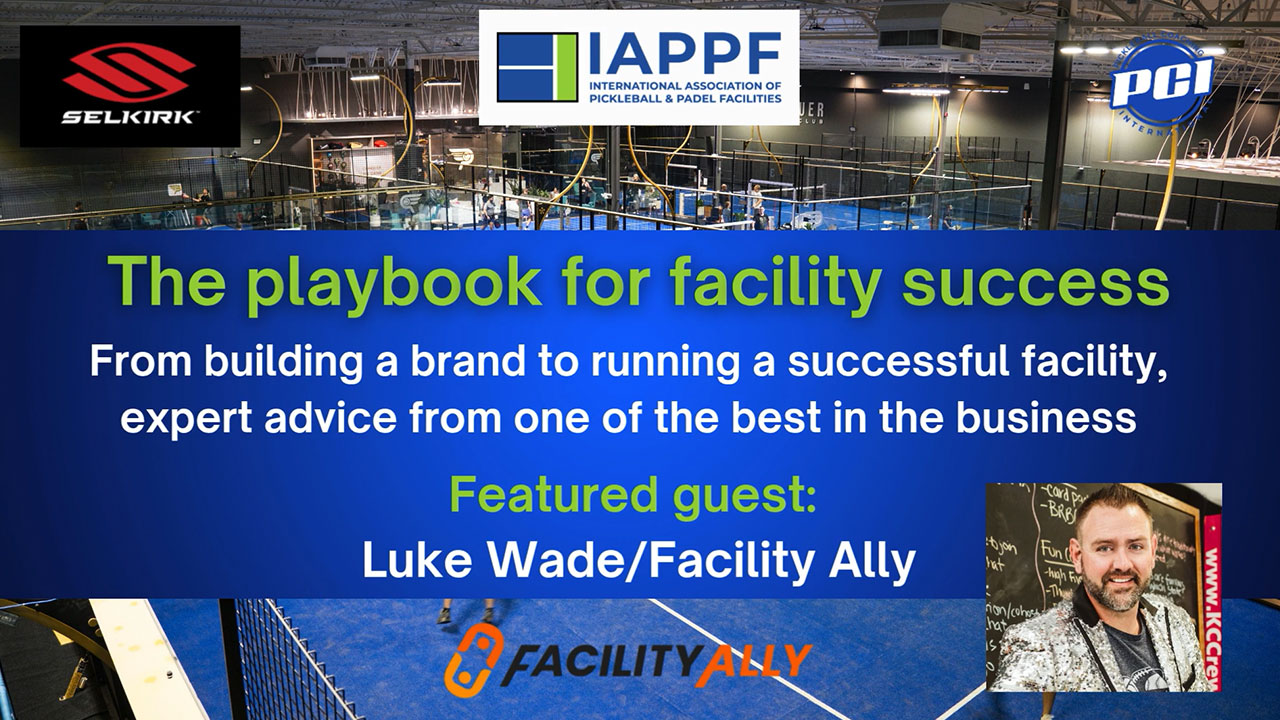
In this episode of The Sweet Spot, the official podcast of the International Association of Pickleball and Padel Facilities, host Josh Kerns sits down with Luke Wade, founder of Facility Ally in Kansas City.
Facility operations are about much more than court reservations, programming, software, marketing, or community building in isolation. The real challenge is pulling all of those pieces together into a business that can grow, adapt, compete, and remain profitable.
Luke brings a broad background in sports facilities, operations, technology, marketing, and business strategy — experience that reaches well beyond the recent pickleball boom. Josh and Luke discuss how facility owners can think more holistically about their businesses, how to use data and marketing more effectively, why community alone is not enough, and how operators can prepare for increased competition in crowded local markets.
This conversation is especially relevant for pickleball and padel facility owners, operators, investors, managers, and suppliers looking to build stronger businesses in a fast-changing industry.
Let’s explore the intricate world of sports facility management as we dissect the strategies of a leader in this space, Facility Ally. In this comprehensive overview, we’ll delve into the crucial themes, challenges, and innovative solutions discussed in this week’s episode of The Sweet Spot. Gain insights into the transformative power of holistic operational strategy, data-driven marketing, and the realities of running a profitable facility in a crowded market.
Covered in This Episode:
Holistic Facility Operations
Balancing Community and Profitability
Elevating Marketing Strategy
Proactive Responses to Competition
Combining Tech and Human Experience
Highlights and Key Moments:
“Facility operations are about much more than court reservations or programming in isolation.”
“The real challenge is pulling all the pieces together into a business that can grow and remain profitable.”
“Community is important, but profitability still matters—you have to cover rent, labor, and overhead.”
“Basic social media posting is not a comprehensive marketing strategy.”
“Operators must be proactive, using data and market intelligence to stay ahead before members drift elsewhere.”
This episode revolutionizes how owners should view their facilities by serving as an indispensable reminder that successful operations require a comprehensive approach. At the core of Luke Wade’s philosophy is the understanding that a facility is a complex ecosystem. It’s not just about managing court reservations; it’s about seamlessly integrating software, marketing, programming, customer experience, and long-term business strategy. Facility Ally serves as a dynamic bridge between these moving parts, helping owners build a robust back-end structure. By applying lessons learned from broader sports industries—like basketball, track, and multi-sport venues—operators can better navigate the specific challenges of the booming pickleball and padel markets. This holistic approach transforms the conventional facility management paradigm, propelling clubs into a new era of efficiency and growth.
The podcast sheds light on the profound tension many facility owners face: the desire to build a thriving community versus the harsh realities of running a profitable business. A welcoming environment is critical, but it cannot come at the expense of ignoring rent, labor, overhead, and margins. The critical realization here is that community alone is not a sustainable business model. Facility Ally recognizes this reality and steps in to help operators structure their businesses so that community engagement and profitability coexist. By focusing on the financial realities alongside player experience, facilities ensure they have the resources needed to keep their doors open and continue serving their communities long-term.
In a world inundated with digital noise, the challenge lies not in having social media accounts, but in executing a real marketing strategy. Facility Ally addresses this hurdle by emphasizing the sophistication required in modern facility marketing. Simply posting on Instagram is no longer enough to fill courts. The conversation highlights the necessity of utilizing digital tools, targeted emails, algorithms, and smarter use of existing software platforms to capture audiences. Furthermore, setting a realistic marketing budget is crucial to avoid wasting money on disconnected tactics. However, the discussion also points out that grassroots marketing still holds immense power; sometimes, visible, boots-on-the-ground engagement is the best way to build local awareness and drive traffic through the front doors.
Investing in a proactive strategy proves to be a wise decision for facilities operating in increasingly crowded markets. The inherent challenges of new entrants, expanding chains, and shifting player loyalties mean that yesterday’s business model may not be enough tomorrow. It is crucial for operators to recognize the need to stay ahead of the curve. By fostering a culture of competitor awareness and market intelligence, facilities can pivot their offerings and tighten their operations before they notice members leaving. The key lies in striking a balance between serving your current membership well and actively anticipating the moves of the competition.
Data tracking and software integration emerge as fundamental elements in modern facility management, underscoring the significance of informed decision-making. Facility Ally’s model is built on a blend of tools, services, software, data, and real-world facility knowledge. This data-driven approach allows for a comprehensive analysis of a facility’s performance, from identifying which programs resonate most with players to understanding where marketing dollars are best spent. Operating much like a high-end “buffet” of services, Facility Ally empowers operators to get targeted help with specific business problems or broader strategic support. By understanding the correlation between technology and the human experience, facilities can ensure their resources are allocated judiciously, maximizing both profit and player satisfaction.
00:28 — Why Facility Operations Are So Comprehensive
Josh frames the conversation around the complexity of running a facility — from software and programming to marketing, operations, customer experience, and long-term strategy.
01:49 — Luke Wade’s Story and the Origins of Facility Ally
Josh asks Luke to share his background and explain how his personal and professional journey led to the creation of Facility Ally.
03:27 — Inside Luke’s Facility in Kansas City
Josh discusses the impressive facility Luke is working from and how it reflects the scale and depth of his experience in sports facility operations.
05:04 — What Facility Ally Actually Does
The conversation shifts into the wide-ranging nature of Facility Ally’s services, including software, marketing, operational strategy, and broader business support for facilities.
07:05 — Applying Lessons from Other Sports and Facility Models
Josh and Luke discuss the value of bringing experience from basketball, track, multi-sport venues, and other industries into the pickleball and padel facility world.
09:42 — Community Is Important, But Profitability Still Matters
The episode digs into one of the central tensions for operators: building community while still covering rent, labor, overhead, and the financial realities of running a facility.
10:00 — What an Engagement with Facility Ally Looks Like
Josh asks how Facility Ally works with both new and existing facilities that want to become more successful.
12:14 — Why Basic Social Media Is Not a Marketing Strategy
Josh and Luke discuss the sophistication required in modern facility marketing, including digital tools, email, audience targeting, algorithms, and smarter use of existing software platforms.
14:38 — Setting a Realistic Marketing Budget
The conversation turns to the challenge of knowing how much to spend, where to spend it, and how to avoid wasting money on disconnected or poorly targeted tactics.
15:50 — Grassroots Marketing Still Works
Josh shares a practical example from the padel world: sometimes awareness is built not only through digital ads, but through direct, visible, boots-on-the-ground community engagement.
17:59 — Can Facility Ally Help Operators Anywhere?
Josh asks whether Facility Ally’s approach applies nationally and internationally, across different markets and facility sizes.
20:18 — Combining Technology, Software, Data, and Human Experience
Luke’s model is discussed as a blend of tools, services, software, data, and real-world facility knowledge.
22:58 — A Flexible “Buffet” of Services for Facility Operators
Josh compares Facility Ally to a high-end buffet: operators can get targeted help with one business problem or broader strategic support across multiple areas.
24:45 — How Facilities Should Respond to New Competition
The conversation shifts to crowded markets, new entrants, expanding chains, and why yesterday’s business model may not be enough tomorrow.
26:37 — Why Operators Need to Be Proactive, Not Reactive
Josh and Luke discuss using data, market intelligence, and competitor awareness to stay ahead before members and customers start drifting elsewhere.
Learn more about Facility Ally: https://facilityally.com/
Become an IAPPF member: https://iappf.org/