
New Episodes Drop Every Wednesday. Click here to subscribe to updates.
Welcome to The Facility Playbook! Join us to hear from industry pioneers who have built and managed successful sports facilities, eatertainment venues, and clubs. We’ll delve into their strategies, challenges, and triumphs, giving you practical insights and inspiration to elevate your own facility. Whether you want to enhance the fan experience, improve operations, or create unforgettable moments, The Facility Playbook is your go-to guide for facility management.

Summary
Welcome to The Facility Playbook, a podcast dedicated to helping facility managers and owners learn from the experiences of pioneers and veterans in the industry. Hosted by Luke Wade, founder, and CEO of Facility Ally, this podcast aims to provide valuable insights and tips for effectively managing sports facilities, entertainment venues, and clubs. With Luke’s background in managing a sports league and developing software to automate operations, he brings a unique perspective to the table. Join us as we delve into the world of facility management and discover how to optimize your operations.
Notes
Learn More about Facility Ally:
Be sure to subscribe here, and follow our social channels for more content
Instagram: https://www.instagram.com/yourfacilityally/
TikTok: https://www.tiktok.com/@facilityally
YouTube: https://www.youtube.com/@facilityally
Facebook: https://www.facebook.com/facilityally
Transcript
What’s up everybody? Do you own or manage a facility while you’re in the right place? Welcome to the facility playbook.
I’m Luke Wade, founder and CEO of Facility Ally, and this podcast is about helping facility managers and owners learn from pioneers and veterans in the industry who have built and managed successful sports facilities, entertainment venues, and clubs. I’ve been managing a sports league for over ten years, and through that process, I developed a software to help me automate everything I could to make my life more efficient.
Ever since I was a little kid, I’ve loved two things. Sports and organizing. I played everything from tee ball to basketball to wrestling, to football, to track. Even got a scholarship to play college football for a year before I was sent to Iraq at twenty years old.
Yes, I joined at seventeen to pay for college six months before nine eleven happened. But even war couldn’t slow down my love for sports and organizing things. While we were overseas, I helped build a soccer field and program pickup for our soldiers in the military that also got to play with Italians, Koreans, and others on base. When I got back from my rack, I was able to finish my degree as a computer programmer in graphic design.
Led me to Kansas City to find a job and be closer to my nephew. When I got here, Kansas City was talking about how cool downtown was for young professionals. And I was one of them living downtown and working downtown as a web developer at a large ad agency, which I loved working at. But I found myself driving outside Kansas City to do anything fun and meet new adults such as myself.
Playing sports, things like that are the best way to meet people, and so I decided to join a league, a San volleyball league, and a softball league, but they were all thirty minutes outside of downtown. And so after a while, I got sick of driving thirty minutes outside of downtown, which supposed to be really cool and decided to just rent a softball field and tell some friends. I called this business Casey crew. It’s been around for eleven years now, and in the first year we had a thousand people sign up, which actually blew my mind.
Three years later, I’m still leaving my full time job as a web developer every day at five o’clock to run and umpire the games every night, I was collecting paper waivers. I was handing out t shirts at every game. I created these coupons for the bars that we were working with and handed all those out. And so I was spending all of my weekends as a twenty year old single adult in downtown Kansas City, programming, building schedules in Google Docs, taking waivers and scanning them in for my insurance, and it just didn’t make sense.
And that’s not something you want to do at that point. And so, took my background as a web developer and started developing a software to automate a lot of my leagues for me. And I built this software up, and it originally was called Lee Ally.
FIVE YEARS LATER, six YEARS LATER, KIN CITY, K C CRUID GROUND INTO THIS BEHEMATH OF OF SPORTS LEAGUE, ALL THE ADULTS ARE PLAYING AND OUR MAIN FOCUS for about seven years was building leagues downtown for people just like me and my friends. Still to this day, most of my friends I’ve had met, I’ve met playing Gigball, Sam volleyball, cornhole. And now ten years later, Casey Crew has almost twenty thousand adults to play all of the city in our programming. At that time, I was also working with about ten different community centers, golf courses, bars, and I just kept getting double and triple booked. So after the hundredth time of that, I STARTED THINKING MAN IF I COULD ONLY BUILD SOMETHING FOR THESE FACILITIES TO MANAGED PEOPLE LIKE ME AS I DID WITH MY LEAGES, THEN THERE MIGHT BE SOMETHING HERE FOR THESE FACILITIES.
And since I was working with so many different community centers, it was kind of a nightmare working with different individual managers. Around this time about year seven or eight of KC crew, I’d heard of a facility called Hybia arena coming, which is where I’m sitting today.
Large, old sports arena, Kemper arena that used to be concerts, rodeos, every you can think of used to be done here, but it was becoming dilapidated, and the city was talking about tearing it down. So they held a city meeting here in the in the old building when it was all falling apart, and I came to it. And I sat there and I listened to every single person stand up one after another in front of the city council. And say, this will never work, tear it down.
There’s no way we could get a thousand people here every single day. And at that point, I’d already worked a lot with the city and built some Sandball courts and programmed most of their fields and was thinking, man, I get several thousand adults a week at my leagues. And so if we combine youth and events, there’s no way that Hyvi arena couldn’t do the same. And so I actually stood up and was one of the only people at the meeting to champion Hyve arena and say, I would love for this to happen.
I believe it’s possible and I’d like to be a part of it. After that meeting, the developer, Steve Fauci, came up to me and he said, who are you? And after explaining what Casey Crew was and what we had done, Not only was I able to secure a large lease here for Casey Crude to move our offices, but I also learned that Steve was very interested in automating this facility so that he didn’t have to manage all the things I was managing in a hundred times the size. And so Steve actually saw saw the opportunity to invest in my league platform to build facility ally to manage high v arena.
And at that time, Casey Crew then moved into high v arena, and we were able to get rid of the eleven to twelve different one off basketball courts we were using, and now we had a one stop shop for our home offices, all of our staff, and all of our programming in this area.
And that was one of the best ways that Casey crew catapulted and used the software to essentially grow bigger.
After facility ally launched in twenty twenty, COVID shut the world down. And what we saw was that most facilities were not looking for software when they’re in the middle of being shut down. But After the pandemic was over and the city started opening up again, a lot of facilities started looking for something better. They had the downtime to really think through their systems, and they were looking for something better.
And here we are today with facility ally growing and scaling across the country. After ten years of running leagues with almost twenty thousand people a year and working with fifty to sixty different facilities, I saw that there was really nowhere to learn how to do this. There’s nowhere to learn how to run a league efficiently. How do you fill a twelve court facility all day long As you can see, it’s not filled right now, all day long, all the time.
How do you drive members in? How do you do that? How do you manage your multiple bookings? You got volleyball, basketball, pickleball, track, do you manage a pickleball facility that maybe has conference rooms and different events going on at the same time?
And I just realized that after ten years, I learned it the hard way. And the grinding way and did a lot of things wrong and made a lot of mistakes, and I’m sure there’s a lot of facilities and league managers out there have done the same. So the reason I started the facility playbook is to educate people just like me around the country and to help make sure that they don’t have to make the same mistakes and failures that I did. Now, you will fail, but hopefully, with the facility playbook and our help, you’ll be able to fail smaller, quicker, learn from it, and move faster to success.
And that’s what I’m gonna be giving you here with the facility playbook. I’m gonna be interviewing and talking to facility managers and owners all over the country who manage amazing different sports venues, entertainment, and clubs, and showing you the mistakes they made, what they learned, you’re also going to get to see these amazing facilities and check them out so you can see kind of what they look like, how they operate, and learn from the mistakes that they made, and the tips and tricks that they’ve learned over their timeline. So if you are a facility manager or an owner getting started or been doing it for years, and you’re just looking for some extra help, stick with us facility playbook, you can learn more at facility ally dot com, which none of this would be possible without facility ally developing this amazing platform to help these facilities.
Did you know that most of those facilities use between four and six different softwares to manage their rentals, memberships, lessons, leagues, and more? Facility ally to the rescue, revolutionize your facility with facility ally’s all in one system, learn more at facility ally dot com. Follow along, check it out with Homefield, Hyvey arena, chicken and pickle, and much, much more. We’ll see you on the first episode of the facility playbook.
Summary
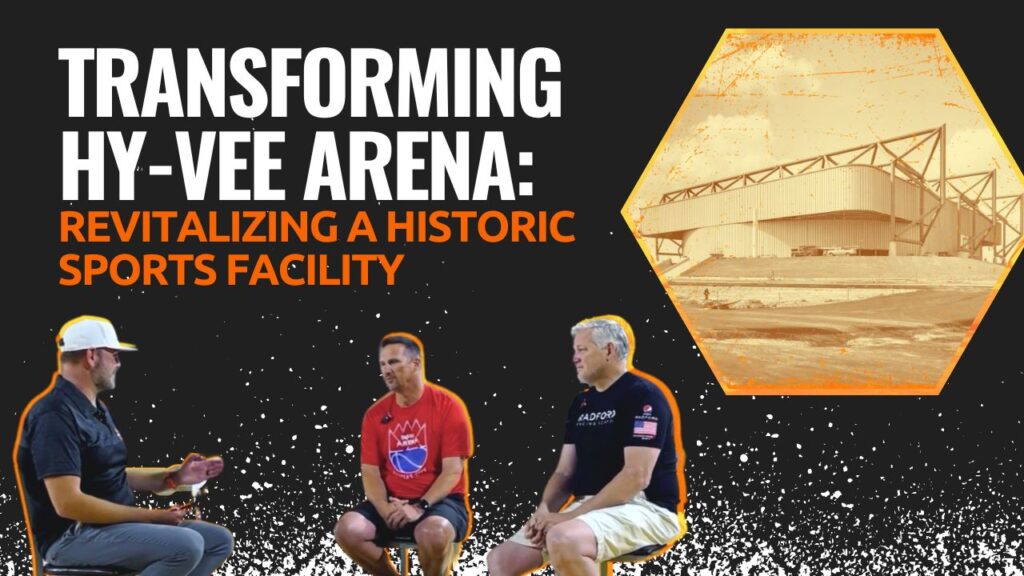
Welcome to the Facility Playbook Podcast, where we delve into the world of facility management. In this episode, we explore the inspiring story behind the transformation of Hy-Vee Arena. Luke Wade, the founder, and CEO of Facility Ally, sits down with Chris Coffin, the general manager of Hy-Vee Arena, and Steve Foutch, the CEO, and founder of Foutch Brothers, to uncover the journey of revitalizing this iconic venue located in the heart of Kansas City.
Notes
Learn More about Facility Ally:
Learn more about Hyvee arena:
https://www.hy-veearena.com/–
Be sure to subscribe here, and follow our social channels for more content
Instagram: https://www.instagram.com/yourfacilityally/
TikTok: https://www.tiktok.com/@facilityally
YouTube: https://www.youtube.com/@facilityally
Facebook: https://www.facebook.com/facilityally
Transcript
So Hybee arena was such a great episode. I feel like I could talk about this arena over and over again for a long time, but I got to record with Steve Fauci’s the owner and creator of Hyvey Arena, and Chris Kaufman, who’s the general manager, ends. We were actually sitting on this amazing court, one of twelve basketball and volleyball courts at Hyvi arena has, and there was people playing and interacting all around us. And it’s this huge, amazing old arena used to be called Kember arena that was actually redeveloped into a sports complex that it is today, but it’s had everybody from Elvis to Prince and even Owen Hart from the WWF fell to his death in this building.
So the fact they were able to take this amazing historical building and turn in this awesome sports complex, is just one of my favorite things about it, and we were able to dive in deep and talk about all that history and their experiences there. And then what it looks like today. And today, you know, they’ve got the membership the track, the the courts, the basketball, volleyball, pickleball, they have wrestling tournaments, dance, all kinds of different things going on here at Ivy Reno. One of my favorite parts of The recording was some great, great advice from Chris on how he manages such an amazingly large complex with so many different things.
So the flexibility also creates many challenges, and Chris is able to talk us about how he makes in game adjustments and things like that. So Hope you like it. Check out Hybee arena.
What’s up everybody? Do you own or manage a facility? Well, then you’re in the right place. I’m Luke Wade, the founder and CEO of Facility Ally.
Most Borst facilities use between four to six different softwares to manage their facility, and facility ally can help you replace that with an all in one system. Check it out at facility ally dot com. Today, I’m joined by some amazing rock stars, Chris Kaufman, the general manager of Hyvee arena, and Steve Fouts, the CEO and founder of Fouch Brothers, and the owner and investor of Hybee arena. Thank you so much for joining me today, guys.
I really appreciate it. Thank you.
So, basically, we’re here at Hyvee arena. So I’d love to start with where where are we? How did this come to be? So Steve, if you kinda wanna just walk us through the how did you first hear about Kemper arena and think of this crazy idea? Sure. We’d try to keep some of this sure, but Oh, geez, ten years ago, eleven years ago.
On the same week that a friend of mine came in and said, hey, Steve, we need a place for eight of all courts at least to try and have some big regional tournaments, can you think of anything or help us develop a property? That same week, they announced that they’re gonna tear down the building to create more parking for some of the space next door. So the historic people in town said, hey, Steve, can you think of any idea to do with the Serena?
So, those two supply and demand showed up at the same week. So, I started looking at the arena, and it’s just the one floor down downstairs, the original.
And so, obviously, with creativity and architectural background and so forth, we’re like, okay. What else? How can we do this differently? So after lots of different schemes, lots of different ideas, lots of pricing sensitivity, we came up with in the bottom floor just removing all that retractable seating and getting four cords down there.
So you wanna have seating down on the court like you used to have, but you actually have a nice seven foot buffer of a of a drop from the regular bowl down onto the regular floor, which actually a lot of coaches like that to keep the separation between the players and the parents and so forth. And then we put in this floor up here that we’re sitting on now. We’re on the second floor. This is brand new.
The fifty year old building, this only existed for four point five five years, while we’re sitting on NOW. THIS IS THE KEY TO WHAT CHANGED THIS FACILITY IS ADDING THIS FLOR and eight more basketball courts, so now Chris can run a twelve court tournament, which is national sized tournaments. This was the key to changing the whole facility but is also the key in the whole financial cost and the financial revenue model of how you operate the Soy. And so how are you able to know that you could get this done?
Talk a little bit about your back crap. Oh, I still don’t know. I still we’re still trying. But I mean, building this this like you said, this court this Florida didn’t exist.
Right? So How did you have the idea? I mean, talk a little bit about your background.
Yeah. I’m an architect and financial and engineer type guy. So we’re just always REENOVATING OLD HISTORIC BUILDINGS CONVERTING THEM FROM SOMETHING TO SOMETHING ELSE. USUALLY SCHOOLS OR OFFICE TOWERS OR HIGH RISES INTO APARTMENTS, THAT’S REL EASY, Apartments can be any shape, shape, size, layout, whatever, and people generally are okay with that.
But in this building, it was how do you monetize Even though it’s a free building, as we bought it for a dollar, that doesn’t monetize the revenue that you have to come up with to keep it operating. So, we’re just looking, you know, at the heights, and the balcony level, and and where we could put a second floor, or originally, the first floor WE LOOKED FILLING WITH DERT AND BRINGING UP THAT BOL. SO AS AS THAT DIMINAL THE BOL GOT BIGGER AS YOU KEPT ADDING DURT MORE AND MORE AND MORE, YOU COULD ACTUALLY GET THESE A COURT DOWN BLOWOSE WHERE THE CONCourse AND AND THE PRIVATE Suites ARE, THAT WOULD JUST WALK STRAIGHT ON OUT ON TO THIS CUT THIS SISE BUT YOU DON’T WE HAVE THE A COURTS.
So it still cost a lot of money, and you still only had eight courts. So that wasn’t a good option. But then we looked at this, and having the two floors gave us twelve courts, And I don’t know where the idea came from. We just we kept looking at sections and plans and just what ifs and what ifs.
And so we even have four wars here. You still have the first floor below everything, and then we added the fourth floor for the running track because I wanted to have, like, the the running a track stuff in here as well. So there’s changes throughout the whole facility. Yep.
And, Chris, what’s your background and how did you what was the first time you heard of this and thought it was would be awesome to do. Well, I’ve kinda I’ve been in a sports world forever. Used sports, high school sports, au sports, professional sports, and just kinda have been around her for a while. When I heard of Steve’s idea, I knew some folks that were involved in the project, and we started having some conversation.
I think I originally came in as, like, a program manager and was gonna start some of that. And I think I came in March. So March, April, about six months before we even opened. And so as that progressed, I kinda my role progressed.
And when by the time we opened, I think I was the operations manager. And it just go over years, that kinda morphed into where I’m at now. So it’s kinda it’s been it’s been a lot of fun. Just the multifacet and the multi purpose use of this building in general.
It’s kinda been a challenge, so it’s new every day you come in here. Sure. So talk a little bit about what you offer high virena. Well, I I like to pitch it in three different ways.
So, like, we’re here on on a weekday. At eleven o’clock, we got a volleyball camp going on downstairs. We got a youth summer group in right now. You can hear in the background a little bit, so During the week, during the day, I say, you know, it’s more for the working working guys downtown and get in over lunch, get a workout in, get some open gym basketball, stuff like that.
Then in the evening, we host a lot of our members. We have a a big membership base. We also host practices anywhere from volleyball, basketball. We do a lot of foot saw in here now as well.
And then we also host, obviously, all the KC crew leagues in the evening. And then weekend events are just limitless.
We have fifty two thousand square feet up here and thirty six thousand square feet downstairs, so anything you can picture with the exception of water we’re we’re take a look at. We’ve hosted anything from concerts, obviously basketball tournaments, volleyball tournaments, wrestling tournaments. We’ve done fashion shows, drumline competitions, high school graduations. We’re looking at some college graduations this year, and we also do a lot of corporate events meetings, trainings anywhere from one hundred employees to three thousand employees.
So with everything you mentioned, you know, six lane running track, twelve basketball volleyball courts, pickleball courts, gym. I mean, conference rooms, like, what is the biggest challenge you face when running a facility this size? I think it’s extremely unique in that a lot of big facilities are just sports oriented, and they might have a couple of kiosks where you can go get a drink. Or something.
But here, we have our membership base.
We have our our clients, customers, People walk in off the street anywhere from one person buying a day pass to large national events. And then we also have tenant spaces. Here too. So we’re kinda we house a lot of different businesses and and retail businesses and office spaces. And then just being able to manage each individual type of business and then tying it all together and one when we have a major event because our major events drive a lot of our traffic and a lot of people in a building benefit from it. So keeping all that coordinated.
Sure. So really just coordination, scheduling, things like that. A lot of planning. A lot of planning.
A lot of good teamwork too. Yeah. Yeah. So back to Steve kinda like what you’d mentioned earlier, you said a dollar.
You bought this entire building for a dollar. People at home who don’t maybe understand what that means are probably like, how the heck did he do that? So you wanna maybe talk about how from the second you knew you were getting it, what what was the transition? Because we bought it you bought it from the city of Kansas City.
Correct? Correct. Yeah.
That was a long process. That was five years of politics and city hall and legal battles and so forth.
The city was gonna have to spend ten million dollars to tear it down, so they knew they at least had to give me a shot to see if I could make it work. And if I couldn’t they’d clawed back and they’d tear it down anyway. So so the dollar was just sort of a yeah, here you go. Try it. See if you can do it or not. If if not, we’ll just tear it down anyway.
But, you know, anything that’s free is not free. It it comes with a lot of liabilities, a lot of you know, they might have actually had to make me tear it down if I couldn’t do it. So I buy it for a buck and then have to spend ten million dollars to have nothing left over. So go You know, luckily, we didn’t go down that path.
But it took took five years, like I said, of politics, a year of engineering, architecture, legal fees, historic tax credits, syndication, all that kind of stuff. Just to put it together just to have a huge mortgage and open up and hope the people were gonna show up. Sure. And so it’s a historic building.
You’ve got some experience there. You also were in sports as well. Right? So you were just like, this is a great opportunity.
We’re gonna make it work. And the building was built in nineteen seventy four. It has some really cool stories. What are some of your favorite stories of of the arena?
There are stories around this arena, when we’re giving tours and we’re walking on the ramp, we can tell people every cow, every motor crossed bike, every monster truck, WALK ran right through here, so did Michael Jackson, so did Elvis, so did Elvis, everybody walked right on these, you know, on these floors and so forth, and they get freaked out by that. But, you know, the the building in was originally built in seventy four for thirty two million, and then in the mid nineties, they had to expand it to seating capacity to keep the big eight tournaments here, so that’s when the new structure came on in the atrium, so they spent thirty four million dollars just to add two thousand more seats.
And do some upgrades and whatever. And then we bought it and spent another forty two million dollars renovating it. So it’s had three lives, and I’m sure it’s not done yet. There’s mean next year, there’s a whole bunch of new stuff coming that’s gonna completely change the building again, so that might be its fourth life for all I know, and I don’t know how much we’re gonna spend on that yet.
I’m pretty excited to talk about that too. So what do you have a a memory of you coming? Did you ever come to Kemperino when it was Kemperino? Yeah.
I mean, not as a kid, not till we moved here as adults, and I would bring my young kids here. I I know we came to arena cross once and something on ice that I fell asleep on, you know, halfway through, and the roadie or whatever. And, yeah, you’re you’re sitting in some of the seats going, wow, this is so cool. I wish I could be in one of those private suites.
You know, and oh, wow, would it be neat to own an arena someday and stuff like that. Yeah. You were always dreaming about could we ever achieve this kind of magnitude? You know, don’t, you know, be careful what you ask for because now you own it, and now you’re like, oh, crap.
Now, what do I do? Yeah. Did you ever come as a kid or an adult?
Yeah. I came down here as an adult too. I after college, and I think my first memory was a a ringling Brothers circus. I I used to go to the circus all the time as a kid, so the first time it came through here.
And then I I played arena football in here for a couple years too, so it’s kinda it’s different now when I walk in. I’m like, was did was this the original player entrance, or was this the bar down here? Unfortunately, nobody’s cheering like they did before when you They were everything very often. I’m not backing you either.
Yeah. He’s not kidding. He he didn’t watch arena football. He was the quarterback for arena football, so he was the you know, the thing everybody was here to watch.
Takes on a whole new meeting from coming in here day to day for sure. Some good hiding spots that we still use to this day. Yeah. So Steve, your motto is respecting the future or respecting the past as we build the future.
What were some of the ways you were able to do that honor that in this project?
One of our architects coined that phrase a long time ago when we were doing a lot of historic properties, and that just really fit our company like I said, we we get a lot of weird or properties that people don’t really want. So we don’t change them as much. I mean, we we have to work with what’s there. We use historic tax credits, so we have to revitalize it to make it look very similar to what it was, There’s certain areas we have some latitude.
So so we are respecting what used to be here in every way possible, but we had to modify it enough to be up to date, and and get rid of the obsolescence, so that the chairs, the historic, a lot of the original fabric is still here. We just added to it. And if we have to, we can rip out some of this stuff and go back to almost original condition. That’s that’s part of the historic tax credits.
Could you reverse and put it back if something happened? Chris, what is what is one of your secret sauces to running a facility? A lot of planning. A lot of planning.
So fortunately, a lot of our events are return tournament directors or event organizers. So building relationship with them is extremely important, so we get as much information ahead of time as weekend. A lot of their stuff stays the same from year to year. And just in communication with them and that good relationship, for when you’re hosting major events, there’s bound to be some things that aren’t going well, or something will happen, or everything’s going really well.
For that tournament director or whoever’s in charge to be able to come to you and go, hey, we need this fixed or this isn’t going right. It’s so you can be able to turn around and get that fixed immediately, so everything stays kinda seamless for the show. A lot of stuff happens behind us and people in the seats or whatever don’t really notice that, but I think the first year was establishing those relationships and just building trust You know, we have a lot of like Steve was saying, national events come through here. They’re really trusting us to know what we’re doing, and so their reputation and stuff is on the line.
You know, you take somebody like Nike or Under Armour.
There’s thirty facilities in the country that they can choose from, and getting them here is one thing, getting them come back every year is a whole another thing. So that’s kinda the secret sauce is really the relationship building because then everything else after that is just a lot of hard work in Noble Greece. There’s no secrets. Sure. Sure. What’s one solution that you found along the way that you’re most proud of?
I don’t know if there’s one that stands out, but I think it’s I’m a football guy, so we call him in game adjustments. So, like, sometimes the parking lot will just get super packed or somebody will park wrong, and it just really throws everything off. Being able to recognize that before it comes to major problem and make adjustments, Same thing inside. If we’re starting to feel something shifting inside where it’s not gonna go right, noticing that stuff early, and being able to make those adjustments where it doesn’t have any effect on no matter what we’re doing inside, there’s no effect on their actual product, I I think that’s what we’re most proud of is that every weekend, a tournament director of whoever was in charge leaves here and goes, hey, this was awesome. We had a great experience here. That’s great.
I know that being said, you got a lot of people in the building. What’s the most you’ve had in for an event?
So unique, like, Steve was talking earlier, we have the two different floors, so getting creative in how we use those. Early on, we had a cheerleading event downstairs.
And we had a youth wrestling event upstairs, and a track meet up on the track going at the same time. And I’d say we’re bursting at the seams are probably just about ten thousand people in at one time.
We, on a regular weekend, we’ll run through five thousand people, but that’s each day, not at one time. So it’s kinda usually anywhere from twelve hundred to two thousand people in the building at a time, which feels kinda empty. But Yeah. We’re we’re close to ten thousand people that day and there are a lot of challenges.
Though after thinking you’ve maximized your facility, you’ve won. What did you learn from actually having that many people in in those three or events? Do you do it again the same way? Or is there anything you learned from that?
I’ll never do it again the same way.
We just we learn. We take a lot of notes. We take a lot submit notes and we file them away for when that event comes up the following year. What went well? What didn’t go well? What could we do better? You know, stuff like that.
And stuff with major events, it all depends on timing, where if it’s one show like a graduation where you have five thousand people show up at one time, or if it’s an event where they kinda are continuous.
I think the biggest things we we learned out of those is you can never have enough janitors.
If there’s gonna be ten thousand people in the building, we probably need a thousand to hundred.
So one of my favorite things about the arena, and that many people in here, you know, growing up, I wrestled, and we stuffy gym or the community center, and we’re eating out of the cooler in the stands, and nobody can move the whole family’s board all day long and mad. But here, you’ve got options of things do. You’ve got food and beverage. You’ve got a bunch of different things with the whole family.
So how important is food and beverage? And and how do you manage that? So food and beverage is extremely important, and we have several vendors right now. They’re all independently owned and operated.
So we really rely on them to be staffed out properly and be able to cycle through lines fast. We’ve learned when we have events that stay the whole day at wrestling or at cheerleading.
Those guys are gonna eat several times throughout the day, probably two or three times minimum and then a couple of snacks, and we just have to have really short ticket times The worst is if somebody’s standing in line for an hour and then they missed their kids event, or they’re just out there forever, a journal rest period, or whatever. And we wanna cycle them through pretty quickly. So we we try it again. Again, we try to get the food and beverage folks as much information up front.
This is when we expect everybody. This is how many we expect each hour or this is a different kind of event where we’re gonna have a lot of people. So they’ll prepare their food differently, they’ll staff differently, and We do occasionally a couple times a year. We’ll have food and beverage meetings where we all just get together, brainstorm, come up with some ideas.
What changes can we make and etcetera like that. I’m sure.
So Steve, if you started all all over today, what would you do differently?
Not do it at all. Not do it at all.
I I Chris doesn’t like an answer because he’s done a great job here, and it’s it’s good for him.
I don’t know. There’s lots of answers. Obviously, we’re talking about our software here soon, that that couldn’t have come soon enough that we needed that way earlier.
MARKeting HERE IS VERY HARD IF NOBODY BELIEVED WE COULD DO IT. SO I THINK OUR FIRST YEAR OR TWO WAS JUST proving that we were good, we were up, we were running, and that other event we were trying to get had just signed a three year contract with some other facility. So we had to wait and wait and wait. So we didn’t really hit the ground running very well, and then by the time we did get moving, COVID hit.
Then we’re completely shut down, and we start all over from scratch again. Now, we’re just about back up to break even. So I think marketing and somehow social media, and, you know, we’re marketing all these different sports across local regional, national, and international then your potential partners, I don’t know how you market to that. I mean, we’re marketing to almost everything.
And there’s no there’s no billboard or TV ad or or radio ad that will hit that. Yeah. You’re you’re definitely you have so many different demographics Right? You want the big camps and clinics and the big tournaments from all over the nation, so you gotta have a salesperson going after that.
You also want the locals in the everyday using the gym and using different things. So you gotta market for that. Guys definitely have a lot of unique challenges there. I know we talked a little bit about Casey Crew, which is actually a company I owe own.
That’s how I got involved. You in the beginning is I I, you know, I was running sports leagues for adults and using ten different community centers, and I saw this one stop shop for everything I needed. And I was like, I gotta I gotta talk to that what’s going on here and actually showed up at a city council meeting in the basement of this building, and that was my first introduction to it. So you guys are definitely marketing to a lot of different avenues, which makes it really challenging.
You had the foresight in the very beginning to know I’m gonna need something to manage this. So you’re actually an investor in Facility Ally, which manages the rentals and reservations of the facility. So you wanna talk about, like, why that was so important is easier? Well, so we started out looking at various facility software systems, and there’s a lot of good ones out there.
But when you get to how big this is, and you can do a single pickleball court or the whole basketball court or half of it or half the floor, the whole floor, the whole building. There’s just too many permutations. There’s too many options.
That no other software even came close to hailing this, and we even tried another company before we teamed up with you, and they still got they couldn’t understand it. Even the programmers couldn’t understand what they were trying to build, and then we finally, you know, got another partner in here, and they finally got it all pulled off. And still. I think there’s still lots more we could do with scheduling, booking, payments, reserve scheduling, ahead of scheduling, AI type stuff, and as we get closer and closer to a vacancy date, how do we keep marketing and and adjusting prices.
So I think the the software we’ve created obviously didn’t exist anywhere else, is robust enough. It’s handling everything we need right now, but I think there’s a lot more we can do. I think that some of the next chapters coming up is it’s gonna go way beyond what we ever expected. And then just operations wise, keeping track of all the scheduling, all the bracketing, all of the the the referees that are assigned to it, what jersey colors do you have, WAS THEIR NUMBERS, ALL THIS KIND OF STUFF THAT I NEVER EVEN THOUGHT OF AT ALL OF THE TEAM DINAMICS AND JUST KEEPING TRACK OF all those moving people, the ten thousand people we had moving through here, the system just handles it, and I I don’t hear a word, I guess, you know, Chris filters it all for me, but it it seems to all be handled autonomously.
Yeah. And to your point, you know, the person that couldn’t understand how to build it for you, the only reason I really you know, having a background software development. I’d already built a league system, which was using to run my leagues. And then I worked with so many different facilities.
I just saw the lack of management and double bookings and all these different things that were happening that by the time I talked to you, I had the idea of, like, I think I can build something and I think it was just the years and years of working with so many different facilities and seeing the issues there plus the software development. So it was a great great time when you were like, hey, I need this. I’m like, I got the idea. I can do it.
And so like you said, it took a long time to get here, but and we got a long way to go, but it’s it’s it’s to a great point now in in in both Hyvi arena and facility ally. Excited to be here. We actually are office out of this building as well. We’re one of the tenants in IB that will work with Chris every day and appreciate to be here.
So what’s the future? You talked a little bit about more things coming down here. Is there anything you can share with, like, what’s coming or some of the ideas that you’re excited about? Sure.
There’s The the West Bottoms in Kansas City is starting to grow. Other areas downtown are filled up, so stuff is moving down here. So there’s apartments going up all around us. There’s a lot more commercial activity I think coming down here in the future.
And so we have some big things going on with the the bridge that’s going in next door, facilitated the zip lines.
A company says, what if we just ziplined off your roof across the state line into Kansas across the river, land on the other side, Come back across the bridge, go back up to the roof, do it again, all these different zip lines, all this different aerial park. And if all of that activity is going to start side, and we have five thousand apartments now in the neighborhood, we need to become an indoor outdoor facility. We need more mini golf, more festivals, more THINGS THAT K. C. CRU DOES AS WELL TO KEEP THOSE PEOPLE HERE TO MAKE IT A DESTINATION TO MAKE IT MORE INTERTAINMENT to give Chris’ people that are here for a tournament something else to do besides food and beverage.
So we’re making it way bigger way more exciting for his visitors as well as the local visitors. Now we just have to figure out parking and logistics of getting people in and out of here. They’re And no, he didn’t say that incorrectly, zip lining over a river from one state to another state, Missouri to Kansas, hopefully coming very soon. Shout out to our friends at the Rock Island Bridge, which is right across the street.
One of a kind never been done before as well. Bridge, concept, that’s really unique, and food, and entertainment space, and so a lot going on down here. We’re excited to be a part of it. And thank you so much for joining us today.
If you wanna learn more, check out Hyve arena. It’s hyveerena dot com. If you wanna connect with Steve on LinkedIn or Chris, go ahead and do so. Thanks again for joining us today, guys, and we’ll see you next time.
Summary
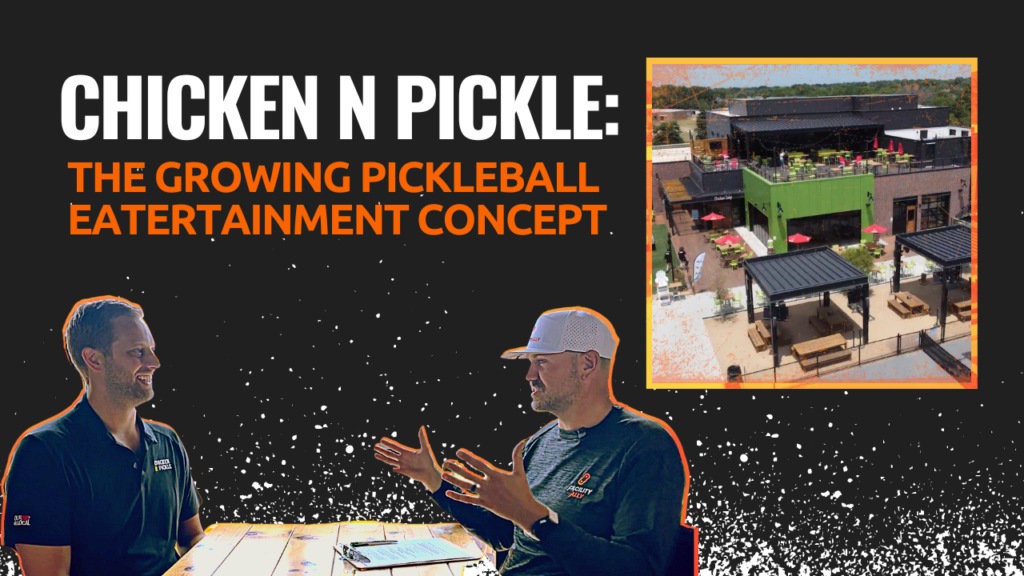
Chicken N Pickle has taken the pickleball and eatertainment industry by storm, becoming the largest and fastest-growing pickleball eatertainment concept in the United States. Originating in Kansas City, this unique concept combines fast-casual dining, pickleball, and outdoor entertainment, creating an unparalleled experience for visitors. In this podcast, Luke sits with Kellen Mumm Director of Business Development at Chicken N Pickle as they discuss the captivating story of Chicken N Pickle, its growth, the challenges faced, and its commitment to community engagement.
Notes
Learn More about Facility Ally:
Learn more about Chicken N Pickle:
Be sure to subscribe here, and follow our social channels for more content
Instagram: https://www.instagram.com/yourfacilityally/
TikTok: https://www.tiktok.com/@facilityally
YouTube: https://www.youtube.com/@facilityally
Facebook: https://www.facebook.com/facilityally
Transcript
Chicken and pickle. Oh, one of my favorite favorites to talk about. If you haven’t heard of them, you need to make sure you pull your head out of the sand because chicken and pickle is the biggest and fastest growing pickleball, eatertainmenting concept, in the country, if not the world, and it started in Kansas City, my home, sweet home. So it’s been really cool to actually watch them grow, And in this episode, I got to really talk to with Kellen Mom, who’s the director of business development.
And what’s really interesting is I actually met with him seven years ago when they first got started, and started using my league software and negotiated with him, and I haven’t really had much interaction with him since was really cool to talk to him and hear his background in his story and They really have created this in entertainment community with the rooftop and the pickleball and the bocce and, you know, one of my favorite things to talking about with Kellen was how he got the expertise to find new locations and new cities to grow chicken and pickle, check it out, chicken and pickle, and hope you enjoy it.
What’s up everybody? Do you own or manage a facility while you are in the right place welcome to the Facility playbook. I’m Luke Wade, founder and CEO of Facility Ally, and this podcast is about helping facility managers and owners from the pioneers of the industry who have built and managed successful sports facilities, entertainment venues, and clubs. Did you know that most of those facilities I mentioned use between four six different softwares to manage their memberships, lessons, leagues, rentals, rentals, rentals, and more, FACility Ally TO THE RESCU.
FACility Ally WILL REVOLUTIONIZE YOUR POLICY Management with our all in one system. Learn more at facility ally dot com. Today, I’m with Kellen mum, director of business development at Chicken and Pickle. Before we jump in, will you tell me a little bit about your background and what led you to chicken and pick?
Sure. Yeah. So, so, Kevin Mom, my started at chicken and pickle about eight years ago now. That was when the idea was first started.
I worked for the our founder and owner previously.
In a real estate investment company.
Straight out of college, I was working for him for a couple years. He came up with this idea, and asked me if I wanted to help, figure out pickleball, and figure out how to make money with pickleball. So that was kinda my start. Had you heard of pickleball at that point? Like so, kind of, in high school, way back when, a hundred years ago, we played a form of pickleball in gym class. And Not until I rediscovered it.
Because of this is when I looked it up again and was like, oh, I think I’ve played that before. Sure. So Tell me a little about that first pitch. Was it anywhere what we’re we’re seeing today?
Nah. So I’ll give you the the the brief version. But so so Dave, our founder, has kinda You went this is a friend out in Phoenix who had a house, and there’s a a complex, and they had, you know, eight pickleball courts. And so instead of playing golf that day, they went and played pickleball.
And, you know, eight AM, they showed up at the courts, and there’s fifty, sixty people.
He aligned up to play pickleball. He played for two to three hours, first time ever, played with a bunch of different people and met a ton of people, just woomoom away at how social the game was, how easy it was for him to pick up and learn. So he came back to Ken City, and he was like, we need a pickleball course in Kansas City. Like, we gotta do this.
And then, you know, his idea was, well, if I could play pickleball all morning, and then grab some lunch to go bring it home for the wife. That’d be the perfect Saturday. Right? So that was kinda the The the birth of it, his idea for the chicken part of it was his favorite restaurant down in the Cayman Islands.
It’s called Chicken Chicken. It’s Wood Fire Road’s History Chicken, a bunch of jamaican sides and stuff, different things like that. But he loves that. He loves getting a half chicken, bunch of sides, bringing it home to the family.
And so that was his idea. Let’s play pickleball, and let me get half chicken and some sides, go home. And that was kinda how it started. So what Far part of that sold you.
Like, why were you like, yeah, I’d love to do this. It I’ve always just been kinda I’ve kinda had that entrepreneurial mindset and This is an opportunity for me to use I’ll I’ll use Dave’s one of his favorite quotes as OPM, which is the most powerful business tool you can use. Just other people’s money. And so I was able to use Dave’s money to write to start start a business.
I get to see the whole process and My thought was, hey, you know, I’m not a restaurant guy. I’m a finance guy, but I get to see how to start a business from the ground up, do everything, I’ll go from there, you know, eight years later, here I am still doing it. So So finance guy into real estate, and now now what are you doing with chicken and pickle? Yeah.
So I do a little bit of everything from the time our site selection crew, fives the site, locks it in, I I get brought in with the architects, and we work on Fitnet site with our concept. And then we go into, you know, design development stages, into construction documents, and we bring on the the general contractor.
Then I became basically the owner’s rep for that project throughout the build.
I have a little bit of hand in everything from picking furniture, to designing the AV package to every everything paint colors on the walls too. So So that’s what you’re doing today. But you used to be a little bit of all, more involved with, like, some of the day to day meetings, which you’ve done it all. Yeah.
Yeah. So starting out, right, I I was a little bit of I didn’t know what I was doing on the first one. So I did a little bit of everything, and then the store opened. And then as any new business, but us specifically because it was the first, you know, pick a ball and restaurant concept combined, we had a lot of growth, a lot of challenges that we had to learn.
So I was there I was an opening manager for six months, opening six days a week, first time ever in a in a restaurant world for me, personally. So that was a a good learning curve, but You know, definitely learned a lot in those six months. And then onward after that, as I tried to organize ourselves a little bit better And before we got to our second one, which was about two years after we opened our first one. So do you feel like some of that day to day manager experience helped you realize what the next couple facilities should look like.
Hundred percent. Because really, when you’re, you know, for me, I wanna make sure whatever I’m designing or building for the the guys that are gonna go in there and operate at seven days a week. I wanna give them as many tools they can. So they don’t have to worry about something going wrong or this breaking or my my hope is it’s the easiest restaurant for them to run, easiest facility for them to run, so that they can focus on what’s most important, which is our guest.
Right? Awesome. So thank you for all that background. I was I was more or less just interested to hear more of that from you.
But for those who maybe don’t know what chicken and pickles, what is chicken and pickle today? So chicken pickle. It’s a restaurant entertainment concept. Born right here in Kansas City.
It’s a concept that brings fast casual — Dining. — and pickleball.
In outdoor entertainment. So we have indoor outdoor pickleball courts. Usually have a large yard for yard games, then we also have multiple bars inside, outside, and a rooftop.
Lots of events, whether private or public events throughout the week, We do anything from, you know, a ten year old birthday party to a corporate outing of two hundred fifty people.
So and everything in between that. And so we’re in the Kansas City area. So we’re in Overland Park, Kansas. The original one opened up in North Kansas City, And now you’re how many of them are there and where all are you located? We are opening our Hates store next month in in Glendale, Arizona.
But we have so we started in North Kansas City, Missouri, went to Wichita, Kansas.
Then we went to San Antonio, Texas. Oklahoma City, Grant Ferry, Texas, which is the Dallas Fort Worth area, Overland Park, Kansas, and Greatvine, Texas, which is also in the DFW area.
That one just opened in January this year.
Now we’re opening Glendale, Arizona this year, Saint Charles, Missouri this year, and then Webster, Texas, which is in the Houston area. I’ll open early next year. Early twenty twenty four. How long before you can’t name them all?
Do you think? I’m already even been there. I’m already at that point where there’s we have so many in the pipeline now that there are some that I can’t even talk about because they’re not public yet. So Sure.
Well, that’s amazing. Congratulations. I I love it. We’re I’m a huge fan. I I play several days a week pickleball and actually play at the original location and I remember you you mentioned, like, you know, pickleball kinda came first, and then it was like, oh, let’s add the food onto it.
And so you even in North Kansas City built the courts first before the restaurant came later. So was that what was the reason for that?
Main reason is we don’t have patience to wait for the whole drawings to get finished. So we the core building and the course themselves, that’s that was easy to do. So we had that done, and we were like, let’s get in there. Let’s start moving dirt. And we were still finishing the drawings on the restaurant part while we were building.
So we were able to get the those courts open pretty fast. That’s a relatively simple structure and build compared to a restaurant. So that’s what we did. We opened it. It actually worked. It was six months before the restaurant opened.
We’re I was working and we had a little a little shack. It was actually a storage container, that we cut the hole out of the side of it and put a bar top on it and said, well, serve beer out of it. I remember. That’s actually when I first started playing pickleball was when you guys opened that was my first time, and I remember thinking like, why did they put this here?
And why just courts? And then six months later, the the I was like, okay. So it was really interesting for me at least to see both sides of that. So what are some of the biggest challenges you face running the facility of chicken and big?
Yeah.
The biggest thing is, right, it’s it’s it’s more of a resort that we we have. Right? We have so many different aspects of this property.
So many different spaces. There’s a lot of different spaces to manage.
So you you it’s hard for you know, just a restaurant GM to come in here and be able to manage all of it because you have your pickleball team, your events team, your your standard, you know, front of house service, the standard back house service, And then everything else that goes on top of it, we have community and different, you know, public events that come in too that we also organize. And and so That’s why I say it’s a resort because you have to think of it like that. Right? You you have the pickleball side, and you have how does that work with, you know, the rooftop event that’s coming, because what if they want courts, and then you have to train the staff on how to deal with that when that those things come up.
And so there’s so many more things that when you just have four walls of a restaurant, you’re like, oh, yeah. Well, if everything in the kitchen’s working, everything in the front in the diner is working, I’ll be alright today. Right? There’s a hundred other things that can go wrong.
So as you mentioned, you know, with eight facilities, look, what’s the secret sauce that make you figured out to create this amazing experience. Like, what do you believe it is that helps manage all that? So that you guys are as successful as you have been. Yeah.
Well, I have to give most of the credit to the people. Most it’s our it’s our day to day operations that are really making this thing run as smoothly as it best.
Like I said, I like to try and give them as many tools as possible to to be successful day to day.
But it’s really them that coming in here and taking care of our guests and giving them outstanding service on a day to day basis that keeps people coming keeps you coming back every week to to play. Right?
So do you have any sort of secret bior? Do you have anything that when you’re hiring people that you you maybe think that you guys do differently or more efficiently since it’s all about the people, which I totally agree, something you need to do differently to find the great team that you have.
You know, a lot of things I think that we are a little bit different is how community focused we are.
Everything we do has a a little bit of how how can this affect the community that we’re in?
Every employee is able to take a couple of days and go volunteer.
In the community for charity. You can submit your favorite charity to us, and we’ll enter it into either do a green cup campaign, which is, you know, yeah, when you buy a Coke and the proceeds of that cup go to whatever charity. Per month. And and that’s a rotating thing. We do that every every store.
Tuesday after Labor Day is our day of giving. Everyone, we close all eight stores and everyone goes out into the community and we volunteer for a full day. And we do that everywhere. We’re always gonna do that.
It’s just something that, you know, the when you work here, you know that you’re not just clocking in and collecting the paycheck. You’re actually making an impact to, you know, people in your community too, things you care about. Sure. Does that make sense?
So you’re very community focused so you feel you’re driving in more people who care about community and believe and align with your vision, so it just kind of works together in the same same methodology. Exactly. That’s awesome.
One of the other things you mentioned was like, it’s not just coming in here and running like a day to day restaurant. That’s one of the things I think I noticed early on from you guys that was really different Now I feel like everybody’s saying fast casual, but I hadn’t heard of it when I first saw chicken and pickle. And so maybe talk about the fast casualness of chicken and pickle where that idea came from and how it’s made you successful. Yeah. Yeah. A lot of growing pains in that as well.
So, our our concept is you come in the door, it’s all open seating everywhere. Everywhere that’s not in a closed event.
But you go up to the cashier, order your food. They’ll give you a number a little table tent. Then you go anywhere on property as you want. Sit down. A server will come over, take your drink order. Come and bring you drinks, add to that tab that you started at the cashier.
There’s a lot of challenges that We came with that because we are such a large project, and most of our stores are an acre or more from, you know, cashier to pickleball courts, So that that could be a lot of ground to cover in in a, just finding that table tent, and b, the food runner. Because we have specific food runners that are just there to grab food and run into that table. And then So then the servers are solely focused on making sure that their tables have everything they need, any drinks I need, refills, you know, silverware, whatever you need.
And so getting that kind of dance down because we want you to be able to order sit down, get your drinks, have your food, you know, ten, fifteen minutes max, and then you’re so for a business lunch, you can have your food, HAVE, YOU KNOW, YOUR MEETING, DO EVERYTHING IN YOUR OUR TIME FRIGHT IF YOU NEED TO. BUT IF YOU WANT, YOU CAN SAFE FOR TO THREE HOURS IF YOU WANT.
YOU KNOW, HAVE SOME DURINGS, PLAYING BAGS OUTSIDE OR WHATEVER.
SO WHEN WE FIRST TALK, YOU SAID IT OPEN PICK WE OPEN PIGWAL FIRST, THEN YOU OPEN THE REST AROUND LATER. NOW do you feel like it’s What are you thinking about more first when you’re building these new facilities?
NOW, it’s, yeah, it all starts in the restaurant. You got to make sure that YOU GET THAT EXACTLY DIALED IN.
YOU REALLY CAN’T HAVE ONE WITHOUT ONE WITHOUT THE OTHER.
We’ve we’ve tried we tried it again in Wichita opening the courts first, and then the and the restaurant after. And it was just it’s just a challenge to GET PEOPLE IN.
IT WORTH OUT WELL IN NORTHCAND CITY JUST BECAUSE OF HOW TIGHT THEM COMMUNITY THAT WAS. Wichita, we were new coming in, and no one knew what pickleball was. And so they’re like, well, why are we coming here? Right? Well, it’s like, well, come play pickleball. And so IT was more of a challenge to get people in.
We find now, you know, we’re able, before our open, both at the same time, you know, half our business, they come in for lunch, and then they’re like, hey, what’s going on over there? And they go, oh, well, that’s pickleball. Let me let me show you. Yeah.
And then and then they come back you know, a week later to play some pickleball. So that’s a that’s a leads me right into my next question. So with the rise of pickleball, now everybody knows what it is right to feel like. So, WHAT’S THE BIGGEST DIFFERENCE BETWEEN AND PICKLE, eight YEARS AGO AND CHICKEN AND PICKLE TODAY BECAUSE OF THIS GROTE OF PICKLE BOL.
IT’S, YOU KNOW, IT’S become less of us having to teach everybody.
You know, a lot of the markets we’ve went to, Kansas City, San Antonio, YOU KNOW, WE BUILD IN San Antonio, I THINK THERE WERE PROBABLY six OR eight COURTS IN THE WHOLE CITY. YOU KNOW, THE SIDOOM five million people. Right? You know, like, there’s no pickleball courts.
We we open, you know, we open ten courts and people are like, what’s going on? What are you doing? And, you know, now there’s a ton of courts. There’s hundreds of courts.
And so, it it it makes it a little easier because, right, now people are coming to us to play, traveling to us.
Because of Bigkelball, And we’re, you know, I we’re the premier place to play pickleball in the country.
It’s There’s no other experience like it. AND I THINK OUR SERVICE AND OUR FOOD ALLEMACE THAT AS WELL. SO THAT’S WHY NOW IF YOU ARE A SERIOUS PIGWALT PLAYER, from, you know, California or Florida and have hundreds of courts around you. They will they will travel TO A CHIGEN ON PICKLE, BECAUSE IT’S THE PLACE THAT YOU HAVE TO PLAY.
PICKLE BALL. IT’S ALSO. AND ALONG THE SAME BAYEN OF, YOU KNOW, YOU USE US OUR LEAGES OFFWET AND SO WE WOULD TALKED ABOUT THAT seven seven YEARS AGO. I REMEMBER SITTING THAT WITH YOU IN THE OFFICE TALKING ABOUT THE Software AND USING IT.
AND SO, AGAIN WITH transition. Have you guys leagues are a really big thing. It’s a big thing for my business and in this industry. Have you guys transitioned more into different types of leagues and events or Talk about maybe the transition of, like, leagues were kinda I felt like the big thing, and now maybe they’ve kinda slowed a little bit.
Yeah. So just just the public leagues have slowed down a bit, but we’ve got into other other types of leagues and other tournaments, like here in Overland Park, for example, NPL is out this weekend, which is NATIONAL LEAGUE FOR fifty five AND OLDER AND THEY TRAVELED THE COUNTRY PLAYING AT DIFFERENT VENIES BUT AND THEY’RE TRAVELING TO ALL OF THE Chicken PICKLES TO PLAY. AND SO THAT’S MORE OF THESE ARE SERIOUS PLAYERS, AND THEY’RE GOOD. AND YOU GO WE’LL GOING THERE’RE WATCH IT LATER, MANY.
THEY’RE AND SOME GOOD PLAYERS.
IT WIP US, pretty easily. I’VE HAD MY. I’VE HAD MY I’VE DEFINALLY BEEN BEED BY PEOPLE IN THAT group, for sure. That’s why I always tell people, I’m like, I play so much now because I’m trying to be the best guy in the retirement home someday. Yeah.
Cool. So you guys have grown so much over the last few years, you know, what led to choosing the first location? You said the next one was Wichita. What led to that? And then how did it grow from there? Yeah, so NorthCan City was the easy choice because that’s where Dave is headquarters. So he likes to be as close to his businesses as possible when he starts them.
So, that was the easy first BIP. Wichita was our second pick just because it is about two hours away from Kansas City.
And so it is easy to get to if there is a problem. We have some issues and we need to shift a manager around or something like that. Is easy to pull, pick and pull from a store that you already know and operate. Sure.
And, you know, we we felt authority and city was running well. And so — He didn’t. — kinda train there and then move to Wichita. So it’s and then moving to San Antonio, As our first Texas location, we knew we needed to get to Texas just because of how much outdoor space we have.
We knew we needed to utilize THE OUTDOOR SPACE twelve MONTHS A YEAR. CANADA CITY. IT’S HADER MISS. Right?
Eight MONTHS, nine MONTHS, MAYBE.
BUT WE KNEW WE HAD TO HAD TO BEEN TEXAS AND San Antonio WAS A GOOD FIRST FIRST UP FOR US. SO WHAT DO YOU BELIEVE AS THE BIGGEST OPTICAL IN SCALING FROM ONE TO TWO TO MULTUL LOCATIONS?
YEAH, YOU KNOW, IT’S GOT TO BE Keeping BEING CONSISTENT ON WHAT YOU’RE DOING. RIGHT?
IT WAS EASY FROM Ken SITTED A WHICH TALK AS YOU ARE RIGHT THERE.
People like, you know, Bill Conning, who is the head of, you know, operations of of those two stores. He can drive their if there’s a, you know, a fire, quote unquote fire, and get there and help.
When if you’re third store in San Antonio, you gotta hop on a plane, you gotta get a rental car. You gotta do all the things to get there. So it’s a lot harder. So and then and that’s, you know, the same issue why some franchise, if you franchise, you have issues because that GM or that YOU KNOW, OPERATING CRU THAT’S THERE, KIND OF TUCKED AWAY, FURTHER AWAY FROM YOUR HOME BASE, YOU KNOW, WHAT’S You know, let’s add this to the menu and let’s stop doing this old pickleball thing.
Let’s turn these into badminton courts here like, I DON’T KNOW. SO HE’S ARE, YOU CAN’T LOSE YOUR WAY AND WHAT YOU DO WELL.
Reporter: SO DOES Chicken AND PICKLE HAVE THEIR OWN FACILTY PLAY BOOK?
We have our own forms of it. Yeah. We have kind of our standard operating procedures that we we train each EACH STORE AS WE GO.
SO THERE ARE CERTAIN THINGS THAT THEY HAVE TO DO, CERTAIN MEASURES THEY HAVE TO HIT.
COSSOM. SO SINCE EVERYBODY CAN PLAY PICKLEBALL, YOUNG, OLD DOESN’T MATTER, WHAT DO YOU THINK IS THE BIGGEST FOCA? WHAT SHOULD BE THE BIGGEST FOCUS GOING FOR? WHAT CHICKAN PICKLE’S BIGGEST FOCUSES OF ADULTS, YOUTH, AND HADED TO PLAY RECRATIONAL WELL YOU KIND OF SEE IT.
THAT’S HARD FOR US, COVID, WE DO SAY you know, we do think we’re kinda cradle to grave as far as our target audience. Right? We we bring in everybody to play pickleball. ALL AGE GROUPS CAN PLAY.
SO WE AREN’T REALLY FOCUSED ON ON ONE TARBING, AUD. WE’RE REALLY planting flags in every major metro. It was Anybody that wants good eats, good community and fun basically? Yeah.
Okay. Cool. So how important are the public and private events for you? So maybe is public more important or the private more important or How do you determine on how many you’re doing beach?
Yeah. So I’d say private events are probably more important, and just for the sheer fact that we can bring in, you know, big corporations like Garman and do a huge thing. And and that not only, you know, it brings in one hundred and fifty of their employees, but those are local people to that headquarters. Right?
And then they they see it, and they’re like, oh, man, this is cool. And they wanna bring your families back. So that’s our chance to show a big corporation. Hey, here’s some cool stuff.
That you can’t do elsewhere, and then it, that it brings the families back. So Sure. So, you talked a little bit about the the tour that’s here today, and I know you guys are are sponsoring the pro tour. Right?
That’s alright. Can you talk about a little bit WHY YOU DECIDED TO DO THAT AND HOW YOU PICK SOME OF THE PLAYERS THAT YOU’RE WORKING WITH? YEAH, FAMILY ARE YOU KNOW, THE PLAYERS WE SELECTED, they all kinda fit our core values as well as a company.
We have our set of set of core values, you know, based on integrity, you know, family.
Can those players replicate what we tried to do here in our stores, AND THEY’RE DOING THAT AT THESE TURER EVENTS ACROSS THE COUNTRY.
WE’RE HAPPY TO PROVIDE THEM WITH GIR AND SUPPORT THEM AND SUPPORT THEM AND AND BRING THEM HERE TO DO PRIVATE CLINICS AND DIFFERENT THINGS LIKE THAT.
BECAUSE, Hey, WE LIKE THEM.
AND YOU KNOW, WE LOVE WATCHING THEM PLAY.
SO REMAY AS WELL, EMIL.
SUPPORT THEM.
Reporter: Sure. SO IF YOU STARTED ALL OVER TODAY, WHAT WOULD YOU DO DIFFERENT?
Yeah.
Man, I’m sure you’re already doing some of it. Right? This is always learning to move forward, but I’m just curious what, maybe one thing. One thing.
AND SIMPLIFY A LITTLE BIT OF HOW WE’RE BUILDING THESE SO AND I You know, keep it the same the same box that we’re building. You know, stores one through nine right now are all a little bit different, but you, you know, There’s a lot of things that’ll be the same. Same feel he’s still walking to it. He still feels like a chicken and pickle, but they’re different enough that that takes a lot of time.
And there’s I wish I wish we had a you know, I wish I had oval and park that I could just could’ve pulled over for sure. Right? Yeah. Yeah. Control v that one. So So what’s the next three years look like for chicken and pickle? Next three years, we’re gonna open a lot of chicken pickles.
I think, you know, twenty twenty four is gonna be a huge year. We’re gonna open five to six more. And I honestly hope we double that the year after that and and double that the the year after that. So They’re gonna need, like, five or six more of you if yeah.
They’re gonna have to control do you need to. So So, yeah, don’t forget. If you’re looking for something to help you, automate your facility, check out facility ally dot com, If you’re looking for league management, membership management, that sort of stuff, check it out. And what’s one before we get out of here?
What’s one book or podcast you’d recommend for the list? Yeah.
Actually, want to listen to this morning. Kinda answered them both. It’s a podcast called Founders, and they usually do a good summary of a book of an autobiography of somebody. So I listened to one this morning about an arm of Schwarzenegger.
Really good.
Super fascinating just to hear about founders of companies, so which resonates with me, obviously, because of I’m kind of a founder of Jig on pickles since I was here from since day one, so I like to hear what other people did and and completely different lines of work, but there’s always lessons to be learned. Let’s go off to check that out. Maybe maybe someday we’ll both get on there and that’s around that one. So What’s one last piece of advice that you’d give to our listeners for running facility?
I would say, Get organized.
Right? Make sure if you make a mistake, that’s alright, just make sure you don’t make the same mistake.
That’s gonna happen. I’m still I’m still making mistakes, but, you know, try and make sure that you learn from that mistake and do something different. Better the next time, even if we’re screws up again, try it again. Failed forward is what I like to set, sir.
Well, thanks so much for having us out here. Really appreciate it. That’s all for today. Thanks for joining us on the facility playbook brought to you by a facility ally.
We’ll see you next time.
Summary
In this episode, we are excited to introduce Chuck Stollery, a seasoned professional with vast experience in facility operations. Chuck shares his journey from managing sports facilities to becoming an integral part of the US Indoor Sports Association, a trade organization supporting facility managers and owners in reaching their goals. Join us as we dig into Chuck’s invaluable advice on how to navigate the challenges of facility management and optimize facility operations.
Notes
Learn More about Facility Ally:
Learn more about United States Indoor Sports Association:
Be sure to subscribe here, and follow our social channels for more content
Instagram: https://www.instagram.com/yourfacilityally/
TikTok: https://www.tiktok.com/@facilityally
YouTube: https://www.youtube.com/@facilityally
Facebook: https://www.facebook.com/facilityally
Learn more about the USIndoor’s 24th Annual Facility Operator’s Conference & Trade Show!
https://usindoor.com/events/EventDetails.aspx?id=1749482
Chuck’s book recommendation:
https://www.amazon.com/Getting-Things-Done-Stress-Free-Productivity/dp/0142000280
Transcript
In this episode, I got to sit down with Chuck Stollery from the US Endore Sports Association, and I met Chuck earlier this year, out in Vegas when, facility Ally sponsored their amazing conference. And Chuck and I got to sit down and talk about a lot of different things around best practices for facility management. And my favorite thing is Chuck clearly knows what he talking about it works with hundreds of facilities through the association, and so he gets to hear what works for some facilities, what works for others, and really learn all that and drop it into one bucket. I like specifically when we start talking about how to take leagues and whether you take one payment or if you take individual payments. So Check out this episode with Chuck from the US Indoor Sports Association. I hope you enjoy.
What’s up everybody? Do you own or manage a facility while you are in the right place? Welcome to the facility playbook. I’m Luke Wade, founder and CEO of Facility Ally.
And this podcast is about helping facility managers and facility owners learn from pioneers and veterans in the industry who have built and managed successful sports facilities, entertainment venues, and clubs. Did you know that most of the facilities I just mentioned used between four and six different softwares to manage their facility everything from memberships, leagues, clinics, camps, and more. The city allied to the rescue revolutionized your sports facility with facility ally, learn more at facility ally dot com. And today, I’m really excited to introduce Chuck Stolary with US indoor sports association, the director of membership.
And did I say it right, Chuck? Yeah, man. It’s close enough. We’re good to go.
Alright. Well, thanks Chuck for joining me today. I really appreciate it. Before we, get started, I’d love to hear a little bit about your background and what led you here today.
Sure, man. So back in two thousand nine, I got my job in the indoor sports world in a tiny facility in Colorado Springs with no air conditioning and no whizbanging. They even have food and beverage. It was just two fields, a front desk and some bathrooms.
And, from there, I got got did well there, got promoted. And then, got a job, with the same company, but I got to to really dive deep into operations and train managers and staff on how to do this and and develop a training program over the next five years on how to do that.
Graduated from there, went on to to run a hundred and seventy five thousand square foot facility, big place, with four indoor soccer fields, four basketball courts, two mini fields, eight sand volleyball courts, a full food beverage operation, six party rooms, a kids play place. It was a a massive thing and, with with a staff of ninety. So all the way from, you know, me and two other people to a staff of ninety. And then I got hooked up with the US indoor and got the opportunity to have influence on the entire industry, right, instead of just one company or facility, and I jumped at that.
So here I am. That is awesome. Sounds like you’ve been doing it quite a while. I’ve been doing it for a while.
Yeah. I’ve seen distillings coast to coast, man, big ones, small ones, you know, rich ones, poor ones. I’ve seen I’ve seen it all. So tell us a little bit about US indoor.
What what does it do, when and what is it about? We are. Yep. Great. We are the trade organization for commercial indoor sports facilities in the US and Canada.
So we are here not only to support those facilities in terms of products and services, you know, partnerships and whatnot, but really to help the managers and owners of those facility really understand the business and and do it better and make sure that they reach their goals in terms of longevity, profitability, that kind of stuff. So the the last thing we wanna see is a facility pop up and then two years later be gone because they just could never figure it out. So that’s why we’re here. That’s awesome.
I love that. And I I just found out about you guys late last year, and we got this, sponsor your conference back in Vegas. That was really was really awesome. Yeah, maybe talk about how you transition from the facility world into what you’re doing now at the US indoor.
Yeah. So when when the former president of US indoor we just ran into each other. We were living in the same town, and, we got connected. And he saw an opportunity to bring somebody aboard in the organization who’s actually worked in facilities for a long time and and has the background and could lend some some wisdom and experience to the to the equation.
And so we worked it out. And here I am, two years later, two and a half years later. And, you know, we just finished a great conference and we’re being able to have influence on the old industry is a pretty humbling thing. So pretty happy to be doing it.
Yep. One of the things you and I connected on kind of off off recording was essentially that there’s really nowhere for anybody to go. To learn how to run a facility. You went through the same school I did was actually getting beat up for years and years actually doing it.
Right? Now we’ve got the US indoor association. And what are some of the ways that, someone can learn through the US indoor? Yeah.
The well, the biggest one is to come to the conference. Right? So we do we have an annual conference, and that’s this next one’s gonna be in Tampa, Saint Pete, around the first of May next year. So that’ll that’ll be great.
Make sure you look that up.
We are developing right now, a lengthy in-depth kind of certified facility manager course. That we’ve never offered before. So we we recognize that no sport management programs anywhere at teaching this. So people are coming out of college with either learning parks and rec, or a spectator sports, and neither of those things translates directly to a to a for profit facility.
Right? So I’ve seen facilities that are hiring, you know, you get a new for profit facility, and and it’s the only one in the area. So they go and hire all the part all the parks in tech people, and it just doesn’t go well because it’s it is a completely different mindset. It’s a completely different way of doing things.
And, if we can teach even twenty percent, right, every year, you get twenty percent better, you know, on some aspect of your business, you can really, really, you know, improve your chances of of longevity and maybe selling the business for a great profit down the line or passing it down to your kids or whatever, but we really don’t want people just Oh, you know, I could do this and they find a bunch of money or they have a bunch of money and they open up a place. And two years later, it’s it’s for sale, you know, because they just can’t can’t get it done. And so we we think we can fill that gap.
I love that. And, great. So let’s get into some of the meat and potatoes that are actually doing Right? So managing a facility is a lot like herding cats.
So how do you narrow your focus and figure out what you’re prioritizing first? Oh, I love that. That’s a great question. So number one, if you’ve ever read Jim Collins, right, definitely read Jim Collins as good or great if you haven’t read it.
For sure.
One huge mistake that a lot of facilities will make is trying to be something for everybody.
Don’t.
Right? Just figure out what you have the no out for, what your team has the no out for to do really, really, really, really, really well. Right? And then do that over and over and over again.
Right? So if it’s if it’s you, like, a lot facilities, especially in the north, they focus almost completely on youth sports. Right? They this focus on the plea almost completely on winter youth sports.
If that’s what’s gonna be your thing, do that and do it really, really well. So when they end that season, with you in the spring, they’re not even thinking about going somewhere else in the the next fall because you’ve done it that well. Right? That’s number one.
Number two is be honest with yourself, right, about what you know, about what you don’t know, that anybody who’s been in a relationship knows this little voice that especially men have, right, this It’ll be fine voice. That voice is a liar. Right? Don’t listen to that voice.
Make sure you know what you’re doing. Think it through. Plan it all the way out and then execute only when you know where you’re going. Cause if you just fly by the seat of your pants and have no idea how to measure how well you’re doing at any given program, it will flop and fail, and and it will just be a nightmare for you.
So stay focused on what you can do really, really well.
Learn how to say no to things when you use the, oh, man, we can start a, I don’t know, a human checkers league. Right? Like, no. Don’t do that.
Like, dumb. Don’t do that. Just stay on what you can really do. What can be profitable, right, and when in the day it can be profitable.
Like, if you can’t start making money till four o’clock, your doors better not be open at eight AM.
Yep. The one man. Love that. And and so one of the main things you said was, what I love to say is the riches are in the niches.
Yeah. So if you can niche down and own one thing, and you can really just focus on that, and then you can move on. Once you own that one niche, move on to the one. Right.
I love that. One of the things you mentioned was youth sports, and that’s a pretty overarching thing. And you said to really focus on what you know and you don’t know. So how would you speak to the facilities that have soccer, pickleball, those sort of things.
So they’re trying to be a multi sport facility. What would your recommendation be to them on as far as nitching down?
Find out where the money is. Right.
Pickleball is great. Lot of people wanna play pickleball.
Nobody’s making money at it. So I mean, say one that we met the chicken and pickle guys at the, you know, at the conference and they’re making money, but they’re not making money on pickleball. They’re making money on chicken. Right?
And and bigger and herbs. Yeah. Yeah. Beer and chicken. It’s not the pickleball. So, you might really, really be passionate, say, about basketball ball.
Right?
But it’s really hard to make money a basketball. So If you wanna have a basketball program, that’s great trying to fill an entire facility of basketball is really, really difficult to do.
Find out where the money is. Right? Like, if you’ve got the same space, you know, you could just look at the research. You don’t have to take my my word for it.
Right? Like, volleyball pays more money than basketball, soccer placement pays more money than volleyball, typically. But then on the same turf space, Lacrosse pays more money than than soccer does. Right?
So just figure out where the money is, and then use the stuff that doesn’t make as much money maybe on the shoulder parts of your day where you’re you’re really not seeing the volume.
Like giving up those prime time hours that that six to eleven PM hour on something that could be making three or four times more than you’re making by doing something else in there, just, like, do the math on that. Right? And and narrow it down that way. I love that.
Yep. And I can totally relate. And with Casey Crew, my other business that started all this with Facility Ally and uses Facility Ally. We started basketball several years ago, and and it was extremely hard to make money.
We had to have two reps and a scorekeeper and, you know, jerseys. And, I mean, everybody complain. There’s fights. And, I mean, It was really, really hard to make money.
When in the end of the day, we just had to keep raising prices, and then we have to pay our staff more. And so — Yep. — can completely relate there whereas we, one hundred percent, would rather have six full same volleyball courts than one to two full basketball courts because it’s way easier to manage. So definitely relate there.
So in all your years of managing facilities, what’s your favorite sport? What have you seen work best for you that you’ve enjoyed most?
That’s a good question. It I don’t I don’t know that I could answer that like, kind of nationwide. I think it really depends on, like, you’re you’re in a big place. Right?
Even on a different side of town, one sport could be more popular than the other. Right? So my favorite ways that people execute facilities in terms of what sport they anchor on are the ones that really create a community around that sport. Right?
So I really don’t find it in facilities where you show up five minutes before your game, you’re you play your game and you’re gawd out of the facility five minutes after. Right?
Those facilities typically struggle to grow because nobody’s hanging around. Nobody’s picking up another game. Nobody’s meeting people. Nobody’s sitting for a beer, having chicken wings, or whatever it is they’re doing.
It and it doesn’t mean you have to have a huge lounge with ten TVs and all the rest of that stuff, you need to do it. You just have to really work on the the community aspect of it.
Make sure that that your players know you and know your staff and and are involved in what’s coming next to the facility, what you’re planning to do, what you’re were planning to stop doing, you know, and listen to them.
It I I don’t know that that answers your question, Luke, but, it it’s It really is so little about the sport that you’re playing and has so much more to do with how the facility is enforcing policy, how they’ve designed policy.
At the end of the day, like, you’re playing for the most you’re playing for is a trophy or a t shirt. Right? So if there’s guys out there or women out there are that are playing, like, this is, like, their only chance of going to the World Cup, it’s not gonna go well because it just starts to get violent, and it it gets divisive, you know, where as opposed to, I’ve seen facilities where the culture is the winning team buys the losing team their first picture of beer.
Yep. And they there’s no rule about it. Right? It’s just that’s the way it got established.
And Now, like, those two teams go out, they play a tough game of whatever sport it is they’re playing, and they go in to share a picture at the end of together. And it it when you do stuff like that, it really doesn’t matter which ball you’re using, right, in which game you’re playing. It it’s it becomes your facility becomes a member of the family, and that that is really quite awesome to see what it’s done well. I love that.
And there’s I wanna pack a lot of things you said there. One, you’re speaking my love language when you say community. That’s my number one thing I love to do is build community. And to your point, it can be through anything KST crew, my other business has the karaoke league.
And so to your point, it doesn’t matter what ball, what what they’re using. It’s just about connecting and having fun and something you enjoy and building that community. So I love that. I’d love to ask what is one of your favorite ways to build community other than, like, you said in person.
Right? Your facility manager’s out there talking to people, meeting with people. Is there anything you use with technology wise to build the community or maintain a community?
There are some things that you can do, that are relatively inexpensive, you know, either from a tech side or a or a software side, most of the softwares, and I think yours does this, Luke. We’ll we’ll keep track of, you know, how many points a certain person scored or or that kind of, you know, how many assists whatever, but it’s relying on the staff to to enter those stats in there and to track them.
People love that kind of stuff. They love to engage with it. They love to see their name on the leader board. Right? You have to be careful with it because if you start reward, like, if you start doing the golden boot or or things like that, people just start running scores up and then that that that ends up not really kinda, you know, not great. But yep.
The details really do like, the software is now have so much power to add notes about the people that you meet about, you know, Luke’s got kids in their names or this and this and they’re this age and they like these things. So when I see you come and live through the door, I see you park your car in the parking lot. I can quick look what’s his kid’s name? I can look him up and ask you a question about your kids.
And how I mean, you don’t get that kind of stuff when you go to the gym. Right? You get the pure scan here. Right?
And then you walk right on by, and there’s no chance to make the community.
But but it it’s the community really starts from the bottom. If you’ve ever studied my Maslow’s hierarchy of needs, right, that the pyramid about physiologically. It all really starts with are you keeping the people in your building safe? Are you are you keeping them feeling like they’re comfortable here, they’re comfortable bringing their family, their kids.
The bathrooms are clean. The referees are looking out for them. Right? You don’t have trip hazards all over the place, and and you don’t have, you know, gum on the bleachers and and all that kind of stuff that’s the kind of stuff where if people have a reason to leave your facility to go somewhere more comfortable, they’re going to.
So I guarantee you a lot of facilities that you run into are sending a ton of money to the bar down the street because they’re just not quite clean enough.
Right? Sure. No. That makes total sense. It sounds like everything you said, the devil’s in the details.
Those little bitty things can add such a big experience. From the moment you walk in the door, if you’re smelling trash, you know, you see trash, all those things just like subliminally start to add up and your brain. And then by end of the day, it’s like, we should go somewhere else. Yeah.
And and some of it’s counterintuitive, right, like the trash can thing. In your head, you’re going, man, I want people to drop their trash in the trash can as soon as they walk in the door. Right? In your head, you’re going, yeah, man.
I want that to happen because I don’t want it all over my facility. But what’s the first thing you smell when you walk in the door?
Yep. Especially if you’re in a hot climate, right, and and that thing’s been sitting out there just cooking, you know, and it flies all over the place. And it’s not good. You can put that in a in a nice hidden place around the corner, right, and and even take their trash for them as they walk in the door, and it you can do the same thing without them without getting in their way of that initial experience.
Awesome. So one of the things you mentioned was their isn’t really a one size fits all for every facility out there. So, you know, how do you evaluate what solutions will work at what scale and even what season. Right?
So I’m in, you know, Kansas City. We’re in the Midwest, so we got big ups and downs. Right? How do you evaluate scale and season for, you know, each individual facility is our process for all?
It’s a great question. It starts with understanding what business we’re actually in. Right? And I get a lot of flack for this initially when I say it, but we are not in the sports business.
We are in the renting space and time business.
And if you once that clicks for an owner or manager that you are an selling a sport, you’re not selling a slot on a team, you’re not sell like, you are selling forty five minutes or an hour on a particular plot of space right, and trying to get the highest rate you can get for that space.
Once you figure that out, then almost always luke.
People are leaving money on the table for reasons that they have convinced themselves are a great idea.
Right? And and but when you finally understand that your inventory is space and time, Right? And if you purposefully leave empty time for whatever reason you think is a good idea and you’re not getting paid for it, you are throwing money out the window.
Right? So from there, then we look at what what are your current offerings What kind of time are they taking up? Are they taking up too much time? Are they taking up too little time? Are you charging too little for them? Are you charging too much for them?
How do rentals play in, right, how to rental contracts play in because a a lot of facilities will do five year long contracts for local clubs or whatever that that they’ll rent hundreds of hours at a time, and they’ll lock them into a price that ends up not being enough, right, that and now now you had a really tough conversation to have about listen, guys, we love having you here, but I’m gonna have to raise your prices by fifty percent or or ask you to leave. And that that causes a real ruckus. Right? Sure.
And that comes really from managers that that don’t quite understand what it is they’re selling and how to how to price it and how to cost it and and then that puts them into a into a position where they’re having to scramble to fill every hour that they can even for less than it costs to run the facility, and that’s not a good position to be in. Yep. I totally agree. That’s one of the things that actually took me many, many years to understand as I was always happy with a sold out.
Right? I was like, we’re sold out. We’re sold out. We’re sold out. Man, I’m grinding.
Where’s all the money at? Like, you know, being sold out in my opinion is a failure to some degree because I’d rather have eighty percent of my leaves full for more money. So I’m working for less people and not and getting more money than than selling out and getting less So Yeah. And the flip side, the flip side is hard to is hard too.
Right? Like, you wanna have about this much of a waiting list. But if you got if you got twenty teams on a waiting list, you’re doing something wrong, man. Right?
Yeah. Yeah. You’re not you’re definitely not priced correctly. Or you need to find more today.
Definitely not placed correctly if you’ve got but so many people don’t realize that that our business when it comes to pricing like that is really no different than a than an apartment complex or a storage unit or a marina or an RV park. It’s all the same. If you got that many people waiting to be in your building, keep bumping the price, man, because you’re leaving money on the table. Yep.
It took me five years starting after starting Casey Crude to raise my prices because I didn’t wanna be the company that didn’t raise their that raised their price every year. And then I realized how much money I was leaving very much. Yeah. But it’s this is math, man.
It’s just math. Yeah. And so, you you you look, you probably did it too. You just said for the first verse, five years.
I think there are a lot of people that build these facilities or buy them that pour it. They pour everything into it. They pour all their heart and soul. They pour all their finances.
And they have this identity that they think they wanna be But it but after a certain period of time, there the numbers and that identity don’t match up. Right? If that identity doesn’t actually make you any money. Yep.
You you can’t keep existing.
Right? So pay it too. This is just a math equation. It really is math equation, and you Listen, you’ll feel a whole lot better, right, if there is two hundred fifty thousand dollars at the end of the year that you can do something with.
Right? Yep. You’ll be real happy about that. Yeah. Definitely. For sure. I wanna go back to one of the things you mentioned.
You mentioned a five year contract. Obviously, that’s not what you should be doing. No. What’s your favorite?
What’s your favorite timeline? Just curious quick tip. Oh, one year. Two year. Yeah. No. One year.
One year. One year. You can do option to renew. Right? That’s that’s the, like, first rider refusal and option to renew or whatever.
So that can give the person that’s looking for that security.
Like, they’ll they’ll feel like, oh, well, I’m not gonna get this sold out from under me. Right? But every year gives you then an opportunity to assess your supply and demand and go, you know, you’re paying me a hundred bucks an hour for the field, but I could be running leagues and making two hundred fifty bucks an hour. So I need to raise your price to kind of close to that And you have the option to say, no.
That’s no no problem, but but I’m not gonna sell it out from under you. Right? Yeah. So having that that renewal, you know, where you say, listen, you know, like, in in the middle of April next year, we’re gonna sit down gonna assess and we’ll sign our we’ll sign our deal for the next year.
That kinda gives you the best of both worlds. Right? But if you lock in a five year deal Man, you you you can’t even you I mean, you did it for five years. Did your five look anything like year one?
No. Not even close. No. Not yet. So you cannot possibly predict what’s gonna happen. Right?
You can’t predict if the next facility closest you down the street is gonna close or sell, and you’re gonna double your business overnight. Right? Like, you you just cannot predict that stuff. And so locking yourself into five years is just a bad idea.
I love that. So another quick tip, how do you decide on how to, like, discount? Right? So if I came in and was like, I wanna book your facility every Monday, Tuesday for six to seven months.
Do you have a specific number, you’re like, hey, I’ll give you a ten percent offer. How do you decide the discounts? Yeah. That that totally depends on supply and demand, and it depends on there is a floor and let everybody listening.
If you don’t know what the bottom floor is for how much you can charge in your building, to make it actually profitable for you to be open and not at home watching the office, right? You need to know that number.
Right, calculate that number about how how low can you go that that is the absolute floor that you will never sell an hour on your facility for less than that. And — I love that. — and check that again every single year. Right?
Every year, check it again. You’re because utility rates go up, staffing rates go up. Right? You you might realize, oh, man, I I I gotta be putting some money away for a court or new turf, and and I haven’t been budging for it.
And that every hour, it goes up again. So, of course, different times of the year. Right? You can charge more.
If you’re in the north, you can charge more in the winter. Right? If you’re in the south, you can charge more in the summer.
You could play with that, but there’s still a floor. Right? There’s still an absolute bottom level number that you’re willing to give that give that discount away for. So Yep.
Again, it took me a long time to figure that out as well, but I now my my team has what we call a break even document. And it’s every cost that goes into every single thing we’re doing. And it’s one document. We plug it in.
We put in the prices. We put in the insurance. And we have a breakeven that says that we only have this many teams or this many courts rented. This is this would be the minimum.
Right? And that we’re trying to come across a breakeven number. And if we don’t hit that, then we cancel it or we or we don’t. Yeah.
You gotta see no. Right? It is as much as you wanna be, as much as it feels better to have people in the building as opposed to not having people in the building, There’s a number. Right?
Yep. I mean, it’s just a math equation. So don’t don’t get a little bit about the math. Yeah.
I highly I highly, we look at it every single season now. So I totally agree, and I think people should definitely listen to that and get yourself a get yourself a document, figure it out gonna feel much better when you can say this doesn’t make sense. No. Or, hey, this is awesome.
We’re actually making this much money. Let’s double down and do more of this. Yeah. Your cell spreadsheet doesn’t have emotions.
Right? Like, he didn’t even tell you yes or no. So That’s absolutely right. I love that.
Cool. So while we’re on pricing, like, what are some of the best cost saving, this facility metrics that you use or some tick tips or things like that used for cost savings and facilities. Cost savings.
Well, for it depends on the program. Right? So for youth programs, for example, if you’re running campus clinics, you classes like that. There is there is a sweet spot in the ratio between the number of kids to the to the number of coaches or adult that you have in that program.
And until you reach enough people enrolled to add another coach, continuing to enroll kids actually drops your profitability.
So And every state is different. So you have to check your licensing and stuff about check your your local stuff about how many it’s supposed to to have.
But There really is. You have to do the math about, like, okay. Until I’ve got six kids enrolled in this class, the answer is no.
I’m not gonna run that class or I’m not gonna run that class until there’s six kids in it because I can’t pay for the coach unless there’s six kids in it. So And it’s okay to say no, to put a couple people on the waiting list because then you can leverage it and be like, hey, if you bring another friend or if you bring two you know, I’ll give your your euros fifty percent off or whatever, and you can you can leverage that. But, more is not always better.
More is not always better when it comes to youth programs.
In terms of of leagues, you’re Your profitability will do better in my view. You know, a lot of people will think differently on this, but team fees are always better than individual fees, especially for adults.
At because at the end of the day, don’t really care how many people who run your team as long as I can predict how much money I’m making per hour.
Okay. Right. I’d love to dive into that because my my Casey crew business, we do individual. And and for us, one of the and we’ve been doing this since the beginning.
So that’s probably why we’re still doing it because it’s hard to change as you know. But It’s not Well, you, you know, it’s not hard when people scream at you for it, but they’re always gonna scream at you. Yeah. That’s true.
So in my opinion, you know, we always did it that way because it made it easier for teams to sign up because then the team camping wasn’t running six hundred to eight hundred dollars and then chasing down their friends for money. Sure. So the way we did it was we have a team captain deposit. They invite all their teammates.
They all pay individually, and then the system automatically refunds their money. So we actually get more money per team in most cases because they sign up each person individually after that makes us more money. And then we have You gotta do, you gotta do, minimum. Right?
You have to have a minimum number of players on the team. Yeah. But we have a minimum for every single one. They have to hit that number, and then everything above that’s just extra.
And we price it accordingly of the minimum. Right? So to your point, we have a minimum and then everything after that’s extra. What we’ve seen is King’s sign up faster and quicker because they’re not waiting to track their friends down to get the money first to sign up.
So so I love your thoughts on that.
We’re gonna have problems. Alright. Here we go. Okay.
A person signs up faster. A team doesn’t. So — Sure. — the the natural tendency across all of my travels.
Right? If you have an individual fee, and I’m only really talking about adults because kids just do what the coach tells tells them to do. Right? So, like, yep.
You wanna do individual fees for the kids. Fine. Be my guest. Right? Cause they’re they’re gonna put as many kids on that team as they want to, and it’s, like, it’s not a big deal.
So do that. We’ll sit down side. For adults.
The natural tendency, if you do an individual fee, is to put the fewest number of people on that team that they can to field a team.
And that’s because I’ve paid the same as everybody else. I’m gonna get my playing time. Right?
So it ends up the taking soccer, for example, indoor soccer, for example.
If you’ve gotta have six players on the field, they might only show up with they may only sign up eight.
Right? You might make some money. But here’s what happens. Right? Then somebody’s sick. Then somebody’s injured.
Then you gotta do how are you doing? Are you doing sub fees? Are you doing, like, how are you how are you handling all that? So then you got more transactions.
There and because the natural tendency is to put the a few the smaller number players on the team, they they wanna play, like, the entire freaking game. Right? Like, and they don’t ever want us up. And so what happens is in that last quarter or third of the game, it starts looking like fight club because they they they’re gassed.
Right? And they can’t keep up anymore, so they’re getting more physical. They’re jacked chucking people into the boards. They’re chipping them from behind.
They’re getting frustrated. They’re they’re, you know, at a facility close to where I live, some, a two hundred Plus pound guy broke a woman’s leg in a game because they just got to that should never happen in a recreational indoor. Like, it should never frigging happen. Right?
Yeah. Yep. And so the the pricing When you go with the team fee, and the more people you put on that team, the less everybody pays, it becomes No pun intended a team effort. Right?
So you put more players on the team, then you extrapolate that out.
You have more subs.
Right? That means that they’re in and out faster. You got more people in your building. You’re you got more people buying chicken and beer. Right? You got the more people making connections and building more teams. And if the team gets too big, right, say this it ends up being twelve or fourteen people, Having this much frustration, if they’re having a really good time about, like, man, I’m having a really good time, but I wanna play more actually makes you more teams.
Right? Because those people then go, man, I wanna join another team or I wanna start my own team, whereas if you’ve only got the same eight people showing up, it doesn’t it that typically doesn’t happen. They they play on the teams that they play on. They pick up a sub here and there because invariably, if you only put eight people on the teams, Teams are gonna need substitute players all the time.
Right? All the people are traveling and sticking injured all the rest. The other problem with it which is a longer term problem is to have a, a league that is really fertile for growth, you have to have roster stability. Right?
You have to know who’s within a reasonable, reasonably, right? Who’s gonna show up every week? How those teams stack up against each other. And if that roster changes by twenty or thirty percent every single week, every time they show up, they have different players playing because people are running out of this net.
You cannot possibly do that. Right? So because parody, as you know, as a facility owner, right, close games make really great fun. Blowouts suck on both ends.
If you if you win by fifteen and you lose by fifteen, it sucks.
Yep. In order to get those teams in the right place the next time, you actually have to know who’s on the team. And if you don’t have those committed players showing up each and every time, and you’re doing sub fees and you’re letting subs play on multiple teams in the division and that kind of stuff. It just jacks the whole equation up and you can’t Right? Like, it becomes nearly impossible to do. So from a pricing standpoint, yes, you might be squeezing a few more dollars out of each team. Right?
But are you creating that growth machine and that parity machine? Right? So you’re keeping eighty, ninety plus percent of your teams every season, and you’re and you’re still gaining one, two more to fill those slots every time. Because if that’s not happening, right, if you’re losing more than twenty percent every season, like, that you’re doing something wrong.
Right. Sure. No. I think I I think I agree with everything you said. I think there’s some things in there that are are preference for a lot of people.
And I think a lot of it is demographic areas too because I know some people in different cities that are doing some of the things you said that are completely succeeding with it. And we’ve been doing this, for, you know, a long time, and we’ve actually grown every single year, every single season. And one of the things you said, I would, on the other side of it, you said if you have, you know, a bunch more people on the team because they all paid little and smaller, then you really aren’t getting the same rosters every week because sometimes Johnny plays more one week, Susan plays more, and so it’s not the same.
In my opinion, you have everybody pay and sign up individually, those people are gonna be more committed because they took the time to sign up pay, and then they’re gonna show up because of that matter. Things like you said about soccer and basketball, we’ve we ran into that where it was, like, we had the minimum of a five v five basketball team at five. Well, then, people aren’t showing up. You got forfeits.
And so we learned the hard way that we should probably make the minimum for basketball, eight or nine. Right? Right. Yeah.
Remember sports like you’re talking about with the snubs and that kind of stuff. We learned the hard way, and now we do have higher minimums. But things like kickball, ten on ten, you know, our minimums ten, and we got people signing up eighteen. Right?
And so, so, yeah, I agree with a lot of what you said. I think there are ways to make both work, and we actually let you do that in our software. You can choose give them the option. Let them sign up individually or do a whole team payment.
For my business case, your crew, we’ve just always done individually. One of my favorite things about it too is you’re getting every single person’s marketing information. You’re getting their phone number. Yeah.
We have to get that anyway with waivers. Right? Like, you never get all the emails. Exactly.
So so, yeah, and that’s one of the things if you’re not doing you are just taking a team fee upfront, not getting anybody else’s info, you’re definitely missing out on marketing info, but you’re also missing out on the waiver side of things too. Well, yeah, you’re you’re you’re don’t don’t don’t tell your insurance company that you’re doing that, right, because that’s not gonna be good. Yeah. Exactly.
It it really some of it is I I think a testament to what you’re doing. If you’re if you’re doing the individual fee and you’re out of you’re barely having any of those problems, it means you’re doing a bunch of other things, right, that we probably don’t have time to go into today. And that’s a great thing. Right?
If you’re doing a whole bunch of other things, right, and the pricing is just helping you make more money per team, and you still got those leagues filled up, and you got people waiting to be on it. Great, perfume, man. That means you’re doing the other things right, and the pricing isn’t a big deal for you.
Yep. No. I appreciate that. Yeah. And and again, like like I said, we’re eleven years in now, and we’ve changed so much and learned so much through doing it.
And there’s always something to figure out And so I think, you know, depending on your market and depending on, like, you said, personal preference. Right? So try it out, see what works. Definitely make that switch.
When you get Well, to my point, you know, we have twenty thousand people that play a year now, all adults. If we were to try and change and force everybody to do team fees, it would probably be a little bit of a headache, you know, for a little bit, but if the if it’s worth it in the end and it’s worth it, it makes things better than step by something. I mean, if your software allows for the captain to invoice people a specific amount, No big deal. Right?
If you say any late so it’s essentially the same thing. It’s not one payment. Right? But it’s one fee.
So — Yep. — even though it’s they’ll say it’s eight hundred bucks to play in the league, and ten people are paying it, it’s still eighty bucks a per Right? And there’s they’re still paying that eighty bucks person. It just it helps me from from a from a forecasting standpoint If I know, okay, every every game in this league is earning me x number of dollars.
Right? That makes it a whole lot easier for me than to have to look historically at averages and like, oh, well, each team’s averaging this amount, and that’s not, you know, and it changes every season. It ends up being a bit old. But that’s I just like to keep it simple.
Right. I love it. So what are you, what are your some of your some of your favorite ways to stay up on, like, trends and improvements and facilities? Talking people like you.
I mean, really. So trends they’re really I mean, in the realm of things aside from software, right, the the game that you’re in, there really aren’t huge leaps and bounds that are happening in terms of facilities. Right? Their the last big one was infill turf, and that was what in the late nineties that we’d we’d went away from astroturf and went to infill turf, LED lighting was a pretty big one.
The the there are some shifts, like, that the industry typically pretty laggard, right, about things. Like, we’re just apparently now figuring out that birthday parties can be really big money.
Like, really big money.
And so there are places now that, you know, the first generation, second generation facilities that were you know, retrofitting an old tennis facility or something, right, that never built party rooms. They never built places for pizza ovens, and they never did, you know, a soda fountain or anything like that. They’re going, man, we might really need to rethink this because we’re just leaving mean, if you can make four hundred, five hundred bucks an hour on a birthday party, you can’t really turn your nose up at that. Right?
Especially when you can do it in the off season and your off season, and you can spend four, five, six hours a day, making four or five hundred bucks an hour on on a Saturday, and that’s you gotta be paying attention to that. Right? Yep. And, so there’s there’s some things like that that are happening Some of the bigger players in the industry, they’ll the larger facility owners, the large number of facility owners have really kind of interesting things to say because they have so much bigger of a picture of what players are are looking for across multiple markets and multiple facilities.
So that they’re really interesting to talk to as well. And then, of course, the providers, you know, we get people all the time there. Like, hey, man, I got I got this new product, you know, this might change the game. And Some of them really do, and some of them, they just don’t realize, like, they’re they’re software developers and not facility owners.
Right? So they they don’t they don’t think that this is they’re not thinking right about it. Sure. That cuts.
Yeah. And one of the things that we talked about earlier off offline as well was that, you know, you mentioned birthday parties. Right? At the end of the day, you’re like, we have space and we’re renting it and we’re giving time.
It doesn’t really matter what it is. And I I’ve seen a big trend of people like me traditionally who just did league leagues now getting into facilities and doing both. And now people who own facilities that just to rent to people like me that run leagues are now trying to do their own leagues and events. And so maybe to, what are your thoughts on, you know, that trend?
And and do you think Is that something that’s gonna happen where it’s, like, people are just gonna end up owning facilities, running their own own program themselves, or is it gonna be a hybrid Well, we’re we’re we’re seeing a lot of, like, youth clubs building building their own facilities, which is an interesting shift, because those facilities, not very many of them were actually open to the public. And if they are, they’re at they’re on a rental basis. Right? Because they’re the clubs are focused on the kids.
So — Yep. — they’re not they’re not interested in being a really great, adult league destination.
Right? So they’re focused on kids training or foots all or whatever it is that they’re doing.
And While that has a huge effect on the local facility in terms of winter youth leagues, it doesn’t really have that much of effect on adults. So that’s that’s kind of an interesting thing, and and we’ll see as those facilities mature if they change their tune.
Right? And after they realize how how expensive it actually is to run a facility and own a facility and and keep it up.
If they start thinking differently about that. Right? If they’ve been, we we got all this time that, you know, once the kids are done training at eight o’clock, when we’re closing up, and it’s like, well, you’re leaving a whole bunch of hours on the table where you could be making some money. You know?
Yep. So that’s happening. I think there’s there’s a consolidation wave happening in the indoor sports world right now, like, the the tokens of the world are are rebying up a bunch of facilities and the three step in the basketball world. They’re buying, buying up a bunch of places.
And so that ought to be interesting to see how that shifts the industry.
But in terms of, like, just straight innovation. I mean, pickleball is a disruptor. No doubt about it. Right?
The pickleball is a disruptor, but not that many places are making money out of it. So we’ll see as that matures, as Piscol facilities mature, how they’re actually paying the bills. Right? So, that ought to be they I agree.
That’s one of the things I’ve seen right now between all the people we’re talking to about using our software is You’ve got this trend of eatertainment places like chicken and pickle who have pickleball, but they’re making their money off food and beverage. Yep. And then you’ve got the other side where they’re, like, we’re membership, we’re pickleball, and we’re just pickleball. And they’re charging membership, and they’re charging for court rentals.
And some of those are working, you know. So it’s kinda interesting to see the different models. And and I think you’re right. I think it’s gonna be time will tell the the story of whether what’s gonna work the best and what’s gonna work as long as And it may end up being the the those pick pickleball memberships may end up being the same models we talked about earlier.
Like, if you’ve got people waiting to get in, then your membership is not to hide Right? And then see how many people drop off from from playing pickleball when their membership gets to be sixty or seventy five bucks a month. Right, as opposed to twenty or thirty. So I, you know, I got nothing against pickleball.
I just think it’s from a from a facility usage standpoint, If you could put twice as many people on the court, play in volleyball as you can play in pickleball, that’s better for my facility. Right? You have more definitely in there. So there is also a trend before we go.
There’s a trend to our in new new buildings that has a real focus on spectators and making spectators comfortable. So better wifi, more comfortable seating, you know, chairs that have USB chargers built into them, that kind of stuff because instead of, you know, take a parent, for example, who’s dropping their kid off for practice, you’d rather that parents stay buy a little something from your from your facility, and be able to do their remote work or or whatever it is that they’re doing as opposed to taking that down the street to Starbucks or Panera or whatever it is they’re going to wait out little Johnny’s practice.
So That is something that historically facilities haven’t paid a ton of attention to. Is that how much revenue per spectator visit you could possibly get? We pay attention to the participants, right, and and the the hourly revenue there. But, you know, for a youth league, every one of those kids is coming with at least one other person, at least one other person.
And so what are you doing for them?
Because that’s just money sitting sitting there that could be spent that you’re not capturing. So that that’s a great that’ll be an interesting thing about how because it I mean, historically, it’s just been bleachers. Right? Like, you put bleachers in.
You put some plastic tables in. Right? So I’m not very comfortable chairs in your lounge, and you you throw a TV up here and there, and you sell some pizza and beer, and and that’s all there is to it. But when you’re really starting to think about, man, this could really look like least part of the facility could more look more like an airport lounge and look, you know, really, really comfortable, you know, that that could really change the game to Well, I totally agree.
And I think Ivy arena was on top of that where I’m sitting right now, and you can check out our episode about Ivy arena if you wanna learn more. But they’ve got twelve basketball courts, volleyball courts, track gym. They have a full bar, fork, food concepts. They’ve got a barber shop downstairs.
They got they had breakout rooms. So to your point, you know, when the parents are coming and dropping their kids off at like a cheer competition, they’re sticking around. They’re at line at the bar at eight o’clock. They’re getting ready.
They’re getting their sandwich. They may go get a haircut. And so to your point, that’s where all those dollars would have gone stayed in their finals. It rules weren’t weren’t weren’t there.
Right. Right. So I love that. Cool. Well, we’re we’re up. I love one more question before we wrap it up, but what’s your favorite, or what do you think the number one thing a facility should focus on automating?
As far as automation goes, Are there a couple things that you’re, like, you have to automate? And then maybe just icing on the cake if you can figure it out. Yeah.
You know, we’re typically still pretty laggard on that stuff. So I think, in general, I got this great piece of coaching. If there’s something you’re doing repeatedly, the same task more than two or three times a day, you should absolutely be automating that. Right? So with the tools that are out now with AI and and that kind of stuff, if you’re not automating your chatbot because almost all of those questions are the same. Right? When’s my game today?
Or, you know, when’s the next season start? Or how much does it cost for a little jotty to play little kickers? You can automate those responses and really save yourself a bunch of time.
The the I’ve been pushing on you guys, like, the soft for guys to automate the league scheduling.
We’ve talked about that some. So that is such a time spent that if we can figure that out, that’s gonna be a pretty big deal.
Auto billing, you know, is a pretty big thing. You have the ability now these sell a bunch of these softwares to do billing plans. So you’re not requiring everything upfront.
Automating that. So you’re not actually having to opt, like, chase people for money every time they come in the facility just makes for a better better customer experience. Right? And as a as a manager, If I’ve got your card on file and I’m gonna run it at regular intervals and I’m gonna get paid, I don’t care if you pay me at the beginning because I’m gonna get paid.
Like, either way, I mean, unless you cancel your card, in which case, you know, then I have to come after you. But No one wants that. Yeah. Nobody wants that. I I think that kind of stuff there is so much about these facilities that still is human and still requires it to be human that if you can offer if you can automate the processes that are not right, whether it’s your social media management or or anything like that, automate the things that do not require a human to do them. Right?
I’m not gonna ever make a relationship with the software that’s running my facility. Right? But I can make a relationship with you. So I love that.
If anything that you’re doing can be take, like, god, as simple as email rules, Like, if you’re not using the email rules of your facility and you’re having to click everything that comes in, dude, you’re doing it wrong. Like, you save that time. And spend that time building building relationships with your staff, training your staff on something new, build a relationship with a customer, not an email. Goodness gracious.
Yep. I love it. Two things off of what you said. One of the things I I love to do is I tell people, like, throughout your week, write down every time you do a different task, write it down every day.
And track it for a whole week. And and mine, what could yours is, what can you automate? Start listing out, hey, can I automate this? The other one is, what takes your energy?
If you got five or six things that are just drugging, dragging, and sucking energy from you, you shouldn’t be doing those. Find somebody else. Find me once those. Hire them, you know, or or outsource it to them.
It’s a good one. You could see that. I don’t know. This is one that’s on James’s desk right here that I gave I’m, it’s called getting things done.
The art of stress free productivity, and it’s the same deal. Right? It’s about timing. Yeah.
And the other thing you mentioned was Yeah. And the other thing you mentioned was, like, automation of billing, and that’s one of the things facility Ally does is, you know, you can send out an, you know, sign up for tryouts and you pay a down payment and then you got six monthly bills and you can split those and change those. And so that’s one link that somebody signs up, puts their information in, and the system just takes care of itself every every single time. So then you’re not having to worry So — That’s right.
— you’ve already answered my question. I was gonna ask you what book or podcast? You’ve given me three or four already. So I love that.
Yeah. So, maybe maybe if you started over today, What facility would you open? If I was getting in it into it today, I’d be doing the public private partnerships with facilities like the one behind you.
Okay. You don’t own the facility.
You’re not responsible for the upkeep of the facility. Right? You’re just there. You get a management fee from the city. And you’re you’ve gotta operate those tournaments and whatnot and book those tournaments, but the city takes most of that lifting off of you because the city’s booking them. And you just have to operate the logistics. If I was getting into it now, that’s what I will be doing.
Okay. If that wasn’t an option, it I was at and I was designing a facility.
It would be probably no bigger than about fifty thousand square feet. It would be the equivalent of, you know, no bigger than, like, an eight basketball court size facility.
Probably turf because turf is rare and courts are not. Like, you get courts anywhere. Know, you you courts at you get courts at schools and churches and community centers, you get those anyway, but you can’t get in or turf very many places. So I think I would do that and a food and beverage operation with a, two or three or four party rooms And that’s it, man.
Because the worst that could happen is you have to build another one.
Right? Not great. Yeah. Well, thank you very much. To everybody out there. Thanks for tuning in.
Don’t forget to check out facility ally dot com. If you’re a manager and owner and you’re looking to automate your facility in one place, check out facility ally dot com. Thanks again, Chuck. Really appreciate it.
Also, don’t forget to check out US indoor We’re a member. We’re gonna be there every year helping people out, and thanks again for the time today, Chuck. Very good, man. Good time.
Thank you.
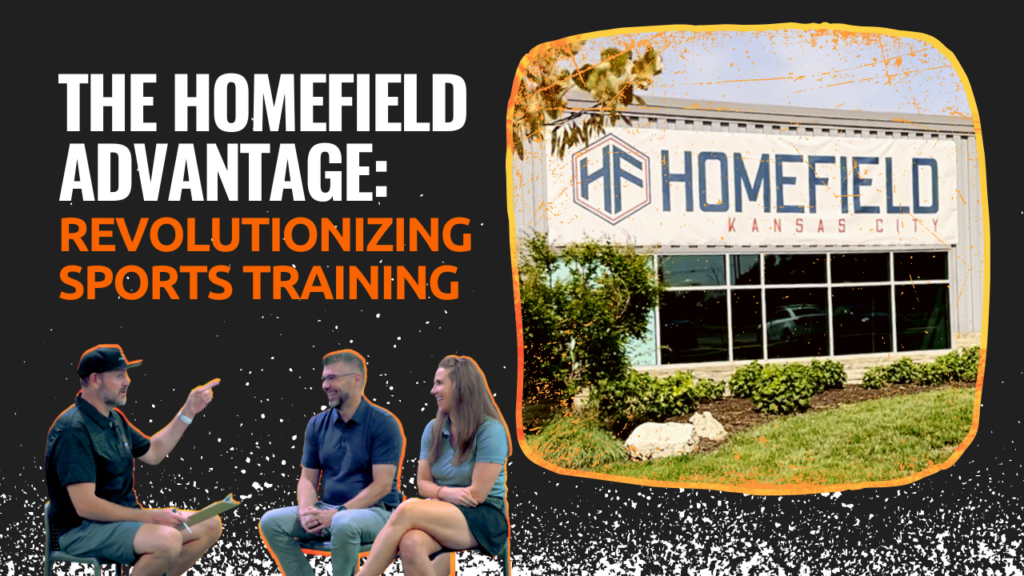
Summary
In an era where technology and sports intersect, one organization stands out with its innovative approach to athletic training: Homefield. Nestled within a repurposed warehouse, Homefield provides athletes with an integrated, user-friendly, and optimized experience that aims to elevate their performance levels. In this blog post, we delve into the workings of Homefield, its journey, and its future plans.
Notes
Learn More about Facility Ally:
Learn more about Homefield:
Be sure to subscribe here, and follow our social channels for more content
Instagram: https://www.instagram.com/yourfacilityally/
TikTok: https://www.tiktok.com/@facilityally
YouTube: https://www.youtube.com/@facilityally
Facebook: https://www.facebook.com/facilityally
Transcript
In this episode, I got to sit down with Chuck Stollery from the US Endore Sports Association, and I met Chuck earlier this year, out in Vegas when, facility Ally sponsored their amazing conference. And Chuck and I got to sit down and talk about a lot of different things around best practices for facility management. And my favorite thing is Chuck clearly knows what he talking about it works with hundreds of facilities through the association, and so he gets to hear what works for some facilities, what works for others, and really learn all that and drop it into one bucket. I like specifically when we start talking about how to take leagues and whether you take one payment or if you take individual payments. So Check out this episode with Chuck from the US Indoor Sports Association. I hope you enjoy.
What’s up everybody? Do you own or manage a facility while you are in the right place? Welcome to the facility playbook. I’m Luke Wade, founder and CEO of Facility Ally.
And this podcast is about helping facility managers and facility owners learn from pioneers and veterans in the industry who have built and managed successful sports facilities, entertainment venues, and clubs. Did you know that most of the facilities I just mentioned used between four and six different softwares to manage their facility everything from memberships, leagues, clinics, camps, and more. The city allied to the rescue revolutionized your sports facility with facility ally, learn more at facility ally dot com. And today, I’m really excited to introduce Chuck Stolary with US indoor sports association, the director of membership.
And did I say it right, Chuck? Yeah, man. It’s close enough. We’re good to go.
Alright. Well, thanks Chuck for joining me today. I really appreciate it. Before we, get started, I’d love to hear a little bit about your background and what led you here today.
Sure, man. So back in two thousand nine, I got my job in the indoor sports world in a tiny facility in Colorado Springs with no air conditioning and no whizbanging. They even have food and beverage. It was just two fields, a front desk and some bathrooms.
And, from there, I got got did well there, got promoted. And then, got a job, with the same company, but I got to to really dive deep into operations and train managers and staff on how to do this and and develop a training program over the next five years on how to do that.
Graduated from there, went on to to run a hundred and seventy five thousand square foot facility, big place, with four indoor soccer fields, four basketball courts, two mini fields, eight sand volleyball courts, a full food beverage operation, six party rooms, a kids play place. It was a a massive thing and, with with a staff of ninety. So all the way from, you know, me and two other people to a staff of ninety. And then I got hooked up with the US indoor and got the opportunity to have influence on the entire industry, right, instead of just one company or facility, and I jumped at that.
So here I am. That is awesome. Sounds like you’ve been doing it quite a while. I’ve been doing it for a while.
Yeah. I’ve seen distillings coast to coast, man, big ones, small ones, you know, rich ones, poor ones. I’ve seen I’ve seen it all. So tell us a little bit about US indoor.
What what does it do, when and what is it about? We are. Yep. Great. We are the trade organization for commercial indoor sports facilities in the US and Canada.
So we are here not only to support those facilities in terms of products and services, you know, partnerships and whatnot, but really to help the managers and owners of those facility really understand the business and and do it better and make sure that they reach their goals in terms of longevity, profitability, that kind of stuff. So the the last thing we wanna see is a facility pop up and then two years later be gone because they just could never figure it out. So that’s why we’re here. That’s awesome.
I love that. And I I just found out about you guys late last year, and we got this, sponsor your conference back in Vegas. That was really was really awesome. Yeah, maybe talk about how you transition from the facility world into what you’re doing now at the US indoor.
Yeah. So when when the former president of US indoor we just ran into each other. We were living in the same town, and, we got connected. And he saw an opportunity to bring somebody aboard in the organization who’s actually worked in facilities for a long time and and has the background and could lend some some wisdom and experience to the to the equation.
And so we worked it out. And here I am, two years later, two and a half years later. And, you know, we just finished a great conference and we’re being able to have influence on the old industry is a pretty humbling thing. So pretty happy to be doing it.
Yep. One of the things you and I connected on kind of off off recording was essentially that there’s really nowhere for anybody to go. To learn how to run a facility. You went through the same school I did was actually getting beat up for years and years actually doing it.
Right? Now we’ve got the US indoor association. And what are some of the ways that, someone can learn through the US indoor? Yeah.
The well, the biggest one is to come to the conference. Right? So we do we have an annual conference, and that’s this next one’s gonna be in Tampa, Saint Pete, around the first of May next year. So that’ll that’ll be great.
Make sure you look that up.
We are developing right now, a lengthy in-depth kind of certified facility manager course. That we’ve never offered before. So we we recognize that no sport management programs anywhere at teaching this. So people are coming out of college with either learning parks and rec, or a spectator sports, and neither of those things translates directly to a to a for profit facility.
Right? So I’ve seen facilities that are hiring, you know, you get a new for profit facility, and and it’s the only one in the area. So they go and hire all the part all the parks in tech people, and it just doesn’t go well because it’s it is a completely different mindset. It’s a completely different way of doing things.
And, if we can teach even twenty percent, right, every year, you get twenty percent better, you know, on some aspect of your business, you can really, really, you know, improve your chances of of longevity and maybe selling the business for a great profit down the line or passing it down to your kids or whatever, but we really don’t want people just Oh, you know, I could do this and they find a bunch of money or they have a bunch of money and they open up a place. And two years later, it’s it’s for sale, you know, because they just can’t can’t get it done. And so we we think we can fill that gap.
I love that. And, great. So let’s get into some of the meat and potatoes that are actually doing Right? So managing a facility is a lot like herding cats.
So how do you narrow your focus and figure out what you’re prioritizing first? Oh, I love that. That’s a great question. So number one, if you’ve ever read Jim Collins, right, definitely read Jim Collins as good or great if you haven’t read it.
For sure.
One huge mistake that a lot of facilities will make is trying to be something for everybody.
Don’t.
Right? Just figure out what you have the no out for, what your team has the no out for to do really, really, really, really, really well. Right? And then do that over and over and over again.
Right? So if it’s if it’s you, like, a lot facilities, especially in the north, they focus almost completely on youth sports. Right? They this focus on the plea almost completely on winter youth sports.
If that’s what’s gonna be your thing, do that and do it really, really well. So when they end that season, with you in the spring, they’re not even thinking about going somewhere else in the the next fall because you’ve done it that well. Right? That’s number one.
Number two is be honest with yourself, right, about what you know, about what you don’t know, that anybody who’s been in a relationship knows this little voice that especially men have, right, this It’ll be fine voice. That voice is a liar. Right? Don’t listen to that voice.
Make sure you know what you’re doing. Think it through. Plan it all the way out and then execute only when you know where you’re going. Cause if you just fly by the seat of your pants and have no idea how to measure how well you’re doing at any given program, it will flop and fail, and and it will just be a nightmare for you.
So stay focused on what you can do really, really well.
Learn how to say no to things when you use the, oh, man, we can start a, I don’t know, a human checkers league. Right? Like, no. Don’t do that.
Like, dumb. Don’t do that. Just stay on what you can really do. What can be profitable, right, and when in the day it can be profitable.
Like, if you can’t start making money till four o’clock, your doors better not be open at eight AM.
Yep. The one man. Love that. And and so one of the main things you said was, what I love to say is the riches are in the niches.
Yeah. So if you can niche down and own one thing, and you can really just focus on that, and then you can move on. Once you own that one niche, move on to the one. Right.
I love that. One of the things you mentioned was youth sports, and that’s a pretty overarching thing. And you said to really focus on what you know and you don’t know. So how would you speak to the facilities that have soccer, pickleball, those sort of things.
So they’re trying to be a multi sport facility. What would your recommendation be to them on as far as nitching down?
Find out where the money is. Right.
Pickleball is great. Lot of people wanna play pickleball.
Nobody’s making money at it. So I mean, say one that we met the chicken and pickle guys at the, you know, at the conference and they’re making money, but they’re not making money on pickleball. They’re making money on chicken. Right?
And and bigger and herbs. Yeah. Yeah. Beer and chicken. It’s not the pickleball. So, you might really, really be passionate, say, about basketball ball.
Right?
But it’s really hard to make money a basketball. So If you wanna have a basketball program, that’s great trying to fill an entire facility of basketball is really, really difficult to do.
Find out where the money is. Right? Like, if you’ve got the same space, you know, you could just look at the research. You don’t have to take my my word for it.
Right? Like, volleyball pays more money than basketball, soccer placement pays more money than volleyball, typically. But then on the same turf space, Lacrosse pays more money than than soccer does. Right?
So just figure out where the money is, and then use the stuff that doesn’t make as much money maybe on the shoulder parts of your day where you’re you’re really not seeing the volume.
Like giving up those prime time hours that that six to eleven PM hour on something that could be making three or four times more than you’re making by doing something else in there, just, like, do the math on that. Right? And and narrow it down that way. I love that.
Yep. And I can totally relate. And with Casey Crew, my other business that started all this with Facility Ally and uses Facility Ally. We started basketball several years ago, and and it was extremely hard to make money.
We had to have two reps and a scorekeeper and, you know, jerseys. And, I mean, everybody complain. There’s fights. And, I mean, It was really, really hard to make money.
When in the end of the day, we just had to keep raising prices, and then we have to pay our staff more. And so — Yep. — can completely relate there whereas we, one hundred percent, would rather have six full same volleyball courts than one to two full basketball courts because it’s way easier to manage. So definitely relate there.
So in all your years of managing facilities, what’s your favorite sport? What have you seen work best for you that you’ve enjoyed most?
That’s a good question. It I don’t I don’t know that I could answer that like, kind of nationwide. I think it really depends on, like, you’re you’re in a big place. Right?
Even on a different side of town, one sport could be more popular than the other. Right? So my favorite ways that people execute facilities in terms of what sport they anchor on are the ones that really create a community around that sport. Right?
So I really don’t find it in facilities where you show up five minutes before your game, you’re you play your game and you’re gawd out of the facility five minutes after. Right?
Those facilities typically struggle to grow because nobody’s hanging around. Nobody’s picking up another game. Nobody’s meeting people. Nobody’s sitting for a beer, having chicken wings, or whatever it is they’re doing.
It and it doesn’t mean you have to have a huge lounge with ten TVs and all the rest of that stuff, you need to do it. You just have to really work on the the community aspect of it.
Make sure that that your players know you and know your staff and and are involved in what’s coming next to the facility, what you’re planning to do, what you’re were planning to stop doing, you know, and listen to them.
It I I don’t know that that answers your question, Luke, but, it it’s It really is so little about the sport that you’re playing and has so much more to do with how the facility is enforcing policy, how they’ve designed policy.
At the end of the day, like, you’re playing for the most you’re playing for is a trophy or a t shirt. Right? So if there’s guys out there or women out there are that are playing, like, this is, like, their only chance of going to the World Cup, it’s not gonna go well because it just starts to get violent, and it it gets divisive, you know, where as opposed to, I’ve seen facilities where the culture is the winning team buys the losing team their first picture of beer.
Yep. And they there’s no rule about it. Right? It’s just that’s the way it got established.
And Now, like, those two teams go out, they play a tough game of whatever sport it is they’re playing, and they go in to share a picture at the end of together. And it it when you do stuff like that, it really doesn’t matter which ball you’re using, right, in which game you’re playing. It it’s it becomes your facility becomes a member of the family, and that that is really quite awesome to see what it’s done well. I love that.
And there’s I wanna pack a lot of things you said there. One, you’re speaking my love language when you say community. That’s my number one thing I love to do is build community. And to your point, it can be through anything KST crew, my other business has the karaoke league.
And so to your point, it doesn’t matter what ball, what what they’re using. It’s just about connecting and having fun and something you enjoy and building that community. So I love that. I’d love to ask what is one of your favorite ways to build community other than, like, you said in person.
Right? Your facility manager’s out there talking to people, meeting with people. Is there anything you use with technology wise to build the community or maintain a community?
There are some things that you can do, that are relatively inexpensive, you know, either from a tech side or a or a software side, most of the softwares, and I think yours does this, Luke. We’ll we’ll keep track of, you know, how many points a certain person scored or or that kind of, you know, how many assists whatever, but it’s relying on the staff to to enter those stats in there and to track them.
People love that kind of stuff. They love to engage with it. They love to see their name on the leader board. Right? You have to be careful with it because if you start reward, like, if you start doing the golden boot or or things like that, people just start running scores up and then that that that ends up not really kinda, you know, not great. But yep.
The details really do like, the software is now have so much power to add notes about the people that you meet about, you know, Luke’s got kids in their names or this and this and they’re this age and they like these things. So when I see you come and live through the door, I see you park your car in the parking lot. I can quick look what’s his kid’s name? I can look him up and ask you a question about your kids.
And how I mean, you don’t get that kind of stuff when you go to the gym. Right? You get the pure scan here. Right?
And then you walk right on by, and there’s no chance to make the community.
But but it it’s the community really starts from the bottom. If you’ve ever studied my Maslow’s hierarchy of needs, right, that the pyramid about physiologically. It all really starts with are you keeping the people in your building safe? Are you are you keeping them feeling like they’re comfortable here, they’re comfortable bringing their family, their kids.
The bathrooms are clean. The referees are looking out for them. Right? You don’t have trip hazards all over the place, and and you don’t have, you know, gum on the bleachers and and all that kind of stuff that’s the kind of stuff where if people have a reason to leave your facility to go somewhere more comfortable, they’re going to.
So I guarantee you a lot of facilities that you run into are sending a ton of money to the bar down the street because they’re just not quite clean enough.
Right? Sure. No. That makes total sense. It sounds like everything you said, the devil’s in the details.
Those little bitty things can add such a big experience. From the moment you walk in the door, if you’re smelling trash, you know, you see trash, all those things just like subliminally start to add up and your brain. And then by end of the day, it’s like, we should go somewhere else. Yeah.
And and some of it’s counterintuitive, right, like the trash can thing. In your head, you’re going, man, I want people to drop their trash in the trash can as soon as they walk in the door. Right? In your head, you’re going, yeah, man.
I want that to happen because I don’t want it all over my facility. But what’s the first thing you smell when you walk in the door?
Yep. Especially if you’re in a hot climate, right, and and that thing’s been sitting out there just cooking, you know, and it flies all over the place. And it’s not good. You can put that in a in a nice hidden place around the corner, right, and and even take their trash for them as they walk in the door, and it you can do the same thing without them without getting in their way of that initial experience.
Awesome. So one of the things you mentioned was their isn’t really a one size fits all for every facility out there. So, you know, how do you evaluate what solutions will work at what scale and even what season. Right?
So I’m in, you know, Kansas City. We’re in the Midwest, so we got big ups and downs. Right? How do you evaluate scale and season for, you know, each individual facility is our process for all?
It’s a great question. It starts with understanding what business we’re actually in. Right? And I get a lot of flack for this initially when I say it, but we are not in the sports business.
We are in the renting space and time business.
And if you once that clicks for an owner or manager that you are an selling a sport, you’re not selling a slot on a team, you’re not sell like, you are selling forty five minutes or an hour on a particular plot of space right, and trying to get the highest rate you can get for that space.
Once you figure that out, then almost always luke.
People are leaving money on the table for reasons that they have convinced themselves are a great idea.
Right? And and but when you finally understand that your inventory is space and time, Right? And if you purposefully leave empty time for whatever reason you think is a good idea and you’re not getting paid for it, you are throwing money out the window.
Right? So from there, then we look at what what are your current offerings What kind of time are they taking up? Are they taking up too much time? Are they taking up too little time? Are you charging too little for them? Are you charging too much for them?
How do rentals play in, right, how to rental contracts play in because a a lot of facilities will do five year long contracts for local clubs or whatever that that they’ll rent hundreds of hours at a time, and they’ll lock them into a price that ends up not being enough, right, that and now now you had a really tough conversation to have about listen, guys, we love having you here, but I’m gonna have to raise your prices by fifty percent or or ask you to leave. And that that causes a real ruckus. Right? Sure.
And that comes really from managers that that don’t quite understand what it is they’re selling and how to how to price it and how to cost it and and then that puts them into a into a position where they’re having to scramble to fill every hour that they can even for less than it costs to run the facility, and that’s not a good position to be in. Yep. I totally agree. That’s one of the things that actually took me many, many years to understand as I was always happy with a sold out.
Right? I was like, we’re sold out. We’re sold out. We’re sold out. Man, I’m grinding.
Where’s all the money at? Like, you know, being sold out in my opinion is a failure to some degree because I’d rather have eighty percent of my leaves full for more money. So I’m working for less people and not and getting more money than than selling out and getting less So Yeah. And the flip side, the flip side is hard to is hard too.
Right? Like, you wanna have about this much of a waiting list. But if you got if you got twenty teams on a waiting list, you’re doing something wrong, man. Right?
Yeah. Yeah. You’re not you’re definitely not priced correctly. Or you need to find more today.
Definitely not placed correctly if you’ve got but so many people don’t realize that that our business when it comes to pricing like that is really no different than a than an apartment complex or a storage unit or a marina or an RV park. It’s all the same. If you got that many people waiting to be in your building, keep bumping the price, man, because you’re leaving money on the table. Yep.
It took me five years starting after starting Casey Crude to raise my prices because I didn’t wanna be the company that didn’t raise their that raised their price every year. And then I realized how much money I was leaving very much. Yeah. But it’s this is math, man.
It’s just math. Yeah. And so, you you you look, you probably did it too. You just said for the first verse, five years.
I think there are a lot of people that build these facilities or buy them that pour it. They pour everything into it. They pour all their heart and soul. They pour all their finances.
And they have this identity that they think they wanna be But it but after a certain period of time, there the numbers and that identity don’t match up. Right? If that identity doesn’t actually make you any money. Yep.
You you can’t keep existing.
Right? So pay it too. This is just a math equation. It really is math equation, and you Listen, you’ll feel a whole lot better, right, if there is two hundred fifty thousand dollars at the end of the year that you can do something with.
Right? Yep. You’ll be real happy about that. Yeah. Definitely. For sure. I wanna go back to one of the things you mentioned.
You mentioned a five year contract. Obviously, that’s not what you should be doing. No. What’s your favorite?
What’s your favorite timeline? Just curious quick tip. Oh, one year. Two year. Yeah. No. One year.
One year. One year. You can do option to renew. Right? That’s that’s the, like, first rider refusal and option to renew or whatever.
So that can give the person that’s looking for that security.
Like, they’ll they’ll feel like, oh, well, I’m not gonna get this sold out from under me. Right? But every year gives you then an opportunity to assess your supply and demand and go, you know, you’re paying me a hundred bucks an hour for the field, but I could be running leagues and making two hundred fifty bucks an hour. So I need to raise your price to kind of close to that And you have the option to say, no.
That’s no no problem, but but I’m not gonna sell it out from under you. Right? Yeah. So having that that renewal, you know, where you say, listen, you know, like, in in the middle of April next year, we’re gonna sit down gonna assess and we’ll sign our we’ll sign our deal for the next year.
That kinda gives you the best of both worlds. Right? But if you lock in a five year deal Man, you you you can’t even you I mean, you did it for five years. Did your five look anything like year one?
No. Not even close. No. Not yet. So you cannot possibly predict what’s gonna happen. Right?
You can’t predict if the next facility closest you down the street is gonna close or sell, and you’re gonna double your business overnight. Right? Like, you you just cannot predict that stuff. And so locking yourself into five years is just a bad idea.
I love that. So another quick tip, how do you decide on how to, like, discount? Right? So if I came in and was like, I wanna book your facility every Monday, Tuesday for six to seven months.
Do you have a specific number, you’re like, hey, I’ll give you a ten percent offer. How do you decide the discounts? Yeah. That that totally depends on supply and demand, and it depends on there is a floor and let everybody listening.
If you don’t know what the bottom floor is for how much you can charge in your building, to make it actually profitable for you to be open and not at home watching the office, right? You need to know that number.
Right, calculate that number about how how low can you go that that is the absolute floor that you will never sell an hour on your facility for less than that. And — I love that. — and check that again every single year. Right?
Every year, check it again. You’re because utility rates go up, staffing rates go up. Right? You you might realize, oh, man, I I I gotta be putting some money away for a court or new turf, and and I haven’t been budging for it.
And that every hour, it goes up again. So, of course, different times of the year. Right? You can charge more.
If you’re in the north, you can charge more in the winter. Right? If you’re in the south, you can charge more in the summer.
You could play with that, but there’s still a floor. Right? There’s still an absolute bottom level number that you’re willing to give that give that discount away for. So Yep.
Again, it took me a long time to figure that out as well, but I now my my team has what we call a break even document. And it’s every cost that goes into every single thing we’re doing. And it’s one document. We plug it in.
We put in the prices. We put in the insurance. And we have a breakeven that says that we only have this many teams or this many courts rented. This is this would be the minimum.
Right? And that we’re trying to come across a breakeven number. And if we don’t hit that, then we cancel it or we or we don’t. Yeah.
You gotta see no. Right? It is as much as you wanna be, as much as it feels better to have people in the building as opposed to not having people in the building, There’s a number. Right?
Yep. I mean, it’s just a math equation. So don’t don’t get a little bit about the math. Yeah.
I highly I highly, we look at it every single season now. So I totally agree, and I think people should definitely listen to that and get yourself a get yourself a document, figure it out gonna feel much better when you can say this doesn’t make sense. No. Or, hey, this is awesome.
We’re actually making this much money. Let’s double down and do more of this. Yeah. Your cell spreadsheet doesn’t have emotions.
Right? Like, he didn’t even tell you yes or no. So That’s absolutely right. I love that.
Cool. So while we’re on pricing, like, what are some of the best cost saving, this facility metrics that you use or some tick tips or things like that used for cost savings and facilities. Cost savings.
Well, for it depends on the program. Right? So for youth programs, for example, if you’re running campus clinics, you classes like that. There is there is a sweet spot in the ratio between the number of kids to the to the number of coaches or adult that you have in that program.
And until you reach enough people enrolled to add another coach, continuing to enroll kids actually drops your profitability.
So And every state is different. So you have to check your licensing and stuff about check your your local stuff about how many it’s supposed to to have.
But There really is. You have to do the math about, like, okay. Until I’ve got six kids enrolled in this class, the answer is no.
I’m not gonna run that class or I’m not gonna run that class until there’s six kids in it because I can’t pay for the coach unless there’s six kids in it. So And it’s okay to say no, to put a couple people on the waiting list because then you can leverage it and be like, hey, if you bring another friend or if you bring two you know, I’ll give your your euros fifty percent off or whatever, and you can you can leverage that. But, more is not always better.
More is not always better when it comes to youth programs.
In terms of of leagues, you’re Your profitability will do better in my view. You know, a lot of people will think differently on this, but team fees are always better than individual fees, especially for adults.
At because at the end of the day, don’t really care how many people who run your team as long as I can predict how much money I’m making per hour.
Okay. Right. I’d love to dive into that because my my Casey crew business, we do individual. And and for us, one of the and we’ve been doing this since the beginning.
So that’s probably why we’re still doing it because it’s hard to change as you know. But It’s not Well, you, you know, it’s not hard when people scream at you for it, but they’re always gonna scream at you. Yeah. That’s true.
So in my opinion, you know, we always did it that way because it made it easier for teams to sign up because then the team camping wasn’t running six hundred to eight hundred dollars and then chasing down their friends for money. Sure. So the way we did it was we have a team captain deposit. They invite all their teammates.
They all pay individually, and then the system automatically refunds their money. So we actually get more money per team in most cases because they sign up each person individually after that makes us more money. And then we have You gotta do, you gotta do, minimum. Right?
You have to have a minimum number of players on the team. Yeah. But we have a minimum for every single one. They have to hit that number, and then everything above that’s just extra.
And we price it accordingly of the minimum. Right? So to your point, we have a minimum and then everything after that’s extra. What we’ve seen is King’s sign up faster and quicker because they’re not waiting to track their friends down to get the money first to sign up.
So so I love your thoughts on that.
We’re gonna have problems. Alright. Here we go. Okay.
A person signs up faster. A team doesn’t. So — Sure. — the the natural tendency across all of my travels.
Right? If you have an individual fee, and I’m only really talking about adults because kids just do what the coach tells tells them to do. Right? So, like, yep.
You wanna do individual fees for the kids. Fine. Be my guest. Right? Cause they’re they’re gonna put as many kids on that team as they want to, and it’s, like, it’s not a big deal.
So do that. We’ll sit down side. For adults.
The natural tendency, if you do an individual fee, is to put the fewest number of people on that team that they can to field a team.
And that’s because I’ve paid the same as everybody else. I’m gonna get my playing time. Right?
So it ends up the taking soccer, for example, indoor soccer, for example.
If you’ve gotta have six players on the field, they might only show up with they may only sign up eight.
Right? You might make some money. But here’s what happens. Right? Then somebody’s sick. Then somebody’s injured.
Then you gotta do how are you doing? Are you doing sub fees? Are you doing, like, how are you how are you handling all that? So then you got more transactions.
There and because the natural tendency is to put the a few the smaller number players on the team, they they wanna play, like, the entire freaking game. Right? Like, and they don’t ever want us up. And so what happens is in that last quarter or third of the game, it starts looking like fight club because they they they’re gassed.
Right? And they can’t keep up anymore, so they’re getting more physical. They’re jacked chucking people into the boards. They’re chipping them from behind.
They’re getting frustrated. They’re they’re, you know, at a facility close to where I live, some, a two hundred Plus pound guy broke a woman’s leg in a game because they just got to that should never happen in a recreational indoor. Like, it should never frigging happen. Right?
Yeah. Yep. And so the the pricing When you go with the team fee, and the more people you put on that team, the less everybody pays, it becomes No pun intended a team effort. Right?
So you put more players on the team, then you extrapolate that out.
You have more subs.
Right? That means that they’re in and out faster. You got more people in your building. You’re you got more people buying chicken and beer. Right? You got the more people making connections and building more teams. And if the team gets too big, right, say this it ends up being twelve or fourteen people, Having this much frustration, if they’re having a really good time about, like, man, I’m having a really good time, but I wanna play more actually makes you more teams.
Right? Because those people then go, man, I wanna join another team or I wanna start my own team, whereas if you’ve only got the same eight people showing up, it doesn’t it that typically doesn’t happen. They they play on the teams that they play on. They pick up a sub here and there because invariably, if you only put eight people on the teams, Teams are gonna need substitute players all the time.
Right? All the people are traveling and sticking injured all the rest. The other problem with it which is a longer term problem is to have a, a league that is really fertile for growth, you have to have roster stability. Right?
You have to know who’s within a reasonable, reasonably, right? Who’s gonna show up every week? How those teams stack up against each other. And if that roster changes by twenty or thirty percent every single week, every time they show up, they have different players playing because people are running out of this net.
You cannot possibly do that. Right? So because parody, as you know, as a facility owner, right, close games make really great fun. Blowouts suck on both ends.
If you if you win by fifteen and you lose by fifteen, it sucks.
Yep. In order to get those teams in the right place the next time, you actually have to know who’s on the team. And if you don’t have those committed players showing up each and every time, and you’re doing sub fees and you’re letting subs play on multiple teams in the division and that kind of stuff. It just jacks the whole equation up and you can’t Right? Like, it becomes nearly impossible to do. So from a pricing standpoint, yes, you might be squeezing a few more dollars out of each team. Right?
But are you creating that growth machine and that parity machine? Right? So you’re keeping eighty, ninety plus percent of your teams every season, and you’re and you’re still gaining one, two more to fill those slots every time. Because if that’s not happening, right, if you’re losing more than twenty percent every season, like, that you’re doing something wrong.
Right. Sure. No. I think I I think I agree with everything you said. I think there’s some things in there that are are preference for a lot of people.
And I think a lot of it is demographic areas too because I know some people in different cities that are doing some of the things you said that are completely succeeding with it. And we’ve been doing this, for, you know, a long time, and we’ve actually grown every single year, every single season. And one of the things you said, I would, on the other side of it, you said if you have, you know, a bunch more people on the team because they all paid little and smaller, then you really aren’t getting the same rosters every week because sometimes Johnny plays more one week, Susan plays more, and so it’s not the same.
In my opinion, you have everybody pay and sign up individually, those people are gonna be more committed because they took the time to sign up pay, and then they’re gonna show up because of that matter. Things like you said about soccer and basketball, we’ve we ran into that where it was, like, we had the minimum of a five v five basketball team at five. Well, then, people aren’t showing up. You got forfeits.
And so we learned the hard way that we should probably make the minimum for basketball, eight or nine. Right? Right. Yeah.
Remember sports like you’re talking about with the snubs and that kind of stuff. We learned the hard way, and now we do have higher minimums. But things like kickball, ten on ten, you know, our minimums ten, and we got people signing up eighteen. Right?
And so, so, yeah, I agree with a lot of what you said. I think there are ways to make both work, and we actually let you do that in our software. You can choose give them the option. Let them sign up individually or do a whole team payment.
For my business case, your crew, we’ve just always done individually. One of my favorite things about it too is you’re getting every single person’s marketing information. You’re getting their phone number. Yeah.
We have to get that anyway with waivers. Right? Like, you never get all the emails. Exactly.
So so, yeah, and that’s one of the things if you’re not doing you are just taking a team fee upfront, not getting anybody else’s info, you’re definitely missing out on marketing info, but you’re also missing out on the waiver side of things too. Well, yeah, you’re you’re you’re don’t don’t don’t tell your insurance company that you’re doing that, right, because that’s not gonna be good. Yeah. Exactly.
It it really some of it is I I think a testament to what you’re doing. If you’re if you’re doing the individual fee and you’re out of you’re barely having any of those problems, it means you’re doing a bunch of other things, right, that we probably don’t have time to go into today. And that’s a great thing. Right?
If you’re doing a whole bunch of other things, right, and the pricing is just helping you make more money per team, and you still got those leagues filled up, and you got people waiting to be on it. Great, perfume, man. That means you’re doing the other things right, and the pricing isn’t a big deal for you.
Yep. No. I appreciate that. Yeah. And and again, like like I said, we’re eleven years in now, and we’ve changed so much and learned so much through doing it.
And there’s always something to figure out And so I think, you know, depending on your market and depending on, like, you said, personal preference. Right? So try it out, see what works. Definitely make that switch.
When you get Well, to my point, you know, we have twenty thousand people that play a year now, all adults. If we were to try and change and force everybody to do team fees, it would probably be a little bit of a headache, you know, for a little bit, but if the if it’s worth it in the end and it’s worth it, it makes things better than step by something. I mean, if your software allows for the captain to invoice people a specific amount, No big deal. Right?
If you say any late so it’s essentially the same thing. It’s not one payment. Right? But it’s one fee.
So — Yep. — even though it’s they’ll say it’s eight hundred bucks to play in the league, and ten people are paying it, it’s still eighty bucks a per Right? And there’s they’re still paying that eighty bucks person. It just it helps me from from a from a forecasting standpoint If I know, okay, every every game in this league is earning me x number of dollars.
Right? That makes it a whole lot easier for me than to have to look historically at averages and like, oh, well, each team’s averaging this amount, and that’s not, you know, and it changes every season. It ends up being a bit old. But that’s I just like to keep it simple.
Right. I love it. So what are you, what are your some of your some of your favorite ways to stay up on, like, trends and improvements and facilities? Talking people like you.
I mean, really. So trends they’re really I mean, in the realm of things aside from software, right, the the game that you’re in, there really aren’t huge leaps and bounds that are happening in terms of facilities. Right? Their the last big one was infill turf, and that was what in the late nineties that we’d we’d went away from astroturf and went to infill turf, LED lighting was a pretty big one.
The the there are some shifts, like, that the industry typically pretty laggard, right, about things. Like, we’re just apparently now figuring out that birthday parties can be really big money.
Like, really big money.
And so there are places now that, you know, the first generation, second generation facilities that were you know, retrofitting an old tennis facility or something, right, that never built party rooms. They never built places for pizza ovens, and they never did, you know, a soda fountain or anything like that. They’re going, man, we might really need to rethink this because we’re just leaving mean, if you can make four hundred, five hundred bucks an hour on a birthday party, you can’t really turn your nose up at that. Right?
Especially when you can do it in the off season and your off season, and you can spend four, five, six hours a day, making four or five hundred bucks an hour on on a Saturday, and that’s you gotta be paying attention to that. Right? Yep. And, so there’s there’s some things like that that are happening Some of the bigger players in the industry, they’ll the larger facility owners, the large number of facility owners have really kind of interesting things to say because they have so much bigger of a picture of what players are are looking for across multiple markets and multiple facilities.
So that they’re really interesting to talk to as well. And then, of course, the providers, you know, we get people all the time there. Like, hey, man, I got I got this new product, you know, this might change the game. And Some of them really do, and some of them, they just don’t realize, like, they’re they’re software developers and not facility owners.
Right? So they they don’t they don’t think that this is they’re not thinking right about it. Sure. That cuts.
Yeah. And one of the things that we talked about earlier off offline as well was that, you know, you mentioned birthday parties. Right? At the end of the day, you’re like, we have space and we’re renting it and we’re giving time.
It doesn’t really matter what it is. And I I’ve seen a big trend of people like me traditionally who just did league leagues now getting into facilities and doing both. And now people who own facilities that just to rent to people like me that run leagues are now trying to do their own leagues and events. And so maybe to, what are your thoughts on, you know, that trend?
And and do you think Is that something that’s gonna happen where it’s, like, people are just gonna end up owning facilities, running their own own program themselves, or is it gonna be a hybrid Well, we’re we’re we’re seeing a lot of, like, youth clubs building building their own facilities, which is an interesting shift, because those facilities, not very many of them were actually open to the public. And if they are, they’re at they’re on a rental basis. Right? Because they’re the clubs are focused on the kids.
So — Yep. — they’re not they’re not interested in being a really great, adult league destination.
Right? So they’re focused on kids training or foots all or whatever it is that they’re doing.
And While that has a huge effect on the local facility in terms of winter youth leagues, it doesn’t really have that much of effect on adults. So that’s that’s kind of an interesting thing, and and we’ll see as those facilities mature if they change their tune.
Right? And after they realize how how expensive it actually is to run a facility and own a facility and and keep it up.
If they start thinking differently about that. Right? If they’ve been, we we got all this time that, you know, once the kids are done training at eight o’clock, when we’re closing up, and it’s like, well, you’re leaving a whole bunch of hours on the table where you could be making some money. You know?
Yep. So that’s happening. I think there’s there’s a consolidation wave happening in the indoor sports world right now, like, the the tokens of the world are are rebying up a bunch of facilities and the three step in the basketball world. They’re buying, buying up a bunch of places.
And so that ought to be interesting to see how that shifts the industry.
But in terms of, like, just straight innovation. I mean, pickleball is a disruptor. No doubt about it. Right?
The pickleball is a disruptor, but not that many places are making money out of it. So we’ll see as that matures, as Piscol facilities mature, how they’re actually paying the bills. Right? So, that ought to be they I agree.
That’s one of the things I’ve seen right now between all the people we’re talking to about using our software is You’ve got this trend of eatertainment places like chicken and pickle who have pickleball, but they’re making their money off food and beverage. Yep. And then you’ve got the other side where they’re, like, we’re membership, we’re pickleball, and we’re just pickleball. And they’re charging membership, and they’re charging for court rentals.
And some of those are working, you know. So it’s kinda interesting to see the different models. And and I think you’re right. I think it’s gonna be time will tell the the story of whether what’s gonna work the best and what’s gonna work as long as And it may end up being the the those pick pickleball memberships may end up being the same models we talked about earlier.
Like, if you’ve got people waiting to get in, then your membership is not to hide Right? And then see how many people drop off from from playing pickleball when their membership gets to be sixty or seventy five bucks a month. Right, as opposed to twenty or thirty. So I, you know, I got nothing against pickleball.
I just think it’s from a from a facility usage standpoint, If you could put twice as many people on the court, play in volleyball as you can play in pickleball, that’s better for my facility. Right? You have more definitely in there. So there is also a trend before we go.
There’s a trend to our in new new buildings that has a real focus on spectators and making spectators comfortable. So better wifi, more comfortable seating, you know, chairs that have USB chargers built into them, that kind of stuff because instead of, you know, take a parent, for example, who’s dropping their kid off for practice, you’d rather that parents stay buy a little something from your from your facility, and be able to do their remote work or or whatever it is that they’re doing as opposed to taking that down the street to Starbucks or Panera or whatever it is they’re going to wait out little Johnny’s practice.
So That is something that historically facilities haven’t paid a ton of attention to. Is that how much revenue per spectator visit you could possibly get? We pay attention to the participants, right, and and the the hourly revenue there. But, you know, for a youth league, every one of those kids is coming with at least one other person, at least one other person.
And so what are you doing for them?
Because that’s just money sitting sitting there that could be spent that you’re not capturing. So that that’s a great that’ll be an interesting thing about how because it I mean, historically, it’s just been bleachers. Right? Like, you put bleachers in.
You put some plastic tables in. Right? So I’m not very comfortable chairs in your lounge, and you you throw a TV up here and there, and you sell some pizza and beer, and and that’s all there is to it. But when you’re really starting to think about, man, this could really look like least part of the facility could more look more like an airport lounge and look, you know, really, really comfortable, you know, that that could really change the game to Well, I totally agree.
And I think Ivy arena was on top of that where I’m sitting right now, and you can check out our episode about Ivy arena if you wanna learn more. But they’ve got twelve basketball courts, volleyball courts, track gym. They have a full bar, fork, food concepts. They’ve got a barber shop downstairs.
They got they had breakout rooms. So to your point, you know, when the parents are coming and dropping their kids off at like a cheer competition, they’re sticking around. They’re at line at the bar at eight o’clock. They’re getting ready.
They’re getting their sandwich. They may go get a haircut. And so to your point, that’s where all those dollars would have gone stayed in their finals. It rules weren’t weren’t weren’t there.
Right. Right. So I love that. Cool. Well, we’re we’re up. I love one more question before we wrap it up, but what’s your favorite, or what do you think the number one thing a facility should focus on automating?
As far as automation goes, Are there a couple things that you’re, like, you have to automate? And then maybe just icing on the cake if you can figure it out. Yeah.
You know, we’re typically still pretty laggard on that stuff. So I think, in general, I got this great piece of coaching. If there’s something you’re doing repeatedly, the same task more than two or three times a day, you should absolutely be automating that. Right? So with the tools that are out now with AI and and that kind of stuff, if you’re not automating your chatbot because almost all of those questions are the same. Right? When’s my game today?
Or, you know, when’s the next season start? Or how much does it cost for a little jotty to play little kickers? You can automate those responses and really save yourself a bunch of time.
The the I’ve been pushing on you guys, like, the soft for guys to automate the league scheduling.
We’ve talked about that some. So that is such a time spent that if we can figure that out, that’s gonna be a pretty big deal.
Auto billing, you know, is a pretty big thing. You have the ability now these sell a bunch of these softwares to do billing plans. So you’re not requiring everything upfront.
Automating that. So you’re not actually having to opt, like, chase people for money every time they come in the facility just makes for a better better customer experience. Right? And as a as a manager, If I’ve got your card on file and I’m gonna run it at regular intervals and I’m gonna get paid, I don’t care if you pay me at the beginning because I’m gonna get paid.
Like, either way, I mean, unless you cancel your card, in which case, you know, then I have to come after you. But No one wants that. Yeah. Nobody wants that. I I think that kind of stuff there is so much about these facilities that still is human and still requires it to be human that if you can offer if you can automate the processes that are not right, whether it’s your social media management or or anything like that, automate the things that do not require a human to do them. Right?
I’m not gonna ever make a relationship with the software that’s running my facility. Right? But I can make a relationship with you. So I love that.
If anything that you’re doing can be take, like, god, as simple as email rules, Like, if you’re not using the email rules of your facility and you’re having to click everything that comes in, dude, you’re doing it wrong. Like, you save that time. And spend that time building building relationships with your staff, training your staff on something new, build a relationship with a customer, not an email. Goodness gracious.
Yep. I love it. Two things off of what you said. One of the things I I love to do is I tell people, like, throughout your week, write down every time you do a different task, write it down every day.
And track it for a whole week. And and mine, what could yours is, what can you automate? Start listing out, hey, can I automate this? The other one is, what takes your energy?
If you got five or six things that are just drugging, dragging, and sucking energy from you, you shouldn’t be doing those. Find somebody else. Find me once those. Hire them, you know, or or outsource it to them.
It’s a good one. You could see that. I don’t know. This is one that’s on James’s desk right here that I gave I’m, it’s called getting things done.
The art of stress free productivity, and it’s the same deal. Right? It’s about timing. Yeah.
And the other thing you mentioned was Yeah. And the other thing you mentioned was, like, automation of billing, and that’s one of the things facility Ally does is, you know, you can send out an, you know, sign up for tryouts and you pay a down payment and then you got six monthly bills and you can split those and change those. And so that’s one link that somebody signs up, puts their information in, and the system just takes care of itself every every single time. So then you’re not having to worry So — That’s right.
— you’ve already answered my question. I was gonna ask you what book or podcast? You’ve given me three or four already. So I love that.
Yeah. So, maybe maybe if you started over today, What facility would you open? If I was getting in it into it today, I’d be doing the public private partnerships with facilities like the one behind you.
Okay. You don’t own the facility.
You’re not responsible for the upkeep of the facility. Right? You’re just there. You get a management fee from the city. And you’re you’ve gotta operate those tournaments and whatnot and book those tournaments, but the city takes most of that lifting off of you because the city’s booking them. And you just have to operate the logistics. If I was getting into it now, that’s what I will be doing.
Okay. If that wasn’t an option, it I was at and I was designing a facility.
It would be probably no bigger than about fifty thousand square feet. It would be the equivalent of, you know, no bigger than, like, an eight basketball court size facility.
Probably turf because turf is rare and courts are not. Like, you get courts anywhere. Know, you you courts at you get courts at schools and churches and community centers, you get those anyway, but you can’t get in or turf very many places. So I think I would do that and a food and beverage operation with a, two or three or four party rooms And that’s it, man.
Because the worst that could happen is you have to build another one.
Right? Not great. Yeah. Well, thank you very much. To everybody out there. Thanks for tuning in.
Don’t forget to check out facility ally dot com. If you’re a manager and owner and you’re looking to automate your facility in one place, check out facility ally dot com. Thanks again, Chuck. Really appreciate it.
Also, don’t forget to check out US indoor We’re a member. We’re gonna be there every year helping people out, and thanks again for the time today, Chuck. Very good, man. Good time.
Thank you.
Summary
In this episode, we are joined by Andy Rieger of J. Rieger & Co Distillery. Join us as we dive into the brand’s history, challenges, and the transformation of a Prohibition-era recipe into a thriving distillery and entertainment hub.
Notes
In this episode, we are joined by Andy Rieger of J. Rieger & Co Distillery. Join us as we dive into the brand’s history, challenges, and the transformation of a Prohibition-era recipe into a thriving distillery and entertainment hub.
Learn More about Facility Ally:
Learn more about J. Rieger & Co. Distillery:
Be sure to subscribe here, and follow our social channels for more content
Instagram: https://www.instagram.com/yourfacilityally/
TikTok: https://www.tiktok.com/@facilityally
YouTube: https://www.youtube.com/@facilityally
Facebook: https://www.facebook.com/facilityally
Transcript
Episode, I got to sit down with Andy Reiger of Jay Reiger and Co, and this is one of my favorite brands of all time, not to mention it’s one of my favorite experiences of all time walking into their physical location. This story of how he revived his great, great, great grandfather’s recipe from Prohibition and and then turn it into this amazing experience and this giant distillery that has everything from making their product to selling their product in really unique creative ways. And how Andy and I got to dive into some of the challenges he’s had from growing the brand to opening a facility and then managing it into this big facility that is now food and beverage, operations, events, and more. Check out this episode with Andy Rehir and Jay Rehir and Co. I hope you enjoy.
What’s up everybody? Do you own or manage a facility while you’re in the right place? Welcome to the facility playbook. I’m Luke Wade, founder and CEO of Facility Ally.
And this podcast is about helping facility managers and owners, learn from pioneers and veterans in the industry who have built and managed successful sports facilities, entertainment venues, and clubs. Did you know that most of the facilities I just mentioned used between four to six different softwares to manage their membership, rentals, leagues, camps, clinics, and more. Facility Ally to the rescue revolutionized your facility with facility allies all in one system. Learn more at facility ally dot com.
Today, we’re your drinking whiskey with Andy Reiger, Jay Reiger, and Co. Appreciate you, man. And I’m gonna let you introduce yourself while I take a sip of this delicious Andy Reiger, I’m the Covader president of Jay Reiger and Co. Jay Reiger and Co is a distillery that we refounded in twenty fourteen, and I used the phrase refounded because in eighteen eighty seven, it was actually founded by Jacob Reiger, Insta Jay and Jay Reiger and Coq.
And Jacob wasn’t like great, great, great grandfather, family ran it for thirty eight years until Prohibition ended up killing it in nineteen nineteen.
At or thirty two years?
Nineteen yeah. Thirty two years. Sorry. Thirty two years until prohibition killed it. And twenty fourteen, we brought it back in the East fodoms at Kansas City, a historical part of our city, and bringing back to history has been something not just for the company, but for the area.
And now we’re in this beautiful building that, as you would call it, this beautiful facility Yes. It is amazing facility. If you not seen it, we’re in Kansas City, Missouri. As he said, the east bottom is not something you normally hear, but, Andy credit and his team, they’ve been able to revitalize this amazing neighborhood.
I feel like history should be your middle name because, you know, you’ve done so much around history in this facility and this neighborhood and everything and gotta ask because I’ve never asked you this, and we’ve known each other for quite a while, but did you grow up hearing this story, or how did this as you grow up, do you hear about your great, great, great, great grandfather in the whiskey and are you guys making it while you’re, you know, growing up before you re re re re brought it back to life? So I always say it this way that when you think about the Wayne family history, it’s just that.
It it’s if you know a piece of information, you know it, and it’s wonderful. And it’s part of your story, and you’re more concerned what’s for dinner, is their milk in the fridge. And so growing up, it was the exact same way where I I always grew up with old shot glasses that were a hundred and thirty five year old relics, old, very, very frail paper advertisements, old whiskey bottles, whatnot empty. And growing up, though, like I just said, they’re relics.
They’re just that. They’re instead of a a family photo on a shelf, it’s an old whiskey model, worse right next to an old family photo. And did you ever really know the story? Don’t really care to know the story because you just know my family made whiskey back then, or we having cookies for desserts and I had dead.
And that’s really the way that it played out. And even at the kid, I was stupid at times, where when we instill parents liquor, we would drink them out of hundred and thirty five year old shop glasses. And so we didn’t realize sort of the valuable nature of each shot glass or how fragile they were or how meaningful they would become someday in life. So knowing that it existed, yes.
Understanding really what went into it, what it was all about, and what to do with it in the future, No. So two totally different concepts, but recognizing that it existed. Oh, boy. So when did it come, you know, obviously, you brought it back to life and then the facility we’re sitting in came years later.
I mean, the actual room we’re sitting in, I know, came years later, but you started it back and part of this building and then expanded. So maybe walkway through how it went from. We’re bringing the whiskey back to life too. Let’s create this amazing facility.
Yeah. So so restarting it really, you know, and for those viewers that went to the Reiger restaurant or manifesto, those were really big components to the revival story of it because the Reiger family built before prohibition started, this beautiful hotel to coincide with union station opening in the nineteen fifteen era. And when union station moved the west bottoms, which is where the distillery originally was, to where we know union station to be today used to be called union depot back then. But a bunch of business owners bought land right around the union station and where it was gonna go in order to build hotels to service all the travelers coming out of town.
So the rigors were no different. They did that. And then after prohibition started, they sold it off because it no longer had a valuable interest in where it would be able to promote the distillery as a part of the hotel as sort of a secondary purpose beyond just selling rooms every night. So being that it was long gone forever, it wasn’t really until two thousand ten when the restaurant and manifesto popped up in there from totally different groups of people And when I met those guys, we started talking about the idea of reviving the old distillery.
And so it took about four years in that process, getting a lot of really good experts involved, guys at Randmakers, Mark, Tankare, Sales for Diage, those types of things where you’re bringing experts into the fold, but the real big thing was where are you gonna do it? Where are you gonna set up shop? And the whole idea that Jay Reiger and Co has this deep entrenchment into history as you’re just alluding to, had to do it in an area that had those historical components to it. Westbottoms, river market, crossroads, east bottoms, where we are today.
And the interesting thing about the East bottoms is that the building that we’re sitting in today was originally constructed as part of, well, not this building in particular, but these grounds were part of an old brewing operation that was the largest brewery to the west of the Mississippi in the pre prohibition years known as the Hyme brewery H EIM. And so John McDonald, who found in Boulevard, actually approached us in two thousand twelve, I believe it was. And said, hey, I own these buildings in this little known area called the East bottoms. You guys should check it out.
Really cheap rent. Let me know. So in looking at this space, came down, and where we are right now is this warehouse built in in nineteen eighty seven that was an annex to the old bottling facility for behind brewery And this space was dirt cheap if we wanted to rent it. So it fit the historical idea that we were going into these historical alcohol grounds at a historical part of the city.
It fit the standpoint from it was fifteen thousand square feet. It had high ceilings. And when you’re starting a business up, As you know, money is everything, and it was really, really cheap. It cost us twenty five hundred dollars a month for our first few years.
Renting fifteen thousand square feet and operating. But in starting in this warehouse, I mean, there was no retail component to it whatsoever.
And so as we sort of began in this area just on the manufacturing side of things, eventually we decided that things worked out pretty well. We needed to to grow. And in sort of sticking to history, as we knew we were going to try to acquire this building, the large building, to us that we ended up renovating, buying our parking lot, and all those components, what were we gonna call it? And in calling it something I I kept researching, and, you know, obviously, electric park was the first amusement park that was in this neighborhood at first amusement park in the city. And was the original origins for a lot of the concepts that the Disney theme parks utilized today because of Walt Disney sneaking into the second iteration of it. Discovering the fireworks at night, the water fountains everywhere, things that started literally a hundred feet from where you and I are sitting today.
And so from that, it just came down to, I’ll never forget. I was sitting in one of our council members offices in twenty seventeen, and I I said to her We are going to do these things in this neighborhood. We don’t know what incentives we need, but I just wanna sort of let you know in advance so you can be on the lookout and you know what we’re trying to accomplish. And she said, remind me the area again, Andy, and I go, the area we’re talking about is the, what, baseball She goes, my husband and I love going down there. And I go, really.
What do you do when you go to the East bottom? So she goes, we love everything right around Kemper arena.
And I go, ah, I go, that’s the West bottoms. And she goes, what did you say? And I go to the East bottoms. And she responded with Where is the East bottoms?
And the only problem with that statement is that the East bottoms was her district at that time. So in my brain, I thought to myself, Okay. So if our council person who is over this district doesn’t even know what it is, how can I anticipate or expect the public to recognize that? So throughout all the research, I just finally came to it where I just said, electric park.
That’s what we’re gonna call our neighborhood. After the original amusement park, it sorta set seeing for what became the Disney theme parks, we’re just gonna call this the historic electric park district because we’re right next to those historical grounds. So we got parks to change their name of the park back to electric park. And at every single interview, we just call it electric park and or the historic electric park district, one of the two.
And creating that general tie to history is something that people wanna dive into, make it more fun. And then, obviously, as you know, we even opened a bar and called car. And so you’re creating that tie even deeper. I love it so much.
Now let me go back to Yeah, please. The like, that was amazing. You probably need a sip after all that knowledge and people watching not from Kansas City or even probably from he probably have no idea that all the stuff you just mentioned happened in this area where I didn’t even know the story of the council councilwoman and that you that’s why you were so specific about electric park. I didn’t know that.
But it was a marketing challenge. You were trying to get away from people being confused about west bottoms and east bottoms. It’s like, know where the electric park, where history, where all those things. And that’s just one of the challenges that you’ve had in this facility.
So maybe talk about some of the, let’s talk about how big it let’s talk about what it is today. We talked a lot about history. So what is Jay Reiger in code today? And what is this distillery facility?
Yeah. So so we’ve got really two business units more or less. Four operating divisions, two business units, or or two business units are distribution, and hospitality. And so think of it as to where you use your credit card when you interact with our brand.
If you use it for doing something on a property that we own, then that’s our hospitality division. If you are utilizing it on a property we don’t own, but our products are at, that’s our distribution division. And so liquor stores, restaurants, bars, whatever that may be. So from there, you think about sort of where we came from and where we are now.
So we started at fifteen thousand square feet purely as a manufacturing entity. And really cool thing about this barrel dining room that we’re sitting in right now is not only is this arguably the coolest room in the entire city of Kansas City, if not, the coolest alcohol room in the country, but this is actually where our first still sat. So it has a lot of meaning beyond just the general idea of how cool it is. So having that sort of connection to the history revival of the organization is really meaningful too.
But so we started in this fifteen thousand square foot building, and then in acquiring it, acquiring forty six thousand square foot or forty eight thousand square foot of historical structure that’s to our north, acquiring the acre parking lot, acquiring an acre to the east side of us, what we’re able to do is really take what we had started with, which was purely a manufacturer trying to figure out the branding, the manufacturer, factoring style, the product formulation, how the public interacts with it. And once we had that figured out, we knew we could always create an on-site experience.
But if we started with the on-site experience, that’s what we’ve been and so we didn’t wanna become defined as a place. We instead wanted to be defined as a company or a brand.
And so that’s where five years after we launched, we were able to re launch in the even bigger space that we had master planned, and we created twenty five thousand square feet of consumer spaces, from a quarter acre garden bar to a twelve hundred square foot cocktail lounge in the basement that’s high end to a five thousand square foot social lounge. You have this five hundred and six hundred square foot private dining room within our barrel warehouse. We’ve got a full blown tasting room and, atrium, that’s like a greenhouse.
So the idea that every single space is completely different, so that when you are in the high end cocktail bar, which is called the Hey Hey club, the cocktail is the experience, the lighting, the furniture, the staff, the uniforms, the food, the drinks, everything is completely unique to that space. No different than how the monogram lounge on the second floor The five thousand square foot lounge, all the food, the drinks, the staff, the uniforms, the furniture, the music, the ambiance. It’s all completely unique to that space. And so it’s it’s the outside is the same way.
Everything is the epitome of you as an adult, what you would want a second floor social lounge that overlooks a distillery. What is the epitome of the drinks that you would expect to have? What is the epitome of the food that you would expect to have? What is the service style you would expect to have?
Basement, same thing. What is the epitome to you as an adult? Outside, what is the epitome to you? And what you’ll understand is each of those spaces when you run those through in your brain, it’s all different.
The drinks that you would want while sitting outside in a garden bar are vastly different than sitting in a basement cocktail, high end cocktail bar with a fireplace. On a winter night, totally different. And so what we can do as a challenge to all of us is how do we make all those experiences completely unique so that we’ve built a district so that when you come down here with your wife, it’s not just you go to a bar for two hours and you leave and you go to a different part of town. Instead, it is Okay.
Great. You’ve built enough for me to be able to say, this is Allen Knight. This is our afternoon. When we’re going out, we’re here for four hours.
And that’s why we’re seeing people from Lawrence, Salatha, Lease Summit, St. Joe, coming in and spending their entire night out with us because we’ve been able to create enough of those adult experiences where We don’t have kids around. We’re not seeing fighting. We’re not seeing people drinking so much that they’re vomiting.
It’s just this adult crowd that feels really comfortable coming to No, the plug of we’ve done a really good job in general figuring out east side development and how to bring people to a neighborhood that they otherwise would be fearful of otherwise. Sure. So do you feel like you and I love the way you brought up that you’re I didn’t know that you’re trying to keep people here for a longer, which obviously makes sense. Everybody wants to do that.
You’re looking at it as, like, they’re gonna come and spend an entire day here. For me, the different concepts also do another thing, and they bring different demographics. Right? Like, somebody may come and just go to the hay, club, and love it there.
But may not necessarily, like, sitting outside or, like, some people may like sitting outside, and maybe the, hey, hate club’s not really their style. So do you feel like it’s also targeting different groups of people so you’re full all the time not counting on one segment of people to come in every time. Yeah. So two fold in your answer in general.
So so the first one is, you know, do we need people to stay? No. But what we’ve really discovered, and and I did a lot of research into this, because I never done development before this project. So I sort of had to learn it on the fly and really asked a lot of developers in different parts of the country, do you do it?
How do you think about it? Whether that’d be on the incentive side or on the actual conceptual side. And so you you sort of understand the the the synopsis as a whole of what we are and where we are. You know, the number one complaint that I got when trying to raise capital for this project was no one is ever gonna come to this neighborhood.
This neighborhood is just too far gone. You know, it was an original part of Kansas City. It was the literal original destination of everything in Kansas City. This is the farm ground, by the way.
That we are in that fed in Kansas City. So this the east bottoms was the farming, river market was the commerce. West bottoms was industrial. And so think of it from that sense in general, and when we started out, this is a very, very historical part of Kansas city’s history that no one knows about.
No one even thinks about. So how do you get people to go to a neighborhood for the first time? And that’s really the thing we had to solve. And whenever you’ve never been to a neighborhood for the first time, that Here, let’s call it as it is on Kansas City’s east side.
Immediately, you assume you don’t go to that neighborhood because of the danger.
And so I broke it down to three areas that perfectly match your question. The first one were carrots, which is exactly what you had ought. What are the carrots that bring you down to our facility for the first time. Those could be we have historical exhibit, historical renovation, outdoor bar, high end basement cocktail bar, social loud, tours, visual manufacturing operation, tasting room, gardens, private events, cool dining spaces, whatever that is, alcohol, just as traction, what whatever that is.
But hopefully, there are enough things that check a box in your brain or at least there’s one thing that checks a box in your brain just like no matter what group you’re with, as long as someone knows what we offer, there’s something for everybody so that when someone says, let’s go down to Jay Reiger and co. You’re saying yes for a completely different reason, then this person is saying yes, then this person is saying yes. And when that occurs, then everyone’s like, great. We’re excited to go down, albeit for different reasons.
The next one is first impressions. First impressions have to be immaculate because I can’t control your driver or your experience here. And, again, everyone wants to be negative going to place they’ve never been to in their life for the first time. So whether walking in, driving in, walking into the building, upstairs, downstairs, outside, whatever it is, that first impression has to be immaculate, The last one is experience, so that, hopefully, by the end of your time when you’re leaving, every single person in your group talks about on the way out what an awesome experience it was, being part of that is why you also leave going down a slide.
Yep. Because then everyone’s laughing and happy and two or three drinks in, once you go down a slide and you’re leaving, you’re high fiving your friends, and then your one friend that says it’d be great if it was located in a more centralized area. Hopefully, someone in the group goes, yeah, but it was the coolest experience ever. And it’s worse coming down there because we stay there all day.
It’s not a bar that we hop to and move all around. Instead, it is our dustin.
Well, amazing, all of that. Number one, definitely can relate to that. You guys have overcome so many challenges in this location more than we ever did, but in case definitely can relate in that when I started my business and we, you know, we built those same volleyball courts on the riverfront, which aren’t far from here, everybody was saying the same thing. We actually had to have security.
It was a little unsafe in the beginning. But now there’s a soccer stadium being built. There’s a dog bark bar, apartments. There’s all these things happening seven years ago.
There wasn’t going on. It was really difficult to get started. Could even imagine because as we’re on the river front, how much harder it would have been in to start here to your point, nothing was going on here, nobody really knew it was happening down here. So Let’s talk about some of those challenges because, obviously, you said the parking, you know, you’ve got the railroad, you’ve got those sort of things.
So let’s talk about just like some of the challenges that you’ve been or maybe the top couple challenges you’ve you’ve been faced in opening this facility. Yeah. So so when we’re talking about the opening of the facility, I’m really all focused around probably public element to it because this neighborhood is really set up for industrial in the modern day time. So, yes, to your point, trains, they’re they’re difficult and annoying, but like our team is so used to it, we recognize that we understand it.
So, really, the the biggest challenge that we do have, I would say is the trade. Because the general public has no idea how to drive, pretty much anywhere these days. And and that’s not a diss of the general public, because we’re both part of the general public, because we’re dependent upon our phones that we just listen to whatever it says. We don’t even use logic into what we’re thinking.
We’re like, mindless, tell me which left to it was right to take. When you get so pissed when you don’t get there, you’re like, what the hell? Yeah. And so so from that, you know, there are several spots where trains like to sit on railroad tracks, and that becomes tough or dozens of ways around, but most people freeze up.
And then so that’s absolutely, you know, a a challenge there. But but really sticking to, you know, the facility side of things, we’ve got now a hundred thousand square feet of finished space.
Between this facility and then our warehouse facility on the other side of the railroad tracks. And in in considering that, It opens up an entirely different set of challenges as to how you manage things, both from a mechanical system and from, from a cleanliness. Perspective. I I mean, as stupid as this light doesn’t work.
Right? How do you move things around? How do you track things? And and when we’ve gone through a lot of iterations of that, and and getting that right and and being able to have a because in my opinion, my background, I I came from, which I’m sure You said you really wanna get into it, but, I I came from investment banking where I focused on, poorly, poorly performing companies.
And so from that, Everything’s all about fixing and improving capital raising and selling. And so it’s this life cycle of a process. And so everything that I focus on here is minimize the downsides versus focusing on the upsides. And so every decision is typically made as to how do you ensure that it doesn’t create a negative.
And when you go through that approach, one of the biggest things is when I talked about Carrot’s first impressions experience, think about that experience. You’re having that experience here on-site and you were willing to sacrifice your Saturday to come down and try it for the first time here. And there’s no toilet paper or the bathroom. How is your experience?
If you’re walking through a hallway and, you know, three of the four lights are out, how is your experience? Because it has to be immaculate. It has to be perfect. There has to be nothing to detract from it in order to make it so that when you are leaving, again, you have no negatives to say.
You might have a personal preference that you claim you wish it was in downtown or the crossroads, whereas I could give you a timer and show you that the amount of time that takes to get to your destination in the middle or the heart of the crossroads versus here, see exact saying. It just feels different because you have to drive a little bit further if you’re coming south, But keeping in mind that people coming from the north, they’re driving less. And huge parking lot, huge everything. So that that’s been a big one.
Another one, honestly, with neighborhoods like this, is, and you experience this a lot in the West bottoms, is just the lack of care from property owners surrounding. And, you know, it always takes one to start it off. And, I mean, we’ve adopted the street, La Milesworth Street down here, every single day, I am picking up trash outside. And it’s just that there’ll be trash on people’s property, and they just won’t even pick it up.
And they’re not saying that they did it. Sure. But they don’t care about their neighborhood enough. And so it’s really frustrating when you as a property owner and you have care, love, and you wanna give attention to your neighborhood, and you’re working against us to grain.
And that’s something that I really try to to focus on, and then, you know, really honestly hopeful that some of these property owners that don’t care for their properties, they wanna sell their properties, so that they actually care about the neighborhood because it’s so counterintuitive to me whenever they talk to me about how much they love this neighborhood, And then they don’t do anything about their trash. They don’t maintain their buildings. They aren’t willing to sell them for very, very above market rates to somebody who they know is going to give it love and care. So as a whole, it’s it’s a lot of the going against the grain, which is why they always say that The harder that the effort is, the more the reward should be down the road, and, unfortunately, in these types of neighborhoods, I always have to use the term over invest.
And you have to over invest in every aspect in order to keep the crowd, whether that be the real estate value or the software that helps run it. Sure. That makes total sense. So when it comes to the hospitality side, I mean, you guys I I love it here.
I’m down here all the time again. Speaking to all the challenges we just talked about, there’s a really quick and easy way down here. You don’t go to have to go through the trains. I use it every single time I come down here.
It only takes you once going through the trains and you realize there’s a lot of other ways to get down here. But that being said, it just speaks to everything.
An example of that. Exactly. We’re just off of seventy straight down is how I take it. But, Rivermarket is also a great spot.
You can see all that stuff, but to your point of, you know, the hospitality side is he’s proven in all the experience. Everything you talked about, the focusing on the experience and everything is true because it is it it’s not normal. It was it was hard to get down here in the beginning. All those things, but you guys have still just done amazing.
And so let’s talk about that for a second because the fatality side, your food, your the history museum, you know, the speakeasy, all those things, the events you’re now doing, you know, that’s a lot. You guys have a huge space. You’ve got amazing drinks, amazing food. So how do you, you know, manage all of this space and and make sure you’re able to deliver the perfect experience that you just talked about?
Yeah. So, you know, the way that we sort of break that down on on the how valleyside and, and you can also understand that we’re playing from behind.
And and I say that in the the kindest way to ourselves, but We opened this building, and we finished construction in July of twenty nineteen. And so if you just everyone watching that understands, eight months later, the world went to hell. And so being able to fight through that and recognize that all of our plans and our business model were completely eviscerated overnight, and we had to just find a way to survive and maintain.
So being able to sort of work that through and discover how we needed to hold on in order to survive, was a challenge in itself, and it wasn’t really, honestly, until this spring, that we feel that we have been able to begin executing all on our hospitality business plan that we set out to implement starting in twenty nineteen. And being able to see it, it’s kind of like everything we’re doing now as a startup. So, I mean, we’ve got marketing team where some of the teams dedicated to the hospitality division alone.
We’ve got a beverage team. We’ve got a culinary team. We’ve got a front of house team. We’ve got a, tours and gift shop team that manages the front desk. So we have all of these different groups that all have different reporting structures that we’re finally getting into realizing how we’re doing it correctly.
But to your point, also, you talked about programming.
And when trying to get people down to this neighborhood, you know, programming, everyone recognizes that that’s the key to success.
So hard though. It requires someone to come up with the ideas, someone to implement the technology aspect of it, someone to up with the budget, someone walk the creation of the event to the finish line, someone to set up the event, someone to put on the event, someone to take down the event, someone to then get feedback from the public on the event. And at the end of the day, I hope you make a thousand dollars.
I yep. And and so when you talk about it from that standpoint, you know, the a bit of what we do here, which is really beneficial to who we are and why I believe that our project works in this neighborhood, whereas a lot of others wouldn’t. Specifically, I always say this when talking about real estate, that The reason why I feel a lot of really awesome restaurants that go in distressed neighborhoods don’t work well is because they create just one thing. They have one thing that brings their specific crowd down, and their specific crowd isn’t interested in the other things around it.
So that crowd says it’s great, but there’s not enough for me to do down there. And so on our end, what we look at is we have a lot of optionality here where because we are producing a product in seventy five thousand of the square feet, that we are managing that’s finished We’re making a product that people can buy in twenty five states and three countries. And so from that, if we can bring people down here for the first time and they see the type of experience that we are producing for them. It’s not just the amount of money that they spend that is valuable to us.
It’s the brand impression. Because what we don’t know, and I admit it’s not a hundred percent conversion. It’s probably ten to twenty percent conversion. What are those people the next time that they’re out at their neighborhood bar or restaurant?
Are they gonna or in their cocktail, Reiger vodka, Reiger gin, Reiger whiskey, whatever that is, whether they’re in Kansas City or Washington, D. C. Or Sacramento, California.
You hope you hope that if they see a bottle, they’re willing to tell the bartender about that one time that they went down for this completely awesome event that we put on, And then the bartender’s like, wow, it sounds like a really cool place. Maybe I should talk about this brand more. You never know it in that sense, but because it’s not single optionality of your dollars come into me today or you’re dead to me, we have to treat everybody as if they’re gonna be residual. And so from that, it gives us that opportunity always show our best light because, a, we need them to come back and talk about this well.
But, b, we need them to love us when they’re on the street. Yeah. That makes total sense. And, yeah, it’s really hard to track something like that where it’s, like, how did my experience in their brain leave a big enough step that the next time they’re somewhere and they buy it?
There’s no way to really track that. Right? So that’s really hard to do, but I I completely can relate to that, especially from the programming side of things. You know, Casey grew for ten years.
We’ve been throwing all these events and to your point, you know, COVID obviously shut all that down. So we had to pivot as well. And then after COVID, we just started looking at events that used to attempt thousands of people and make good money like barely break even with a thousand people or something like that. And so really, you know, all this work of marketing planning, I mean, that’s what we did, and we didn’t have the food and beverage side to make any money off of.
Just made money off sponsorship and tickets. It’s really hard to do. And people, you know, wait till the last minute. There’s just all these problems that you can’t account for And so the programming side is is difficult, but, you know, that’s part of the reason Casey grew success is people like you and bars had needed help with it.
And so we’ve actually been throwing events for other bars and facilities for years, and that’s kinda how we got our start. But I love that you guys have transitioned into doing on your own because the brand just I I feel like it fits really well with the Kentucky Derby and just some of the other things that you guys have done, it have really been cool to see you guys do. So Let’s talk about maybe one of the failures. So you talked about this, perfection.
What’s one of the failures that led you a step closer to for perfection of running the facility or an event you thought would work. When thinking about the failures, or or the, the opportunities missed is probably a better way to say it.
What I will say is that when you are doing construction on your home, whether it be your house or your business.
That is not the time to be cheap.
And I would argue that probably ninety five percent of the time. I adhered to that when we were building out this facility, with five percent of the time being moments where I was like, oh, we don’t really need that. That’s superfluous get rid of it. And architects engineers are like, well, you would need it in this this this or this scenario, and you’re like, it’s like once a year.
Those are the moments in time that come back to haunt you all again. And so what I will say is that when we we built our patio and finished October of twenty one. That’s when we officially launched the patio.
I did not cut corners with it at all. Because I learned my lesson on just a handful of things on the core project within the historical renovation, that enabled me to recognize that okay. Either this is a money saving thing today and a problem later or figure out the money today, and I never deal with it again. And having that peace of mind with most of the stuff that you utilize is so vital and so important that I would always say that and I live this way with my home as well, where at times when, You know, when you are a service provider, you don’t need to own your property.
Right? You are in the market for the best deal you can find. Whether that be, a rental deal, or you wanna own a billing and own the real estate that you’re leasing out, but you can move so quickly as a service provider. And the manufacturer Moving all of this stuff is nearly impossible.
And so acquiring the property, knowing that it’s gonna be your home for a really long time, For us, we couldn’t have a hundred thousand square feet of retail space down in this neighborhood, just wouldn’t work. But twenty five thousand with seventy five thousand being made facturing, that works.
And so for us truly, it’s all of those guest systems, all of those ease systems that Why did we make our generator a certain size? Why did we not make it even bigger? Why did we only hook certain things up notifications on the building management system when we should have hooked everything up. Why do we have a middle tier RTU on the roof that provides air conditioning as opposed to a top tier.
You know, it’s all of those little things that, along the way, you discover What was I really thinking? You know, it it’s not throwing that out there. It’s just money. It’s the every dollar you don’t spend, as long as you’re asking all the right questions, turns into problems you deal with down the road.
Sure. So now that you’ve been open, and everything’s you feel like you’re finally living out the plan, you guys set five, six years ago. What are some of the biggest challenges you face running day to day in the facility? The as a whole now, it’s because now that we are in traditional marketing mode, advertising mode, we’re bringing significant number of people down here every single week.
It’s all about from a facility standpoint.
As silly as it is, making sure it works I mean, it’s out it’s not ridiculous to say that because the public just assumes that when they show up to a place, it works. You know, the drinking fountains are operating, the sinks but on water, there’s soap in the handhelds, the toilet flushes. The there there’s ice to be put into my cocktail, whatever that is. Those are all things that the public just takes for granted that they require a lot of input and effort.
And so it’s an ongoing effort in order who have preventative maintenance teams coming in to have on-site maintenance teams coming in to have reporting systems that people in general look at, and they know how to submit a problem forward that they recognize needs to be addressed I would argue that that’s probably the biggest thing that companies struggle with is having the staff take ownership in ensuring that the building looks perfect, and feels perfect and operates perfect. Because that is, like, on our team, for example, on the hospitality side at a minimum, their tips depend upon it.
Their take home pay depends upon people not just staying here longer when they’re here, not just buying more while they’re here, but coming back. And so or when they leave, telling friends what an incredible experience it is, so that more people come in the future. And so it’s getting that buy in and that general building wide ownership from the staff to recognize, hey, if I notice something is wrong, I need to alert somebody so that it gets fixed. I mean, a very simple example is, like, you can eat it as silly as furniture.
Yeah. If a chair breaks, And no one wants to talk about it because that’s not my problem. Well, then if that was your table, you’re down to that table being a three top, not a four And so now a lot of groups can’t sit at your table. So if those groups can’t sit at your table, then your tips are gonna go down.
So do you want to tell somebody this chair is broken? And then immediately, we’re calling the furniture repair company, and they’re fixing the chair for sixteen bucks showing up one day and just knocking it out, making it perfect, and then it’s back to a four top, or do you wanna basically make that table, a table that no one gets seated at and you lose out on the money and you take home every night. And that’s a really big thing that we’re, really, I wouldn’t say struggling with now because a lot of our team’s bought in, but getting the team to buy into that mentality where originally they were like, I don’t need to deal with the chair.
To recognizing, oh, if I don’t wanna deal with the chairs, then my tips go down. The bartender’s tips go down. My coworkers tips go down. And it affects everyone’s take home pay just because I claimed it wasn’t my job.
Sure. And all I have to do is tell somebody else, like, just get it off my plate. Like, hey, get that fixed, and then have to worry about it anymore. So that’s cool.
So what does the next three years look like for the entertainment side of things, the entertainment side of things for Jay Reager to So the for for us, really, the next three years, when looking at both sides, I mean, I know you’re asking entertainment, but the big thing is we’re next year in twenty twenty four. We’re gonna begin releasing a lot of whiskeys. In droves, and that’s been part of our really business plan from the onset. Was convincing investors that doing it the right way and letting it really take its time and only releasing things when they’re already coming of age and the right quantities with the right strategy was what we were really buying for.
And so that’s where are at in twenty twenty four on that side. But for the on-site thing, you know, we own some more properties right around here as well. And we look to develop and turn into retail opportunities in order to better the neighborhood as a whole, and just being able to take what we have started here, knowing that we pretty much have the core of the team other than the hourly staff necessary, maybe one or two managers, being able to open additional spaces so they’re really creating, truly a district within our own, because right now, one of our biggest struggles is that what we have done is we have created not only what we believe is the best adult social experience But we’ve created the best event experience as well.
And our problem is that we have to ensure that the adult experience is preserved when having that event experience. Because at the end of the day, as you came down here, let’s say, two weekends in a row, and both times we said loop per sorry, we’re closed for a private event, you’re probably gonna stop coming down here. And so we all know that events are places that if you do them very very well at a high end point, you’re gonna be able to get a lot of more repeat business, a lot of recommendations, and the events are a place where you can add a lot of gravy on the train as a whole, whereas being able to have additional spaces creates more opportunities to either host events in other spaces, or push the general public into those spaces while you have events in this building as a whole.
So trying to again solve the problem for why are people not coming to neighborhoods such as this, what would make them eviscerate that blockage in their brain so that they wanna come back. And like I said, it all falls down to the carrots.
First impression and the experience when they’re actually here. I love it. And before we wrap up, I got one more question for you, but Make sure you check out facility Ally. It’s brought to you. The playbook is brought to you by facility Ally. Check it out at facility Ally dot com. If you’re looking to automate some of your reservations, bookings, membership, lesson leaks, camps, clinics, and more.
So what is one book or podcast you’d recommend for the listener at home about facility management or just something that may improve them?
Oh, I’m very, very boring.
I actually I’m not a big book reader. My wife will always admit that I read she reads a lot of books, and I may read more than her. I’m a very current event guy.
I read a lot on economy, geopolitics, economic and financial news for the US, And so that’s kind of much more of a macro person. But, you know, one of the things that I think has done me very, very well personally, And and, again, and I apologize, but it’s just I would try to relate everything macro into micro scenarios, is I’ve really gotten into, listening to via podcast and reading, various Berkshire Hathaway, prerogatives, and listening even to their, annual meetings and just listening to highly intelligent people that are not politically divisive in the way that they talk and when they do inject an opinion that that is absolutely a political slant, they admit to it, so that, again, the reader recognizes, alright, cool.
Like, This is the Democrats approach. This is the Republicans approach. Whatever it may be. Those are things that I find to be highly enlightening, and obviously done by people that have had great success with it, but every business lesson no matter what it is, whether it be a facility or it be brand or it be a, manufacturing of a widget.
Everything relates. And so it’s just about hearing other’s experiences and mentalities and then deciding, or not, how do you apply that to the specific that you’re trying to the specific problem you’re trying to solve or the specific thing you’re trying to fit it into. And so, like I said, just So many people have so many different motives and why they try to talk to people, and and it’s finding those individuals that speak about various topics that you recognize comes from a point of honesty that I feel to be so valuable and something that helps guide you a long way that most things that when people are talking to you, you’re just like, like this person is trying to get me to do this or do that or influence me to feel this way about something.
And the people that allow you to here’s my here’s the information raw.
You fit it into however you wanna fit it in. There’s a lot of value to it. No. I totally agree.
Well, Thank you for letting me come out and, talk to you on the facility playbook. And thank you for pushing through all the challenges, and what you’ve done for Kansas City is amazing. I’m a big Kansas City fan. And this is one of my coolest most favorite places.
I you’re on the top of my list. Every time somebody says I wanna go check out something in Ken City, I tell them to come here even though they don’t like whiskey. So Thank you for doing that. I know as an entrepreneur, it’s been at it for eleven years myself.
It’s not easy.
So appreciate what you’ve done. I’ve never built anything like this. So can’t imagine what that was like. But thank you very much.
Appreciate it. I know you’re out of whiskey, but cheers. I got a little bit more. And then what about what about pepper?
Oh, don’t forget pepper?
Pepper is our mouse hunter here on the facility playbook at Jay Reiger and Co. Thanks for joining us today on the facility playbook. We’ll see you next time. Cheers.
It’s fast.
Summary
In this episode, we are joined by Paxton Stieber, COO of OSSO Sports & Social and Pearl Beach Brew Club, as she shares the remarkable journey of transforming the backyard of a brewery into a bustling entertainment hotspot.
Notes
Learn More about Facility Ally:
Learn more about Epic Center KC:
Be sure to subscribe here, and follow our social channels for more content
Instagram: https://www.instagram.com/yourfacilityally/
TikTok: https://www.tiktok.com/@facilityally
YouTube: https://www.youtube.com/@facilityally
Facebook: https://www.facebook.com/facilityally
Transcript
This episode, I got to talk to Paxon from Pearl Beach in Oklahoma. They have two locations, one in Tulsa, Oklahoma City, and I got to really focus on how she took What was an old house turned it into a bar brewery with San volleyball courts, and and how they’ve been able to actually, you know, manage the courts, the San volleyball leagues, the rentals, the private events, and also being a brewery at the same time, and some of the challenges that come along with that. We got to sit right in the heart of the action, so you could see people playing Sand volleyball as sitting out there on the picnic tables, talk about the challenges and everything that was going on. And I hope you enjoy this episode with Paxon and Pearl Beach.
So I’m here in Tulsa, Oklahoma today with my friend, Paxton, the COO of OSO, Oklahoma Sport and Social Organization and Pearl Beach Brew Club. Thank you so much for joining us. Tell me a little bit about how you even got into this.
Yeah. So I think first came OSau, Oklahoma sports and social. So we created OSau to, do adult social sports leagues and kind of fill that gap of programming for different cars and parks around, Oklahoma.
And then in twenty nineteen, we actually discovered this backyard property. It was just totally empty all grass, and this was BURERY, AND partnered with the owners of the BRURY AT THAT TIME TO FILED WHAT YOU NOW SEE HERE. Tell me a little bit about yourself and your background on how you got into OSO and Pearl Beach. Yeah.
It’s like a a complicated question, but my background is kind of everything I’ve done corporate. I’ve done non profit. I’ve done It happens. We’re at a Sand volleyball bar, and now they’re ready to go to Sand volleyball.
And her purse is wet now, but oops. Anyways, I’ve done corporate. I’ve done non profit, and, now we’re into small business and, you know, just kind of met the owner, Blake, and he provided me with this opportunity And it’s been great. So I’ve just kind of been running it since twenty nineteen and took over we took over the bar operations in twenty twenty, so it kind of That’s when we first got our grip into let’s run this whole entire facility, but originally it was just like split into two.
Also, ran the backyard and the bar was completely separate. So talk about that transition between, alright. OSo’s going well. We’re doing really well with Sand volleyball.
We partnered with the bar. Yeah. Tell me about how did they come about it? Like, maybe we could take this over and talk about the challenges there.
So I think a a little bit of both, both, like, the bar owners love the volleyball and the volleyball owners love the bar, but there was a disconnect, right? Because as somebody who was planning the programming for six out of the seven days of the week. We’re bringing in two hundred to four hundred people into your bar every single day and not capturing any of the bar revenue.
You know, some animosity built there. And same thing with the bar, they were like, but you are collecting leak fees. So it was just it was just a hard partnership to establish, and we just decided that it would be better for us to just take over the whole thing. Summer.
And so what what what did that look like? Did you guys buy them out? Cash? Did you work on it over time?
Yeah. So, the owner of the company bought it out, but we’re still doing like a so he bought the land and then, we’re paying right monthly payments for the business. Okay? For a few years.
So you’re able to negotiate rather than paying all upfront, buying the business you negotiate. And the owner, like, the previous owner Pearl Beach the bar, you know, he just did some self financing. He was like, you know, this was actually their house in twenty seventeen.
And then he turned it into a brewery. So it was so the our tap room is about two thousand total square feet, but the actual like sitting space It was, like, nine hundred square feet. And, and, you know, that was their garage and the kitchen and everything. So he transitioned it into a brewery and you know, has owned it ever since, so it ends up being a great investment for him. Well, I never thought about that, or maybe I just turned my backyard into a Samuel light bulb bar.
I mean, truly, the one thing that we never took into account when this was converted was parking. It still is a problem here. But because our top room is so small, like legally, our occupancy inside is only sixty nine people. We’re only required to have four parking spaces.
Okay. So, how is that a big challenge with parking? Do you feel like it? I, yeah, I, definitely, it is a challenge.
We actually have a vacant lot on the other side of the fence, and it’s been vacant for the last two years. So people have just been parking in that lot. Last Thursday, and they put a fence up around it they let us know that they were starting construction on it. And so this has been like a blast five days issue where people are like where do we park?
Luckily, you know, street parking is legal. So they’re just like parking from the curb from here down four blocks and walking.
That’s crazy. The problems never, never cease to exist too. No. I mean, one time you you solve one and another one pops up.
Yep. Yep. So with the facility. I mean, now that you’ve been three years into the agreement, do you feel like there was a better agreement, or do you think the way you work purchased this on the The deal you made to take it over was the right was the right moon.
I think the origin of social sports made this steal the right move. And what I mean by that is a lot of the times social sports are low overhead high high cash business, right, because You’re giving all these late fees. And you’re not really paying for the facility necessarily, but I mean, a lot of the times you’re renting it, a lot of different revenue streams that you aren’t capturing within that, but this was right for us because we started so small. I mean, we started so small and we were able to just come in and finance the backyard filled out.
That was, you know, three hundred four hundred thousand dollars all in over the course of two years. I mean, we first just bill the courts, and then we added the bathrooms, and then we added an outdoor bar. So some of the additional features were added as we went on, but It was it was great because we were able to sell finance all of it and and and just kind of grow organically.
So what do you feel like was the biggest challenge obviously, you didn’t have to open it from scratch. It was already open, but the transition to take ownership, what was the biggest challenge? Yeah. So, I mean, we did open the backyard from the GRATCH, WE WERE HERE TO BUILD THAT UP, BUT THINK THE BIGGEST CHALLENGE WAS ALL OF US HAD SPORTS BACKOUND AND NOT OF had far background.
I mean, what we knew was what you know as a patron. Right? And what I knew was I, worked for a quick trip, like, a convenience store. I felt they’re out the Midwest for six years.
So I knew how to work hard and fast, and when I was in college. I worked for Chipotle over like two months. So I was like, alright, I’m gonna take this combined experience.
And at the time, my manager here he was like, you know, the GM. Congratulations.
Get in there. And the rest is kind of history. We just had to figure it out, but the bar industry can be tricky to just jump into. There’s a lot of legalities, a lot of rules, licenses that you have to maintain in a in a whole layer of, like, safety.
Right? Sure. Right. You just cut to take into account and serving liquor. Yep. So you did actually open this from scratch What was the biggest challenge in developing this out for the Sam volleyball park?
I think, their biggest challenge was, I think, the Sam’s I know that we ended up ordering the sands from a southern state and, you know, we’re like, how many dump trucks do we need full? Trying to figure out that, figuring out quality of sand because, the different coarsenesses of the sand comes into effect. We have one other sand valley facility here in Tulsa, and it’s actually at Tulsa Park.
And it’s down on Riverside and Jinks, and it’s so much like gravel. Like, the sand is a gravel, and everyone will post pictures after playing in there just totally torn up. Right? But that takes away from, like, the experience entirely is you don’t have this luxury sand, then there’s that. So I think the sand was huge. Drain an inch is a really big thing. We’re kind of on a slope slope, blah, and I still think we still deal with that a little bit.
I think that’s what’s so great about this industry is, like, issues parking issues with some of these issues you’re bringing up small thing. Everybody wants to play, so they’re gonna figure it out. They’re gonna figure out where to park. They’re gonna, like, I think that’s what’s so cool about a business line.
Yes, is people wanna play same volleyball. So if they have an issue with parking or whatever, they’re kind of, like, overlooking it to some degree because they wanna play same volleyball to some place. So, that’s awesome. What are your biggest challenges now that you’re open?
You’ve been open three years. What day to day? What do you feel like is your biggest challenge?
Seasonality probably. We’re in Oklahoma in the Midwest.
Tomorrow, it could be snowing, and today it’s sunny. It That’s definitely our biggest challenge and probably biggest, I’m gonna say regret, but I don’t mean it like that. I just think that if I had all the money in the world I would have figured out how to build this as an indoor outdoor concept so that I could be profitable at twelve months out of the year, not just eight. Yep. As we really are, profitable on Saturday, and then the other however many I can’t do that for, it’s just dead. And that makes it really hard not only for from a cash perspective in a business perspective, but also from a staffing perspective.
It’s really hard when, you know, we slow down, bartenders are like bar based business. They are or tip based positions.
And they wanna go where the money is, so they end up leaving when you slow down. And they come back when we’re ramping up. So we’re ramping up. We have to train all our thirty south again.
We have to do all our leaks again. We have to open up the bar. All over again. And so it’s all all at once every single year.
And so I think a little bit of me just wants to find out a way to avoid having to go drink from the fire hose every single year — Sure. — at the same time. So, do you have thoughts on how you’re going to solve that problem?
I don’t.
I don’t have a lot of thoughts with this specific location.
We would love to, I think our dream for this location would be to move the brewery off-site. So to do the production, not IN THE TOPPEROON, AND THEN WE HAVE A LITTLE BIT OR INDOOR PROGRAMING SPACE. SO WE COULD ACTUALLY SEE PEOPLE. SO I SAID OUR OCCUPENSY sixty nine people, but we only have like twenty three chairs inside.
Because that’s all that we really can fit. But if we could actually fit seventy people in there, you know, the higher top room with tables and chairs, then we could create indoor events, like trivia Bingo, karaoke night, live events, SUP LIKE THAT, BUT WE DON’T HAVE THIS VACE TO EBIT PROGRAMM THAT IN THERE. Right now, our up, a sellout event in the winter is twenty Yeah. It’s kinda hard to run events.
Yeah. With twenty three people. Yeah. And it ends up not being worth all the time that you put in to create the event.
That’s awesome. So what’s one solution that you’ve implemented that you’re most proud of? I don’t know if I have a answer for it.
This is like what we were talking about the just earlier, it’s like every day you get a new problem, and you solve it, and then you move on, and it wasn’t, like, it comes to the back of my head. I don’t know what the problem was anymore. Sure. During it from that fire hose short term memory.
Probably from me, I’m a systems based person, so just like When you start a company, like from the bottom, you have to create the systems for everybody to communicate efficiently for all of the information to flow for through every member of the team. And so I have about six or seven different softwares, and they all talk to each other. And that’s probably something that I’m the most proud of because I single handedly, like, made that happen. Right?
Like, through trial and error, for sure, you know, finding all of the right pieces and all the right software, to operate the different parts of, our business. And I think that’s also where you come in. Right? Sure.
Exactly. Facility Ally. Check it out at facility Ally dot com. So how are you managing your rentals before switching to facility Ally?
We did, we didn’t try another court Rental software, and it was pretty comfy.
And and and it didn’t talk to a lot of them. The thing we love about facility ally is that, we we can get it to tie into our Google Calendar.
And so then our Google Calendar ties into our staff scheduling software. And so when our staff clock in, they can see everything that’s happening in the day without having to, like, totally open up a whole different software, get, like, having your bartender check a calendar every day is really hard. But if they’re looking at it and they’re like, oh, I work TODAY. AND, ALSO, here’s all the other things that are going on.
That’s been really great. Sure. That’s awesome. Have you gotten many reservations through the website since putting it up there?
Yeah. Yeah. For sure. I think that this is our first year because we we just implemented facility Ally in the fall of last year.
And as I mentioned, we’re very slow in the fall.
So we have been getting all of our reservations kinda rolling in. And so what we do is we have like the courts of separate rentals WE HAVE AN AREA UNDER THE SHADE TRY THAT’S A RENTAL AND THEN WE ALSO HAVE LIKE THIS SHADE STRTURE THAT WE’RE SINING UNDER AS A RENTLE. It basically allows you to have, like, a private area that you know for sure if you’re having fifteen of your friends for your birthday coming out and you wanna rent. A court, but you also wanna have, like, space.
Everything here is first come for a sermon, unless you rent it up. That’s awesome. So it kinda creates demand. Like, go to our website, I mean, not courts are never open because we run-in the six, six days a week, and then normally on the seventh day we do tournaments.
So, the courts aren’t really ever open, but the hours that they are open, people never rinse it. How do you keep the sand in the crooks? I feel like that’s one of the costs? Yeah.
We we need to do weekly turf cleaning, to get all the sand out of the turf and back in. But the nice thing about the turf is when you use, like, a brush, everything that’s under the turp is sand. You have like a layer of gravel, a layer of sand. So when you’re brushing it, it’s just settling down.
And it ends up cleaning itself that way.
I think one of the things is that, being a brewery in the brewery culture, people love to have their beer and a nice cold glass.
And that is our biggest enemy when it comes do, a place where we let people walk around bare footed. Okay. So I think that’s been a little bit of a hurdle because the craft Duke brew community has such a stigma of this is how we drink our beer. This is the way we like our beer. And then we’re also introducing this in retainment. That just can’t have that. SO WE DON’T HOW MANY TOO LIP BASES OR, STINES, if you will.
I I CAN KIND OF RELACED THAT. I LOVE MY BIR IN A COLD class, but as someone who does this stuff too, it’s like, no, you can never have grass. Like, it’s just not an absolute We’ve kind of been trying to slowly transition to get all of our beers, like, canaries?
That auction, so that we can serve it in a bucket with ice.
And then that gives like, people a little bit of an option because if you take your drink, and then you go play, and when you come back, now you’ll be very warm. Yep. So that so stinking. You’re great for the bar, business a little bit because it makes them drink it faster.
And buy more. Right. Yeah. So, how do you attract or another successful weighing found to attract human approach.
You know, we pretty much just do organic marketing, so posting on social media, but like ninety percent of it is word-of-mouth.
I think that when you’re creating a team of people, you invite your friends to play. And our league’s run, seven weeks. So it’s six weeks plus playoffs. So seven weeks, so you’re coming out near. You get two time slots. You’re about you’re here for about two to three hours, and you may have a great time.
You, as my teammate, may not have a great great time, but you’re like, but if I had so and so and so and so with me, I’d have a better time. And then it just has really expanded, and we have totally sold out our league.
The last, I’m gonna say two seasons. We’ve been completely sold out. Well, wait listed. So twenty nineteen, we opened in May.
So it’s kind of taken a couple years. So organically, out a hundred percent, but now we’re wait listed. And what can you do? We can’t build more courts.
So So how do you decide? So now that you’re wait listed, you kind of achieve what you wanted to achieve. You know, is what’s the next option there? Obviously, you can’t build more courts.
Do you think you raise your price just because you have so much demand or what are your thoughts around that? Doug, recode raise our price and we have more recently with inflation and such, but I think the only other option for us is, so here in Tulsa, which is where we’re sitting. We only have three Sand volleyball courts. So our demand is a little bit higher for what for what we have in our backyard.
So we do four on four sand volleyball, Monday, Tuesday, and Wednesday, and then we do six on six Thursday, Friday, and Sunday. Obviously, with both of those, we have a roster minimum.
The roster is larger for six zero six. So I think our next step would be transitioning out a night of fours and introducing another night of six. And how we will do that is we’ll cap like a fours night to only eightteens and do two style of play on one night, and then organically have, like, the sixes take over the forest, because we do. We make more revenue, when there’s more people here.
Yep. It’s a tough thing to balance, is to try and make sure the people coming, get what they want, are happy, but also we’re a business, I mean, to make money. Yeah. So it’s been it’s been good.
I mean, we sixes for us is like a party style. And because we are a bar, a lot of the times, we do see like less experienced players. In Oklahoma City, we have six courts. The demand is a little bit less.
We’re able to offer more styles at play. We do doubles. We do more competitive tournaments and leagues.
Because we have the space, here, we can’t do that. And that has been a divide a little bit in the community because the people that love the sport want to play. They wanna they wanna be playing the whole time. They never wanna sit on the bench.
I think you already touched on this earlier, but if you started today, what would you do differently? Maybe other than building an indoor so that your year route? Yes. A little bit of that, I and, I mean, if we were to totally pick our own land, then that would be ideal too, because I don’t, I think I speak for everyone on our team when I say, don’t build an odd number of courts.
The scheduling and the programming and all of that. It becomes a lot more difficult when you can’t evenly split split. Sure. Between Tilling to you or just four courts, ain’t you?
So, obviously, now you know, you’ve you’ve got you’re selling out, you got a wait list. So probably one of the other things would be to build more courts, but obviously didn’t know that. Oh, but there’s a thought when there’s a fine line too. Right?
Because, we have less ports, so we get more court rentals Whereas, in Oklahoma City, we have more courts. We’re able to offer more styles of play, but we don’t get very many court rentals because they’re like Abos, probably an open court. Yep. That makes sense.
Cool. Are there any weird like local rules or communities that you had to navigate through here in Tulsa?
Other than just Like I said, I mentioned a little bit earlier, just the Sand volleyball community, the people that wanna play, don’t necessarily wanna pay the premium dollar to play.
But then also just expect to treat this place like a park and not, a business. And so that that was like a little bit hard to train your rule starting from, you know, we’re taking IDs at the door. We’re gonna check your bag. If you can’t bring whatever you want here, we’re not like normal, you know, pick up what you’ll lay down sort of thing.
So that was definitely typical. And then, I think every state poses its own challenges with liquor licenses. So, we can all just say blanket statement liquor licenses or difficult to navigate, and they put a lot of strain on your business in in different ways with restrictions. Sure.
Awesome. So before we wrap up today, I wanna remind everybody that we’re brought to you by facility ally, software platform for entertainment con entertainment concepts, clubs, and large entertainment sports facilities.
If you had one thing to say why people would need to automate their facility, what would you say?
I love putting people on the spot. Yeah. I think it’s It’s just important. One person can only do so much.
And the number one thing is, we get Facility Ally is a great way to communicate what happening to everyone without having to actually communicate it. The customer is putting in all of the information that everyone can see it at the exact same time. Awesome. So What is one piece of advice?
The one thing you wanna tell people that are they’re gonna start their own facility. They’re gonna try and do something. What’s the one thing Oh, I don’t know.
Just get ready to do all the jobs, I guess. I think that if you’re scared to do any portion of the the job, then maybe the business isn’t right for you. Appreciate that. Awesome.
Are there any books or podcasts you recommend to someone just getting started?
Not necessarily in this business, but just as an entrepreneur, my favorite podcast is, how I built this by guy RAS. I like it because they take a lot of, like, really big companies and corporations.
And it’s taken a lot of big companies and corporations.
And, they start from the bottom. They tell you, like, the basic building blocks of the things that they were doing to build Amazon, you know, before Amazon was Amazon. And so it’s really cool because you get into small businesses and you think to yourself, like, that all of this isn’t normal, and that it’s all a lot of work, and you’re not doing things right, but it’s reassuring. Yep. So it’s a long explanation.
That’s great. And Pastier Syndrome is a real thing, so having all the knowledge really helpful. So, well, thanks again for having us, Paxon. If you ever are in Tulsa or Oklahoma City, check out Pearl Beach, check out OSO, and we’ll see you next time.
Summary
In this episode, we are joined by Justin Wood and Gabrielle Klockau at Dimensional Innovations, as they discuss how they utilize technology to create unique moments and enhance the customer experience.
Notes
Learn More about Facility Ally:
Learn more about Dimensional Innovations:
Be sure to subscribe here, and follow our social channels for more content
Instagram: https://www.instagram.com/yourfacilityally/
TikTok: https://www.tiktok.com/@facilityally
YouTube: https://www.youtube.com/@facilityally
Facebook: https://www.facebook.com/facilityally
Transcript
This week on the facility playbook, we got to sit down with Justin and Gabrielle from Dimventional Innovations, and we were down at their headquarters in overland Kansas just outside of Kansas City Metro. And what’s really cool about it is having this amazing company here in my hometown here of Kansas City. And the thing they do nationally and globally for companies like Disney, the Raiders, sorry, Chiefs fans. And all these really cool brands out there, including Jay Reiger and Co who we’ve also interviewed in the past.
They’re focused on customer experience and everything that goes into the thought process and really helping the customer understand what goes into a customer experience without even knowing they needed it. So it was really cool to walk around their amazing facility where they had this giant three d printer bring things we couldn’t tell you about, and all the way down to their design team and architecture. It was amazing to sit there and talk to them about the ideas behind customer experience. Hope you enjoy.
What’s up everybody? Do you own or manage a facility while you are in the right place Welcome to the Facility Playbook. I’m Luke Wade, founder and CEO of Facility Ally, and this podcast is about helping facility managers and owners learned from pioneers and veterans in the industry who have built and managed successful sports facilities, entertainment venues, and clubs. Did you know that most of those facilities I just mentioned used between four and six different softwares to manage their rentals, lessons, memberships, leagues, and more?
Facility Ally to the rescue revolutionize your facility with facility allies all in one system. Learn more at facility ally dot com. And today, We are in a giant facility, but not in a facility. We’re here at dimensional innovations with Justin Wood, you’re the principal And you’re the director of sports practice.
Is that correct? Correct. And Gabrielle Clockow, one of the program directors. Thank you so much for joining us today.
I really appreciate it. Before we jump in, will you tell us a little bit about yourself and how you came to DI? Yeah. Let me go first, Gabriel.
Yeah. Sure. So I, went to school at Savannah College of Arton Design in Georgia, and, really was interested in manufacturing technology. I have a degree in furniture design, and I looked for a job everywhere, and I loved all the work that DI was doing and just all their cool projects that they were they were doing.
So I was really interested in working here. And now I’ve been here for ten years. Oh, wow. That’s awesome.
Pingrats. I feel it was super old.
I came to NODI about twenty years ago. I’m coming up on nineteen years, and, I got to NODI when my previous company was hired to do some large scale water features, and at one of our theaters down in the Caribbean, down in, Calga’s Puerto Rico. So I went down there, spent about a month working with, working alongside DI, got to know them a little bit, sold my company, came back here, and quickly follow-up with DI and rest his history. Well, nineteen and ten years, I think that speaks to how awesome it is to work here at DI. So maybe tell us a little bit about what is DI, how did start, and what is it now? Yeah.
We’re an experienced design build and technology firm, and we’re very unique in our space, and that we have you know, designers and strategists all the way through engineers, all the way through implementers. Well, when they say implementers, you know, that’s as builders, technologists, installers, etcetera. To, you know, really bring great brand activations into the built space. We work very heavily in sports, professional sports, collegiate sports, also retail, corporate storytelling, cultural, entertainment in a couple of other spaces.
Yeah. And you guys you’ve worked with some amazing companies. I’ve gotta here because that’s how cool it is. You’ve got the Chicago, Blackox, Denver nuggets, Disney, Universal, Garman, Jay Reiger.
What are some of the coolest projects you’ve gotten to work on?
Oh, gosh. I I I think my favorite projects are the ones where we really get to beat what I call of the community where we, every facility should feel different. So, uh-uh, an NBA facility in Los Angeles should feel different than an MBA facility and Atlanta or in Miami. And getting to get into those teams, getting to get in with our sponsors, working with the hospitality team, etcetera, to really bring those to life and make them feel like they belong to those fans, to that community, is my favorite work, for sure.
Yeah. Because every fan’s a little bit different. Right? So making sure you have something that kinda focuses on their experience is is really important.
So do you have any favors that you’ve worked on? I’m thinking of, like, the sports ones that I worked on, I loved working with the Vikings. We had a really amazing, activation at US Bank Stadium, where you couldn’t be the player. I think it was fun there.
It started as kind of a traditional hall of fame experience. And evolved quickly into more of a, hey, let’s get dirty and sweaty in here. Let’s tell the story of the Vikings who are, by the way, very very speaking of fans, very passionate.
Fan base.
How do you tell the story of the Vikings through engagement and experience, not just through looking at cases and looking at relics. You know, let let’s talk about a forty yard dash. Let’s talk about how high you can jump. Let’s compare your handprint to some of the hall of famers, etcetera.
Sure. You know, it’s about making the experience just immersive. So today, we’re talking about elevating a customer’s experience. And I feel like that’s all you do here is is is focus on the customer experience depending on the brand or company you’re working with.
Is there anything that you believe that customer experience boils down to. If you could put it into a couple of sentences, what do you believe that customer experience should mean to these facilities or these companies?
I I think what is becoming more and more important is what maybe I’ll just say the word relevance So everybody needs something different and what were maybe a handful of offerings in customers, you know, let’s talk about suites and premium offerings and, you know, whether it’s a, whether it’s a amateur or collegiate or professional venue.
Not that many years ago, there were a small handful of offerings for what you could have if you wanted to pay extra for a premium experience, now those offerings are almost infinite. You know, we we laughed at Sophie stadium in Los Angeles, how there were you know, like, twenty one with twenty one different premium offerings with different places. Seven different VIP levels. So, You know, the ability to have exactly what you need for your experience to be awesome is what’s becoming more and more important.
When you say options, you’re maybe talking about like a suite. Right? So maybe in the past, you used to just have, hey, we’ve got one suite. We’ve got twenty of the same suite.
Here, and we’ve got ten over here. And when you say the different offerings between VIP, can you maybe dive a little bit deeper into what that means exactly? Sure. It it can be, it’ll the the size of the suite, how many times a year you’re gonna use it, how many seats will be in it, or is it shared?
What are the food offerings in there? Do you want to be all inclusive? Do you not want to be all inclusive?
How do you make it when you’re sharing a suite with other groups, how do you make it feel like it’s yours? So if you’re taking your employees or team members to a to a game, How do you make them feel like this is their suite for the night, not just a suite? So in things like VIP, you may have to cater some things depending on whether you’re gonna have all inclusive food or not, and some of that may change in the suite depending on those offerings. Yeah.
That’s awesome. Completely changes your experience. So, you know, A lot of these facilities, you know, some of these sports facilities are either barely scraping by or they’re just getting started. Why do you feel like it’s important to invest in the fan experience?
It keeps them coming back I I think some of the leagues out there also are having a challenge with, you know, say Avidity. Now, there are not the avid sports fans that there were in years past, and you’re having to do other things. You know, we we had a we didn’t end up doing this project, but one of my one of my favorite projects that I I’m aware of, and we’ll get to Latiro well on, was a project that the San Francisco Giants did where they blew out. They had three suites at the end of their suite corridor that had a horrible view of the field.
And they blew the walls out, turned it into a club, and the club was positioned strictly for people that wanted to be seen, C and BC, but didn’t care a lick about baseball. But they wanted to be at the games. They came to the games. They wanted a great food experience, that wouldn’t be great social experience, but, lousy view of the field.
And I I I think you’re seeing where those kinds of experiences happen. So more about the experience than maybe the action that’s going on at that facility. Yeah. You know, you still have to cater to the to the to the rabbit sports fan.
They’re certainly still out there, but but I think it’s becoming a more broad demographic these days, and there’s just more distraction than there used to be in terms of what you can spend your time with, whether it’s something like can watch on your television or it’s something like chicken and pickle or top golf. There are just lots of places to, spend your entertainment energy. These days. And that’s a great point.
You know, top golf and chicken and pickle is an experience. You know, those things didn’t exist. I don’t know how many years ago top golf, but, you know, chicken and pickle is seven, eight years old. And so before that, to your point, it’s like, oh, we could go to a baseball game.
We could go to a Chiefs game. We could go to, you know, x y and z. And now it’s top golf. Now it’s chicken and pickle.
Now there’s so many other options, Jay Reager. Which is, you know, one one of the facilities we had on this podcast. I’d love to hear a little bit about that process and how Jager, we you worked on that directly. Right?
I’d love to hear about how did, you know, was did that project come since you’ve been here for ten years. It probably came in while you were here. And what was that like talking to them, you know, coming up with that idea and maybe executing on Yeah. So they came to us for a full service solution.
So they we really designed, built out, and fabricated all of the elements for for their, historic renovation space. And we, worked with historians. We wrote all of the content for all the panels, and then we fabricated them and installed them. So it was a really full service.
Experience for Jay Reiger. They had no idea what they wanted when they came in, and then at the end, we were able to deliver something really. Pre full. That’s awesome. Is that a bit of a challenge? I feel like when somebody comes in, it’s like, here’s our idea, but they have no idea what they want. Like, maybe, how do you hone that in to make sure it’s a good experience?
Yeah. I think, we have really talented designers that know how to ask the right questions and, hone in to how is this going to be successful. We ask them directly. You know, how are you defining success when when we’re done with this project?
We want you to feel like it’s you’ve got return on investment. And so we’re asking that directly at the beginning of the project and all the way through checking in with them, hey, is this still on the right track? Are we still meeting your goals, are we are we delivering this best experience that we can? That’s awesome.
I think that’s one of the most important things that a lot of people don’t ask is how do you define success? They just think we need this really cute cool history museum to tell our story. Well, what makes that successful or my favorite is start with why. If you don’t know your why, then you kinda get taken off the track and you’re never gonna end up at the you wanted to be if you don’t always know your why to come back to.
So that’s really cool. What was one of your favorite things about the Jay Reiger Reiger project that maybe You didn’t know when it started, but it turned out to be, at the end.
I just loved working with Andy and Lucy. They’re just awesome clients to begin with, but I learned a lot about, you know, the different spirits that they offer. We had some activations, kind of like photo ops, basically, for, different, of their liquor offerings, gin, and Cafe Marrow, and just, learning about what goes into making those. You know, they work with or distillers, and I had just no idea the depth of the of, experience that it takes to create liquor.
It. Yes. And — Yeah. — just, that’s a project that got away from me. I get buried in the world of sports, and I did not get to participate in that one.
And it was, say, I mean, just the opportunity to kind of bring a brain back to life in in that kind of way and be a part of that was really, really special for the eye.
We and they know how to do they know how to do hospitality and and client experience very, very well. We’ve done a couple of small group Christmas parties there where, you know, you’re in the back room, you’re surrounded by all of the all the barrels. It’s super they they do it very, very well. Yep.
Yes, they do. And that’s where we shot the podcast, was in the back room. I was like, can we do it in here? This place is awesome.
So and to your point, storytelling, in my opinion, is one of the important things that comes around customer experience. Is there anything that you would say to a facility how they should find that story to tell? Or when you’re working with these new projects, is there anything you do to help them find that that customer experience story that they need to project.
The storytelling to me is one of one of my favorite words. So we use this place. I think regardless of what the nature of the project that we’re doing is, whether it’s a, you know, it could be a simple signage package. It can be a museum experience.
It could be a hall of fame, you know, whatever it is, storytelling’s at the root of it. And I I think the answer is be authentic. So back to that idea of being of your community and you know, re make sure you resonate with who’s using you, food, who’s coming into your facility, use of the facility, you know, if it’s if I spend a lot of my I spend a lot of my day at soccer youth soccer fields because of where I am in life. And, you know, I know that when I go to the right facility who understands that parents are held captive there for our and hours sometimes entire weekends, and they they understand that.
Appreciate that and and then step up to it to give you a great experience. That’ll, like, watching your kid play soccer for a couple of hours. But, you know, the rest of the experience as as well as, I think really, really important Yep. I think that’s a great point.
That’s I I tell this story a lot when I talk about Hyvi arena. When I grew up, I was a wrestler, and I used to, you know, we’d go to wrestling meets, and we’d sit in the stands with our family, and we’d be eating out of a little cooler and nobody everybody hated it. Your old family didn’t wanna be there. You didn’t wanna be there except to wrestle.
And so Hyve arena and places like that now have food and beverage and games and track and, you know, a haircut place. And so how do you make the experience? Cause they’re gonna be there. They’re gonna come play, but how do you make it well good enough that they either spend more money or they enjoy their experience enough to come back more often.
I find that really, really important. And one of the things I talked to a lot of facilities about I gotta ask about a twelve foot tall five hundred pound functional electric guitar, and did I hear right? Did you do it in five weeks? Is that accurate?
Run that project? I didn’t run it, but, yeah, I know. It was crazy fast. It, I don’t know if you can see it.
It it’s back over here, but, It was it was produced, you know, very last minute as kind of the the opening. We used the phrase wild moments, you know, my beer moments, whatever you wanna call it Instagramable moments, but a place where you can stop, take a picture, or, hey, meet me at the twelfth of guitar.
It was at the entrance to Bolivardia lived there for a couple of years. It is playable. It is tuned and playable. We’ve got a guide in our technology department that can play play a whole song on it while holding a beer on the other hand. It’s quite quite impressive.
Yeah. That’s amazing. And so to your to your point, it was at the front of a fest and that’s I didn’t even think about it being wayfinding. That’s really, really cool.
But, you know, how did that project come to be, and how does, you know, a festival or how does a facility justify the cost of that What how are they looking at it? I’m I’m always amazed. I’m not a social media expert, but I’m always amazed at some of the elements that we have an opportunity to do here at DI and how much they show up in social feeds. You know, the the number five out of loyal, out out of the Royal Hall of Fame.
So that would use the word iconic place making or intuitive wayfinding instead of traditional signage, you know, and again, back to the nature of that meet me at the blank, and then the number of people you see taking taking their picture in front of some of these elements is just, I think that’s how it’s justified. Sometimes it’s hard to quantify that. But at the end of the day, now you guys have some examples. Right?
So we built this guitar. It would look how many exposure and impressions it’s gotten. So maybe that’s used a little bit. But always find it really hard to justify something like that, especially when it just comes from an idea, like, we should build a giant guitar.
Well, what’s it gonna do? How’s it gonna impact us? You know, those sort of things are really hard see until it’s in front of you and you see it. So that kudos to Boulevard, and you guys were able to accomplish something like that.
Well, I I think every facility Most major facilities have some kind of element like that. You know, the Atlanta braves have their big baseball that hangs out in the battery. You know, the raters have the giant torch. The, you know, power light has a has a clock tower.
You know, there there are a number of elements that are sort of these defining elements and, again, that into it away finding, but make a place. Sure. Can we talk about the torch? Sure.
So you guys developed the raters torch. Correct? We, so so Mavic architecture, also based here in Kansas City, Mavic architecture conceived of it, really as an anchor for the for one of the end zones for Allegiant Stadium.
Well, the the bull sort of wraps around it, and you’ve got one huge glass window looking out onto the Vegas strip, and this kinda lives right in the middle of it. And it is was it three d printed? I know we walked through earlier, and you guys have this mega three d printer. That’s where it was made.
Yeah. Three d printed right here, right here in DI. We had, the design team came to us with a very, very unique challenge. It was a interesting geometry, very hard to make and by any other traditional methods, we had never three d printed anything near this large.
And, you know, we asked them to take a leap of faith with us. Obviously, proved it in baby steps along the way, but take a leap of faith with us that this was the best way to do this. It was gonna create a great result. And, it did.
How did you get it out there?
Lots of little pieces. Yeah. Yeah. Yes.
Well, I have to say as a Chiefs fan, to all your Raiders fans out there, your torch was built by Chiefs Country. So, don’t forget. But, yeah, thanks again for that. That’s awesome. So looking to the future, what what are some of the trends you see around customer experience? I think, again, personalization, you know, giving people what they wanna need and not assuming that everybody wants and needs the same thing.
Is there an example of a project that you’ve worked on recently on where you can give, like, a specific example to where that made a difference? I can think of one. There’s, So, hospital that we recently worked with, kids go in there for dialysis treatments, and we were hoping to create a positive distraction for them. So we created this world avatars that they can build on their phone and basically drop into this world where you can pick out you know, what the avatar looks like, what skin color it has, what, you know, what little features it has, and it’s a positive distraction for kids when they’re going in there, but definitely personalized experience because you can see your own little avatar running your own in there.
Yeah. It would really didn’t talk about our experiential health care, but it it that’s a great example in it, you know, that when Gabriel was talking about positive this distraction, you know, it’s that the notion that kids are because that are in the hospital are largely helpless completely. Everything around them is out of their control. So let’s give them something that they can own, they can have control over.
And, hopefully, I had some fun way. Is that something, and this specifically, because I love that story. Did they come to you with that dear? Did they comment saying we need something and you guys came up with it?
I believe we came up with it completely from scratch, and we built out the whole activation like, we built out the world and all the characters that live in the world, all of the features that you can add to the characters. So it was, again, full service. Yeah. You guys can continue to blow me away.
I love it. I didn’t even know you guys were in the health care space at all. It’s so amazing. So if you start all over today, I know that you, you know, it started before you, but it you were to start all over today, you know, what do you think when you would focus on for DI?
I don’t know that we would change much. I think I think my my answer, my perspective would be we would we would get heavier into tech earlier. It has become such an important part of how we go to market and how we customize you know, speaking of customization of experiences, that is one way to make us base feel like it is of the day. So many of these arenas of facilities are you know, a basketball game one night, a hockey game the next night.
At, lunch or jam the next night, usually a couple nights in between.
You know, but how do you make that how do you make that arena feel of the of the day? And, the technology is a great way to do that. It’s also provides us the opportunity to, you know, stay fresh with content, give positive distractions, lots of different things. You know, it’s been an important part of our story for the last five to ten years, you know, it if we had started it fifteen years ago, twenty years ago, maybe.
Think that’s always the thought. Right? I wish I would have started sooner. So, well, what’s, before we head out of here, what’s one podcast or book you’d recommend for readers at home maybe thinking about experience or in general any podcast or any book that you’d like to recommend the spine to.
So I I I never knew myself to be a stoic, but I’ve gotten super into Ryan holiday if you know So so, I we just finished. We just did our first version of the DI book club, and it was the obstacle is the way, which basically is in bracing the hard stuff. You know, we talk about that all all the time we’re out here. Don’t shy away from the hard stuff.
Don’t shy away from the hard conversations. Embrace and lean into them to make you stronger. And make it better at your job. And so obstacles the way of the way is the first one I read of his.
I’m now listening to Stillless is the key, which I’m the worst person in the world at being still, but on that I’m I’m trying to learn And for that’s mine right now. And he’s he’s got a great podcast, great Instagram feed, and folks are fantastic. Awesome. I was also gonna suggest that.
But, so I’m gonna try and think of another one on the spot, probably like leaning. That was a really great book, just being a woman in this environment, really helped me have a different perspective of how to navigate professional way. I read them myself a few years. That’s been a few years, but yeah.
Yeah. Awesome. Well, thanks for joining us today. We’re at dimensional innovations. Thank you so much.
For having me. If you’re looking to focus on customer experience, please, by all means, reach out to DI. If you’re looking to automate your facility or your entertainment venue, check out facility ally dot com, Thanks again for having me, and we’ll see you next time on the facility playbook.
Transcript
This episode of the Facility Playbook, I got to sit down with Mike from Shills soccer complex. My favorite thing is how Mike took his knowledge from the NFL and translate it into this huge soccer complex that’s ultimately owned and operated by a parks and rec department.
It clear that Mike has some great knowledge around this, and he’s able to turn this complex into the top soccer complex in the United States, and they’ve won a title around that. So if you’re looking at learning how to run a huge soccer complex and how Mike has dealt with his issues around parking, and how they’ve looked into food and beverage and what works the best for them, you’re gonna really enjoy this episode.
What’s up, everybody? Do you own or manage a facility while you are in the right place? Welcome to the facility playbook. I’m Luke Wade, founder and CEO of Facility Ally, and this podcast is about helping facility managers and owners learn from pioneers and veterans in the industry who have built and managed successful sports facilities, entertainment venues, and clubs.
Did you know that most of those facilities I just mentioned use between four and six different softwares to manage their facilities, facility ally to the rescue, revolutionize your facility with facility allies all in one system. Learn more at facility ally dot com. Speaking of facilities, we’re at a mega facility here today, and I can’t wait to introduce you to Michael Leplant, manager of soccer operations here in Overland Park. Thank you so much for joining us today.
Glad to be here, Luke. Can you tell us a little bit about yourself and what led you here? I know you’ve been here quite a while, but — Yeah. — before the world of shield soccer complex — Right.
— where were you?
Very roundabout sort of way, went to college in, California.
Decided to go to grad school, when the sports marketing industry was kinda just taken off in the early nineties, went to grad school in Florida.
Did a bunch of internships down there, moved to Dallas, ended up getting a job doing special events for the NFL. Did that for twelve years My wife was originally from here and wanted to get back. So we moved back up here, and that was in, early two thousand six. And about that time, the city was working with sporting case, sporting KC, then the wizards. And they were talking about building a facility with, youth fields and all that stuff. So if anybody remembers back in two thousand seven, they had a bond initiative to build the stadium down at a hundred and fifty ninth and sixty nine highway, which the city wasn’t part of other than it was in their city limits.
That did not pass because it involved raising the, property taxes and people voted that down. And the city immediately after that said, Hey, you know, maybe we can do something, and they got together in about three weeks. They had a plan. They had the financing, and they put the job offer, posted the job. And I’m like, I think I could do that. And, in March of two thousand eight, I was hired to, run this place, and we opened in September of two thousand nine. So it was a real quick construction, thirty two months.
And we opened and really kinda been learning ever since. So Yeah. Well, that’s awesome. I didn’t know you had a background with the NFL.
That’s pretty cool. Yeah. And has any of that knowledge transferred over to what you do today? Yeah.
You know, the NFL kinda set the the the bar really high and for everything they do.
The power of the shield, they used to call it. And, you know, when I was looking at how to run this place, I used that experience in I’ve been to, Disney and their fields at ESPN a number of times. And so I kinda use that as my frame of reference of what this could do and how to program it, how to monetize it, taking care of it operationally was a whole different ball game, but you know, when you’re trying to generate revenue streams, that’s really where I came at it from.
And I think it was unique at the time because everybody had one or two fields, but to have this many multipurpose fields rectangular in one location was unique at that particular juncture in time. Sure. So fifteen years ago is pretty unique. And I and still today, it’s huge.
So — Correct. — tell me a little bit about shield soccer complex today and maybe try to explain the enormity of this place. Yeah. So, you know, we have ninety six acres, which, you know, today, with some of the other facilities out there around the country, is probably would be considered small, but I think the advantage that we have compared to a lot of places that we’re located right in the middle of everything.
We’re surrounded by homes and apartments in retail and commercial, and and so the accessibility to our hotels and restaurants is unique because generally soccer facilities or any large facilities on the outskirts of town where there’s the most availability of land.
With that in mind, you know, the the traffic, you know, two hundred and fifty thousand people going up and down the the streets around here.
Every year or every month. Sorry. We’re located next to another city facility, Vienna Rose Children’s Farmsstead. On one side, Saint Andrews golf course on another.
So this corner coupled with a softball complex is heavily trafficked Monday through Friday, obviously, for a lot of reasons, but especially on weekends. So I think that’s unique in and of itself when you look at us compared to a lot of other places. On top of that, you know, when we opened twelve contiguous fields, all synthetic, all with lights was unheard of. And that in and of itself was something that appealed to their early users, to the folks that were coming here from other locations from the north because it was too cold.
Folks that were playing at other facilities because it was too wet.
Just the fact that you could play here, regardless of the climate, and play later into the night because we had lights. And so it was a combination of things that hit at the right time, coupled with sporting Kansas City becoming their name change, the NWCL coming into town at that particular juncture with, FC Casey. And, it was just a perfect combination of events that led to tapping into that soccer popularity at the time. So you mentioned, ninety six acres twelve fields, all soccer.
Right? And the baseball across the street, that doesn’t fall underneath you. That does not fall underneath. So can you explain a little bit about, you know, This is technically Overland Park.
It’s re it’s owned by the city of Overland Park, but are you a subset of the the parks and rec department, or how does that directly connect to the So, yeah, I’m an employee of the city, and I fall under the parks and rec umbrella just like the golf course would, and the pools, the rec centers, and things like that. So the benefit is that I have the resources of the city at my disposal. So whether it’s public works, for when it snows, whether it’s the facilities, if we have something going on with one of the buildings, don’t have to worry about HR or accounting or all that good stuff. But at
the same time, we’re relatively autonomous because what we’re we’re considered an enterprise fund. So all the money I make, I keep, it doesn’t go back to the general fund. So I have to be able to fulfill my financial obligations operationally.
Plus, since I get to keep the money, I I make over and above my budget, I have to pay for everything that I do.
Repair wise or upgrades and things of that sort. Now I have the benefit of the city behind me if I don’t have that, but the goal is to be self sufficient. And and that’s where the challenge really comes in. Sure. And in fifteen years, how’s it going so far? We’ve been really fortunate from that standpoint. I mean, you know, it it’s, Like everybody knows the prices, especially in the last two years, have have changed the dynamic with cost increases.
And we’re able to to roll with that a lot, but at the same time, that’s the challenge. Because, again, you’re still talking youth sports, and and you’ve gotta be really cognizant of not pricing your availability for the product that you’re trying to offer, which is field rental in our particular case, so far out that, people can’t afford it.
And, that’s a challenge for a lot of sports because youth sports has become more and more expensive.
And it’s become more year round. And so We try to have some semblance of balance. It doesn’t always work out well, but that’s the goal at least. Sure. That’s awesome. So twelve full size turf soccer fields There’s what is your biggest challenge day to day?
Weather. You know, weather and, you know, you gotta We have, we have over the course of the calendar year. We’ll have eighteen to twenty tournament.
We’ll have the weekends that we don’t have tournaments. We’ll have league play going on.
Monday through Thursday, we have practice from four till ten o’clock. You couple all that, with the activity over the summer, which is camps.
Adult play, things of that nature, which will run from six thirty in the morning till ten o’clock at night. So you add all that up, and and generally, and very conservatively, we estimate we get about one point two million people through here a year. So with that in mind, Friday, you’re done cleaning up. Monday, you start cleaning up.
And, you know, cleanup is, you know, mowing and trash and putting everything back and and like when you have the family over at Thanksgiving, get the house back in order because you have guests coming again, the next weekend. So that’s our biggest challenge. Just and And because it is a nice appealing location, you know, we want kids to be able to come here and kick around during the summer when not out causing trouble. We have a skate park, so that’s always busy.
The basketball courts are always busy. Tennis courts and the pickleball courts. So It’s not just the soccer component of it. And even when we don’t have soccer going on, we’ve got lacrosse, because lacrosse is really looking for space and And summer is one of the only times we can offer them availability.
And so, you know, it’s we just transition between the sports primarily more often than not. So you said one point two million. That’s probably why you guys were named the top soccer complex in the United States. Yeah. And that was a that was a great honor.
And and again, it’s I I think it’s a testament to the location, the availability of amenities, and and kinda what we started off hoping to build and it’s transformed into that. That’s awesome. Yeah. I hadn’t really thought about you being centralized in the city.
Know, fifteen years ago was, you know, obviously, we’ve grown a lot as a city of Kansas City Metro in Oakland park. Was there this many houses and this much stuff going around it fifteen years ago or did it kinda just spring up around it? Yeah. That, you know, it’s it’s funny because so where we are right now was actually three holes of the golf course.
So when they took the big puzzle and they took the puzzle pieces apart, they said, okay. Well, we need to take these three holes away from the golf course. We’ll build three new holes at the golf course, and then we’ll add, some some other amenities to the golf course. We had to take two of the fields from the baseball side, which was owned by the city at that particular time, gave those to our neighbors next door, the other two, and we took that to make the parking lots in in the building where we sit. There was three fields on the corner of a hundred and thirty fifth in Swightser, which were city owned again, and they reconfigured those. So There was a a movement, of stuff just in this little space. And then the apartment complexes across the street on both sides next to Blue Valley Northwest.
All the retail that you see. I mean, the the the Casey’s, coaches, you know, all that stuff. None of that was here. And so that, you know, were we the cause? I don’t think a hundred percent, but it didn’t hurt because you were bringing traffic.
In our relationship, I think with shields is a perfect example of that too, because where they are down, down the road, they looked at that, and they knew the proximity. To the soccer complex and the traffic for their type of, clientele would be consistent. Sure. Yeah.
It doesn’t help to have one point two million people drive your front door or, you know, around you, right, as a business. So that’s great. You mentioned temperature is one of the weather being one of the biggest problems. And we’re in the middle of this insane heat wave.
I think it’s supposed to get, like, a hundred eight today. I don’t even know. Right. So maybe talk about that.
You said you had a challenge this weekend with that for the first time ever. So maybe let’s talk about how that heat weather and the heat was a big challenge and what you guys did to Yeah. Well, you know, the since we’re all synthetic, that’s always been the big knock. Right?
It’s just not as cool as natural turf. And and there people are a hundred percent right. It’s just the nature of that beast. But with the weather that we’ve had, we’ve had to deal with the cold probably more than the heat.
Kansasus is known for being that hot. Right? So, you know, we we learned early on that, when it snowed, you can clear these, you know, get a plow out there. There’s a way to do it.
But it’s not ideal because of what it does. It doesn’t necessarily tear up the turf, but the infill, the the black rubber that’s in there that makes it as soft as it is, does get rolled up in that snow, and then you have just these huge piles of black snow everywhere. And then as that everybody knows, typically, when it snows, it’s even colder the next day. So we had piles of hard snow right off the field.
And so there’s a safety issue there. And then we learned that, you know, we let mother nature do her thing. We can get about three inches of melt, a day. If it’s as long as there’s no north wind, and it’s about thirty five degrees.
So In two days, you can get it done.
With the heat, there was theories as this evolved over time that, oh, you water it and it’ll cool it, which it’s true, but is what it does. It actually increases the humidity that comes off the field and it evaporates within thirty minutes. So you’re right back where started. So, really, there’s been an educational process that starts with us working with the clubs, who work with the teams, who work with the players, say, look, you gotta be hydrated. You gotta be smart. You can’t run a ninety minute training session like you normally would.
You have to take water breaks. You have to bring towels. You have to be prepared to deal with this, and you can do it.
I think it’s harder on the spectators and the referees just because they don’t have that. And and even the coach because they’re standing out there for a longer time too. So there’s been a an evolution and based off of experience and lessons learned that we try to pass along to people, maybe who aren’t familiar with it, or people who are coming from out of town that don’t have to experience that on a daily basis like we do.
And that’s been the biggest, you know, that’s probably that’s probably one of the biggest hurdles. And and it happens every summer. We always had that one spell where it’s really, really hot. We’ll go into November.
Last November, if you remember, we had that freak cold snap, and it was really, really, really cold. And as uncomfortable it is to be out there when it’s hot, it’s actually more uncomfortable when it’s cold just because you’re standing on a block of ice for all intents purposes. So, you know, we get both extremes. Sure.
So with it being, you know, cold, how are you able to program and program this facility year round? Do you only operate in certain months shut down for a season. How does that work? Well, we we’re fortunate that we have our season typically will run.
For example, we’re in the middle of the fall season. We’ll call August one to December fifteenth, and that takes care of all of our tournaments and our league play.
Starting about that time, teams typically go inside. But again, was it a year or two ago? We only had like two or three inches. Even this past winter, we only had eight.
So people will schedule one or two practices, a lot more low keyed in preparation for when the season starts in about March one. So weather permitting, we have practices as long as the fields are cleared. We are pretty much still full Monday through Thursday. Not as much on the weekends anymore, but, that time period, people have learned to duplicate what they do inside and bring it outside and give the kids a chance to play on the bigger surfaces again so that they can be prepared for when seasons pick back up again in the spring.
So it’s fortunate. I was gonna say there. So there’s really no downtime. You got January, February, March.
I mean, people are here playing. Christmas and fourth of July, we say are about the only downtimes. That’s so unique for an outdoor facility. Yeah.
Yeah. I know that’s a lot of them struggle with, you know, even my, you know, we run volleyball leagues on the riverfront, and it’s April through October. And that’s it. There’s no Sand volleyball revenue through the winter at all.
So it’s amazing you guys have been able to do that. So how important? You know, obviously, I didn’t see a restaurant or a kitchen directly on-site. How important is food and beverage to you guys and how do you manage So, you know, when when this was being designed, I had this great idea having been through, some facilities that I wanted to get away from the, quote, unquote, traditional hamburger hot dog mentality.
And, we have three concession stands here, which, again, is unique. We don’t have any portalttes. So all internal bathrooms through bickering water and stuff like that. So that maintains the cleanliness of the facility.
But the idea was probably a little bit ahead of its time.
And I learned really quickly that soccer games are are so transitionary.
You come, you only have ten, fifteen minute halftime, second half, and then you’re gone. It’s not like baseball where it drags out a while, and you can go between innings and you can still watch the game. And So, the idea was sound. It’s just the execution of it from a quick serve standpoint.
You can’t have an elaborate meal, prep time. And so we used a third party. We took it back in house and we simplified the menu. Went nachos pretzels you know, hamburgers hot dogs, real simple stuff.
And and and that worked, really, really well. As time has evolved in more restaurants have come into play or in more convenient stores, it’s actually changed the dynamic within the last three years especially since COVID.
People just know that if they want to get, it it’s it’s an amenity Really? It’s not a service. It’s turning into an amenity. So it’s water, gatorade, maybe some candy or chips for the kids, but that’s really about it.
And so we are actually in the process of reevaluating what we want our sessions and food service component to be in the next ten, fifteen years. And that’s something that we’re analyzing now and trying to figure out what what do we wanna be? What do we think we need to do to provide that service? And how do we go about executing that?
Sure. And so, obviously, being a part of the city, you guys work well with the community and and are working on that, which is awesome. Can you tell us a little bit about your stay of stay to play arrangement with the city? Yeah.
So stay to play. Again, when we started, that was kind of the buzz word at the time. Right? If you’re gonna if you’re gonna play at this particular facility you need to stay in town.
And our partnership with the hoteliers because the hoteliers based on the increase, we increase the hotel bed three percent and went from six to nine percent in order to back the bonds that we got to build the facility.
And the idea was that anybody who comes here to play has stay in Overland Park hotels.
Sounds good, looked good on paper and all that other stuff, but you gotta be able to execute it to drive that compression.
And and when you’re dealing with Chiefs games, with races at the Speedway with any number weddings, graduations, any number of events.
Hoteliers are looking to maximize that, rate, room rate as much as they can. And soccer parents, are pretty savvy, especially if they have to go around the country and having done it for sixteen years with my kids.
You find loopholes, and people started finding loopholes.
So, even though our hotels were full, they also realized that Yeah. It’s great to have a full hotel, but it’s really painful to have a full hotel of a bunch of ten and twelve year old kids running around your hallways all the time.
So there was recently a kind of, again, a recalibration of that and a reaffirmation with our hoteliers working with our visitor and conventions bureau.
To try to really do that in a way that everybody, everybody benefited. So just just this past, spring, we put a new pricing structure into place that will actually go into effect in twenty twenty four. That gave an incentive to the tournament operators and the rights holders to bring in out of town teams, and they would get a declining rebate based off of their rentals. So there’ll be a base rate and based off of the number of hotel rooms. It’ll go down.
The more room nights you bring in, the lower your overall rental will be. So it’s, again, it works in favor of the hotel years because they’re filling their hotels. It works in favor of the tournament directors because they’re paying less It works in our favor because we’re creating more transient guest tax. The only person that doesn’t help is me, because in my bottom line, I’m getting less money. However, with that in mind, in in in conversations with our council in educating them on the the theory and the thought process that we were implementing, they saw the benefit because there’s a greater upside on the economic impact than there is the actual dollars in hand from a rental. So it it it’s taken a while, and it’s something that we have tried to massage, and I think we finally settled on something where everybody wins, especially the tournament folks, because they’re their driver in that. Even though they work with the third party ha housing company.
We’ve got them on board to to help them understand what we’re trying to achieve because if they fail over the hotel rooms, then the turn on operators are making more money paying less on the rental and everybody wins. So That’s awesome. It sounds like a very complicated partnership to work with so many different groups. And to be able to recognize, you know, I called a win win win.
Obviously, you had more than three three people there. And so we always look at things that if the my customers aren’t winning. If I’m not winning in the partnership I’m working on aren’t winning, it’s not a win for everybody. So it’s really congratulations.
It sounds like a lot and the and like you said, to be able to explain that in a way to the city to understand, like, yeah, we’re getting less money here, but it’s actually impacting everything else in a positive way. Right. That’s awesome.
So do you own any of your own programming or you just purely renting space? Yeah. No. We just straight rental. We say we unlock the doors and make sure the place doesn’t burn down. That’s the that’s a real oversimplification of the process.
You know, we we looked at at having program, but because of our partnerships with Heartland soccer association, runs leagues with sporting blue valley, which is one of the local clubs. They have a rec league with the tournament operators that already had had pre established tournaments We just determined, you know, we were coming into a space where the wheel was already created. And so we would just be really, really fighting an uphill battle to try to take over something or even become active in a space that was really established already. So we made a determination that the part ship route was gonna be better for everybody than it was to be a competitor.
I love that. I partnerships is one of my favorite things. And speaking of that, you, you know, you talked a little about the hotel partnership also have some hospital partnerships and some cool sponsorship programs. Yeah.
We talk about that. How did the hospitals get involved? And what are your sponsorship program look at from from a city level? Right.
So the the sponsorship end was kind of one of the things when I was interviewing for this job. I had this grand idea because you know, there are assets out here that lend value to the local community, whether businesses, restaurants, or whoever it might be.
And we had a really good, initial partnership. It was re originally with HCA, and that was just, expired a year or two ago. Now we have a partnership with Advent Health. And, you know, with with all our partners out here, whether it’s advent, whether it’s, go car wash, tie cleaners, our our naming sponsor with Shills All Sports, you know, Those are really meant to intertwine with what they’re trying to do in the community.
And you talked to all three of those And and it’s always like, you know, we we wanna have a presence. We want people to know that we’re here. We wanna be able to help them with their with whatever drives they’ve got going on to raise funds. You know, they’re the type of businesses that wanna do that.
We also have the the local mom and pops whether it’s a a deli or the the real estate agent and things like that to where we had to create a a sponsorship level that they their marketing budgets could handle.
You know, so we have banner rates for six hundred dollars for a season or eight hundred dollars for the year. You know, and in the overall marketing budget, that’s pretty nominal. So if they get one return on that ROI, then it’s definitely paid for itself. And and that’s what I tell them.
I said, look, a banner’s a banner, and it’s just gonna be a matter of how much that resonates with the person when they walk by. So we try not to get them too convoluted in there. I don’t place any limitations on, other than size, what they do graphically and how they wanna do it. We try to lend a partnership for them with Heartland soccer association because they have the tournaments if they wanna get in player bags and things like that.
So we have a kind of, an understanding with Heartland, you know, with stuff like that. And and that’s where if somebody wants to get literature into somebody’s hands. I say, well, you’re better off probably going with Heartland because they you can touch more people that way. At the same time, if you just wanna advertise, this is what I can bring to the table.
So, you know, it’s it’s evolved, over time, and we’ve gone through a couple economic ups and downs where people have more money to spend at one time or sometimes they don’t. So, you know, hospitals were easy, we’ve been looking for that phone tech thing for a while, and it just hasn’t worked out.
Vehicles, you know, we’ve looked at a couple times too.
Ninety six acres sounds like a lot, but we’re so condensed. And when you get ten or fifteen thousand people on here, there’s only so many places that you can put things where they’re not gonna get hit by a soccer ball. So it kinda we kinda run into some hurdles with some of that stuff, and we try to, you know, do a trial run, see if it works, and sometimes it does, and sometimes it does. Sure.
And so you have the shield’s name, obviously, on the whole soccer complex. Yeah. And you’ve got some banners, you know, any thoughts around why you’ve stuck or or thought about field naming rights and things like that. Yeah.
And we do have some of that. The price points on that stuff, you know, we’ve gotta make it worthwhile for those guys, but we’ve also gotta make sure that There’s some longevity with some of that stuff. So the ones that we do have, tied being one that’s been here forever, shields, the hospitals and things like that. But those, you know, run anywhere from eight to ten thousand dollars a year.
And so that’s a big chunk of the marketing budget for folks. And, you know, we were putting our points together at a time that we thought that those were reasonable asks.
That’s rate card. So a lot of it just depends on the the person what they think they’re looking to do, how long they’re here. Tide’s a perfect example. Those folks had kids that played here.
They were here all the time. They have multiple locations around the around the city. And so they that was their way of giving back to the community because they knew what we were doing putting it back into the fields and making sure everything was nice for their kids to have a place to play. They felt that that was, like, their contribution even though it was coming through their business.
And and it’s been a great partner from that standpoint.
Shields, again, they’re they’re a family owned private, you know, sporting goods store, and their whole philosophy has always been built around community.
So, it just was perfect aligning of the stars that the store and the complex were so close together too. And we were looking for naming rights at that particular juncture. It’s and we haven’t talked about values very much, but it sounds like you’re finding a lot of partners and a lot of sponsors and a lot of, like, meshes that all go go back to your value, which is like helping the community. Right. You know, as a city facility, right, and and we are beholden to the tax payers, obviously, and trying to be good stewards of of the money that we’re given.
And just like our pools, just like the farmstead, just like the golf course, we’re an amenity. For the local community. We just have the benefit of extending that bubble a little bit wider because we do bring in much out of town business. You know, we are a destination.
And that’s one of the things that we are working with the CVB to to do is that if we’re a destination, what other components of the city do we bring to the table that people can visit as part of that destination, the farmer’s market, you know, prairie fire, whatever it may be. So it’s we’re learning, and and you gotta have the right people at the forefront to kinda promote that because I’m so singularly focused on making sure this is ready Friday, Saturday, and Sunday, and getting it ready Monday through Thursday that helping that evolve is difficult, and it’s getting people into the room and everybody pulling in the same direction.
And and we’re getting to that now where we haven’t been in years past. So we’ve talked about a lot of challenges, obviously, working in a, you know, government, parks and rec department. Typically, there’s a lot of transition or changeover, but you’ve been here fifteen years. So one of the reasons you feel like you’ve stuck it out this long and why you like staying here?
Oh, I I think there’s probably, it won’t run without me kind of mentality, which I know isn’t true.
You know, this was a flyer for me when I took it. I I had a background in events. I knew how to do a lot of that stuff, but facility in the bigger picture was where my steepest learning curve was.
I had a crash course in turf technology in, two years ago, I learned about asphalt technology, which was a whole another, you know, laying asphalt and stuff like that, and building maintenance and facilities and things So I think it’s just been one of those things where as times evolved, you know.
Do do I stay here? Because I love it. Yeah. And this is where my kids grew up.
My My kids started playing here. I got a picture of my office on our grand opening, and now they’re both ones graduated from college and one’s gonna graduate from college. So you know, I see some of that. There’s kids that were here when I opened and now they’re bringing in their kids here, which is frightening.
You know, so it it it’s one of those things. And I think there’s a part of me too that wants to compete against those bigger guys. I don’t want this to be the the d two site. I want it to be the d one site.
And so there’s a little bit of pride that comes with that. The guys that work with me, kind of feel the same way, and We’re a small staff, but we do a lot with very little. You know, we do a lot ourselves. And I think that’s what helps too.
Sure. How, you know, in that period of time, how have you seen the soccer industry change? Yeah. That’s, you know, the sport has grown significantly.
I had the benefit of traveling with my girls to a lot of different facilities around the country.
And it the first hour I was there is all I was doing is walking around and evaluating meeting. What what they had, what I didn’t have, what did they do look like they were doing well versus maybe what they weren’t doing well.
And size always kind of lends itself to awesome. Right? And then, as time has gone on, I’ve realized that we have this nice little compact.
Entity that really lends itself to, the intimacy of a tournament as long as everybody’s behaving, and and people come here, and they’re like, this is just absolutely amazing because again, if you think of most soccer complexes, they’re in a park, right? And it’s beautiful. You got trees and next to the river or wherever it is, but it’s just a wide open space without any confinement. This is really dedicated to dedicated to the game.
To those kids coming in and having the best experience they can. And I know, and I always ask my girls. I’m like, what was it like? And they’re like, it’s like nothing else.
And even what they’re both played in college. It’s like your facility is still better than anywhere we go. And And that’s what I like to hear. And I said, well, what’s better?
And they’re like, it’s clean. You know, it it it lends itself to the atmosphere that you’re looking for when you’re coming to a soccer facility, and that’s what we hope to achieve. And even for the lacrosse guys, it’s different because it’s it’s intimate in in your in one space, and and it’s all about you in that sport at that particular time. That’s awesome.
So you mentioned lacrosse and soccer. Anything outside of those two that you’ve done here? No. Because we’re so packed with soccer.
I mean, it’s and it’s unfortunate.
You know, we all we joked early on, and I realized by year three that we probably could have had more fields.
And it just sock it la crosse is at that stage where soccer was twenty years ago. They’re looking for to find a space so they can grow the sport. And it we may eventually get there. It’s just hard because soccer here is, you know, like I said, the Define season, but even outside the Define season.
There’s still a lot of soccer going on, even with the other facilities coming up around this. Sure. What’s one of the coolest solutions or something you’ve implemented in this space that you were like, wow, I’m glad I figured that out or that was really neat that we figured that out as a team. You know, I think I think for us, the our we have a running joke around here.
As long as the bathrooms are clean, then mom’s happy.
And we can’t control the weather. We can’t control the refs.
We, you know, we there’s a lot of things we can’t control. But if we can do that, keep it picked up, keep it clean, keep it, curb appeal, nice curb appeal, then a lot of other stuff takes care of itself.
And like I said, I’ve got two guys that work for me that are phenomenal. And even our part time guys who have been with us for years and years, they understand, you know, what it means we try to be really cognizant of the experience. We don’t like people when they kinda get out of hand. So we have a lot of rules that a lot of places might not have. You know, we don’t want animals in inside just it creates potential problems. And and I realize people like to travel with their dog, but, you know, it’s a still synthetic turf, and we gotta can’t really handle that like you could with a natural surface.
So it’s just little stuff like that. I think that’s kind of evolved and and we don’t apologize for it because I think the experience at the end of the day is what really matters. So when people say, you know, we wanna go back there next year. Sure.
Did you have the dog rule from day one, or did you learn the hard way? No. We learned we we did put that up, yeah, from day one. And so, you know, it’s Sometimes you you have to be a little bit flexible, but, you know And that’s unique, actually.
I wouldn’t have thought of that. Is there anything any other rules that maybe are unique to your facility or something like that that you think is one of the reasons that maybe people look as a negative, but it creates a positive experience. Well, you know, the whole sunflower seed thing. Right?
You know? Oh, okay. No no seeds. Yeah. So that doesn’t mean it’s actually followed.
Signs are just a recommendation. They’re not a rule. So, but those are small little problems, you know, in the grand scheme of things. And it’s one of the one of the things that we have to deal with.
And, you know, most people are are pretty good. And that and and, you know, we’re not afraid to say, look, we want you to come enjoy, but this is why it is. And most people are like, okay, I understand. And so, you know, as long as we go about approaching it correctly, then hopefully it it works out in the end.
Sure. So if it all started over today, what would you do differently? Oh, yeah. You know, that’s that’s favorite question that people always ask when they’re saying, Hey, I’ve got some space.
What would you do different? And, you know, I I don’t know if there’s a lot I mean, there’s a lot of little operational things that we wouldn’t have known when it was being designed. The parking flow is probably one of them.
This place was designed with eleven hundred parking spaces and and grass parking to offset that. So that’s ninety five spaces typically per field.
Which is more than is recommended by, you know, whatever the governing parking rules are.
But the thought process of when you break those fields down into small sided. Now all of a sudden, you’ve got two teams on a field. And then mom and dad are coming in separate cars, and grandma and grandpa are coming in in their own car. So now we’ve gone from one parking space for that player, two, three, So it gets really, really, really crowded.
And then our entrance and our egress, you know, going out to major streets, having to deal with stop signs. I don’t think you could have done a lot different, but I would have looked at that if I had known, you know, had a frame of reference because again, when you go to most facilities, they’re gravel and it’s just wide open. Right? So, but I always say, what do you do when you go to a Chiefs game?
What do you do when you go to the mall during the Christmas. I mean, it’s the same idea. I’ve come here for fifteen years and if I ever need a parking spot, I by my field, I usually find it within, like, two minutes. So it it’s that’s one thing.
I would have probably looked at some different stuff with the building that we’re in, just because I know how it can lend an appeal, even though we’ve got some great positives that come with it. But I think it could have lent to the experience the back was glass, you know, and opened up and just made that whole thing a lot more, visually aesthetic. But again, you know, you’re you have a finite budget and you can only do certain things. That’s the hard part.
I mean, this whole complex was thirty six million dollars, and we spent all thirty six million dollars at the time. And there was a lot of value engineering that had to come out of it.
But at the same time, it had to look it had to appeal to the look that was that met the vision that those folks had at that particular point. Sure. And so, the twelve soccer fields we’re sitting in the field house, there’s also some training areas in the field house. How does that tie into what you do?
Right. So the field house is sixteen thousand square feet. So we have our office up here. Then we have a first floor tenant space and a second floor tenant space.
So second floor is local club, sporting blue valley. Again, synergy made sense to have one of a soccer club here. The first floor space is technically two spaces.
And early on, I was introduced to Scott Moody, and he was at another facility hey, come take a look at this and see if that’s something that you’d wanna do. And it’s essentially a a gym, you know, to oversimplify it. But, It’s a training ground for primarily soccer, but all athletes.
And that has evolved in the fifteen years that he’s been here. To where it was, you know, heavy in the iron and weights and all this other stuff. And now, it it’s just it’s translated to really help soccer players become better athletes to help prepare the young ones for, you know, the the rigors of the game, introduce them to the world of weights, and and and nutrition, and and development.
And then the older players, come back from college and train in the summer or in the off season on the the the more elite players are getting specific training to help them, achieve their goals of going to college.
So there’s just been a lot. And I’ve learned a lot from him, having my daughters go through that and kind of philosophically and and stuff like that. And so when you look at it again, you talk the synergies and and the relationships and partnerships sporting blue valley and him. It just made sense, and and and it worked out well.
That’s awesome. So been here fifteen years. What’s the next three years look like? The next three years are busy.
We’re gonna get LED lights in the spring, which is, you know, those weren’t really around in two thousand nine, and those have, evolved in their efficiencies and all that stuff.
We’re hosting the twenty twenty four and twenty.
No. I’m sorry. Twenty five and twenty six. Twenty four and twenty five US youth Midwest regionals, in June.
So those will be, two hundred and fifty teams that’ll be here for a week. Looking to qualify for the national championships for USU soccer, which is a a big deal because, we hosted the nationals last time in twenty nineteen, and then we were supposed to host them in twenty, and that got, canceled.
Turf replacement in twenty seven and twenty eight. And then by then, I’ll be thinking about what am I gonna do before I retire.
Where are you gonna get any of the World Cup stuff that’s coming? So, don’t know yet. In the next, I think at last I heard in September, they’ll have a tentative schedule of games, game times, not necessarily who’s playing where, and they will I think they were gonna announce who’s going to, house out of which cities as their home base. So once that comes out, that will help us have a general idea of of who’s gonna be staying in town, when the game times are gonna be.
But again, you know, you’re gonna have a lot of people traveling from around the world. And so it’ll be interesting. I we we we’re kind of having some preliminary discussions on what that would look like, but it’s really in the down season.
Later part of June and and July are quiet because everybody goes on vacation. Right? And so, people gonna be still wanna go to the lake when all that activity is going on in town? I don’t know.
I don’t think so. I mean, it happens here how and we’ve never had it before. I would I would hope Yeah. And, you know, and if you think back to when it was here, well, it was that back in eighty four or whenever a long time ago, that’s when soccer kinda got that uptick you know, and it’ll be interesting to see what how much of an uptick there is in in participation in the game and and people being introduced to it for the first time.
And showcasing the city itself to a lot of people who may have heard about it, but didn’t really believe it because there’s a lot of soccer in this town. Sure. Yeah. It’s getting bigger and bigger.
I see it all the time. We got one more question before we do. Got to remind everybody to check out facility Ally. If you wanna revolutionize your facility all in one systems for reservations, leagues, camps, clinics, memberships, and more.
Check it out at paciliallie dot com. And then you mentioned twenty seven twenty turf replacement. Are you gonna change anything or put the exact same thing in? Or maybe there’s new technology by then?
Or There’s some new technology out there. You know, actually, that’s on my do list to start having those discussions with those guys since we’re far enough out. It does take me about two years to kinda educate myself with the different technologies, the pros and cons of stuff.
And, you know, it’s a really simple thing, but there’s a lot of science in it. And, I’m sure sure it’s evolved since seventeen and eighteen, and when’s the last time we did it. So we’ll just have to wait and see how kind of new bells and whistles they have, if anything that could help, you know, make it even better. Sure.
Well, thank you for all you do for the city. Really, really appreciate it. Love it. And thanks for being on today, the facility playbook.
Now appreciate it very much. We’ll see you next time.
Summary
In the fast-paced world of sports, where youth athletes often dominate the spotlight, there’s a remarkable resurgence happening among adults. Young professionals looking for connection in KC are reaping the benefits of KC Crew’s Adult Leagues. They’re redefining the way grown-ups engage in sports, emphasizing camaraderie, fun, and fitness. Let’s delve into this exciting movement and discover how KC Crew’s Adult Leagues are transforming the game for adults.
Transcript
Today we got to sit down with Greg and Mitch of Casey Crew. And this is one of my favorite episodes we’ve done so far, not only because I started Casey Crew eleven years ago, but Greg and Mitch were some of the first employees ever to really help me start Casey Crew, who went away for a couple years in the corporate world, and then came back a couple years ago to help Casey Crew maximize what it could offer. In this episode, we went on a deep dive of adult league programming and working with facilities and injuries and so much other knowledge around adult league programming. That we had to split into two episodes. So make sure you check this one out and look for the future episode part two for running leagues. I hope you enjoy this episode. C crew.
What’s up everybody? Do you own or manage a facility while you are in the right place? Welcome to the Facility Playbook. I’m Luke Wade, founder and CEO of Facility Ally, and this podcast is about helping facility managers and owners learned from pioneers and veterans in the industry who have already built and managed successful sports facilities, entertainment venues, and clubs.
Did you know that most of those facilities I just mentioned use between four and six different softwares to manage their reservations, memberships, lessons, leagues, camps, and clinics, and more? Revolutionize your facility with facility allies all in one system. Learn more at facility ally dot com. And today, I’m really excited to be here at the Casey crew offices and wear two hats today, but introduce Greg Malloy, general manager of Casey crew, manager of general things, And Mitch La Mendola, lead director, among many other things with Casey Crew.
Thanks guys for joining me today. I know you didn’t have an option, but, appreciate appreciate you being here. Yeah. Thanks for having us.
Tell us a little bit about your background and what led you to Casey Crew. Yeah. So I joined Casey Crew back in twenty fourteen. I came from Omaha originally, came down to Kansas City, he went to school at Rockhurst, and a couple years through, had a buddy grand jewel, and he told me about this cool opportunity, softball, get paid some beer money and you can have a couple beers while you’re doing it.
Now, probably weren’t supposed to do that, but thought it was a cool way to make some cash in college and started doing that part time. So started with softball, and then found out Casey Crew does everything. So kickball Sam volleyball, indoor volleyball, pickleball, karaoke. I mean, the list goes on, like, I’ve I’ve done a little bit of everything that we did and, loved every piece piece of it.
Started doing our events as well. So five ks, pub crawls tailgates. Again, did it all. Loved it.
And then eventually did two years part time. Kinda worked my way to the top, and when I graduated, ended up being the first full time hire here. So was the lead commissioner, did that for a couple of years left, and then came back two years later.
So, yeah, no, I’m happy to, kinda be running the show here and making sure things are running smooth. Yep. We’ll have it in you. Yep.
And my store’s gonna be the same exact same as Greg’s, basically. Both went to Rogers University both played soccer there. So, that’s how I got to know Greg, and he brought me into KC Crew. Softball, my first thing as well, even though it was a soccer guy, softball at Swope Park out in Kansas City, Missouri.
Great. Really enjoyed it. Started doing everything. Kickball, little bit of everything helped with, events, helped in the office a little bit here and there.
Worked my way up, was co commission with Greg for about six months. So I did that for about a year and a half And then when I graduated, college went into the corporate world a little bit, got some experience there. And then Greg pulled me back as his lead director almost two years ago now. So, basically the same person, both have beards, both play soccer, both wear hats, now both, full town’s KC crew.
So it’s it’s been fun. Yeah. And and both are rock stars, a players. And for those of you that don’t know, I started Casey Crew about eleven years ago, and so found Mitch and Greg really early on.
They were at my kitchen table in my garage, building this with me, sorting shirts, just doing everything. And so They were a really big part of me growing Casey Crew in the beginning. Went out and dabbled in the corporate world for a little bit, and I was very happy to bring them back. And now, you guys are running Casey Group day to day every single day of last two years, and really has allowed me to expand more into the facility ally role role and grow that.
So I really appreciate that. So for you guys, I’d love to hear what is Casey Crew to you? You wanna take that one first? Cool.
So to me, Casey Crew is a fun social place for adults to be active, meet new people, do something after work, something that they love. So if the stress of everyday life, they can come out to Casey Crew and just enjoy selves. So whether it be playing softball, kickball, pickleball, like Greg said at karaoke league, we do we do a little bit of everything.
Something for everybody and the freedom for people to play when they want, where they want, and with who with whoever they want.
Whether it be our leagues or our funny events, our pub craws, things like that, just a place for people to be active and be with other people. Awesome. Yeah. And we’re so we’re Kansas City’s largest adult sports league as well.
So about fifteen thousand annual players playing with us from all different parts of Kansas City. So the airport to Liberty, to Lease Summit, to Olathetha, to Olathetha, It’s just cool to see, you know, it might be a softball you get Penn Valley, but you got two people living in Northwest, two people from Leesumet coming together meeting competing against each other. Or they went through the free agent system. So they didn’t know anybody or didn’t have enough for a team.
So they went through our free agent system where people from out of town or don’t have a full team can come together we’ll mix and match you. And, you know, you meet ten other people in Kansas City and, you know, make memories that can last for a lifetime. So Awesome. And you say largest.
What does that mean exactly? Largest for adults. And so how many people? What’s the age range?
Yeah. So core demographic with us, about seventy five percent of our players are that twenty five to thirty four. So it’s all, you know, kinda young professionals throughout Kansas City. All different kinds of industries.
Like I touched on all different parts of the city as well.
Then our leagues stretch anywhere from tee shots up north, and then essentially all the way through downtown, midtown, then down into Overland Park in which you can touch touch on a couple of those locations. Yeah. And I hear the main main man down there.
Grace, you had fifteen thousand people playing our leagues every year. So we have five different seasons, winter spring, summer fall holiday. So they’re seven week leagues where people commit to playing seven weeks, Sunday or through Thursday. Some people play multiple leagues, maybe sometimes, multiple times a night if they’re playing Sand volleyball.
We play at different Ret community centers down in Overland Park, Matt Ross, and and, Kamock Ridge. And then we have pickleball locations all over the city as well. So, we just have offerings everywhere in the city. That’s kinda what makes us the largest is we have some we’re playing somewhere for everybody.
Hopefully, we’re only a five minute drive, ten minute drive from where they live, if they wanna play a sport. Sure. And, yeah, so normally, I would ask you, you know, why did Casey Cruz start since I started it, I can kinda touch on that. And and I think to to your point is, you know, people wanna play socially where they live.
Right? Recreational players are looking to play down the road from them and then go to the bar nearby with their team, meet new people, have fun. And so that was me eleven years ago, you know, I was, twenty seven years old. Looking to play downtown, but I was driving all over the city.
And if you want more information on how I started Casey Group, make sure you walk watch the introductory episode. But, you know, I was looking for something for myself, built it for my friends, And now today, we still offer it for those type of people. All my friends still playing it. I still playing it.
And so that’s essentially why Casey crew got started. And then, to the recreational point, you know, people wanna, like I said, drive down the road, and then they wanna go, you know, to the bar nearby, meet friends in their area as the more competitive players are gonna drive farther. So, like, our cornhole leagues, our our basketball leagues, you know, more of the competitive sports are gonna drive further. So, Maybe let’s take a step back real quick quick and like define a league.
What is a league? Well, that’s I know I’m league director, but that’s like asking what is life, you know.
What’s the meaning of life? So I think I define a league as, a place for adults to gather, socialize, meet new people and be active. So it can be any sport, any it doesn’t have to be a sport, karaoke. I don’t think you could consider that a sport.
I mean, they have they’re amazing singers. I would never step up and compete against them, but it’s something for people to be active and be with other people on a weekly basis. So that’s what I think makes league, is it something you’re coming back week after week and competing against other people in that same sport and in that same, you see him every week type of thing. Sure.
And on the technical side, so our leagues, we run seven weeks total. So it’s six weeks of reg regular season, and then a tournament for the top number of teams, once the regular season colemanates. We do have a couple of buffer weeks because in Kansas City, we all know how the weather is. It snows in spring.
It, you know, is ten degrees in summer. You never know what’s gonna happen. So we build in as many right now weeks as possible during those seasons just so we can make sure we get all seven games in for everyone because that’s the last thing we want to have people come out. And then not have them get to play all their games.
So we work really hard, Mitch and Matt.
They really go above and beyond to reach out with all of our facilities.
They work very closely. We’ve built excellent relationships with really, you know, Casey Parks, Wine Out parks and rec, all the different organizations, What’s the name of it? Is Overland Park? Overland Park. Yeah. Yep.
But yeah, we built relationships with them where, you know, they’ll work with us. If we need to figure out a way to squeeze the league in, we’ve gotten ourselves to a point where it’s an easy thing for us. We just gotta have a conversation with them. Sure.
And the only thing I would add to that is a league can really be anything you wanted to be. To Mitch, what Mitch said, you know, it doesn’t have to be a sport. You know, most of our our activities or leagues are sports, but karaoke, you know, cornhole different we’ve also ran, like, urban, you know, playground leagues. We’ve done a bunch of different things, and it could be anything you want.
It doesn’t have to be just Monday night, every Monday for seven It can be eight weeks. It can be shorter. You know, we’re we’re trying a new thing in the holiday where it’s a shorter season to try and get it in before winter happens. So a league can really be anything you want it to be.
You can run it. However, it works for you and your community. And I think that’s the biggest thing is we’re very feedback driven. We’ve been feedback driven since day one.
And so listening to your community, if you offer something and they don’t like it, listen to them and try and give them something in a unique, creative way. So I think that’s really important. So maybe talk mid to your point. What’s something, or to my point.
What’s something maybe that we’ve heard and, you know, from our community that we’ve changed and given it back to them?
I know I just put you on the spot, but I know we’ve had rules like basketball and a couple other things where we’ve changed it around based on the feedback from our community.
We’ve had that pitching that rule. Yeah. So we were we’re trying like you said, feedback, I’m always asking for feedback, and I’ll try it in one league because we have leagues every night of the week. Different locations.
So something I like to do is, for instance, we have a softball rule where if it used to be if it hit anywhere near the pitcher, it wasn’t out, but that can be kind of, objective and from league to league, if you’re like, well, this on power calls it this way, this on power calls it this way. So to be more consistent, something where trying is a pitching net at one of our locations where if it still hits the pitcher, it’s an out because we don’t want anybody to get hurt while it’s all about coming out to play and then go to work the next day. But implementing a pitching net where the pitcher does have an opportunity to stand behind it after the pitch.
So there is safety. And if it hits that pitching net, We’ve tried, if it hits pitching net, it’s live ball that didn’t think think over well. So after feedback, this season we’re now doing, if it hits the pitching net, it is a foul ball. So kind of encouraging people to use it for safety.
So I’m always adjusting rules if people are like, Hey, we don’t like this rule.
Cornhole wise, we were going over our hour hour limit. We play we used to play up to five games at a minimum of three. People miscommunication thought I was at always five games, and they would try to play more and but bars close at a certain time. So we wanted to honor everybody’s time.
And I lowered it down to three three games, only three games, and people were like, we’re getting done in half an hour. I said, okay. We’re going to do it up to five games, but as soon as the hour hits, whoever is winning wins. So you could be winning eleven to ten.
You win that fourth game because you’re up. And that’s going really well the last three leagues. And so always changing and providing feedback based on feedback. Yep.
I love that. And I think that’s really important because that was the whole reason started Casey Crew was I was looking for something for me and my friends downtown, but I also didn’t like how other leagues were ran. And so from day one, listening to feedback, it was originally my idea. How do we make this better?
But then it was listening to feedback. And so we’ve been running top all these for eleven years. And this year, we’re adding the pitching based on feedback. So it’s we never stop improving.
We never stop listening to feedback. Otherwise, there could be a new Casey crew come someday and and do it better than us. So We at the end of the day are just the facilitator of, activity for our participants. And so if we can give it to them in the way they want it, that’s what we’re here for.
And to touch on that a little bit further is we don’t really necessarily need or own a location to what Greg was saying is, you know, we rent out space we market it, we staff it, we run it all, and then we rent the space in bulk. And so we’re the middle man or the middle woman for these facilities to reach a young demographic and provide an activity without them being able to do it the themselves. So they have space. We have the people and we have the know how so we come in and partner with facilities on big scale.
A lot of times we get bulk rentals. So maybe let’s talk about, you know, how does a partnership start? And then, what are, you know, what are the typical steps on creating a partnership that works for everybody? Yeah.
So, usually, you just connect us with someone that you started talking to.
But no, we’re actually working with, epicenter, KC. I get that right? Yes.
They use facility ally, and they were a previous podcast, guests. So check them out. Yeah. They, Kevin and the team, they rock over there.
We’ve met with them a couple weeks ago, but we’re actually working on a, running some pickleball leagues there and then pickleball tournaments as well. So they just got, I think, is it twelve I think it’s eight indoor, four outdoor. Thanks. So, yeah.
Twelve of course, we met with them out there, checked out the space, and it’s really, you know, from there, it’s, you know, do we make it work? So we know what we wanna do. We wanna bring leagues in. We wanna bring the demographic in.
So now we get to the nitty gritty core rental cost. What does that look like? Is it a percentage? Is it a fixed rate we essentially look at, you know, what are you guys doing?
And then another thing that we really focus on is, you know, once you’re off hours, when are you struggling to bring people in? Give us that time. We’ll fill that. We’ll bring that people those people in and we’ll help generate more revenue that way.
So, again, we try and make everything a win win win. So win for us. We’re going to put on the league, win for the facility, they’re filling their gap, win for the players, they get to play and have fun. So that’s a huge piece that we focus on for every single thing that we do.
For all of our leagues. I say, colleagues said, like, we’re the middle, piece and person, doing the facilitating other leagues. We don’t own our own facilities. So the win win win is probably, I think, the biggest aspect of when you partner with somebody.
If it’s not a win for your facility that you’re running leagues at, they’re not gonna wanna have you there. It’s not a win for the players. You’re at a weird time. They’re not gonna come play.
It’s not a win for you as a lead provider. It’s more struggle for you, more hassle to run a lead, and it’s worth it. Then the if those things don’t line up, then it doesn’t make sense to run that league. So that’s why we ask, hey, we have we were missing pickleball on Tuesdays out in this location.
Is that an off day for you? Yes. Great. We’re gonna bring it out there. But if a location doesn’t need us, there’s no point for us to compete with other people if they’re already filling every day of the week.
Awesome for them. So we really wanna bring it, have a league when they need people in there. Yeah. It makes sense.
And one of my one of my one of ways I explain this as a win win win is, you know, every year, you know, a pro sports team may reach out to you and say, Hey, we’re gonna offer you a discount to all of your members. Will you email this out to all forty thousand participants? You know, right off the bat, you’re like, oh, cool. I get to work with this sports team, and I get to associate my name with it.
And then I get to offer it to my players. But, you know, that’s a win to the sport team, and that’s a win to my players. But as a company, we also have to consider you know, could we email about something else and benefit the company? Could we offer something better to our participants?
So at that position, it’s not really a win for the company. And so I always turn it around and say, yeah, we’d love to offer that to our participants. Thanks for offering. Will you also offer a discount to your ticket holders or your participants about Casey Crew, and a lot of times it’s no.
And in that situation, it gets really clear on not a win win win. It’s just a win win. And so those are some really easy ways to evaluate, like, If you’re willing to partner and do something for them, they should be willing to do it for you. And in that sense, this situation, it may not make sense for you as that lead to make that partnership.
So, yeah. And to that point, when we’re talking about leagues and working with a facility, something we try to do is since we’re bringing people in every week, to pickleball or a bar or something. Hey, your normal rental rate is this, but this is guaranteed rentals every week. We do a lower lower rate so we can offer it at a lower price to our participants?
So it’s a win for our participants that are playing in an awesome location. They’re not having to pay that high rental fee every week. It’s a win for the facility. No one was renting in any ways at that time.
They’re still getting rental money, and it’s a win for us because we have a new location. We can offer league exec. Yeah. And I love that because the end of the day, you know, we’re coming in and offering a service that benefits them.
And so if we can do that and guarantee them revenue, even, although discounted over a longer period of time, most places prefer to sign a six month deal guaranteed at a less amount than, oh, I hope I get rentals every single day. And so that’s where we look at the partnership again as a win win, gonna bring all these people in. We’re gonna do all this work to promote you, market you, bring people in the door. And for that, could we get a discount?
And I think that’s where a lot of facilities or organizations like Casey Crew or sports leagues, get themselves into trouble is they just go in and pay the same rental rate as everyone else. And then it’s really hard to make money doing that as a league. And so, you know, when we first got started running pickleball leagues, everybody out there was like, no way we can make money doing pickleball no way we can make money doing pickleball. And to be honest, in the beginning, we weren’t making money doing pickleball leagues, but we evaluated it.
We went through the process. We started negotiating rates. We went back to facilities. Ask for discounts.
Like, we have to have this rate. Otherwise, it doesn’t make sense. And so the facilities that wouldn’t give us that rate, we didn’t run a league there. And so those are things you really have to look at is does it make sense for your financial model to do this?
And that, in that way, you have power because you’re bringing people into that facility, and otherwise they’re just hoping to get rental. So maybe talk about our breakeven document at a high level, what we use there to essentially the profitability of a league is really important. And, I didn’t start doing this in the beginning, and so we weren’t making any money. But along the way, we really learned, like, we need this document.
And if we don’t, you know, we have break evens minimums, I’ll let you talk about that a little bit later. Yeah. So, basically, it at a high level, it’s we have all of our locations in there for all of our sports and say, hey, if we pay this much for court, how many teams do we need? How many players do we need?
To make x amount of money, to make a percentage. And if it doesn’t meet, certain amount, we don’t do it there. Or if we say, hey, This is the rate that we can do. It’s the highest we can do.
I know it’s not your normal rate, but we we we lose money, so it’s on a win for us. So I can play around with it and I say, Hey, at this location, I’m gonna let you know two weeks before league start I need at least eight teams in this league to run the league. So I break even documents letting me know based on eight teams at x number of players per team at this rental cost, we’re making this much percentage, profit.
So that’s where I really plug everything in, can play around with it, employee costs in there, equipment costs, insurance costs, tax costs. So every little thing you can adjust and play around with it to make sure that we’re actually making money on that Yep. And I think it’s really important. A lot of people don’t think about these other cost insurance per person, equipment.
You’re buying new equipment. You may buy it for all your leagues everywhere, but at the end of the day, you can break it down to per league cost. So really tying all that in gives you your actual profit on that league. And and and that’s part of our negotiating power too.
We go to a a facility, and we actually request can we, you know, make changes up until two weeks before the league starts? And what that allows us to do is pre sell all of our leagues. It allows us to pre sell all of our leagues. And if those leagues don’t hit the numbers we need them to hit, we’re able to give those courts back to the facility or those fields back without really costing us any money and refunding that didn’t get in or moving them around.
So maybe let’s talk a little bit about that process of what does registration look like? Planning it out or start a registration consolidation and management. I mean, it’s all the way through. Right?
So maybe high level talk through that process. Yeah. Well, so registration’s always happening for us. Even though it’s not always live on our website, we’re always playing the next season as a season’s happening.
So we use a lot of technology, thanks to you, and teaching us how to do it with, Google, Google sheets, Google forms, Google docs, that way we can all work on it at the same time. I’m reaching out to facilities. I like to do year contract if possible. That way I know what I’m gonna have down the line three months.
I’m not always reaching out. Hey, how about this next three months? How about this next three months? It’s like, hey, for the two thousand twenty three we’re gonna have x number courts on x number days.
So they can plug those into our league plan and then, has all the details price per person, price, t shirt costs, things you should know. Every little detail, we use League Ally.
Such as city area facility ally and hopefully merge together, soon so we can be part of that family.
We plug all it into our league plan document, and then we build each individual league out. So before registration even opens, we’re planning out a month in advance before registration happens. About which leagues did we wanna run at every location. We looked at the past season, the past year, did leaks fill, did sell this league out, do we need to offer more more leagues at that location?
And then we look at the break even document and our post season money breakdown, like, oh, this league made money. This league didn’t. Let’s not run this one again. So we’re always evaluate evaluating past seasons for the future seasons.
As we plan our our league document and build those leagues in league ally, we open registration and registration opens about five weeks before the league starts.
So we’re pushing leagues as leagues are happening. I think that’s a very important thing. If you’re looking to run leagues is opening registration while these are happening that way people can be on the radar, because people might not sign up right away. But if you email them in person, all your umpires or league officials are telling them, hey, registration is open for next season. People start gathering their team because a team of ten softball players might take a little bit a couple weeks to formulate.
So you’re opening that up and giving them time to sign up. As registration opens up, we close registration down about a week and a half before leak start, and that’s where we really dive in and start consolidating. If this league only has three players or three teams in it, where can we move them so they can still play? So if it’s, hey, can you play in another league on another night, or can you play in the same same night at a different location?
So we’re reaching out to, captains of teams and say, Hey, what works for you guys? We want you to play. I think that’s what makes us different than other people. We should not like, hey, sorry.
Don’t have a league for you. See you later. And I was like, hey, we’re gonna work with you. Although, that’s how we used to do it.
Unfortunately, I didn’t think about that, and I used to just refund people immediately when the league wasn’t gonna happen without even asking if they wanted to switch. And the only reason I changed that is because someone responded and said, why did you refund me? I would have moved leave. And I immediately was like, why am I not asking people who’ve already given me their money to move to a different league or a different location before just refunding all their money?
And most people are willing to switch, which was a huge light bulb for for us a long time. That’s, like, that’s feedback right there. People like, hey, I’ll do this and you’re like, cool. We’d start doing that forward.
We haven’t changed since, we’ve only gotten better. On it. So and once leagues, once you have everything consolidated and figured out, then we make schedules for all the leagues. So we try not to make schedules until we have, confirmed league with a number of teams in it because there’s nothing worse than having to redo a schedule once it’s already published.
So Yep. And then, building all the schedules. And so let’s maybe talk about the number of teams. How many teams you guys typically manage in a season.
So for our big sum our big seasons, spring summer fall, we’ll have in the upper seven hundreds. So that’s hundred basketball teams, two hundred plus pickleball teams, two hundred sand volleyball teams. So, each league can have anywhere from four teams to up to sixteen teams for a kickball league, and then in our smaller seasons in our winter, we’ll have in the upper four hundreds. And that’s only because we can’t play in negative ten degree weather in Kansas City in the in the winter.
So we’ll have it anywhere from a hundred leagues to a hundred and fifty leagues happening at a time with all those teams, and four thousand participants down to about twenty five hundred in the winter. So Yep. And the winter is something where, you know, you go from twenty five hundred up to four thousand spring summer and fall. So as a company becomes really hard to navigate that.
I’m like, how do you budget that? And so we’re constantly thinking of how do we grow our winter seasons, how do we grow our holiday seasons? And last year, actually, it was the first time we tried an or kickball league in the in the holiday season. And I was like, no way it’ll work, and teams sign up.
So even you can get in your own way sometimes, so really to truly test something, you gotta put it out there. And before that, you’ve gotta run your break evens. You’ve gotta do your due diligence and get feedback. And if people are asking for stuff, obviously, try and give it to him, but sometimes you can get in your own way.
So the best way to truly figure it out is do your due diligence, put it out there, see what the people want. And if they fill it, even better. I know we’ve done that multiple times where I was like, no way that’ll work, and I ended up working. So that’s really cool.
So, you know, we’re adults. I’m getting old. Almost forty years old, and I know a lot of people have gotten injured in the league. So maybe let’s talk about our process there, and, you know, what’s it look like when someone gets injured in our leagues?
Yeah.
So, I think we have a really cool process. We try to partner with, Focal Therapy Partners. So currently, Kansas City and Performance Rehab.
There are local PT partner and they have locations all over the city. So what we do is even if we don’t have a PT partner at that time, if someone is generally hurt in our leagues, we found fill out an injury report. Our staff does that on-site, gets their name, their phone number, their team name, what happened, try to get as much detail as possible, what location. And that’s for a couple reasons, one for insurance wise, just so you have a record of it.
Unfortunately.
Sports are awesome until someone gets hurt. Just so you have a record, that way someone comes ask about something, you can go and look back at it. But then also we follow-up with every player that gets hurt, whether it be a stub toe to I broke something.
A company, I care about our players, we care about our players, and we want everybody, to feel care cared about as well. So I call everybody, give a follow-up email if they don’t answer, and say, hey, How are you doing? That’s my first question.
Sometimes they’re doing great. Like, I was just I’m old. I I heard something. Or like, I’m I’m out for the season.
Yeah. Great. What can I do to make it to help you? Because that’s, sometimes a light life altering event, they have to get surgery and things like that.
Well, let’s find someone else for your team and help cover that cost so you don’t have to play whole pay for whole season that you now can’t play. So I I work with people. We try to work with people because we’re all human. We but and then I will refer them to our PT partner.
So currently KC and Performance Rehab do does free, consults. So if you could hurt in our leagues, Well, I’ll reach out to you, then they’ll reach out to you, and you can go see them for free. So if you’re like, hey, I hurt my knee. I’m not sure what it is, if it’s something that’s torn or if it’s just a bruise and I need time to heal.
You go see them. They’ll do evaluation on you and say, hey, I think you just need time, ice and rest. Or we think you need to go see a specialist.
We have partners with specialists. We can get you in quicker. So we’re trying to provide a service for our players where we care about them after the league as well. So even if you’re not playing currently with us, reach out to me.
I can help you with what’s going on. Yep. And I think that to deep dive on that for a second, you know, one, you know, it started out where, you know, people were getting injured in the league. And it was from our side as a business.
It’s like, yeah, you don’t want anybody injured, but what can, you know, how can we help them? And it started out where we just had every time someone get injured in our league, and the rule is if any if play ever stop for an injury, our staff is trained to fill out an incident report. And this incident report tracks all of that information. In the past, we were just using it for insurance purposes so that we could, you know, help cover the player, help them out if something happened.
Well, well, then we saw the opportunity where we have all this data on. Like, we’ve got this many knee injuries in basketball, like, We had all this data that we could use to essentially help a PT partner, essentially match them up and make it better for everyone. And so now we have this data that’s a win for our PT partner It’s also a win for our participants now. They’re getting care from us.
They’re getting follow-up, and we’re making sure that they’re getting the the care they need right away. And so that came later with the PT partner And so I I, again, I think that’s another situation where win win win is really important, and it not only became a win for everyone, but it came another touch point from us to build a relationship with our customers because Mitch calls every single one of them. I’m in the office. I hear him.
He’s very, very nice.
And he calls every single them. Like, and and, you know, if it’s a stub toe, they laugh. Like, oh, it’s so funny. You’re calling me.
Right? But that’s that’s an experience that they now are gonna remember that Casey Crew even though it was just a stubbed toe called me because they cared about it. And so that’s another touch point to build a relationship in a community with your customers that can be you know, big and helpful. And so I think that’s another opportunity that we took from a negative thing like getting injured and spun it into a positive thing for everyone involved.
So really love what we’ve done there, and that’s been really cool to partner with partners like that. Use facility ally. Check it out at facility ally dot com. You’re looking to get into leagues, rentals, those sort of things, you can do all that, manage it all with the facility ally.
Or ask us? Or, yeah, or hire us. Yeah. Consulting. So yeah. We today, we deep dive on leagues.
Obviously, we’ve been talking about leagues. Casey Crude does much, much more. We’re gonna have a future conversation on tournaments corporate events, nonprofit fundraising. We got a lot going on with these guys all using Facility Ally.
So look for future episodes. Thanks for joining us today about leagues, but we can’t wait to see you next time. Thanks for joining us on the facility playbook.
Summary
In an era where technology and sports intersect, one organization stands out with its innovative approach to athletic training: Homefield. Nestled within a repurposed warehouse, Homefield provides athletes with an integrated, user-friendly, and optimized experience that aims to elevate their performance levels. In this blog post, we delve into the workings of Homefield, its journey, and its future plans.
Learn More about Facility Ally:
Learn more about KC Crew:
Be sure to subscribe here, and follow our social channels for more content
Instagram: https://www.instagram.com/yourfacilityally/
TikTok: https://www.tiktok.com/@facilityally
YouTube: https://www.youtube.com/@facilityally
Facebook: https://www.facebook.com/facilityally
Transcript
In this episode, I got to sit down with Chuck Stollery from the US Endore Sports Association, and I met Chuck earlier this year, out in Vegas when, facility Ally sponsored their amazing conference. And Chuck and I got to sit down and talk about a lot of different things around best practices for facility management. And my favorite thing is Chuck clearly knows what he talking about it works with hundreds of facilities through the association, and so he gets to hear what works for some facilities, what works for others, and really learn all that and drop it into one bucket. I like specifically when we start talking about how to take leagues and whether you take one payment or if you take individual payments. So Check out this episode with Chuck from the US Indoor Sports Association. I hope you enjoy.
What’s up everybody? Do you own or manage a facility while you are in the right place? Welcome to the facility playbook. I’m Luke Wade, founder and CEO of Facility Ally.
And this podcast is about helping facility managers and facility owners learn from pioneers and veterans in the industry who have built and managed successful sports facilities, entertainment venues, and clubs. Did you know that most of the facilities I just mentioned used between four and six different softwares to manage their facility everything from memberships, leagues, clinics, camps, and more. The city allied to the rescue revolutionized your sports facility with facility ally, learn more at facility ally dot com. And today, I’m really excited to introduce Chuck Stolary with US indoor sports association, the director of membership.
And did I say it right, Chuck? Yeah, man. It’s close enough. We’re good to go.
Alright. Well, thanks Chuck for joining me today. I really appreciate it. Before we, get started, I’d love to hear a little bit about your background and what led you here today.
Sure, man. So back in two thousand nine, I got my job in the indoor sports world in a tiny facility in Colorado Springs with no air conditioning and no whizbanging. They even have food and beverage. It was just two fields, a front desk and some bathrooms.
And, from there, I got got did well there, got promoted. And then, got a job, with the same company, but I got to to really dive deep into operations and train managers and staff on how to do this and and develop a training program over the next five years on how to do that.
Graduated from there, went on to to run a hundred and seventy five thousand square foot facility, big place, with four indoor soccer fields, four basketball courts, two mini fields, eight sand volleyball courts, a full food beverage operation, six party rooms, a kids play place. It was a a massive thing and, with with a staff of ninety. So all the way from, you know, me and two other people to a staff of ninety. And then I got hooked up with the US indoor and got the opportunity to have influence on the entire industry, right, instead of just one company or facility, and I jumped at that.
So here I am. That is awesome. Sounds like you’ve been doing it quite a while. I’ve been doing it for a while.
Yeah. I’ve seen distillings coast to coast, man, big ones, small ones, you know, rich ones, poor ones. I’ve seen I’ve seen it all. So tell us a little bit about US indoor.
What what does it do, when and what is it about? We are. Yep. Great. We are the trade organization for commercial indoor sports facilities in the US and Canada.
So we are here not only to support those facilities in terms of products and services, you know, partnerships and whatnot, but really to help the managers and owners of those facility really understand the business and and do it better and make sure that they reach their goals in terms of longevity, profitability, that kind of stuff. So the the last thing we wanna see is a facility pop up and then two years later be gone because they just could never figure it out. So that’s why we’re here. That’s awesome.
I love that. And I I just found out about you guys late last year, and we got this, sponsor your conference back in Vegas. That was really was really awesome. Yeah, maybe talk about how you transition from the facility world into what you’re doing now at the US indoor.
Yeah. So when when the former president of US indoor we just ran into each other. We were living in the same town, and, we got connected. And he saw an opportunity to bring somebody aboard in the organization who’s actually worked in facilities for a long time and and has the background and could lend some some wisdom and experience to the to the equation.
And so we worked it out. And here I am, two years later, two and a half years later. And, you know, we just finished a great conference and we’re being able to have influence on the old industry is a pretty humbling thing. So pretty happy to be doing it.
Yep. One of the things you and I connected on kind of off off recording was essentially that there’s really nowhere for anybody to go. To learn how to run a facility. You went through the same school I did was actually getting beat up for years and years actually doing it.
Right? Now we’ve got the US indoor association. And what are some of the ways that, someone can learn through the US indoor? Yeah.
The well, the biggest one is to come to the conference. Right? So we do we have an annual conference, and that’s this next one’s gonna be in Tampa, Saint Pete, around the first of May next year. So that’ll that’ll be great.
Make sure you look that up.
We are developing right now, a lengthy in-depth kind of certified facility manager course. That we’ve never offered before. So we we recognize that no sport management programs anywhere at teaching this. So people are coming out of college with either learning parks and rec, or a spectator sports, and neither of those things translates directly to a to a for profit facility.
Right? So I’ve seen facilities that are hiring, you know, you get a new for profit facility, and and it’s the only one in the area. So they go and hire all the part all the parks in tech people, and it just doesn’t go well because it’s it is a completely different mindset. It’s a completely different way of doing things.
And, if we can teach even twenty percent, right, every year, you get twenty percent better, you know, on some aspect of your business, you can really, really, you know, improve your chances of of longevity and maybe selling the business for a great profit down the line or passing it down to your kids or whatever, but we really don’t want people just Oh, you know, I could do this and they find a bunch of money or they have a bunch of money and they open up a place. And two years later, it’s it’s for sale, you know, because they just can’t can’t get it done. And so we we think we can fill that gap.
I love that. And, great. So let’s get into some of the meat and potatoes that are actually doing Right? So managing a facility is a lot like herding cats.
So how do you narrow your focus and figure out what you’re prioritizing first? Oh, I love that. That’s a great question. So number one, if you’ve ever read Jim Collins, right, definitely read Jim Collins as good or great if you haven’t read it.
For sure.
One huge mistake that a lot of facilities will make is trying to be something for everybody.
Don’t.
Right? Just figure out what you have the no out for, what your team has the no out for to do really, really, really, really, really well. Right? And then do that over and over and over again.
Right? So if it’s if it’s you, like, a lot facilities, especially in the north, they focus almost completely on youth sports. Right? They this focus on the plea almost completely on winter youth sports.
If that’s what’s gonna be your thing, do that and do it really, really well. So when they end that season, with you in the spring, they’re not even thinking about going somewhere else in the the next fall because you’ve done it that well. Right? That’s number one.
Number two is be honest with yourself, right, about what you know, about what you don’t know, that anybody who’s been in a relationship knows this little voice that especially men have, right, this It’ll be fine voice. That voice is a liar. Right? Don’t listen to that voice.
Make sure you know what you’re doing. Think it through. Plan it all the way out and then execute only when you know where you’re going. Cause if you just fly by the seat of your pants and have no idea how to measure how well you’re doing at any given program, it will flop and fail, and and it will just be a nightmare for you.
So stay focused on what you can do really, really well.
Learn how to say no to things when you use the, oh, man, we can start a, I don’t know, a human checkers league. Right? Like, no. Don’t do that.
Like, dumb. Don’t do that. Just stay on what you can really do. What can be profitable, right, and when in the day it can be profitable.
Like, if you can’t start making money till four o’clock, your doors better not be open at eight AM.
Yep. The one man. Love that. And and so one of the main things you said was, what I love to say is the riches are in the niches.
Yeah. So if you can niche down and own one thing, and you can really just focus on that, and then you can move on. Once you own that one niche, move on to the one. Right.
I love that. One of the things you mentioned was youth sports, and that’s a pretty overarching thing. And you said to really focus on what you know and you don’t know. So how would you speak to the facilities that have soccer, pickleball, those sort of things.
So they’re trying to be a multi sport facility. What would your recommendation be to them on as far as nitching down?
Find out where the money is. Right.
Pickleball is great. Lot of people wanna play pickleball.
Nobody’s making money at it. So I mean, say one that we met the chicken and pickle guys at the, you know, at the conference and they’re making money, but they’re not making money on pickleball. They’re making money on chicken. Right?
And and bigger and herbs. Yeah. Yeah. Beer and chicken. It’s not the pickleball. So, you might really, really be passionate, say, about basketball ball.
Right?
But it’s really hard to make money a basketball. So If you wanna have a basketball program, that’s great trying to fill an entire facility of basketball is really, really difficult to do.
Find out where the money is. Right? Like, if you’ve got the same space, you know, you could just look at the research. You don’t have to take my my word for it.
Right? Like, volleyball pays more money than basketball, soccer placement pays more money than volleyball, typically. But then on the same turf space, Lacrosse pays more money than than soccer does. Right?
So just figure out where the money is, and then use the stuff that doesn’t make as much money maybe on the shoulder parts of your day where you’re you’re really not seeing the volume.
Like giving up those prime time hours that that six to eleven PM hour on something that could be making three or four times more than you’re making by doing something else in there, just, like, do the math on that. Right? And and narrow it down that way. I love that.
Yep. And I can totally relate. And with Casey Crew, my other business that started all this with Facility Ally and uses Facility Ally. We started basketball several years ago, and and it was extremely hard to make money.
We had to have two reps and a scorekeeper and, you know, jerseys. And, I mean, everybody complain. There’s fights. And, I mean, It was really, really hard to make money.
When in the end of the day, we just had to keep raising prices, and then we have to pay our staff more. And so — Yep. — can completely relate there whereas we, one hundred percent, would rather have six full same volleyball courts than one to two full basketball courts because it’s way easier to manage. So definitely relate there.
So in all your years of managing facilities, what’s your favorite sport? What have you seen work best for you that you’ve enjoyed most?
That’s a good question. It I don’t I don’t know that I could answer that like, kind of nationwide. I think it really depends on, like, you’re you’re in a big place. Right?
Even on a different side of town, one sport could be more popular than the other. Right? So my favorite ways that people execute facilities in terms of what sport they anchor on are the ones that really create a community around that sport. Right?
So I really don’t find it in facilities where you show up five minutes before your game, you’re you play your game and you’re gawd out of the facility five minutes after. Right?
Those facilities typically struggle to grow because nobody’s hanging around. Nobody’s picking up another game. Nobody’s meeting people. Nobody’s sitting for a beer, having chicken wings, or whatever it is they’re doing.
It and it doesn’t mean you have to have a huge lounge with ten TVs and all the rest of that stuff, you need to do it. You just have to really work on the the community aspect of it.
Make sure that that your players know you and know your staff and and are involved in what’s coming next to the facility, what you’re planning to do, what you’re were planning to stop doing, you know, and listen to them.
It I I don’t know that that answers your question, Luke, but, it it’s It really is so little about the sport that you’re playing and has so much more to do with how the facility is enforcing policy, how they’ve designed policy.
At the end of the day, like, you’re playing for the most you’re playing for is a trophy or a t shirt. Right? So if there’s guys out there or women out there are that are playing, like, this is, like, their only chance of going to the World Cup, it’s not gonna go well because it just starts to get violent, and it it gets divisive, you know, where as opposed to, I’ve seen facilities where the culture is the winning team buys the losing team their first picture of beer.
Yep. And they there’s no rule about it. Right? It’s just that’s the way it got established.
And Now, like, those two teams go out, they play a tough game of whatever sport it is they’re playing, and they go in to share a picture at the end of together. And it it when you do stuff like that, it really doesn’t matter which ball you’re using, right, in which game you’re playing. It it’s it becomes your facility becomes a member of the family, and that that is really quite awesome to see what it’s done well. I love that.
And there’s I wanna pack a lot of things you said there. One, you’re speaking my love language when you say community. That’s my number one thing I love to do is build community. And to your point, it can be through anything KST crew, my other business has the karaoke league.
And so to your point, it doesn’t matter what ball, what what they’re using. It’s just about connecting and having fun and something you enjoy and building that community. So I love that. I’d love to ask what is one of your favorite ways to build community other than, like, you said in person.
Right? Your facility manager’s out there talking to people, meeting with people. Is there anything you use with technology wise to build the community or maintain a community?
There are some things that you can do, that are relatively inexpensive, you know, either from a tech side or a or a software side, most of the softwares, and I think yours does this, Luke. We’ll we’ll keep track of, you know, how many points a certain person scored or or that kind of, you know, how many assists whatever, but it’s relying on the staff to to enter those stats in there and to track them.
People love that kind of stuff. They love to engage with it. They love to see their name on the leader board. Right? You have to be careful with it because if you start reward, like, if you start doing the golden boot or or things like that, people just start running scores up and then that that that ends up not really kinda, you know, not great. But yep.
The details really do like, the software is now have so much power to add notes about the people that you meet about, you know, Luke’s got kids in their names or this and this and they’re this age and they like these things. So when I see you come and live through the door, I see you park your car in the parking lot. I can quick look what’s his kid’s name? I can look him up and ask you a question about your kids.
And how I mean, you don’t get that kind of stuff when you go to the gym. Right? You get the pure scan here. Right?
And then you walk right on by, and there’s no chance to make the community.
But but it it’s the community really starts from the bottom. If you’ve ever studied my Maslow’s hierarchy of needs, right, that the pyramid about physiologically. It all really starts with are you keeping the people in your building safe? Are you are you keeping them feeling like they’re comfortable here, they’re comfortable bringing their family, their kids.
The bathrooms are clean. The referees are looking out for them. Right? You don’t have trip hazards all over the place, and and you don’t have, you know, gum on the bleachers and and all that kind of stuff that’s the kind of stuff where if people have a reason to leave your facility to go somewhere more comfortable, they’re going to.
So I guarantee you a lot of facilities that you run into are sending a ton of money to the bar down the street because they’re just not quite clean enough.
Right? Sure. No. That makes total sense. It sounds like everything you said, the devil’s in the details.
Those little bitty things can add such a big experience. From the moment you walk in the door, if you’re smelling trash, you know, you see trash, all those things just like subliminally start to add up and your brain. And then by end of the day, it’s like, we should go somewhere else. Yeah.
And and some of it’s counterintuitive, right, like the trash can thing. In your head, you’re going, man, I want people to drop their trash in the trash can as soon as they walk in the door. Right? In your head, you’re going, yeah, man.
I want that to happen because I don’t want it all over my facility. But what’s the first thing you smell when you walk in the door?
Yep. Especially if you’re in a hot climate, right, and and that thing’s been sitting out there just cooking, you know, and it flies all over the place. And it’s not good. You can put that in a in a nice hidden place around the corner, right, and and even take their trash for them as they walk in the door, and it you can do the same thing without them without getting in their way of that initial experience.
Awesome. So one of the things you mentioned was their isn’t really a one size fits all for every facility out there. So, you know, how do you evaluate what solutions will work at what scale and even what season. Right?
So I’m in, you know, Kansas City. We’re in the Midwest, so we got big ups and downs. Right? How do you evaluate scale and season for, you know, each individual facility is our process for all?
It’s a great question. It starts with understanding what business we’re actually in. Right? And I get a lot of flack for this initially when I say it, but we are not in the sports business.
We are in the renting space and time business.
And if you once that clicks for an owner or manager that you are an selling a sport, you’re not selling a slot on a team, you’re not sell like, you are selling forty five minutes or an hour on a particular plot of space right, and trying to get the highest rate you can get for that space.
Once you figure that out, then almost always luke.
People are leaving money on the table for reasons that they have convinced themselves are a great idea.
Right? And and but when you finally understand that your inventory is space and time, Right? And if you purposefully leave empty time for whatever reason you think is a good idea and you’re not getting paid for it, you are throwing money out the window.
Right? So from there, then we look at what what are your current offerings What kind of time are they taking up? Are they taking up too much time? Are they taking up too little time? Are you charging too little for them? Are you charging too much for them?
How do rentals play in, right, how to rental contracts play in because a a lot of facilities will do five year long contracts for local clubs or whatever that that they’ll rent hundreds of hours at a time, and they’ll lock them into a price that ends up not being enough, right, that and now now you had a really tough conversation to have about listen, guys, we love having you here, but I’m gonna have to raise your prices by fifty percent or or ask you to leave. And that that causes a real ruckus. Right? Sure.
And that comes really from managers that that don’t quite understand what it is they’re selling and how to how to price it and how to cost it and and then that puts them into a into a position where they’re having to scramble to fill every hour that they can even for less than it costs to run the facility, and that’s not a good position to be in. Yep. I totally agree. That’s one of the things that actually took me many, many years to understand as I was always happy with a sold out.
Right? I was like, we’re sold out. We’re sold out. We’re sold out. Man, I’m grinding.
Where’s all the money at? Like, you know, being sold out in my opinion is a failure to some degree because I’d rather have eighty percent of my leaves full for more money. So I’m working for less people and not and getting more money than than selling out and getting less So Yeah. And the flip side, the flip side is hard to is hard too.
Right? Like, you wanna have about this much of a waiting list. But if you got if you got twenty teams on a waiting list, you’re doing something wrong, man. Right?
Yeah. Yeah. You’re not you’re definitely not priced correctly. Or you need to find more today.
Definitely not placed correctly if you’ve got but so many people don’t realize that that our business when it comes to pricing like that is really no different than a than an apartment complex or a storage unit or a marina or an RV park. It’s all the same. If you got that many people waiting to be in your building, keep bumping the price, man, because you’re leaving money on the table. Yep.
It took me five years starting after starting Casey Crude to raise my prices because I didn’t wanna be the company that didn’t raise their that raised their price every year. And then I realized how much money I was leaving very much. Yeah. But it’s this is math, man.
It’s just math. Yeah. And so, you you you look, you probably did it too. You just said for the first verse, five years.
I think there are a lot of people that build these facilities or buy them that pour it. They pour everything into it. They pour all their heart and soul. They pour all their finances.
And they have this identity that they think they wanna be But it but after a certain period of time, there the numbers and that identity don’t match up. Right? If that identity doesn’t actually make you any money. Yep.
You you can’t keep existing.
Right? So pay it too. This is just a math equation. It really is math equation, and you Listen, you’ll feel a whole lot better, right, if there is two hundred fifty thousand dollars at the end of the year that you can do something with.
Right? Yep. You’ll be real happy about that. Yeah. Definitely. For sure. I wanna go back to one of the things you mentioned.
You mentioned a five year contract. Obviously, that’s not what you should be doing. No. What’s your favorite?
What’s your favorite timeline? Just curious quick tip. Oh, one year. Two year. Yeah. No. One year.
One year. One year. You can do option to renew. Right? That’s that’s the, like, first rider refusal and option to renew or whatever.
So that can give the person that’s looking for that security.
Like, they’ll they’ll feel like, oh, well, I’m not gonna get this sold out from under me. Right? But every year gives you then an opportunity to assess your supply and demand and go, you know, you’re paying me a hundred bucks an hour for the field, but I could be running leagues and making two hundred fifty bucks an hour. So I need to raise your price to kind of close to that And you have the option to say, no.
That’s no no problem, but but I’m not gonna sell it out from under you. Right? Yeah. So having that that renewal, you know, where you say, listen, you know, like, in in the middle of April next year, we’re gonna sit down gonna assess and we’ll sign our we’ll sign our deal for the next year.
That kinda gives you the best of both worlds. Right? But if you lock in a five year deal Man, you you you can’t even you I mean, you did it for five years. Did your five look anything like year one?
No. Not even close. No. Not yet. So you cannot possibly predict what’s gonna happen. Right?
You can’t predict if the next facility closest you down the street is gonna close or sell, and you’re gonna double your business overnight. Right? Like, you you just cannot predict that stuff. And so locking yourself into five years is just a bad idea.
I love that. So another quick tip, how do you decide on how to, like, discount? Right? So if I came in and was like, I wanna book your facility every Monday, Tuesday for six to seven months.
Do you have a specific number, you’re like, hey, I’ll give you a ten percent offer. How do you decide the discounts? Yeah. That that totally depends on supply and demand, and it depends on there is a floor and let everybody listening.
If you don’t know what the bottom floor is for how much you can charge in your building, to make it actually profitable for you to be open and not at home watching the office, right? You need to know that number.
Right, calculate that number about how how low can you go that that is the absolute floor that you will never sell an hour on your facility for less than that. And — I love that. — and check that again every single year. Right?
Every year, check it again. You’re because utility rates go up, staffing rates go up. Right? You you might realize, oh, man, I I I gotta be putting some money away for a court or new turf, and and I haven’t been budging for it.
And that every hour, it goes up again. So, of course, different times of the year. Right? You can charge more.
If you’re in the north, you can charge more in the winter. Right? If you’re in the south, you can charge more in the summer.
You could play with that, but there’s still a floor. Right? There’s still an absolute bottom level number that you’re willing to give that give that discount away for. So Yep.
Again, it took me a long time to figure that out as well, but I now my my team has what we call a break even document. And it’s every cost that goes into every single thing we’re doing. And it’s one document. We plug it in.
We put in the prices. We put in the insurance. And we have a breakeven that says that we only have this many teams or this many courts rented. This is this would be the minimum.
Right? And that we’re trying to come across a breakeven number. And if we don’t hit that, then we cancel it or we or we don’t. Yeah.
You gotta see no. Right? It is as much as you wanna be, as much as it feels better to have people in the building as opposed to not having people in the building, There’s a number. Right?
Yep. I mean, it’s just a math equation. So don’t don’t get a little bit about the math. Yeah.
I highly I highly, we look at it every single season now. So I totally agree, and I think people should definitely listen to that and get yourself a get yourself a document, figure it out gonna feel much better when you can say this doesn’t make sense. No. Or, hey, this is awesome.
We’re actually making this much money. Let’s double down and do more of this. Yeah. Your cell spreadsheet doesn’t have emotions.
Right? Like, he didn’t even tell you yes or no. So That’s absolutely right. I love that.
Cool. So while we’re on pricing, like, what are some of the best cost saving, this facility metrics that you use or some tick tips or things like that used for cost savings and facilities. Cost savings.
Well, for it depends on the program. Right? So for youth programs, for example, if you’re running campus clinics, you classes like that. There is there is a sweet spot in the ratio between the number of kids to the to the number of coaches or adult that you have in that program.
And until you reach enough people enrolled to add another coach, continuing to enroll kids actually drops your profitability.
So And every state is different. So you have to check your licensing and stuff about check your your local stuff about how many it’s supposed to to have.
But There really is. You have to do the math about, like, okay. Until I’ve got six kids enrolled in this class, the answer is no.
I’m not gonna run that class or I’m not gonna run that class until there’s six kids in it because I can’t pay for the coach unless there’s six kids in it. So And it’s okay to say no, to put a couple people on the waiting list because then you can leverage it and be like, hey, if you bring another friend or if you bring two you know, I’ll give your your euros fifty percent off or whatever, and you can you can leverage that. But, more is not always better.
More is not always better when it comes to youth programs.
In terms of of leagues, you’re Your profitability will do better in my view. You know, a lot of people will think differently on this, but team fees are always better than individual fees, especially for adults.
At because at the end of the day, don’t really care how many people who run your team as long as I can predict how much money I’m making per hour.
Okay. Right. I’d love to dive into that because my my Casey crew business, we do individual. And and for us, one of the and we’ve been doing this since the beginning.
So that’s probably why we’re still doing it because it’s hard to change as you know. But It’s not Well, you, you know, it’s not hard when people scream at you for it, but they’re always gonna scream at you. Yeah. That’s true.
So in my opinion, you know, we always did it that way because it made it easier for teams to sign up because then the team camping wasn’t running six hundred to eight hundred dollars and then chasing down their friends for money. Sure. So the way we did it was we have a team captain deposit. They invite all their teammates.
They all pay individually, and then the system automatically refunds their money. So we actually get more money per team in most cases because they sign up each person individually after that makes us more money. And then we have You gotta do, you gotta do, minimum. Right?
You have to have a minimum number of players on the team. Yeah. But we have a minimum for every single one. They have to hit that number, and then everything above that’s just extra.
And we price it accordingly of the minimum. Right? So to your point, we have a minimum and then everything after that’s extra. What we’ve seen is King’s sign up faster and quicker because they’re not waiting to track their friends down to get the money first to sign up.
So so I love your thoughts on that.
We’re gonna have problems. Alright. Here we go. Okay.
A person signs up faster. A team doesn’t. So — Sure. — the the natural tendency across all of my travels.
Right? If you have an individual fee, and I’m only really talking about adults because kids just do what the coach tells tells them to do. Right? So, like, yep.
You wanna do individual fees for the kids. Fine. Be my guest. Right? Cause they’re they’re gonna put as many kids on that team as they want to, and it’s, like, it’s not a big deal.
So do that. We’ll sit down side. For adults.
The natural tendency, if you do an individual fee, is to put the fewest number of people on that team that they can to field a team.
And that’s because I’ve paid the same as everybody else. I’m gonna get my playing time. Right?
So it ends up the taking soccer, for example, indoor soccer, for example.
If you’ve gotta have six players on the field, they might only show up with they may only sign up eight.
Right? You might make some money. But here’s what happens. Right? Then somebody’s sick. Then somebody’s injured.
Then you gotta do how are you doing? Are you doing sub fees? Are you doing, like, how are you how are you handling all that? So then you got more transactions.
There and because the natural tendency is to put the a few the smaller number players on the team, they they wanna play, like, the entire freaking game. Right? Like, and they don’t ever want us up. And so what happens is in that last quarter or third of the game, it starts looking like fight club because they they they’re gassed.
Right? And they can’t keep up anymore, so they’re getting more physical. They’re jacked chucking people into the boards. They’re chipping them from behind.
They’re getting frustrated. They’re they’re, you know, at a facility close to where I live, some, a two hundred Plus pound guy broke a woman’s leg in a game because they just got to that should never happen in a recreational indoor. Like, it should never frigging happen. Right?
Yeah. Yep. And so the the pricing When you go with the team fee, and the more people you put on that team, the less everybody pays, it becomes No pun intended a team effort. Right?
So you put more players on the team, then you extrapolate that out.
You have more subs.
Right? That means that they’re in and out faster. You got more people in your building. You’re you got more people buying chicken and beer. Right? You got the more people making connections and building more teams. And if the team gets too big, right, say this it ends up being twelve or fourteen people, Having this much frustration, if they’re having a really good time about, like, man, I’m having a really good time, but I wanna play more actually makes you more teams.
Right? Because those people then go, man, I wanna join another team or I wanna start my own team, whereas if you’ve only got the same eight people showing up, it doesn’t it that typically doesn’t happen. They they play on the teams that they play on. They pick up a sub here and there because invariably, if you only put eight people on the teams, Teams are gonna need substitute players all the time.
Right? All the people are traveling and sticking injured all the rest. The other problem with it which is a longer term problem is to have a, a league that is really fertile for growth, you have to have roster stability. Right?
You have to know who’s within a reasonable, reasonably, right? Who’s gonna show up every week? How those teams stack up against each other. And if that roster changes by twenty or thirty percent every single week, every time they show up, they have different players playing because people are running out of this net.
You cannot possibly do that. Right? So because parody, as you know, as a facility owner, right, close games make really great fun. Blowouts suck on both ends.
If you if you win by fifteen and you lose by fifteen, it sucks.
Yep. In order to get those teams in the right place the next time, you actually have to know who’s on the team. And if you don’t have those committed players showing up each and every time, and you’re doing sub fees and you’re letting subs play on multiple teams in the division and that kind of stuff. It just jacks the whole equation up and you can’t Right? Like, it becomes nearly impossible to do. So from a pricing standpoint, yes, you might be squeezing a few more dollars out of each team. Right?
But are you creating that growth machine and that parity machine? Right? So you’re keeping eighty, ninety plus percent of your teams every season, and you’re and you’re still gaining one, two more to fill those slots every time. Because if that’s not happening, right, if you’re losing more than twenty percent every season, like, that you’re doing something wrong.
Right. Sure. No. I think I I think I agree with everything you said. I think there’s some things in there that are are preference for a lot of people.
And I think a lot of it is demographic areas too because I know some people in different cities that are doing some of the things you said that are completely succeeding with it. And we’ve been doing this, for, you know, a long time, and we’ve actually grown every single year, every single season. And one of the things you said, I would, on the other side of it, you said if you have, you know, a bunch more people on the team because they all paid little and smaller, then you really aren’t getting the same rosters every week because sometimes Johnny plays more one week, Susan plays more, and so it’s not the same.
In my opinion, you have everybody pay and sign up individually, those people are gonna be more committed because they took the time to sign up pay, and then they’re gonna show up because of that matter. Things like you said about soccer and basketball, we’ve we ran into that where it was, like, we had the minimum of a five v five basketball team at five. Well, then, people aren’t showing up. You got forfeits.
And so we learned the hard way that we should probably make the minimum for basketball, eight or nine. Right? Right. Yeah.
Remember sports like you’re talking about with the snubs and that kind of stuff. We learned the hard way, and now we do have higher minimums. But things like kickball, ten on ten, you know, our minimums ten, and we got people signing up eighteen. Right?
And so, so, yeah, I agree with a lot of what you said. I think there are ways to make both work, and we actually let you do that in our software. You can choose give them the option. Let them sign up individually or do a whole team payment.
For my business case, your crew, we’ve just always done individually. One of my favorite things about it too is you’re getting every single person’s marketing information. You’re getting their phone number. Yeah.
We have to get that anyway with waivers. Right? Like, you never get all the emails. Exactly.
So so, yeah, and that’s one of the things if you’re not doing you are just taking a team fee upfront, not getting anybody else’s info, you’re definitely missing out on marketing info, but you’re also missing out on the waiver side of things too. Well, yeah, you’re you’re you’re don’t don’t don’t tell your insurance company that you’re doing that, right, because that’s not gonna be good. Yeah. Exactly.
It it really some of it is I I think a testament to what you’re doing. If you’re if you’re doing the individual fee and you’re out of you’re barely having any of those problems, it means you’re doing a bunch of other things, right, that we probably don’t have time to go into today. And that’s a great thing. Right?
If you’re doing a whole bunch of other things, right, and the pricing is just helping you make more money per team, and you still got those leagues filled up, and you got people waiting to be on it. Great, perfume, man. That means you’re doing the other things right, and the pricing isn’t a big deal for you.
Yep. No. I appreciate that. Yeah. And and again, like like I said, we’re eleven years in now, and we’ve changed so much and learned so much through doing it.
And there’s always something to figure out And so I think, you know, depending on your market and depending on, like, you said, personal preference. Right? So try it out, see what works. Definitely make that switch.
When you get Well, to my point, you know, we have twenty thousand people that play a year now, all adults. If we were to try and change and force everybody to do team fees, it would probably be a little bit of a headache, you know, for a little bit, but if the if it’s worth it in the end and it’s worth it, it makes things better than step by something. I mean, if your software allows for the captain to invoice people a specific amount, No big deal. Right?
If you say any late so it’s essentially the same thing. It’s not one payment. Right? But it’s one fee.
So — Yep. — even though it’s they’ll say it’s eight hundred bucks to play in the league, and ten people are paying it, it’s still eighty bucks a per Right? And there’s they’re still paying that eighty bucks person. It just it helps me from from a from a forecasting standpoint If I know, okay, every every game in this league is earning me x number of dollars.
Right? That makes it a whole lot easier for me than to have to look historically at averages and like, oh, well, each team’s averaging this amount, and that’s not, you know, and it changes every season. It ends up being a bit old. But that’s I just like to keep it simple.
Right. I love it. So what are you, what are your some of your some of your favorite ways to stay up on, like, trends and improvements and facilities? Talking people like you.
I mean, really. So trends they’re really I mean, in the realm of things aside from software, right, the the game that you’re in, there really aren’t huge leaps and bounds that are happening in terms of facilities. Right? Their the last big one was infill turf, and that was what in the late nineties that we’d we’d went away from astroturf and went to infill turf, LED lighting was a pretty big one.
The the there are some shifts, like, that the industry typically pretty laggard, right, about things. Like, we’re just apparently now figuring out that birthday parties can be really big money.
Like, really big money.
And so there are places now that, you know, the first generation, second generation facilities that were you know, retrofitting an old tennis facility or something, right, that never built party rooms. They never built places for pizza ovens, and they never did, you know, a soda fountain or anything like that. They’re going, man, we might really need to rethink this because we’re just leaving mean, if you can make four hundred, five hundred bucks an hour on a birthday party, you can’t really turn your nose up at that. Right?
Especially when you can do it in the off season and your off season, and you can spend four, five, six hours a day, making four or five hundred bucks an hour on on a Saturday, and that’s you gotta be paying attention to that. Right? Yep. And, so there’s there’s some things like that that are happening Some of the bigger players in the industry, they’ll the larger facility owners, the large number of facility owners have really kind of interesting things to say because they have so much bigger of a picture of what players are are looking for across multiple markets and multiple facilities.
So that they’re really interesting to talk to as well. And then, of course, the providers, you know, we get people all the time there. Like, hey, man, I got I got this new product, you know, this might change the game. And Some of them really do, and some of them, they just don’t realize, like, they’re they’re software developers and not facility owners.
Right? So they they don’t they don’t think that this is they’re not thinking right about it. Sure. That cuts.
Yeah. And one of the things that we talked about earlier off offline as well was that, you know, you mentioned birthday parties. Right? At the end of the day, you’re like, we have space and we’re renting it and we’re giving time.
It doesn’t really matter what it is. And I I’ve seen a big trend of people like me traditionally who just did league leagues now getting into facilities and doing both. And now people who own facilities that just to rent to people like me that run leagues are now trying to do their own leagues and events. And so maybe to, what are your thoughts on, you know, that trend?
And and do you think Is that something that’s gonna happen where it’s, like, people are just gonna end up owning facilities, running their own own program themselves, or is it gonna be a hybrid Well, we’re we’re we’re seeing a lot of, like, youth clubs building building their own facilities, which is an interesting shift, because those facilities, not very many of them were actually open to the public. And if they are, they’re at they’re on a rental basis. Right? Because they’re the clubs are focused on the kids.
So — Yep. — they’re not they’re not interested in being a really great, adult league destination.
Right? So they’re focused on kids training or foots all or whatever it is that they’re doing.
And While that has a huge effect on the local facility in terms of winter youth leagues, it doesn’t really have that much of effect on adults. So that’s that’s kind of an interesting thing, and and we’ll see as those facilities mature if they change their tune.
Right? And after they realize how how expensive it actually is to run a facility and own a facility and and keep it up.
If they start thinking differently about that. Right? If they’ve been, we we got all this time that, you know, once the kids are done training at eight o’clock, when we’re closing up, and it’s like, well, you’re leaving a whole bunch of hours on the table where you could be making some money. You know?
Yep. So that’s happening. I think there’s there’s a consolidation wave happening in the indoor sports world right now, like, the the tokens of the world are are rebying up a bunch of facilities and the three step in the basketball world. They’re buying, buying up a bunch of places.
And so that ought to be interesting to see how that shifts the industry.
But in terms of, like, just straight innovation. I mean, pickleball is a disruptor. No doubt about it. Right?
The pickleball is a disruptor, but not that many places are making money out of it. So we’ll see as that matures, as Piscol facilities mature, how they’re actually paying the bills. Right? So, that ought to be they I agree.
That’s one of the things I’ve seen right now between all the people we’re talking to about using our software is You’ve got this trend of eatertainment places like chicken and pickle who have pickleball, but they’re making their money off food and beverage. Yep. And then you’ve got the other side where they’re, like, we’re membership, we’re pickleball, and we’re just pickleball. And they’re charging membership, and they’re charging for court rentals.
And some of those are working, you know. So it’s kinda interesting to see the different models. And and I think you’re right. I think it’s gonna be time will tell the the story of whether what’s gonna work the best and what’s gonna work as long as And it may end up being the the those pick pickleball memberships may end up being the same models we talked about earlier.
Like, if you’ve got people waiting to get in, then your membership is not to hide Right? And then see how many people drop off from from playing pickleball when their membership gets to be sixty or seventy five bucks a month. Right, as opposed to twenty or thirty. So I, you know, I got nothing against pickleball.
I just think it’s from a from a facility usage standpoint, If you could put twice as many people on the court, play in volleyball as you can play in pickleball, that’s better for my facility. Right? You have more definitely in there. So there is also a trend before we go.
There’s a trend to our in new new buildings that has a real focus on spectators and making spectators comfortable. So better wifi, more comfortable seating, you know, chairs that have USB chargers built into them, that kind of stuff because instead of, you know, take a parent, for example, who’s dropping their kid off for practice, you’d rather that parents stay buy a little something from your from your facility, and be able to do their remote work or or whatever it is that they’re doing as opposed to taking that down the street to Starbucks or Panera or whatever it is they’re going to wait out little Johnny’s practice.
So That is something that historically facilities haven’t paid a ton of attention to. Is that how much revenue per spectator visit you could possibly get? We pay attention to the participants, right, and and the the hourly revenue there. But, you know, for a youth league, every one of those kids is coming with at least one other person, at least one other person.
And so what are you doing for them?
Because that’s just money sitting sitting there that could be spent that you’re not capturing. So that that’s a great that’ll be an interesting thing about how because it I mean, historically, it’s just been bleachers. Right? Like, you put bleachers in.
You put some plastic tables in. Right? So I’m not very comfortable chairs in your lounge, and you you throw a TV up here and there, and you sell some pizza and beer, and and that’s all there is to it. But when you’re really starting to think about, man, this could really look like least part of the facility could more look more like an airport lounge and look, you know, really, really comfortable, you know, that that could really change the game to Well, I totally agree.
And I think Ivy arena was on top of that where I’m sitting right now, and you can check out our episode about Ivy arena if you wanna learn more. But they’ve got twelve basketball courts, volleyball courts, track gym. They have a full bar, fork, food concepts. They’ve got a barber shop downstairs.
They got they had breakout rooms. So to your point, you know, when the parents are coming and dropping their kids off at like a cheer competition, they’re sticking around. They’re at line at the bar at eight o’clock. They’re getting ready.
They’re getting their sandwich. They may go get a haircut. And so to your point, that’s where all those dollars would have gone stayed in their finals. It rules weren’t weren’t weren’t there.
Right. Right. So I love that. Cool. Well, we’re we’re up. I love one more question before we wrap it up, but what’s your favorite, or what do you think the number one thing a facility should focus on automating?
As far as automation goes, Are there a couple things that you’re, like, you have to automate? And then maybe just icing on the cake if you can figure it out. Yeah.
You know, we’re typically still pretty laggard on that stuff. So I think, in general, I got this great piece of coaching. If there’s something you’re doing repeatedly, the same task more than two or three times a day, you should absolutely be automating that. Right? So with the tools that are out now with AI and and that kind of stuff, if you’re not automating your chatbot because almost all of those questions are the same. Right? When’s my game today?
Or, you know, when’s the next season start? Or how much does it cost for a little jotty to play little kickers? You can automate those responses and really save yourself a bunch of time.
The the I’ve been pushing on you guys, like, the soft for guys to automate the league scheduling.
We’ve talked about that some. So that is such a time spent that if we can figure that out, that’s gonna be a pretty big deal.
Auto billing, you know, is a pretty big thing. You have the ability now these sell a bunch of these softwares to do billing plans. So you’re not requiring everything upfront.
Automating that. So you’re not actually having to opt, like, chase people for money every time they come in the facility just makes for a better better customer experience. Right? And as a as a manager, If I’ve got your card on file and I’m gonna run it at regular intervals and I’m gonna get paid, I don’t care if you pay me at the beginning because I’m gonna get paid.
Like, either way, I mean, unless you cancel your card, in which case, you know, then I have to come after you. But No one wants that. Yeah. Nobody wants that. I I think that kind of stuff there is so much about these facilities that still is human and still requires it to be human that if you can offer if you can automate the processes that are not right, whether it’s your social media management or or anything like that, automate the things that do not require a human to do them. Right?
I’m not gonna ever make a relationship with the software that’s running my facility. Right? But I can make a relationship with you. So I love that.
If anything that you’re doing can be take, like, god, as simple as email rules, Like, if you’re not using the email rules of your facility and you’re having to click everything that comes in, dude, you’re doing it wrong. Like, you save that time. And spend that time building building relationships with your staff, training your staff on something new, build a relationship with a customer, not an email. Goodness gracious.
Yep. I love it. Two things off of what you said. One of the things I I love to do is I tell people, like, throughout your week, write down every time you do a different task, write it down every day.
And track it for a whole week. And and mine, what could yours is, what can you automate? Start listing out, hey, can I automate this? The other one is, what takes your energy?
If you got five or six things that are just drugging, dragging, and sucking energy from you, you shouldn’t be doing those. Find somebody else. Find me once those. Hire them, you know, or or outsource it to them.
It’s a good one. You could see that. I don’t know. This is one that’s on James’s desk right here that I gave I’m, it’s called getting things done.
The art of stress free productivity, and it’s the same deal. Right? It’s about timing. Yeah.
And the other thing you mentioned was Yeah. And the other thing you mentioned was, like, automation of billing, and that’s one of the things facility Ally does is, you know, you can send out an, you know, sign up for tryouts and you pay a down payment and then you got six monthly bills and you can split those and change those. And so that’s one link that somebody signs up, puts their information in, and the system just takes care of itself every every single time. So then you’re not having to worry So — That’s right.
— you’ve already answered my question. I was gonna ask you what book or podcast? You’ve given me three or four already. So I love that.
Yeah. So, maybe maybe if you started over today, What facility would you open? If I was getting in it into it today, I’d be doing the public private partnerships with facilities like the one behind you.
Okay. You don’t own the facility.
You’re not responsible for the upkeep of the facility. Right? You’re just there. You get a management fee from the city. And you’re you’ve gotta operate those tournaments and whatnot and book those tournaments, but the city takes most of that lifting off of you because the city’s booking them. And you just have to operate the logistics. If I was getting into it now, that’s what I will be doing.
Okay. If that wasn’t an option, it I was at and I was designing a facility.
It would be probably no bigger than about fifty thousand square feet. It would be the equivalent of, you know, no bigger than, like, an eight basketball court size facility.
Probably turf because turf is rare and courts are not. Like, you get courts anywhere. Know, you you courts at you get courts at schools and churches and community centers, you get those anyway, but you can’t get in or turf very many places. So I think I would do that and a food and beverage operation with a, two or three or four party rooms And that’s it, man.
Because the worst that could happen is you have to build another one.
Right? Not great. Yeah. Well, thank you very much. To everybody out there. Thanks for tuning in.
Don’t forget to check out facility ally dot com. If you’re a manager and owner and you’re looking to automate your facility in one place, check out facility ally dot com. Thanks again, Chuck. Really appreciate it.
Also, don’t forget to check out US indoor We’re a member. We’re gonna be there every year helping people out, and thanks again for the time today, Chuck. Very good, man. Good time.
Thank you.
Summary
In this episode, we are joined by Matt Baysinger from Swell Spark, the mother company of Blade and Timber, Sinkers Lounge, and Breakout escape rooms. Matt is very open about the challenges he has faced, the strategies he has used to grow, the failures he has experienced, and how he used that knowledge to continuously improve the customer experience. This one is full of valuable industry knowledge that you won’t want to miss.
Notes
Learn More about Facility Ally:
Learn more about Swell Spark:
Learn more about Sinkers Lounge:
https://www.sinkerslounge.com/
Be sure to subscribe here, and follow our social channels for more content
Instagram: https://www.instagram.com/yourfacilityally/
TikTok: https://www.tiktok.com/@facilityally
YouTube: https://www.youtube.com/@facilityally
Facebook: https://www.facebook.com/facilityally
Transcript
This week on the facility playbook, I got to sit down with Matt from SwallSpark.
Previously known for creating breakout rooms and axe throwing bars He is now with us today talking about sinker’s lounge, a high end mini indoor golf putt putt experience in downtown Kansas City. Not something you normally hear when you think about golf or putt putt. We’re gonna learn from Matt how he got into the downtown Ken City market, what he learned along the way, what he failed on and what he’s gonna fix for the next one and a lot more on how he reaches a different demographic in downtown Kansas City. Looking to learn more, check out this episode of the facility playbook.
What’s up, everybody? Do you own or manage a facility while you were in the right place? Welcome to the facility playbook. I’m Luke Wade, founder and CEO of Facility Ally, and this podcast is about helping facility managers and owners learn from pioneers and veterans in the industry who have already built and managed successful sports facilities, entertainment venues, and clubs.
Did you know that most of the facilities I just mentioned used between four and six different softwares to manage their reservations, lessons, memberships, and more, revolutionize your facility with facility allies on one system. Learn more at facility ally dot com. And today, we’re an amazing entertainment concept with Matt Basinger, CEO Swallspark, who helped create syncers. Thanks for having us today, Matt.
Thanks for being here. Us a little bit about your background and what you led you to swell Spark and sinkers. Man, it doesn’t make any sense, but I was a high school guidance counselor.
I had summers off, and I started a soda shop in Lawrence, Kansas. We had thirteen different thirteen hundred different kinds of soda from all over the country.
I’m a soda nerd at at heart, you know. But what I realized, just really quickly within that is people love unique experiences.
And so, the long of the short I’ll breeze through it is traveling with my wife, saw it escape room, thought it would be fun, decided to go in and build it escape room had a lot of early success.
Within that started to really understand the role of real estate, the role of, you know, media, the role of marketing the role of b to b sales. And so as we started looking at what else was in that space, call it entertainment or small box entertainment, we then kinda stumbled into ax throwing. We found that in Toronto and brought it to Kansas City and then kinda expanded elsewhere. And then In April of twenty was when we were supposed to open Sinkers Lyle and Germany golf concept delayed a couple years, but we opened here in Kansas City in April of twenty twenty two.
We’ve been operating for about a year and a half now. Well, that is a lot to unpack. Yeah. But I love it.
And what you said is it really sounds like you’re focused on experience of threat. Fun social experiences, whether it’s drinking soda with a friend, throwing axes, or playing butt butt. Yep. No.
I think a lot of people go into business to solve their own problems. Right? And What I realized is me as a social creature, like, I’m not one to go to a bar and sit there. Like, hey, Luke.
How’s it going with buddy? You know?
I find when I’m at my friend’s house is we end up in the backyard throw to football while we’re talking or we end up doing something. And so for me, it’s like, man, the best form of entertainment is one of the active participant.
And so my life, the last eight years, has been finding the best concepts to do that. Figuring out how to do it really well and then, you know, opening those things and and reproducing them. I love it. And I’m I’m very similar.
I like to go out and play ping Paul play pickleball, whatever, maybe, and have a conversation or go for a walk. So I can totally relate there. Everything else you mentioned seems pretty new. Breakout rooms didn’t exist.
Soda bar didn’t exist. Ax throwing didn’t exist. But sinker is where we’re at today. Put butts been around for a long time.
You know, it used to be a part of bowling alleys and a whole bunch of different things. So How did that kinda get thrown in the mix after you kinda created these newer concepts? You know, you say bowling. It’s kinda interesting to think about bowling as a case study because bullying’s been around forever.
Right? And bowling at one point was the most popular sport in America, and then it died a fiery death. And then it’s actually had a huge resurgence not a lot of folks are talking about. And I think the primary reason is because great operators were finally able to take the concept of bowling and make it relevant again not by the bowling lanes, those really haven’t changed, but by a technology that surrounds the bowling, by the food and beverage offerings by opening new facilities that don’t have eighty years of cigarette smoke smell.
Right? Like, people updated the concept. And so I think with mini golf as well, like arguably, mini golf died. Right?
It died years ago other than some little pockets in Florida or some tours they owned Branson.
But for the most part, mini golf facilities have been going out of business for decades.
And in the UK, there’s really been this mini golf resurgence in the UK that started about ten years ago. And they took this decades old concept and they said, hey, remember the nostalgia? Like, what if we couple that with great food and beverage? And we make it a place that twenty somethings and thirty somethings and forty somethings actually wanna go to.
And so they started doing that in the UK and they started having a lot of success. And then we found it, you know. And so, mini golf traditionally and historically is done on multiple acres on the outskirts of town where land is affordable. Right?
We had to ask an answer to the question, how do you take mini golf and how do you put it in fifty five thousand fifty five hundred square feet instead of forty two thousand or eighty thousand square feet outside. And so that’s where we get this really, I think, good, nice, clean, contemporary version of mini golf, where, yes, mini golf matters, and that is the primary thing that you’re doing here. But Most folks are walking around, and there’s tables for your food and beverage options as well to make it a fun night out, not just a morning out. I love that.
And for one who’s not here, we’re in the middle of downtown Kansas City, home of the Kansas City Chiefs.
And we’re literally surrounded by Scott, you know, sky rises, all kinds of apartments, everything around us. So to your point, we’re in the middle of the city with this amazing pupput, and I love that. There’s also something unique here that’s not just Poput. You guys have you tabletop, create tell us a little bit about the other game that’s that’s available. Yeah. So I I have to preface by saying, you know, a lot of people like, Matt, you’re so creative.
And there’s probably some truth to that statement. Right? But everything I’ve done, it’s when you go see a version of something, and you’re like, I think we can do that better. Right? And so, escape rooms initially came from Southeast Asia. Axtroy initially came from Canada. Mini golf originally came from the UK, but there’s little there there are places or facilities that have created, you know, mini golf on tables or these extra mini golf type games And so we saw a concept that we’re like, man, that’s that’s pretty neat, but we think we could do it a lot better.
And having to ask and answer the question of, again, how do you put it do you do mini golf in five thousand five hundred square feet? You don’t. Like, you can’t. You can’t do eighteen holes in mini golf. And so we we fabricated, created, drew up this idea called TableTalk Golf.
And TableTalk Golf is, you know, these four foot by eight foot tables where you’re actually playing a mini golf type game, but, on essentially a pool table with a modified pool cue, we called a sinker, Right. And so it’s a combination of, I mean, you know, billiards and shuffleboard and mini golf all kind of merged into one But what’s really neat about it is, like, each hole is very, very different, and a little bit different from mini golf is they’re all replayable. And so most people, if they spend forty five minutes to an hour playing minigolf, they might spend an hour or two hours playing tabletop because you’re trying to figure out how to get a hole in one on every hole.
We’re super proud of it because it’s something that we designed, created, you know, in house with our fabrication team and, and they’re spots to it has been amazing. Right? If you look on the Google reviews or if you talk to your friends, they’re like, Hey, the mini golf was good. Have you played tabletop yet?
Like, that thing was incredible, you know, totally we we actually came down here with a bunch of, my employees and the companies and came and then, you know, played putt putt and played that and everybody was just raving about how awesome that was.
So kudos to you guys after he did it. Cool. So maybe, I think I skipped over it a little bit. Tell us what sinkers is.
Yeah. So, I mean, sinker’s lounge. Right? That’s that’s the name of this place. And so we’re trying to think of, hey, what golf buzzwords are there?
What’s not used? And so a sinker is a really good butter. Right? That’s someone who’s singing the putt.
But sinker’s lounge is our upscale indoor mini golf cocktail bar. And, we’re We try to cater to your date night, but we also try to cater to b to b and corporate audiences, and folks who wanna come out and have a great time. What’s really fun about this place is the malleability is if you come, you know, at Saturday at noon, you’re gonna see a lot of families. It’s great.
We welcome that. We want them to come you come Saturday at nine PM, and and it’s almost like a club, you know, the the music’s a lot louder. People are dressed to the nines, and they’re getting ready to have, you know, it’s part of their experience in downtown Kansas City.
I love that. So what are some of the biggest challenges that you’ve had? Let’s talk about from opening the facility to managing Yeah. This concept in many ways was our biggest risk that we’ve ever taken.
Right? If you take a step back and think about how we have started things, Breakout KC, we did this, you know, elbow grease build in the river market area of Kansas City, which now is a great, really cool space. Right? But Rivermarket eight years ago, nine years ago was not what it is today.
Right? The phone calls we were getting is like, hey, is this place safe. You know, like, and so that was a very elbow grease type build. You know, I think our total investment to start that pay was like seventy five thousand dollars in the initial thing.
I mean, it was cheap. Right? And it was amazing, but it was inexpensive. And then you look at our initial rendition of Blaine Timber, right, we were in the west bottoms, like, and and we were in a warehouse, and we stood up some lanes that we threw out.
And there was a minimum viable product like, hey. Are people in your account? And so our initial investment there was, I don’t know, thirty thousand dollars on a a very friendly lease because we’re, like, and if this doesn’t work, Like no problem. Yeah.
We’re in power and light. Like, we’re in arguably the most expensive district in Kansas City, were Maine and Maine. And so to sign a ten year commitment to open a concept that we hadn’t actually tried yet was terrifying.
Yeah. You know, absolutely terrifying.
But we we felt confident. We felt confident that it was gonna be a good fit and that downtown no no way We have Blaine Timber next door literally. And so we knew the audience. We knew the type of customers who were coming here, and we just thought it would be a great fit.
So the initial, like, day one, was really scary. I’m just like, okay, we built this beautiful thing. Are people gonna show up? Hope you know?
Yeah. And, and work, fortunately, it didn’t. So you talked a little bit about the demographics. You have families during the day on the weekends, and then, you know, kind of the club atmosphere at night.
Like, who do you target there anybody specifically you’re targeting, for your demographics?
You know, it’s interesting, and you talked in your introduction should write about the technologies that people have and the technologies that people use. And having done this now for for nine years, our target market changes. Right? When you think of when you first open something, a lot of times you don’t even need to advertise because you’re getting your like, think in your head, like, that mental picture of the people he used to wait in line for iPhones.
Right? Like, that’s who showed up. The people who, like, They’re the they’re the early adopters. Among their friends group, they wanna be the first to have something.
They wanna be the person to be like, I was here, you know. You have to go to that thing that already discovered because of really cool.
So our our first group of folks was that, right, early adopters.
And then you kinda move on to the friends of those people. Right? They’re like, oh my gosh. Like, Luke told me the things.
Fill me to go. And they always just do what Luke says. Right? Cause Luke was the early doctor.
With, like, breakout, though, having nine years of of trend lines now, at one point in time, is, like, men aren’t the people who are coming is, like, suburban moms. Right? And those are the people who now that they’ve had seventy four people tell them that it was amazing, and now that there’s four thousand five star Google reviews, they’re like, I think I’ll try it, you know. But the reality is and you know this. Right? You have two kids. I have three kids of, like, you get to a stage in life where it’s like, hey, man, I have two date nights a year.
It’s gotta be nails. Right? Like, I got it. I gotta get it right. We can’t be risky.
We can’t try the new thing. Like, let’s let’s try the thing that everyone says is awesome. I mean, a little fun. And so, you know, it’s been really fun and interesting.
We have ten stores across the country. Is to figure out, okay, what stage are we at with our customer base? Who are we supposed to be marketing to? You know, how do we make sure we’re not leaving these folks behind by capturing these new clients?
And it’s just it’s a fun and sometimes, makes you wanna pull your hair out, but it’s a it’s a fun challenge to solve for. Sure. And I think in this in this environment, like an eatertainment concept, in my opinion, everybody a lot of the younger people wanna try it immediately. Everybody’s rushing to a a bar.
You know? Yep. An extra bar, like, this is so cool. But it’s your job once they come here to do an awesome job of creating this amazing experience so they continue to come back and do tell everybody and leave those great reviews.
So I think what you’ve done is amazing and testament to that because anybody can open a space, really. But to be able to create an experience that people love, refer, leave reviews, tell everybody, is really the power to not have to market anymore. Right? It is is organic.
And so kudos to you guys were able to do that on three different concepts. Yeah. I understand. So that’s really awesome.
And and I think a big piece of that is your food and beverage. So obviously your blade and timber, you’ve got food and beverage. You’ve got food and beverage at at most of your locations. Let’s talk about sinker’s lounge specifically.
Yep. What was the idea? You mentioned already kind of the golf idea. So what was kind of the idea around your food and beverage for you?
Yeah. You know, what’s been so interesting about sinkers is, again, like, there’s already a pretty captive audience of golfers, and golfers are passionate people, you know, And, I mean, I don’t know how many golf courses in Kansas City there. There’s dozens and dozens of golf courses just in this metro. So those folks are willing to spend money, but there’s this expectation of what goes along with golf.
Right? Like, I don’t have the data, but I I would guess that the vast majority of folks who go to a golf course to play golf are also spending money at that facility in some other way. Sure. And so I think one of the reasons that mini golf didn’t last is they didn’t provide that.
Right? They were only and I’m talking, like, the old version of mini golf, right, is the only thing that they had going for him was the experience itself. There was no add on. So if this experience is twenty dollars, right, like, the the big question is, like, hey, how can we get twenty five?
How can we get, like, they’re already coming, you know, how can we get a couple extra dollars, both for the sake of wanting to make money, but also we know that generally speaking, those extra dollar spent are also gonna add to the experience.
And so for us, this is, I mean, when you look at Bladen Timber, the first version didn’t have a bar, We very quickly realized, like, man, this needs a bar. You know? And that’s why we moved from the west bottom to power light largely. With here, it was like, man, we’re gonna open with the bar.
We’re also gonna make it a faux of what we’re doing. And so really, like, our bartenders are incredible, you know, and and in a lot of ways, they are the ones who make this what it is. Because there’s an expectation. If you’re gonna go out at power light, you’re not just gonna get, you know, vodka and coke or whatever it is.
Like, you want you want something. If you’re gonna dedicate this as the thing that you’re gonna do with the Saturday, better be awesome.
So yeah, so having, I think, a good food program and a good beverage program is is, I mean, it’s entertainment. Right? It’s Yep. Exactly.
That is the addition that has made it special. So what’s do you one of cocktails you made here. You’re right? So I’m assuming you have fun names, things like that.
Like, can you tell tell us about one of the cocktails? You know, it’s funny.
I really focus on the entertainment portion. And I I think that is my sweet spot. And so one of the things that I’ve had to learn to do is realize what’s mine and what’s not. We were talking about this a little bit off the show Look, I don’t drink alcohol.
You know? And so, I never have, not to say that I never will. But it was really important for us to hire and work alongside, you know, folks who know what they’re doing. And I think, especially in the early stages, what you’d see still is, you know, our bartenders are coming up oftentimes with the NDAs and the cocktails of the day and do this to that.
Because this is a it’s a bar program that needs to be malleable and adjust in real time in response to what’s going on in the world in the first place. Right? And so when the Chiefs beat the tar out of the lions on Thursday, you know, maybe we have a deadline of there. So I don’t know.
Like, I think so much of this form of entertainment space is the importance of staying relevant with culture, you know, and so we build this facility to be very, instagrammable for lack of better, very, very photographic photo photogenic, you know, part of that is, like, man, when there’s a trend, if there’s a meme, like, make a drink based off that meme, and because people are gonna want that. You’re Alright.
So we’ve we’ve we’ve tried to put our people in positions to be able to make those decisions and make them quickly and make them in real time. Well, I think it’s really important. I’m glad you you didn’t make up a drink or tell me about a drink. I’m I love that you went down that road because for a lot of facility managers, even owners out there, try and do everything.
I mean, they’re taking the calls. They’re doing the books. They’re chasing down invoices. You know, they’re making the drinks.
They’re doing it all. And I think it’s really important for true scalability. To have the team members that help support you. Like, if you’re not good at making drinks, you don’t drink alcohol, probably shouldn’t be the one designing the the the drink menu.
I think it’s really important to touch on that with the facility manager and the owners is you can’t do it all. So make sure you find the team to help support you. So I really appreciate you saying. You know, and and I guess You can do it all if you have zero desire to grow.
Right? Like, there I think there are some decent or operators who and it’s the one thing. And and if that’s what you want, that’s great. Right?
It’s really interesting being in these you know, Facebook communities or whatever of other accelerating vineyard operators, other mini golf operators, and folks who just they can’t get out of their own way, you know, and people who are talking about, like, yeah, I’ve, you know, ninety hour weeks. And, and, and I can’t trust anyone to leave the store, do this. So I’m just like, dude, like, I was there the first week and I’m out. Yep. Like, because we got electric people do their thing. Yep.
We had a really, really big name local Kansas City slip, the biggest name celebrity in Kansas City who came through recently.
And, you know, they’re like, mad, are you gonna run to front desk? I was like, no. They had to stop my store. You know? Like, that that they’ve earned the opportunity to be in that I love it. And so to that vein, you know, of of finding a team to run it, and your point, you know, you just opened another location And so, I know that was for Blake, but talk a little bit about what a facility manager and owner should think about before they open a second location.
I mean, I we’ve come to realize real estate’s everything. Right? Like, it your where where your address is is your greatest market asset there is. And so one, if you make the wrong decision of where you’re gonna go, like, you’re starting at a considerable disadvantage going all the way back to breakout, like, I was there all the time.
And but I think becoming operationally sound and and really starting to understand what I what is it that you are and what is it that you are And a lot of the folks here, whether they know it or not, they’re asking themselves the question of, like, what would Matt do in this situation?
And it’s funny to me when I go into facilities now and, like, I don’t know the staff or they don’t know me, you know, and it’s been honestly, it’s been strange mental challenge just from a, like, a communicator hierarchical standpoint to realize that there’s folks. And I’m like, I’m their boss’s boss’s boss’s boss or whatever whatever it is.
But that that’s not indicative of the value of the person. That’s just a role that we’re serving in a in a communications input. All that being said, I think, to be able to set those expectations and have folks understand what it means to work here. Right?
Like, There’s billions of people, there’s millions and billions of jobs. Why does someone want to have this one? And at Swellspark, we really quickly, we call it Jay Sage is our it’s kinda cheesy corporate whenever, but it’s real. So our expectations is that folks are joyful, server minded, actually oriented gritty and eager.
And we talk about that in every interview. And the reality is, like, if a person doesn’t align with that, they’re just probably not a good fit to work here. They’re they’re a great fit to work somewhere That’s that’s cool. But if they come in with that foundation, I think it’s gonna be really easy to fit in here.
In being an entrepreneurial, still an upstart company, and still something that is changing often.
I think those qualities help identify what it’s gonna be like to be successful now, but also later as we continue to change and hopefully grow, not just as a single facility, but as a company. Sure. I think I think that’s you nailed it. And I think it’s really important.
Not everybody can be your customer, not everybody can be your employee, not everybody should or wants to be that. Right? So by trying to fit people into those holes, it really difficult, and I as well. I I learned the hard way.
It’s got many, many years thinking that I could fit people into holes and that they weren’t shaped for. And you just realized after a while that, you know, it’s probably better for them to go somewhere anyway. They’re quite happier than trying to force them to hold the whole time. And so I think that real realization allowed me to help scale and grow all my Yeah.
This is as well. I mean, we don’t we don’t have a monopoly on Right? Yep. And, someone said, yeah, you know, I think you should promote them to customer.
And I was like, oh, it has a little passive aggressive, but I like I like the idea of it. You know, This is so back to sinker’s lounge. Obviously, you have a limited space. We’re in the middle of the city.
So do you ever deal with, like, overcrowding or weight lines? And how do you kinda deal with that? We do. I mean, if you come on a Friday or Saturday night, there’s a line.
You know, there’s a line to check-in, which there’s pros and cons. Right? Like, I love if I do a drive by and if you’re walking by, you’re like, oh, there’s a line. Like, I think there’s something mentally that’s like, there’s a line that it’s worth it.
You know? On the same note, I don’t want people waiting line. I wanna play many golf. And so, we’ve with this being our first location, we have learned a lot about what location two should be like.
And the biggest thing we’ve learned is that this location, or that our next location should be bigger. I’m not gonna say this one should be bigger because it can’t. Right? But our next location, what we’re really missing here is we’re we’re missing a great place for large groups and large parties.
You know, I’m talking ten, twenty, thirty folk at a time to hang out. We don’t have that here. We have a a room for, like, ten, you know.
But our next facility will have a much better b to b private space program, you know, that will also allow us to do overflow on a super crowded day or whatever it is.
And and you could go back and I could beat myself up for not having a thought about this beforehand, but it’s like, the reality is you just you don’t know what you don’t know. You know? And, for us, we did not fully understand, how many people would wanna use this for those large parties. And we know that now. And so now we’ll figure out what to do with it and how to maneuver and how to adapt to larger groups wanting to do full facility a great problem to try to solve for, you know. Sure.
But I also think just a general all of our concepts have required an education of our consumers, an education of our customers. Right? With breakout, it’s like, dude, what is it? Yeah.
You know? Yeah. With act throwing is is this safe? No. You know, and so we have to enter, hey, here’s what an escape room is, and here’s what it is.
It actually, here’s all the things that we’re doing to keep you safe, you know, and we have alcohol, and it’s still gonna be an amazing experience. Here, if you’re coming in thinking that this is gonna be Orlando outdoor four acre mini golf, you’re gonna be disappointed. Yep. And so we have to do a good job of making sure our customers know what this is.
Right? Like, is this a minigolf facility? Yes, it is.
But it’s a mini golf cocktail bar. Right? And, like, that’s a different thing than I’m in a golf facility.
We don’t have a big, you know, like, dinosaur.
Who’s eating your golf ball. Yeah. Ball’s not coming out of the clown’s mouth. Because they’re not room for it.
Yep. So we had to focus on what are the most important aspects of mini golf what can we use and how could we do that in a space? That’s also a cocktail bar. I love it.
And so and that’s probably why, but I’m still gonna ask, why did you decide to be only open, you know, afternoons and evenings during the week. Yeah. I I think, it’s a great question. That’s actually one that we’re asking right now is, like, should we be open earlier?
You know, what’s been interesting post pandemic is downtown Kansas City in the middle of the day still is not what it was even three or four years ago. Right?
But I think we’re moving more, and I think you’ll, you know, if if someone listened to this in early twenty twenty four, they’ll see that we’ve had expanded hours since then. We’re about to launch kids’ birthday parties. Right? We’re about to launch programs and make it easier for folks to come during non traditional hours.
But part of that too is for someone to have a great time here, it requires kitchen staff. It requires a bartender. It requires someone to set you off a meeting. It’s not like we can just open the doors and, like, have a seventeen year old kid just be like, how fun you know?
Like, we have an expectation of service that you’re gonna get whether you show up early or late. And there’s just some realities as far as labor and numbers of, is it worth it to have a bartender in the kitchen staff and front desk at eleven o’clock in the morning? And if the answer is no, then we maybe we shouldn’t be open then because we’re just not. We’re we’re giving them a less than experience.
Sure. I think it makes events, and a lot of the lot of the entertainment concepts I talk to actually close Monday and Tuesday and push all of their private events and rentals and corporate buyouts to those two have you thought about any of that sort of moving and changing as a part of what you’re been what you’ve been now? What’s been so fascinating is you go back to prependemic and and corporate rentals accounted for about thirty percent of our total revenue. And right now, it’s like fourteen percent.
Right? And so and those numbers have kinda ebbs and flowed. And again, that number is very Kansas City than theirs in Seattle, and it is a Huddlulu. Like, we’re having to deal not just with, hey, what’s the consumer base look like?
But what’s it look like in these different cities as well? Why? And I think one of the challenging places about my business in the stage that I’m in is we’re not a small business. We’re also not a big business.
Right? And so from a marketing standpoint, if we’re gonna say, hey, we’re only open on, or we’re closed on Monday and Tuesday for private group, but like, what if we’re not in Hawaii because it’s tourism driven? How do you get that message out appropriately to say this facility operates different than this facility, because we wanna have room to be able to do that. But that creates challenges from a marketing standpoint from an operation Like, there’s yep.
There’s stuff you have to think about, especially when one of the core principles is how do we build something scalable and repeatable? And then if the first thing you go to is like, oh, well, let’s not repeat this part of it. It’s just like, okay. Yeah.
No. Yeah. But what a way book for every single Which again? That’s bad in and of itself, but it can be if you don’t do it thoughtful.
Larry challenging. Because sure, like you said, the the training of it to me is, like, Oh, we don’t do that here. You gotta train differently here. And, like, just to keep track of all that and train and follow-up seems really, really challenging.
Yeah. I think what’s gonna be fascinating, and we’re opening Manhattan, Kansas next Right? Like, so we’re going from Kansas City, two point four million people in the metro to Manhattan, Kansas, fifty thousand people, and it dies in the summer because students are in session. Right?
And a lot of people are like, that. Like, what are you doing bro? You know? But I think what’s gonna be fun, one, we’re the largest entertainment destination in Manhattan.
We are the only place in all Manhattan, Kansas that can handle a group of more than twenty people to do anything other than a farm. Right? Like, or arrest like the a distillery brew, whatever.
We are the destination entertainment provider in Manhattan, which is cool. But what Manhattan is, hopefully, gonna force us to think about is if we can find a measure of success in a town of fifty thousand, there are there are a lot more fifty thousand person towns than Kansas City. You know?
So it opens up questions like, hey, do we franchise? Do we license?
Where do we go? Where do we grow? Do we take on funding? Do we take on debt?
Questions I’m eager to get to ask but Manhattan for us, like, we’re still learning. We’re still this thing is only eighteen months old. We’re still learning what it is. Sure.
You know, your if your kid is, what, two? Like, two. Yep. I got two year old and a two month old.
I have to step back sometimes and realize, like, for every time that I’m on a podcast because we’ve had some success or whatever. And I’m like, oh, we know what we’re doing. I’m like, I haven’t been doing this eight, nine years. Like, I have no idea what I’m doing.
Yep. No. I I can totally relate to that. What what’s one of the ways, you know, with the My Casey crew business that run all the leagues, you know, we have a built in feedback system on every week of the schedule so people can leave feedback really easily.
What’s one of the ways that you take feedback and, you know, make sure you’re modify or making sure you’re alright. We need to fix this or, you know, alright, that’s the tenth time is there a way that you manage feedback? I mean, one of the biggest one, we ask everyone to review us online publicly. And we tell them, like, hey, how did we do?
It’s not just, like, give us a five course, do I want that five star review a hundred percent. Right? But we give folks our email address so they can respond to for direct feedback. And, of course, when they’re posting online, my favorite thing, that’s a lie.
Something that because I I I can’t say my favorite thing starts with the one star review. Right? Like, I just that would lying. We don’t try to go in you.
It’s not real. Gorgi is but what I what I do enjoy is when someone gives us some feedback, and we can say, Hey, don’t you’re right. Fixed it, come back, and then they come back, and they changed that one star to a five star because they said, hey, this was bad, and now it’s not. You know?
The word one of the funny thing I talked to my folks in the tech company or SaaS sales or whatever. They’re like, hey, we have four clients. They pay us a million dollars a year each. So, like, You know, I need four thousand people to give me twenty bucks every week. Right? Yeah. Which means With the with that review process, he also have to realize, like, we’re gonna disappoint people sometimes.
It it’s not even us necessarily. Some people, they just decide to be pissed off when they wake up in the morning. But to sift through that feedback and and decide like, oh, hey, we’re seeing a trend or, hey, this store is not performing to the same like.
The goal is to get better. Right?
And so you and you can’t do that without feedback. And either they, what we see as the operators, oftentimes, is the best feedback. Means getting in the store and looking around and seeing like, oh my gosh, that or this or that? Sure.
But, you have to. If unless you wanna fade off and, you know, drift away into oblivion. Just curious because I don’t do a lot with Google reviews in my business day to day. Lead as a, I find a great team member like you do.
But, you know, do you manage what do you is there a technology you use to manage your Google reviews? Right? Yeah. I mean, I was when you were introing, I was like, how many technologies do we use?
Right? And so our booking and waiver software automatically has the ability to send out, a review ask, and we can point that to Google trib adviser or to yelp or whatever, maybe medium we think is the most important at that point in time in order to gain more reviews or traction or whatever. Sure.
But, yeah. We I mean, awareness is still the name of the game for us. Right? Like, what’s bizarre for me in Kansas City is that and sometimes, like, my head gets big and I’m like, oh, like, I’m one of the cool kids, and I’m in the entrepreneur club, and then you go out.
And you’re like, yeah, with breakout, JC. They’re like, oh, that. Yep. And I’m like, wait, really?
I’m like, yeah. And I’m like, oh, it’s an escape. I’m like, oh, the things you put in your basement for intruders? I’m like, no.
You know, like and this is a real conversation that happened last week. Oh my gosh. And, the reviews though, they’re they’re huge because these are These are testaments that people said, hey, I had a great time or had a terrible time, and and we get to respond and fix it. So, yeah, we’re, I mean, we’re using the technology for waivers, we’re using technology booking, we’re using technology for reviews, like, we’re using technologies.
And what? Any thoughts on membership? You know, I know a lot of, like, pickleball places, and, you know, some of these newer entertainment concepts are doing membership driven, you know, to obviously drive revenue. Yep.
But also, you know, reward your fans who really want that extra touch point, wanna have special events and wanna rave about you. So have you thought about membership at we’ve thought about it. And and honestly, we were we were set to launch it when we first opened, and we didn’t. There were a couple kinks that we wanted to work out.
And I think one of the things that’s really funny and frustrating about being in in a position like ours is, like, when those things just kind of fade away. You know, memberships, I think, would be great here. And there’s no reason that we haven’t done them other than that we haven’t done them.
And that’s the and part of it is based off the software you’re using in a technology or how do you manage it? How does it integrate with the POS and this and that?
And then sometimes when those problems you know, don’t seem as big as whatever you deal with. He just kinda like, oh, we’ll get to it later. Yeah. Maybe not now.
Then later becomes nineteen months, they’re like, Oh, yeah. Remember what we thought that that I think was gonna spin off an additional forty thousand dollars in revenue a year. We just haven’t done it because we’re lazy Sure. Where we forgot or whatever.
So mental note, Luke, I need to revisit our membership. Yeah. Let us talk about it. Facilityally can do a lot of that stuff.
So I’d like to chat with you about that.
I know you’ve already mentioned a lot of things you would do differently. You’re doing a bigger space. You’re already doing it. But maybe though what’s one thing that a facility manager or owner should think about before they open their space that you’ve learned over all of your years of all the different concepts.
I know you said real estate. That was one thing you mentioned off screen too. It was like, you’re now getting into real estate trying to own the building. I’m stealing all your ideas. So I’ll stop Yeah. I think, you know, one of the thing and I think there’s seasons where we’ve learned things. And one of the things that we learned in the midst of the pandemic is that your lease really matters, you know.
And we did not, in the early stages, like, have an attorney review early because we thought we did it. Like, oh, it’s, you know, whatever. Sign it off. Yep.
I think some of those just found out foundational elements in the early stages of, like, hey, know what you’re getting into, know what you can do, know what you can’t do. You know, what’s really interesting about this facility is we can’t have live music.
And it and it makes sense, and it’s because they wanna drive live music to the live block. Right?
So that that’s, like, when we were talking about things that we’ve seen successful in other things, we’re like, oh my gosh, they’re doing this thing. It’s hey. We can’t do that.
Hard stop. You know? Yep. And so I think just maybe before you press go, take maybe, hopefully, have a group of friends who have said, but just take it a step back talking with other facility managers and just getting to ask and answer those questions, I think, is really important.
I I think the single most important thing though is who who are you going into it with, you know, and and I think what is your goal in doing so?
I kinda fell into this space, and I had I had no goal. I just wanna do something fun. Right? And then all of a sudden, create a successful business.
And you start to realize as as we had people come approach to bias or to invest in us. And they’re like, hey, what do you wanna do? And I’m like, I don’t know. Like, I’m having a good time, I guess.
It’s hard to real it’s hard to assess.
Decisions if you don’t know what the end goal is in the first place. Right? A hundred percent. And so I would I would encourage folks to consider what that is in And it can change. Right? Like, it is totally okay to change, but you have to have that first stake in the ground so you know what you’re changing from. Yep.
Someone told me a while back, like, hey, businesses, stop in three ways, either go out of business, they get passed on to someone or they get sold That’s it. Those are the only three ways that a business ever ends. And so even to be like, okay. Which of those do I want?
Right? Like, okay. I don’t wanna go out of business. That’s an easy one. Do I wanna pass this on to my kids or my employees, or do I wanna sell it?
And I didn’t know the answer to that for the first five years that I did this. Right? And now I know. I’d I’d love to sell this at some point in time.
You know? Sure.
So I I think what I’ve loved over the last decade ish is just realizing how big of a world business is what an incredible lens it is and can be to look through life, but also just the things that it with the ways that it’s taught me, you know, about myself. As well.
But a lot of people, I think so many of the things that get given his advice aren’t real because the first two months of facility are just so different than year two or year three or year four. And even if you were to give your four advice, it you just and doesn’t even compute. That’s right. Yeah.
Because you just don’t have the intake. I think that’s really important too because two things I don’t wanna forget. One is, you know, kind of my one of my favorite books is start with why. Then that’s to your point of, like, if you don’t have your y, you want your one’s hard.
You’re two’s harder. Your three’s harder. If you lose your you don’t have this y ever to begin with, once it gets harder, you just kinda wanna But if you have your why, like, I’m building this for my kids, I’m building this to sell it for freedom, whatever that why is, then it’s easier to keep moving forward as those years get harder. So I love that you said that, and I totally agree.
I used to run my kickball leagues every day and leave my day job at five and go, the games every night. It was fun. It was awesome. Three years later, I got this huge business.
I have no idea what I’m Right? So it can constantly change. Right? I learned that I didn’t love bumping kickball, so I wanted to help grow the business.
I’m, you know, hired some kickball reps. So totally totally agree there. Completely separate talk about topic, but I wanna go back to it is what is your ideal lease term? And I think that’s really important for people that are looking to get into this space Is it the first one?
Three years? Is the second one ten years? You know, what what is yours kinda sweet spot there? You know, and I’m a big I am a elbow, grease entrepreneur.
Right? Like, I’ve never taken on funding. I’ve never taken on VC. I’ve never taken on VC.
I’ve never, like, and part of it is I don’t understand the world. Part of it is because it intimidates me, part of it is because I like control.
But one of the biggest frustrations of this industry is that more often than not, these facilities are not asset based. Right? In this code, when we go to a bank and say, Hey, we want somebody to grow this. They say, what’s your collateral?
We say, the four thousand people that we hope come through the door next week and the week after, like, we we have none. Period. Yep. Which in a banking lens makes us high risk.
Which is a bummer because and what it’s forced us to do, right, is we’ve grown out of cash flow. Like, every store we’ve built has just been with the money that we already made. Which is a great way to grow in some ways. Right?
But, if I would have had more money theoretically, five years ago when, you know, the act throwing concept was just exploding and I could have done twenty stores and instead of three, like, that could be on a beach sipping a virgin mai tai right now. That’s because they went to this Jadell?
And am I upset about, like, I’m not upset about that, but it’s just like, oh, it’s that realization. And so, the fist the facility that we opened last week in Lawrence You know, downtown Lawrence, it’s a hundred and sixty year old building on Mass Street, which is an incredible district. It’s one of the coolest downtowns of any small town in America. Right?
And for the first time, we own the building. So we own the building that we’re leasing from, and and part of that is we’re building a new asset class as a company. Right? So that hopefully five years from now, one, maybe we’ve paid a building off with the lease.
And two, when we decide, hey, we wanna scale whatever concept we’re focused on in five years, they say, like, oh, what’s your collateral? We say, how about this this building right here? They’re like, deal. You know?
And then we we can do that.
But I would say for those folks that are I’m gonna call it the the the mowing pops. Right? The the young the map based series of the world who are not taking on money or this or that, like, that minimum viable product. Like, first, you need to figure out and do people wanna do the thing that you wanna do in the first place, because your early adopters, they’ll go to the West bottoms.
They’ll go to the, you know, what was the crossroads fifteen years ago. They’ll go to those right out of downtown type areas make sure they like it before you sign a ten year, ten million dollar lease or whatever it is. Those are made up numbering, but those can be real numbers. Right?
Sure.
So I think that’s know what you’re leveraging, you know.
And and one of the things that I say to it to folks asking for advice is like, hey, you should understand what’s the worst that could happen. You know, and we we saw it in the pandemic. Like, I was forty two days away from bankruptcy. Right? I knew my exact runway to the day. I was like, if nothing changes, that day is when we run out, you know. Unfortunately, it didn’t.
But I think a lot of people I think for a lot of people, the worst case scenario feels a lot worse than it actually is. And so I think on beginning with the end in mind of knowing, like, hey, this doesn’t work out. What does that look like?
And just knowing that that’s not showing the table and being willing to ask yourself, hey, is this still worth it? In that way, whether you decide to sign that lease at the alt outside of downtown area or Maine and May, and you at least are going into it with eyes wide open. And I think that’s having eyes wide open on your financial health is the thing that has been the most frustrating at times and probably the biggest piece of advice that I’d give right now.
But again, just just knowing what you’re getting into. So many people don’t Yep. They don’t know. I love what you said about thinking about the worst case scenario because to your point, nobody really thinks through that detail.
Like, alright, what happens if we don’t open today? Yeah. But, like, actually happened. Yeah. Maybe a hundred people didn’t get to come here.
Right? Or, oh, man, we let a hundred people down, which is not something you ever wanna do in business. There’s still how many other people out there that you can succeed for the next step. And so I think people just, you know, they think through all worst case scenario, like someone’s going to die.
Well, rifle. No. That never happens. Right? And most time, it doesn’t. And so I think if you actually think through well, if this happens, then this happens, then this happens.
Oh, I’m I’m still okay. Know, and you’re able to actually mean there’s a little bit more as far as mental health care. Yeah. It’s, like, mine literally was, like, hey, my worst case is I’m moving with my parents, with my family.
And I was like, you know what? Like, And it and it sounds so silly, and I’m very fortunate to have that as my legitimate worst case. Right? A, like, hey, worst case, I’m I’m squatting in my parent’s basement for a year.
I was like, honestly, is that that bad?
No. Yep. Like, parents are pretty cool. Yeah. And I think the biggest part I think is perception.
Right? I feel like everybody’s gonna judge you or everybody’s gonna sell these things. Again, if you can get past that, no one’s gonna even know you’re in the big circle. That’s the thing.
Right? That was the hardest thing to get that’s the hardest thing, I think, mentally, I think he pictured Chris Farley and, like, I’m gonna live in a van down by the river. Even government seems Like, you know what? Like, no.
That’s not. Yep. That’s not what’s happen unless you make your parents hate you as well in the process. Like, the reality is, your your worst case ain’t that bad.
Yep. It’s demoralizing, maybe, whatever, but but again, I think and one of the problems that we had, right, and and problem is maybe not the right word, but weighing the worst case, but also weighing the best case. And what we came to about three years into our business is we had a lot of success and the partners that I had at the time had different ideas of what we wanted to do with that success. Right?
I immediately went to, like, let’s grow. Let’s do it again. And one of the partners out of those was, like, No.
I was like, oh, no.
Was not expecting that. You know? And so that became a really tough challenge to figure out how do we navigate this thing where we we just want different things and neither of it were bad, but, like, we go to restaurant and he wants a getty to own a burger and they have both options. It’s like, you gotta eat the you’re like, oh, that was a getty.
Sure. Yeah. We’re we’re getting some weeds. The weeds are fun. Right? The weeds are fun.
Taste like spaghetti. Yeah. No. I love it. I love it. I think that’s important even for You know, if you’re just a facility manager, just facility manager, the one running everything every day.
These are things you should be thinking about. Right? Because at the end of the day, you may not own the facility but you also need a y. You also need to know what your exit strategy is.
You need to know all those things. And so, I think it’s I love that we were able to dive into some of these topics today. To wrap it up, what does the next three years look like for sinker’s lounge?
I mean, sinker’s is gonna grow. You know?
We will know in about six months if that growth is gonna be focused on call it small markets or mid markets.
There are huge players in the meeting off space who are VC backed in a hundreds of millions of dollars, and they’re gobbling up every call it NFL market there is. So we know that’s probably not where we’re growing. The question is, do we need to go to the desmoinses of the world, right, the the Tulsa’s, or do we need to go to the Lawrence System Manhattan? Sure. And we’re gonna find out. And then once we find out, that’s what we’re gonna do.
I think what’s gonna be fun about sinkers as well, that the folks who have come in the first year and a half is, like, you know, all of these golf holes can move in stage. And so Rev two of thinkers even here in Kansas City were excited to be able to continually revamp his space to bring people back. To have tournaments, to have leagues, to have memberships, to have all these things where, you know, this becomes the neighborhood hangout. And I think we can do that.
I love it. Well, definitely gonna need facility ally if you’re gonna run all those things and then toss in. Oh, yeah. Make sure you check out facility ally.
If you’re looking to run leagues, tournaments, memberships, reservations, all in one place, And thank you again, Matt, for having us. Really appreciate the love of you, dude. Been a big big fan for a long time, so appreciate you having us out. And we’ll see you next time on the facility playbook.
Summary
Sports facility design and management is a complex, ever-evolving field that requires careful planning and execution, and where poor planning can be costly. In this blog, we’ll explore various aspects of facility design and management, from cost-saving measures to technology integration and future prospects. Whether you’re a facility manager or an enthusiast, this blog will provide valuable insights to enhance your understanding of this dynamic field.
Notes
Learn More about Facility Ally:
Learn more about VSR Design:
Be sure to subscribe here, and follow our social channels for more content
Instagram: https://www.instagram.com/yourfacilityally/
TikTok: https://www.tiktok.com/@facilityally
YouTube: https://www.youtube.com/@facilityally
Facebook: https://www.facebook.com/facilityally
Transcript
This episode of the facility playbook, I got to sit down with Vance Repca of VSR Design. We met at in mid America sports complex where he helped revamp that entire baseball facility into a turf complex with new lighting, new food and beverage, pretty much upgraded everything about the facility that’s been around for twenty to thirty years. So whether you’re building a new facility or revamping your old one, you’re gonna wanna listen to this episode with Vance. Hope you enjoy.
Do you own or manage a facility? Well, you’re in the right place. Welcome to the facility playbook. I’m Luke Wade, founder and CEO of Facility Ally, and this podcast is about helping facility managers and owners learn from pioneers and veterans in the industry who have built and managed successful sports facilities, entertainment venues, and clubs.
Did you know that most of those facilities use between four and six different softwares to manage the reservations, memberships, lessons, leagues, camps, clinics, and more, revolutionize your facility with facility allies all in one system. Learn more, facility ally dot com. Today, we’re actually talking a little bit deeper into facilities, not about management, not really about oversight, But more about the design, planning, and redesign. And today, we’re here with Vance Repka from VSR Design.
It’s so great to have you here today. Thanks for being with thanks for having me. It’s a it’s a it’s a pleasure. I listen to your podcast, so, it’s great to be on one.
That’s awesome. I appreciate that. And, can you before we jump in, tell a little bit about your background and what led you into your VSR design company. K.
So I’m, a landscape architect. I got my degree, in nineteen eighty four from k state, originally from Saint Louis, but, went to k state and have been working in Kansas City since really the first of nineteen eighty five, worked for a couple of the big sports firms, H and TB, and then the populace guys, and then I’ve been on my own for about twenty years, and worked from essentially major league baseball and NFL football all the way down to small parks and rec and, any other kind of sports facility design?
That’s awesome. You’ve been through a lot. You’ve done a lot. You’ve worked with some of the really big companies, also in Kansas City, which is my favorite, I love that you’re here now.
And, yeah, I consider you a local. I always ask people long before I say I’m from Kansas City, because I’m not from here either, but I’ve been here about fifteen, twenty years. So you’re from Kansas City. I’m from Kansas City now.
Well, can you talk about maybe some of the projects? You know, today we’re here at, John we’re in Johnson County, we’re at the Mid America Sports Complex. I actually met you at the Shills complex. With Michael a plan.
So you’ve gotten around town a little bit. Can you tell us about some of the cool unique projects that you worked on? Well, I, you know, I I started, in the sort of in the sports side of the big way in nineteen ninety four, the strike here. And when I was at HNTB, we were tasked with converting Kaufman stadium from the old artificial astroturf, that was laid over asphalt into natural grass.
And so my golf course design background led me into into that project because of the understanding of how grass grows in sand.
And and so we converted that field in ninety four. From there, I went over to Populous. It was h o k sport at the time, but it’s populous now, and worked with them on fields like that, all over the all over the country, actually all over the world.
And so it’s been that’s been great. What’s one of the most unique projects you worked on or your favorite project? Well, I, you know, I think they’re all my favorites. He’s kinda like asking a parent who’s your favorite kid.
They’re all my favorites. And they’re all a little bit different. You know, there are some we do some high school stadium work, and some of those have been a lot of fun because you have full design on a greenfield site. You’re able to, you know, in one site in Sedalia, we were able to bury the field in the track down in the hillside and and and had a really nice setting for the field and and the architects on our team, you know, designed the stadium around it to make it feel like almost like a college bowl is what it was.
So those are lots of fun. This is a blast, and this is a a renovation.
To go from really a, you know, a thirty year old, you know, worn down place that needed new just new needed a face lift, and we’ve kinda gone a little bit beyond that with with fencing backstops, incorporated a lot of shade, new lighting, and then the facility like this with you know, more fan accommodation, than than used to have in the old types of parks and rec type facilities. Sure. So they’re all my favorites. I know that’s kind of a a chicken way of of answering that question, but, they all they’re all different.
They’re all fun. Whether it’s natural grass or artificial, you know, enjoy doing both, and embrace both. And so it’s, it’s been great. So this was this was a really, really big one.
How many fields are here that you actually did the redesign on? Oh, on this facility, there are twelve.
There are ten, three hundred foot softball fields for, adult and youth, and they’re also used a lot for, for youth baseball as well.
And at Mid America West, which will be another phase starting up this fall, there’s another twelve fields there. And those are smaller, essentially girl softball because they were two hundred foot fields. For the most part, and, and some of the younger youth baseball can play on those fields as well. So all twelve fields were returfed, redone, and you were part all that.
Yeah. Yeah. So what was what’s something that a facility like this or or even smaller should think about before they consider expansion or redesign? What are some of the things that should be top of the list?
Well, I think when you, when you consider it, I mean, so this project started in a couple of phases as a matter of fact, and it was, hey, we’ve gotta get rid of our fences. The old galvanized chain link and the backstops were kind of falling down and and needed to be repaired. So as we repaired all of the fencing, we essentially put And if you can look out there, you see a concrete mow strip around all of the fencing. And so that’s what you need to do synthetic turf.
You attach that synthetic turf to that to that curb.
So with natural materials, you don’t need that curb.
So we incorporated that. It was a little bit of a an upcharge to get that done, right away. And as it turns out, we did the turf about a year later, and it So it really wasn’t an upcharge, but that did save money on the next phase, because you don’t have to do that curve anymore. And and I’ve done some renovations where the fence stays in place, and you try to pour a curb around an existing fence, and it and it’s not a lot of fun, and it’s not easy and it costs a lot. Because there’s just a lot of labor associated with that. Sure. So that so think you try to think as far as you can.
Are we gonna do synthetic turf some day, depending on on where you are, may be the initial goal, but it may be a long term goal. And so you incorporate some of those things. There’s also the the playability of turf, synthetic turf versus natural.
And so when you have long grass, the ball tends to stop. With baseball and soccer. And so you you also need to have, you know, surface drainage. So that tends to be a a steeper slope.
So when you take a steeper slope type field and put synthetic on it, which is like a short pile carpet almost, that bulk can roll for days. And soccer coaches love that, typically, at the high end, at the bottom end, they don’t. And, you know, this is not the George Tom era of water the grass real heavy when you have a fast team coming in so that they can’t run fast and the ball dies if they try to bot. Sure.
You don’t get to do that on synthetic. It’s gonna be fast no matter what you do. So it’s it’s that sort of thing. You you try to incorporate game strategy, you know, understanding what those long term goals are, and and find out what budgets are on you.
Let’s face it budgets big deal with pretty much any business nowadays. Sure. So when you went in to do the fencing, they had the four the four side to say we’re gonna do turf someday, so we should probably put this curve in Yeah. Now we didn’t know if it was one year or ten years.
Sure. But either way, it was going to save us in the future. So And so that was one thing they considered. What was the reason they decided to switch to turf instead of grass.
I know this is a big discussion, you know, messy doesn’t play on turf, and some people don’t play on turf. And so know, as a facility at this size that’s throwing huge tournaments, you know, why wouldn’t someone decide, hey, let’s switch to turf or let’s stick to grass? What are some of the benefits. Well, and so the biggest thing here is this is a this is a facility that hosts a lot of tournaments, like you said.
And so when and it’s kinda like the when Koffman and Arrowhead were originally artificial turf.
They, they went to artificial turf because people were gonna come from all over the place to see games here. You know, the the Kansas City metro area isn’t reliant on, you know, isn’t gonna take care of all of the attendants and all of the teams at play here. People are here from Iowa I mean, you see Iowa, Nebraska license plates in Oklahoma from all over the place, the Dakotas, you name it.
And so when those people come into town, they don’t wanna have the chance of a rain out. So when they know they won’t be rained out, now The the fact of the matter is when it’s raining, you’re not playing.
But after the rate is done, you can get right back on it. You don’t have to go work on the infield and put down the kitty litter and the diamond dried, all that kind of stuff, and work it and work it and work it.
Facilities like this, unless you’re at the major league or minor league level or division one, where you have a tarp to roll out over your infield. There’s no way a place like this is gonna have twelve tarps, and fifteen people to unroll and roll those tarps. And so, you know, Major League Baseball can do that because they’ve got a, you know, a lot of people that can roll it and unroll it before and after a rate of that. You can’t do that at here. And so went to synthetic And, you know, it it when this fur place was first built, these four diamonds actually had an infield that was made out of the artificial turf, same thing that Kaufman and Arrowhead had.
And that became this facility really wasn’t a huge adult you know, men’s softball. It was, like, you know, big, big time, big mecca for the nationwide.
And so as other facilities upgraded, and they started to put you know, some of this latest generation of artificial turf on, you know, this facility sort of dropped in the rankings, if you will, and so we wanted to get back up there. And so, and it brings in I I can’t quote you dollars, but it brings in tons of economic development. You know, the tournament fees and that sort of thing are one thing. And and, you know, the restaurant and the, you know, beverage, food and beverage here, is increased a lot from those tournaments, but the economic development of, of just hotel rooms and restaurants and everything else and just fill it up your cars with gas here.
And, that is is huge. I, you know, the, the city of Shadi can probably give you numbers on what that means to them. But but that’s a big deal. Now back to the turf question, why doesn’t messy play on sun on synthetic?
It’s a it’s a huge debate in the in the industry. We saw Aaron Rogers go down with a torn Achilles a couple weeks ago, and immediately everybody blamed it on the synthetic turf.
You know, the the NFLPA is generally against it. You know, I kinda counted up the number of NFL stadiums, and there’s there’s I think there’s about ten stadiums out of the thirty two that have synthetic turf. Now, when you’re at a dome, unless you have the hundred million dollar roll in and roll out, and and I make that budget number up. But like like, Las Vegas does and like Phoenix does, you’re not gonna retrofit a stadium to do that. You you can do it with pans and things and, and can to roll turf in and out, but when you’re in the northern climates, nothing’s growing in Indianapolis or in Green Bay or anything. So it it really doesn’t do any good to take it outside. So, so there are the there are the the the theories anyway, and and some of the feelings that natural grass is, a little more forgiving than than the synthetic.
And it all depends on the synthetic, and it all depends on the natural grass. You know, when you’re playing on the frozen tundra in Green Bay, and that if that’s frozen solid. It’s not a very forgiving surface.
But, there are there are part of the the newer versions of synthetic turf allow you to put a pad underneath it and and help with that concussion problem, it allows you to put different infills in so that your feet grip. There’s there’s cleat, you know, there’s there’s research done on the cleat of of the cleats of shoes, and whether they grabbed too much or slipped too much, it’s it’s all become sort of science now.
It is way beyond my pay grade. Same. But, it that’s that’s part of the deal. And I and I think that FIFA and a bunch of the the the soccer folks, especially from Europe, don’t want to play in synthetic turf.
And kind of a preference. And I think Eric, for yourself, a facility like this who’s obviously not at a high level of FIFA or NFL, you know, they really I think the main points that you said, it was like rain. Right? Rainouts. Like, since it’s mostly tournaments and traveling, that’s horrible for the families, the people that are staying here, all that kind of stuff, So that’s a big piece of it.
And to your point was, like, maintenance. I feel like as, oh, well. Right? There’s less no mowing.
You know, I feel like you save a lot of money on that side of things. So That’s that’s I I think it’s, in my opinion, it’s preference. Right? Like, right?
It’s really hard to prove whether somebody’s getting injured more. The plays that different on turf versus grass, unless there’s studies out there, I’d love to see them. But but I I think it really comes down to preference. And for a facility like this, it’s mostly youth or, you know, low in a competitiveness, it’s it’s more about people wanna play.
They they’re not worried about the actual turf they’re playing on. And so as long as it’s not raining them out and they’re able to play, then that’s really what they care. Right. Exactly.
Yeah. Cool. So some of the other things we talked about a little bit earlier was, you know, lighting. And so I know you mentioned you did the fencing first.
You know, you then went in with the turf. Was the lighting done at the same time. You mentioned, you know, LED versus normal lighting. So we’re gonna get in another Yeah.
Battle of, of what’s bigger. Right. Well, and and so, yeah, so, the next project we did all the fencing and the backstops.
We did dugouts and we did, seating in in shade as part of that seating for for all twenty four fields.
We came in to do, really renovate this facility. And so there was a whole team of of architects and engineers and and different people than the playground designers and everything to to renovate this, and part of it was the sports lighting. And, the older sports lighting, was not bad. It was it was it was it it was still good technology.
But it wasn’t new technology. And the light levels had degraded a little bit, and so we’ve replaced everything with LED, So it does help with, you know, your operating costs, obviously.
It’s it’s nice that it’s there’s incredible cutoff, and I won’t get into the dive into the details of that. But, in the old days, that field just the backlighting from in the spill, from those from those lights would light this whole area up at night. It’s it’s dark here. We have to have our own whole set of lights to put light on this.
And so behind those poles, it’s it’s really dark. And so that creates its own issues as well, because we used to rely on, sure, on that spill for concourse lighting and other things. And now it’s no longer there. Yeah.
Yeah. So that’s a negative, some, in some degree. It is, in some degree. Now neighbors will love it because, you know, and and in a facility like this where you have multiple fields all playing at the same time, the spill, the the light that shines, you know, kind of, horizontally that would be in your eyes.
So if you’re on a Outfield here and you’re looking at a Pop fly from over there, those lights aren’t gonna blind you now with this new LED technology. It’s so focused on the field that, you you don’t have that glare, you don’t lose the ball in lights from a different shield. And that’s also the positive for if we had neighbors here. We don’t have any neighbors here, but we’ve got there’s a number of facilities that are built with neighbors, you know, a hundred feet away in houses.
And so That’s one of their biggest complaints. They don’t really com they can’t really complain about it anymore. Now they just complain about noise and cheering for There’s always some kids here.
So then financially, it’s, there’s it sounds like there’s a lot of benefits. Couple negatives, you have to put more lighting in in some scenarios because you’re not getting that spillover. But financially, you know, is it worth it in your opinion to go LED today, even it may take several years to pay for it? Yeah.
It’ll it’ll take a long time. I mean, depending on how old your lights were, that you’re replacing, if if they were, you know, only five or ten years old, those were pretty efficient lights. And so the cost savings probably isn’t gonna pay for itself. For ten, fifteen, maybe twenty years.
But these new LED lights will last, you know, I won’t say forever, but a lot longer without having to be relamped.
The other the other ones had, you know, sort of big bulbs that would have to be relapped, you know, every thousand hours of use or or whatever their number was. I don’t I don’t know exactly what it is, but they’d have to be relamped, depending on how much you use. So like shields, the Olin Park soccer, they’d have they run their facilities so often or so much, that they have to relamp much more often than a typical high school or, you know, even colleges do, or or even a parks and rec kind of facility, because this place will shut down from November through March virtually shut down.
And they don’t. I mean, they practice twelve months a year, and they have those lights on all the time. And so they relamp all ton. And so that’s why we’re going through the an RFP to relamp or to to redo the lighting it it shields with my you know, all as we speak.
So it depends on the facility. They’re kind of their planning and whether how much they use it and all that. Yeah. The more you use it, the more savings you get.
Okay. Believe it. I, you know, it’s kind of a a weird little, yeah.
You know, sort of play there. But, but the more you use it, the more the the more it helps.
In in really the other part is the quality of light in the uniformities.
You you have to see him side by side or or go from one facility to the next. You know, in the same night, and it’s it’s pretty remarkable how how much better the light is. That’s awesome. Well, so since we’re talking about kind of like finances, you know, kinda cost savings and things like that.
What are some of the things that, facility should think about when it comes to financial planning for a revamp or, you know, building out something like this from the beginning? Like, what are the top things that, hey, when you’re planning out your finances for your project, these are the things you need to consider. Yeah. I mean, other than the I mean, we all every architect and engineer is gonna come to you with initial cost of how to construct this and and how to build it and or how to demo something and take it out.
The the real issue that I think people forget about is while they are re reducing the amount of water and fertilizer and other things that they’re gonna put on their on their lawn, and they don’t have to mow anymore. Still have to do a little bit of maintenance. But in ten years, you’re gonna have to replace that to her, and and that’s not cheap. And so it’s always better, Mike, over Sheels knows that, and he’s been putting money away.
The guys here with Johnson County, they know that, and so they are gonna start to put money away, and so that in ten years, they can replace the turf. So that’s like the big ticket item.
Everything else is to try to when when we do new facilities, we try to design ball plexes like this, so fields are close enough together so we can share light poles, and you don’t have, you know, six or eight per field the ones that are in between, you can kinda share that poll and light from both directions. So there’s things like that that have been been the issue forever.
A lot of times we know with soccer, soccer and lacrosse is becoming a much bigger sport now. But even if it’s just soccer, you play a lot of small sided games where they’re not the full length. You don’t really need the full length field. And so you gotta be able to flip the fields ninety degrees and run smaller, you know, smaller sides, you know, up to a three on three, and you may have, like, twelve or sixteen fields for one field.
So take that into consideration. The other part of that is when the younger your kid The kids that are playing, the the more people come to watch. So grandpas and grandmas come and watch those games and It’s like the tee ball when you do a little tee ball field, you’ll have more people for that field watching that game than you will for two high school baseball games.
Because not everybody’s good. It’s gonna travel. And it’s and it’s, you know, Johnny or Susie’s first game, and they everybody wants to see it. So So we talked about, you know, the the turf and put money away that’s always makes sense.
Right? Save for future maintenance. So maintenance, obviously, number one, lighting, turf, you know, is there any others that you think are big ticket items when you’re designing or re re redamping a facility? No.
I mean, that’s the biggest thing. I mean, those are the big ones. I mean, the the the parking, you always try to allow yourself to have to add parking. You know, it’s, it’s a it’s an old saying down in the real estate business, but you don’t you really hate to build your parking lot for the day after Thanksgiving.
Now with, you know, all the online buying and stuff, it’s not as big a deal. But in the old days, you would, you know, that day after Thanksgiving, parking lots at all the malls were just packed. And so what you don’t wanna do is that you’re you may have three tournaments here a year that are just massive. And so if you build enough paved parking for that, you’re only gonna use seven fifty, sixty, seventy percent of that the rest of the year So if you can try to to allow for some grass parking, you know, that’s just some overflow parking, you know, other facilities have arrangements with other facilities nearby that maybe you can park there and shuttle people back and forth.
Those sorts of things kinda help you long term you gotta have to think long term, and in a lot of its league versus tournament.
And the other thing is try try to build in flexibility with field size.
So this they will, they have temporary fences, that are you know, they’re distorted, and they’ll and they’ll put them out on this field so that this can be a two hundred foot field. So when they get the fields on the other side of the road down, it terf’d in and are permanent two hundred foot field, and they put the temporary fences here. You know, you’ve got twenty fields, two hundred foot and for especially for girls, fast pitch softball. I mean, that really gets you all the way through college.
And so You know, the thought is you can have high school college showcases. You can have big tournaments, all kinds of things open up for you. And they do big tournaments here. During the summer, but some of that flexibility, because when you are those two hundred foot fields, you can’t play men’s softball on it.
It’s too small. But you could always take those fences up and and and do it here. That’s one of the things I always say is, like, try and be flexible. Right?
If you can have a volleyball court, be a basketball court a pickleball court, be a football court, like, and be flexible because you never know what you may wanna do or need to do in the future. Yeah. His his pickleball and tennis are are a perfect example.
It and I don’t know if tennis is gonna come back, and I don’t know if pickleball’s ever gonna go out of favor. I mean, today, it doesn’t look like it looks like tennis is will be steady at a small rate, and pickleball is only gonna grow, but nothing is forever. So, so I I always look at when we do tennis courts and pickleball courts, let’s make sure that we’re we can restry in the future if we need to. Yep.
That’s great. So what’s something, you know, when a a a facility comes to you and they’re like, hey, we wanna do x, y, and z. Is there something you wish they’d have thought about or, like, planned more in advance before they come to you? You know, not not really, because most of them come to us without any knowledge.
It’s it’s nice when they know how to run it, when they know how they’re gonna run concessions.
You know, there’s a there’s a newer, you know, doing the grab and go now like a, you know, like a quick trip model where you just go in and grab food and go to a a station A lot of that is driven by the difficulty in getting staff to run a concession stand, and having a full kitchen. So this facility has a nice full kitchen, and that was that was part of the reason they they built this and rebuilt the whole facility was to have different food offerings. And so it’s hard to retrofit that if you start with the plain old concession stand that has, you know, you’ve got restrooms on one side, and you’ve got just the concessions on another, and you Yeah. Your window, and you’ve got hot dog rollers and popcorn. And, it’s hard to put a full kitchen in there.
And so knowing that sort of food service is important to know ahead of time and not figure that out later. But most of the time, it’s it it seems like most people understand now.
What they need, at least from the big low, and they don’t know how to design it and how to how to carry it out, but, or carry it through construction. But they know everyone seems to be much more educated than they used to be. Now we still do get people, and this is the one thing that that is interesting is that these kinds of facilities are not just cash cows.
Everybody thinks because because I have calls from people in rural areas that say, Hey, I’ve got I’ve got forty acres, and I’ve seen that my kids go play baseball at this other place.
I wanna build one of those and just start raking in the cash. And, you know, so when you start to tell them how many millions of dollars it’s gonna take, it’ll get kinda quiet and say, well, yeah, maybe maybe that’s not So what if I don’t do turf? How much is natural grass? It’s like and so it’s it’s, you know, significantly less, but it’s not you know, you still have parking. And you still have your buildings, and you still try to do batting cages and warm up areas. And it all the square footage doesn’t go down. It’s just that square foot for that turf, and then you have the you’re you’re taking the risk of losing rate outs.
So, yeah, that makes sense. So you mentioned food and beverage. You know, how does that play into when you’re designing a facility, talking turf lighting, you know, how does food and beverage play into, like, What a facility should be thinking about when they’re designed? Well, and so yeah. Yeah. So food and beverage is big. I mean, that’s really where most of these folks will make money.
And, you know, the the fees and everything, the tournaments, those will cover officials They’ll cover the staff to kinda clean the place. But if you want to make money over that, a lot of times it’s food and beverage.
And so when we when we do these, the designs when it’s multi fields such as this.
We try to funnel people through very select spots, so that when you you either take gate, and you control everybody. You don’t wanna have five gates and have to have five people try to take, you know, five bucks ahead or ten bucks and and hope that that works.
We have we’ve got everybody coming through one gate here.
And and so Part of the design of this was as you come in that gate, the first thing you see at a distance is this facility, which is food and beverage. And so That’s that’s always, an issue. And when you turn down each alley, you can see that. Well, I don’t know if you can see that in the distance.
As you turn down there, that was very specific that when you walk down there to get to those four fields, it says concessions. You know, restrooms are on the other side.
You know, walk into the place and say, oh, well, Restry. It’s like, I can’t wait.
And so both both sides do that. And so the buildings actually mirror each other, and they are so that they say concessions.
And we we try if you can to put a facility like this in a location where everybody passes back throughout. So it’s, you know, the old Disney mouse trap where Billy and Susie wanna get that that power aid or whatever the drink or cotton candy or whatever it is as they pass through. And so you’d start that with your design. Now upgrading the type of, you know, the the type of food offerings is different.
And that just means you probably means a bigger building. You’ve got other infrastructure underground to take care of you know, the the cooking waste and that sort of thing.
You know, the one thing that that came up here that we underestimated a little bit is when they run these big national, regional, national men’s softball tournaments, they’re able to sell a lot of beer.
And, coupled with the fact that there a few years ago, there was the there were the driver shortages. And so where you would normally have, you know, the Budweiser truck come up every day, pick up old empty kegs and take them back and give you new ones, They said we’re delivering on Thursday night, and we’re coming back Monday. So we gotta give you all those kegs right now And, yeah, and so storage, and even storage for the empties was a problem. And so we’ve built some of some ancillary facilities just fenced areas that are kinda out of sight that we can store those empty empty kegs.
Things I would not have thought about. No. And and, you know, we didn’t even think about it. And and a lot of it really came from that that trucking trucker shorted.
You know, truck drivers were just in a shortage back at the sort of as the we came out of the pandemic.
I don’t think it’s as big an issue now, but Some definitely think about. And so to to kinda recap that is Since food and beverage is such a big piece and makes most of the money, putting it forefront right when they walk in, seeing it here, seeing it there, making it easy, and it seems like Like you said, you know, hot dog rollers and popcorn. When I when I grew up, you know, it was, like, grab the candy bar or whatever. Right?
Yep. But now it’s a little bit more expanded. Like, we’re here all day. You know, give me something good to eat.
Give me some over queue. And so taking it and making it a little bit nicer and offering better food. Right. Yeah.
And so we’ve got smokers here. We’ve got to have smokers here. And as you know, being from Kansas City, you know, that smoke wafts throughout the whole area, and it makes you more hungry. And it’s awesome.
At even at older facilities that we’ve done, even if you just bring a little webber grill out and start to grill burgers and hot dogs, you know, that’s a better offering than something you’re getting off of, you know, off of a flat top. And so, those things matter. So if we incorporate it, it just makes it easier to run. Easier to, you know, to clean the whole thing just makes it much more efficient.
Sure.
So for a, you know, most of the facilities you work with, you see any sort of, like, new technology or anything that’s being infused with some of these facilities? Well, we see, you know, we see some outside of the the the technology of the LED life There are, we have, we have cable that goes to our front to the front desk so that there can be point of sale there So when people come in, they can and and that can come back to wherever the the brains are in this building.
And so there’s some of that technology check into your teams and all that sort of thing, try to do that much more electronically.
We’ve we’re also looking at there are some facilities that will have some cameras on every field. And so, so that grandma and grandpa from North Dakota that can’t drive down for the tournament, can get into a little subscription and and watch the kids play on the field.
We don’t have that here yet, but I think that’s in the it’s that’s in the makings. And I know that Shields is looking at. And a lot of those places are that that run those tournaments. Colleges tend to do that.
I I think as at I think they they were forced to do that by each by their their, Yeah. Even my my, you know, my I wan I’m able to I was able to watch his high school games live. You know, they’re doing it at the high school level now for sure. So when with cameras, obviously, you need wifi that’s probably a big Well, and Wi Fi is, yeah, is is required everywhere now.
I mean, it’s it’s gotta be everywhere. I don’t I don’t know the specifics of it, but I know that it’s I don’t know where wherever you put it, it’s like it’s not enough now. Because there’s now there’s too many people on it. They know there’s wifi here, so now it’s really slow.
And so you so whatever that whatever that technological, innovation is, you you you gotta do more of it. And so you gotta figure on more of it. I would tell people to always run bunches of spare conduits when they’re running, you know, wiring to light poles, run an extra conduit, and just try to run it throughout the whole facility because you just never know.
You don’t really wanna break up any concrete to get to get into the building, and so you just have conduit out of the building, out of the back, and so you can rat it around. So So we do that pretty regularly, on all of our sports facilities, underneath running tracks at high schools and everything. We always have extra conduit so that you don’t ever disturbed some of the hardscape, that’s put in play. That’s great.
So what’s one thing that you don’t wanna hear when a Cility comes to you for a redesign or planning project?
Well, so there’s there’s one thing that that makes me nervous.
And sometimes it works out great, sometimes it doesn’t. And it’s and it’s when somebody comes to us and says, we wanna do this new facility.
And we’ve got a lot of our own volunteers that are gonna help do it. And so I’ve had some that those that works out great. And they know their place. They’ll come in, you know, we get in, in the remote areas. We’ll get farmers that come and move dirt, basically, for free.
And, you know, you can’t get that in in town hearing.
And so you kinda have to be careful. And what I always caution people is that volunteer labor is great. I mean, take advantage of it as you can, but volunteer volunteer anything is volunteer. And it doesn’t necessarily come on your schedule.
So if you’re in a deadlock and you wanna get this field done quick or this facility done quick, that may not happen, because somebody may have to go out of town along a business trip, and so then they can’t be there that weekend. And so that really puts you behind. But it’s, that’s the scary one. Mhmm.
Well, yeah. And I I I we run-in this a lot with events. I work with a lot of non profits and they’re like, we’re gonna have thirty volunteers, forty volunteers, and and I’m always like, well, what happens if they don’t show up? Well, they don’t have a backup plan And what happens is most time they don’t show up.
And so I always tell them, you know, the best way to guarantee somebody shows up is to pay them. And you want them to do the best job ever, pay him well. You know? Exactly.
That’s exactly right. Yeah. We and we do have a lot of times we’ll do fields where we’re converting, you know, the sacred football field of some high school into synthetic turf, and everybody wants a, you know, I know everybody’s gonna want a piece of the old grass that’s on that field. And so we’re gonna have you know, a sod cutter out here, and we’re gonna and everybody’s gonna take a chunk, put it in their trunk or put it in their pickup.
Nobody ever shows up. You know, I mean, they just don’t. You know, the truck full of Yeah. You know, it is like, well, okay.
We just wasted a whole weekend, and the contractor could have just plowed it all under and taken it away. So those sorts of things are they’re they’re kind of funny, but they don’t they don’t really hurt being that much. But you have to be careful about volunteer labor in in getting that. I mean, the other part is some of the low if I have a local contractor that that does certain trades.
So some of the concrete curbing, some of the light some of the grading, and so the precision that you need with the synthetic turf is is far beyond doing a parking lot curb.
It’s far beyond, you know, the the asphalt in your parking lot is is is nothing near what you need to do for a high school running track.
The precision that you need for some of those facilities is well beyond what a lot of the normal contractors can do, and that’s why they’re specialists that just build tracks and fields and courts.
And that’s all they do. And so you have to be beware of some of that, hey, I got a local guy that will do this for me. A local guy that wants to do some of the landscaping, that’s fine. You know, but beyond that, you just gotta be careful.
It makes sense. Going back to the wifi real quick, I I had a thought. And I know a lot of facilities miss out on this, but have you ever seen the facilities who would like me to put an email in or, you know, to get access to the wifi. And I know you’re not a wifi expert, but I always find that I feel like it’s a missed opportunity.
Right? You have thousands of people here most of the time, if it’s a tournament organizer that’s running it all at you, is the facility don’t get their information. Right. You’re contacted.
Right. Which is valuable, right, as a facility. And so my my thought is always like, why aren’t they gating this with an email or a phone number to access the wifi? And so I didn’t know if that came up at all in any year.
If it does it to me. Yeah. You know that a landscape park that isn’t the wifi, how do I get it? But that’s yeah.
So I mean, you know, keep keep doing those podcasts and and and tell the guys that operate.
Mean, to me, that’s kind of the magic, to be honest with you. I think my job’s easy compared to what they do.
And and that really makes the place operate, you know, without people here and without the revenue, it doesn’t really doesn’t it doesn’t matter how great this is.
But other than volunteers, is there any strange request? Like, what’s the strangest request you’ve got from a facility?
You know, I I really haven’t had that many strange requests.
I think you get more of those at at at the higher levels with, you know, when when you’re doing sweets and when you’re doing you know, coaches, boxes, and things, and and and something that’s re regarding recruiting, you know, at these rec level things, they’re they’re there really isn’t I mean, we do have some of the grounds people that think that they would love this whole thing to be concrete, and so they wouldn’t have to mow at all.
But as you can see, they do a great job here. And, but it’s it’s maintenance, and everybody has pressure to keep your costs down, and it and and that’s where things. It’s not a weird request, but it’s, Yeah. I don’t really have any weird requests.
I wish I did. Well, that’s not no. That’s not a bad thing at all. So, you know, if if, if you started all over today, with facility design, obviously, the world’s change the locks since nineteen eighty five.
You know, what would would be one thing you you do differently?
I, you know, I don’t know if I would you know, I kinda look back and think I would I would have maybe taken a different path and kinda looked at things. But, things have worked out pretty well for me. And so I I don’t know that I would change that as much. I think that the really the, you know, the the computer aided technology of doing drawings and things kind of happened, shortly after I came out into the world.
We had none of that kind of stuff in school. And so we were you know, everybody from my age and older really is at a disadvantage, when it comes to that sort of technology. I’ve embraced it and I do a lot of that cad work myself now. I wish I had gone a little bit further and and knew a little bit more and did more three d renderings.
So the architecture firm that that did all the vertical stuff here You know, they’ve got a guy that built the whole facility in three d, and some of his original pictures, especially like of this facility. Either be a picture out there looking through here. And I look at those old renderings from three or four years ago and think, is that a picture? Present real.
And and it’s it’s gotten that good. And so that would be good because what I do know is that facility, owners, for the most part, have a difficult time reading blueprints and plans. And so stuff that we draw in two d, you know, I I will draw a circle or a square or or a field, and and instantly, in my mind, it’s all in three dimensions. I mean, it looks like that.
You know, it look you I can visualize the backstop and everything.
Nobody else can do that. I mean, not nobody else, but the non non design professional doesn’t see it that way. And so being able to to show that in a three d format, and it’s, you know, it’s getting better and better and faster and faster and cheaper for us to do. It used to be a You’d have to hire an artist to spend a week, you know, trying to draw a, you know, a a helicopter shot We didn’t have drones then either. So that those are new.
But yeah, so that’s that’s probably all I would do. I mean, I wouldn’t really wouldn’t change a whole lot.
I think my, you know, your your path from big firm to little firm is all of this personal preference, whether you like it or not. I mean, there are times I love being on my own. There’s times I hate it. But, and there was the same way with a big firm.
There were times that I loved it and times that I hated it. And so, it it’s I wouldn’t change anything. I’d probably get into the technology a little bit sooner. I mean, when you especially when the technology first starts, you don’t know if it’s a fad or a real technology.
And so we were not real sure, because at the time, the computer aided drafting to the long time. It was not faster than hand drafting.
And so most of the people were like, came on. I’m out. That doesn’t really seem to be very promising. Now it’s nobody draws by hand, or or hardly.
So Sure. So you’ve done baseball soccer tennis pro level, you know, pickleball, all the different things. So what does the next three years look like for you and BSR design? Well, it’s, you know, like I said, this they the the next complexes over the next couple of years, two or three years, of the softball in baseball.
And, and there are football conversions from natural grass to synthetic, that happens, you know, all the time. And, you know, in my my sort of radius of where I’ll work is you know, four or five hours, six hour drive, radius kind of thing. Actually, more than that probably. But, that’s what I see a lot of, you know, I I do see, I I see people building keep on building sports facilities.
I mean, the colleges keep upgrading and and, and I think it just sort of keeps ratcheting up. There will There will potentially be another facility that wants to compete with this facility, that has to get designed. And and so it’s Those sorts of things just seem to keep coming. I I don’t typically try to count on it, and and I wouldn’t tell you that I can predict the future, you know, when I when I left, populous because I was a little bit more tired of travel than anything.
I kinda thought, you know what, The all the NFL savings are are new now, and they’re all been rebuilt. Division one College has gotta stop at some point. You know, that was twenty five years ago. I was definitely wrong about that.
So I’m not gonna pro a prognosticator of what what it what’s gonna happen by any means, but But that’s what I would see. And I and I think that, I think things are still gonna keep growing. And and things are more fan focused now than they used to be. You know, my focus has always been because it’s at the rec level on the the play itself.
And so the priorities start inside the fence and then kinda move out beyond that. And I think once you get to the higher level, it’s all fan experience, and there’s there’s a lot more. So I just kinda do sort of the basic stuff.
And the real, the the real new, cool stuff, is based around the fan experience. And keeping those people engaged. Sure. I’m a I’m a baseball guy. So I hope that baseball, looking forward to it moving downtown. I don’t know if that’s that’s a reality or not, but I think there’s a lot of energy with baseball and, you know, being next to a place like a power and light and and energizing those those areas.
I don’t see that with footballs because you’re only playing, you know, eight. Yeah. I agree. I think with that many games a year, you want people to come.
You gotta put it closer to and so having a downtown, you get tourism, you get the people that are living down there, whereas, like, the chief stay in which I’m a huge chief guy, and you’re like, I wanna go and tailgate and be up in the park and you want the space. And so I think definitely a different experience. But, well, if you’re a facility manager or owner, hopefully, you got something out of the design planning from this, with, with Vance. Thank you so much for coming on.
If you’re looking to manage your facility, your reservations, your memberships, your lessons, camps, clinics, and more, check out facility ally dot com. If you’re looking to learn more about facility management, design and more. Make sure you check out the next episode of silly playbook. Thanks so much for coming on.
Thanks for having me. See you next week.
Summary
In a world where technology continuously blurs the line between the real and the virtual, the demand for virtual reality (VR) businesses is growing at an unreal rate. As the desire for immersive in-person experiences grows, entrepreneurs are seizing the opportunity to transform digital dreams into reality. So, fasten your VR headset and prepare to embark on a journey where the virtual becomes very, very real.
Notes
Learn More about Facility Ally:
Learn more about Double Tap KC:
Be sure to subscribe here, and follow our social channels for more content
Instagram: https://www.instagram.com/yourfacilityally/
TikTok: https://www.tiktok.com/@facilityally
YouTube: https://www.youtube.com/@facilityally
Facebook: https://www.facebook.com/facilityally
Transcript
On this episode of the facility playbook, I got to sit down with Terry Keith of Double Tap Casey. This entertainment virtual reality bar lives in the of the riverfront in Kansas City, Missouri. And what I loved about this was he opened an amazing concept years and years later realized that he needed to add food. And so we got to really talk about the challenges behind that, what he learned, what he failed at, and how he’s been succeeded. Hope you enjoy this episode with double tap Casey.
Do you own or manage a facility? Well, you are in the right place. Welcome to the facility playbook. I’m Luke Wade, founder and CEO of Facility Ally, and this podcast is about helping facility managers and owners learn from pioneers and veterans in the industry who have already built and managed successful sports facilities, entertainment venues, and clubs.
Did you know that most of the facilities I just mentioned use between four and six different softwares to manage their reservations, memberships, leagues, lessons, camps, clinics, and more, revolutionize your facility with facility allies all in one system. Learn more at facility ally dot com. And today, we’re at a really, really cool entertainment venue. I’m joined today by Terry Keith owner and operator, a double tap KC.
Thank you so much for joining me today. Thank you, Brad. Tell us a little bit about, you know, what you got you got here. Tell us about your background and what led you to the point you’re at today.
Yeah. No. It’s, it’s an interesting story, but, I worked In and out of different, if you will, like, restaurants, bars, things of that nature, you know, all through, like, high school, and then into college as well. And then, after I graduated college, I went to a company if you’re from Kansas City.
Most people know, but Cernards now oracle. I was there for about seven and a half years, so on the tech side of things. So I’ve always had, like, an an niche, if you will, or a Mac, like, technology to want to learn more about it. And Surner kinda gave me that opportunity to to really dive into it.
And then I played reality for the first time, and it just absolutely blew my mind. And I’m like, how is nobody talking about this, man? I absolutely it just mind blowing to me that there’s not more places around here. And so I played it, and then that was where the iterations of the concept started taking place.
It was like, how can we make this a fun venue that multiple people can go to enjoy without breaking the bank, but still allow them to enjoy, you know, this new age tech, if you will. That’s awesome. So a little bit of combination of your background in the in the hospitality world, some technology, and then just pure enjoyment of virtual reality. So Tell me what double tap KC is today.
Yeah. It’s, obviously, like, from where we started back in June of twenty twenty to where we are today, it’s it’s kinda morphed into what our customer base is, like, really kinda told us they want us to be, but, to break it down double tap is a virtual rally arcade and sports bar. So VR being the primary focus. You have your own private base.
Think of like a top golf or a bowling alley where you have that space and you rent it by the hour with a group of people and split the cost. Same concept except we do with VR instead. So our small space is gonna have two headsets Our largest bay has five headsets up to fifteen people. We obviously have, like, a sports lounge for you.
Enjoy your your local sports or even, you know, any other sporting venue that were, excuse me, sport, that you would like to watch, full bar, full kitchen as well. Glass car case, so we got a little bit of something for everybody. So I’m gonna ask the question. I think I asked you years ago when I first met you was, you know, why would I come in here and play this and not just use, you know, one of my VR headsets at home?
What’s the difference? Yeah. I the biggest difference is the playing with your friends, because most people, even though they do have a VR headset at home, the space for more than one headset, is the piece that really sets us apart. Right?
VR takes up a lot of space at a minimum if a standing room only is a six by six space. Doesn’t seem like a lot when you’re talking your flail and your arms, you’re swinging. You have more than one one of those headsets in an area, like it gets pretty dangerous. Right?
But then the other side of what may double tap unique is the vibe. It’s the atmosphere. So you can play the VR with your friends, get a drink, grab food, enjoy some great music at the same time. So, and it it’s a lot higher quality, right?
Like isn’t there? There’s a lot more behind it as well. Sorry. Yeah. Yeah. No. You’re good.
It’s a great pleasure. Yes. I’m sure you talk about this every day, most people, they don’t realize that you guys have this amazing VR quality and, like, high end stuff. Yeah.
No. That’s a great point. And it’s from even when we talked, you know, several years ago, to where it is today. I mean, it’s ever changing.
Right? But these are PC powered headsets. So most people are familiar with the oculus quest or the meta quest to It’s a white headset. Everybody is familiar with that.
You can plug those into a PC, but the difference of barrier of injury, that headset is around three, four hundred dollars now. The headsets that we operate are fifteen hundred, plus you have to buy the PC. So they’re you’re gonna have much higher, resolution refresh rate, like, overall the graphic are better because it’s powered by a PC graphics card. So you’re talking three thousand dollars entry for a single headset.
It’s awesome. And so when you first played VR, Like, did you immediately know you wanted to open a place or why didn’t you end up deciding, hey, I’m gonna open a VR bar? Yeah. Actually, the VR bar, Pete, like, and that just hap it just happened.
Right? So my background or my my degree was in entrepreneurship and business management. So I always knew that I wanted to be was always had that entrepreneurial spirit, if you will. And I wanted to own a business.
I just didn’t know what. And I I feel like as I get older and and I’m more into this business, I definitely overcomplicate certain things. So, you know, that model of keep it simple, is something that I’m learning the hard way, but, you know, I always wanted to open a business, but when I played VR for the first time, that was where the wheels really started turning. And it became like, okay, I think we can make something of this.
And so that’s different iterations came to be, and then we opened double tap in June of twenty twenty. That’s awesome. Not awesome than open in COVID. You wanna talk a little bit about like, how that was and what the kind of the timeline obviously started planning it before the pandemic.
So let me walk you through that story. When did you start planning it and then how did it end up opening in the pandemic? Yeah. So it we started the planning.
I played for the first time. I think it was, like, June of twenty eighteen.
Is when I played VR for the first time, and then that it just the planning started from there. So bought a headset, bought a PC, and just started like, Okay. This is cool. This can work, but what can we do with it? That’s not already been done. And that was where kind of the lane design came to be, but that was about twenty iterations before we landed on the current concept.
But, it’s about two years of planning, try to find a facility, or, excuse me, a location that could house us for the minimum amount of square footage that we needed in the price point. I mean, we’re, you know, a small business and everything that I own was ended this business. So finding that location, squared footage we need at the right price point. You know, that took a year in and of itself, putting the business plan together.
I spent six plus months if not more than that on that business plan, it was a thirty five page document. I mean, I I I really went into it because with my life savings going into this, I didn’t wanna open a business I was going to sink all that money into and not feel like I had all the tools necessary and all the data at a minimum to to start off successful. You never know if it’s gonna work, especially with a brand new concept. So, yeah, it was about two years.
And then June or January hit. We started construction.
Because this was just an empty warehouse. There was nothing in it. There was a garage door where our front door currently is. And I just love the warehouse feel, but it was just a blank canvas.
So we started construction in, January of twenty twenty. And then February, March was when COVID hit construction delays. And then we kept pushing through, but slowly but surely, and then June of that year. Open.
It’s amazing that you were able to push through all that and still open in June. Kudos to you and the business plan. I never did any of that, and I wish I would have. So I’m glad that you were able to start that way.
And I think I heard about you right after that, and we had met early on. And so, you know, one of the things, you know, I had the idea of from the Casey crew side was starting a league. And so when you guys run leagues, let’s talk a little bit about your leagues and how they work because I know every time I tell somebody there’s virtual reality leagues, they’re like, what do you talk about? Yeah.
It even works. Talk a little bit about the leaks. Yeah. No. And I’ll be honest with you.
I’m gonna fully give this guy credit right here, for it because, you did reach out to me. He was like, hey, you thought about a league. And, you know, starting a brand new business, my main thing was just like, man, we’ve gotta get some some revenue in the door. It’s the middle of the pandemic when people aren’t allowed inside at first when we first opened.
I think we started our first league was August September. It was it was the fall league is when we started with you guys.
And so that really just kinda got the wheels turning and this is possible to do because I wasn’t thinking about it at the time. It was like, I was just thinking, like, people play VR as a group, like, our main core concept, But then, oh, wait, we could do something else to drive up some revenue, and have people enjoy the VR, but in an competitive space. I hadn’t thought about that. So our leagues have morphed a little bit since then. We’re currently in Apollo of our leagues because we’re revamping how we do that.
But, yeah, so we I think we’ve done an eleven or twelve seasons of our league, and it’s, minimum two v two all the way up to a four v four league. It takes up, obviously, most of our headsets that we have in here. So we do it on a specific night where it’s my lowest revenue night, makes the most sense to have those people come in, those headsets are in use, which is what we need. Right?
We wanna make sure they’re being in use about six, seven days a week. So, yeah, two b two or four b four league. What makes it hard in the VR space is I there’s only so many games that can support that number of headsets. Playing in the same game at the same time.
Obviously, since we’ve opened that’s changed drastically, like there’s more developers pushing out content, that can support large parties. But when we started our league, that wasn’t the case. I had, like, maybe two or three games that we can do that with. So, yeah, it’s really just kinda changing advertising and and, yeah, I mean, the the league has been a great success, but we put a little bit of a pause on it right now to try.
And I always wanna, like, make sure I’m offering a great experience for people. So that’s why we’re taking a little bit of a break. Sure. And I think, what I always tell people is exactly what you said is leagues are gap fillers, and this is what Casey Cruz’s done for years.
It’s like, give me your slow side of the week and let me drive people down. Right? Like, pick a slow night, offer a league, and that’s gonna essentially get people guaranteed coming in every week for a soon so whatever time you decide to run your league. And so that’s exactly the point of them.
And then the other thing I love about it is, like, people are, you know, concepting is, like, you go to softball field and you play softball against another team. Virtual reality, you’re doing the same thing. You’re all coming in here. You’re coming with your team of four, your team of two, and then we’re all just playing in virtual reality against another team in another game that’s also here.
And so you get that cool experience of, like, the socializing, drinking at the bar, hanging out, talking to your team, the other team, and then you go into virtual reality and you play a game, you’re able you know, smack talk and do all that stuff in there. So I I was one of my favorite things that we’ve ever created and been a part of. So I thought that was really, really cool, and I’m glad you were open to it. Because not everybody’s always open to when I have these crazy ideas, people were like, no, that’ll never work or, like, to your point, you could have said, no, we only have two games to do that on.
Right? But you were you were very open to that. I thought it was one of the coolest things that I’ve been a part of. No.
It was absolutely fantastic. I mean, and I think, like, I appreciate you coming because, like, as entrepreneurs. Like, we’ve always gotta try and push that boundary, right, and and drive in revenue. But, for me, it it it taught me.
It’s like, okay. Well, let’s let’s challenge the status quo. Let let’s push outside of of what I even thought this place was possible or VR. And so it it really morphed into something beautiful, but just out of nowhere.
So, yeah, it was it was great, man. Where did the name double tap come from? Great question. I give that a lot, actually.
Initially, so double tap if you’re a gamer at all was. And now because of zone double tap zombie lamp, this was way after we were created, by the way. But, yeah, it’s obviously you gotta make sure that they’re dead. Right?
So that was one side of it. The other side was we knew we were gonna have a bar, so multiple beers on tap. That was those two kind of played together. The gaming aspect with the the bar side.
Oh, that’s cool. I didn’t I didn’t think I knew the bar side, but that’s awesome. So then, obviously, you got a bar, you got virtual out are all the revenue generators or what are all the ways that you essentially drive revenue in this business? Yeah.
No. So, obviously, the VR, the bar, the kitchen, and then we had memberships. So that those three, those four, excuse me, right there, are really how we’re driving in revenue. There’s always different revenue streams, like, during the pandemic, trying to creative and drive in, you know, different streams of revenue when customers were kind of skeptical of coming inside, especially trying something so new because when we first opened VR, although it’s been around for years, man, like, it the it was still new to your average consumer.
And so it was like, alright. What can we do differently? Well, during the pandemic, we did to go VR. So you could rent a headset, take it home for three days, and then bring it back.
We don’t do that anymore. But, yeah, that was cool. We were just trying to do anything and everything because you had businesses that were doing to to go food and drink. We’re like, okay.
Well, I didn’t have a kitchen at the time. Well, we could talk about that later. That came after we opened. But we were doing to go drink.
Nobody was doing it because it’s usually pairs well with food. So I was like, what else can we do to go to drive in revenue? That was where the tagovir came into play. So I didn’t know that you did that either.
That’s awesome.
So when you were obviously researching and planning to build this, you know, what are the some of the things you learned from, I mean, were there other VR places that you kinda pulled ideas from or did this all just come from from you? Funny enough. Yes. There was another local place here in Kansas City. I played VRN.
I mean, a small business is we all work together one way or the other. Right? So I played VR there, for the first time. Went there twice, I wanna say, And then that was where I took that and was like, okay, that’s cool.
But, like, I have a large friend group, and we’re always looking for something to do, which you know, like the concepts that you’ve come up with or people that you work with, it’s like, okay. Well, these large groups, what can we do together? And that was where essentially the concept came to be was I I played that. It was more one on one at a headset, but I wanted to kind of flip it on its head and make it more of a group based activity.
So Obviously, now you’re almost four years into your business, you know, three three plus, there’s other VR facilities that have opened around the country. What’s something that makes, double tap unique, compared to some of these other facilities? Good question. Yeah.
It’s our lane design. There are other places, well, two things. Right? The lane design. So our smallest base two headsets up to six people in there, and you’re splitting that cost.
So our cost point on a weekend, it becomes ten bucks in person. That is palatable to your average consumer, especially in today’s, you know, economy.
And so that was number one. I didn’t wanna break the bank for your average consumer that is wants to enjoy a high-tech experience, as well as with our friend group. And then the other side was the bar. So at the time that we open, There was maybe two places in the country that did VR and Alcohol.
My brother was first, he’s like Yurg to do virtual reality, and you’re gonna have people drink and get drunk. And I was like, yep. Sounds alright. Yep.
Absolutely. Yes. We are. And it’s kinda weird how it works to be honest with you because if you and if you’re drinking, I’ve I’ve had some pretty intoxicated people jumping that headset.
And all of a sudden, they they sober up. Because the zombies are coming at you. That adrenaline kicks in. And you’re like, that person’s just been drinking this whole time, and now they look perfectly normal.
Then they take this off and they start stumbling again. But, yeah, so those are the two things that really kind of make us unique. So, Bar obviously, you started with a bar, like you mentioned, and now the food came later. So maybe talk about how important, you know, in contrast, do you have VR?
Obviously, that’s the main driver. How important are the food and beverage side of things for you guys? Yeah. They it all works together.
Right? And that was the the vision of the concept, right, having all of that to together in the same spot that everybody could enjoy.
VR being first, and then the restaurant came about a year and a half after we opened. I mean, I I mentioned it already. My life savings was in this. I didn’t have the money at the time to open a kitchen.
So I was like, alright. Well, let’s get the place open proof the concept first with the VR and the Drinking, and let’s add the food. Well, now that we’ve added the food, people, especially if you’ve been drinking, playing, even if it’s just finger foods, I want something to snack on. Like, I otherwise, they’re gonna leave or they’re gonna wanna bring something else And so once we brought the kitchen on, we’ve seen a a significant jump in sales, because you’re keeping your guests here a little bit longer.
They’ll get that that second drink, that third drink versus before it was like, okay. We’ll play VR for an hour. We’ll grab a drink. Now we need to go eat.
So we’ve been able to kinda capture some of that revenue. But at the end of the day, we’re also not a sit down restaurant. So for me over this past year and a half, it’s really like not trying to compare us to full sit down, eat, you know, restaurants. We can now it’s been the hardest part for me, but capturing those guests that are here when they’re here, you know, really just allowing them to to purchase food and drink when they’re here.
Yeah. And we talked a little bit about this before we started recording. Like, in my opinion, it’s You know, leagues or gap fillers, food are things that keep it’s it keeps people here. Right?
So everybody’s gonna wanna eat, especially if they’ve had too much to drink. Like, hey, we need to go get somebody to eat. The difference between them leaving and staying is you having food or something to observe. So, which again, like you said, it just means more revenue, keeping those dollars here instead of them going somewhere else.
I know there’s challenges around that, but I tell every facility, like, you need to decide, to your point, right, you don’t have to be this high end restaurant and offer the every menu and all these food and chef driven items. Right? It can be burgers. It can be hot dogs.
It can be a good food. Again, just enough to keep them there to buy the next drink or stick around for q more VR. And so I think it’s really important for people people to think about that, but it’s also not super easy even if you’re keeping it low end. So you mentioned you had several issues with your kitchen, you know, getting that in.
And so maybe talk a little bit about the challenges there and your workarounds that you end up finding. Yeah. So the kitchen in of itself is another business, and I remember talking to a friend, that will doesn’t own any more of a Marquay David at Marquay. He told me before I opened a kitchen, he said it will be your biggest headache.
And I said, man, get out of here. Like, I’ve worked in restaurants before, like, no way. Right?
It is, by far, my biggest headache. And a lot of it’s staffing. Right? But we when we first opened two and to my wife’s credit, and she’s normally right if I’m being honest, you know, don’t tell her I said that, but, it we the menu was so big.
Like, I was trying to compete with those big sit down restaurants trying to get people to come in and eat here. Well, that that wasn’t the focus. The VR is the focus. So We started with a huge menu.
My turnaround time was crap. The quality of the product because we have such a small kitchen with a large menu. We were trying to do too much in that kitchen. So it’s been a learning experience in that regard where he pared it down.
And now we just focus on a high quality burger, fries, you know, a couple other small menu items, really quick when items, that is good, because food is the first thing that people will leave a negative review out. I mean, if it’s not quick if it’s not fresh, hot, like, they’re they’re gonna go leave that review. So that’s really been the biggest learning curve for me was, like, be true to who you are, specialize in something, and understand your your demographic, if you will, and and what what consumer base you’re trying to capture. The other side obviously is the staffing.
I mean, it’s just been it’s hard to get a good, you know, good kitchen help. So the staffing, and then the main just kinda learning who we are and where those fit into our demographic has been, I think, the biggest learning experience for me. So would you say if I’m a new facility or an existing facility similar to you where I’m thinking of adding a kitchen or thinking of adding food, would you still say yes? I would say yes, but just no.
It has your smallest margins. Obviously, your bar is gonna be, you know, your your biggest margin, and depending on your other offerings as well.
It is at the end of the day a net positive, but you have to monitor that like a hawk. Right? I mean, because with the margins being smaller there, the labor can kill you, your food margins. If you have a lot of waste, you do it just know your demographic, who you’re trying to accomplish or or try trying to pull in from there.
And then, I mean, really get that menu hammer down. I mean, that’s really the big and biggest thing. I I’ve learned. And if I were to do it again, I would go through that really thoroughly because I I built the kitchen.
Let’s get it open. You know, and I rushed it. And anytime I’ve ever rushed anything in this business, it’s always come back to bite me in the button. I’ve had to circle back and redo it.
Negative reviews.
Okay. Now why are we getting these reviews? And just kinda circle back and fix it, whereas I could’ve just done it right the first time. Thank you for sharing that insight.
I appreciate that. And I, you know, every business fails, every entrepreneur, every Cility fails. And so learning from our failures is the number one thing. It sounds like you’re you’re moving in that direction, which is great.
Oh, I hope so, man. Yeah.
Say. So what kind of memberships? You mentioned memberships earlier. What kind of memberships do you offer and, like, what’s included?
Yep. So we are redoing the memberships right We’ve had this same membership since we’ve opened, but it was eight hours of VR, per month. And it was, it’s per headset per person. So it was ninety nine dollars a month.
The reason I’m revamping it, that’s a very although people will pay that for a gym membership and things of that nature. And this space. It’s kinda hard for some people to justify that because, like, what am I getting from it? I mean, yeah, it’s fun, but it’s not like a gym membership where I can see my health getting better and and feeling that differently.
So We’re kinda revamping that, but, yeah, it was eight it’s eight hours of VR for a hundred dollars a month. And that includes, discount on drinks, and then a special members only, drink menu. Oh, okay. Cool.
What’s the special members only drink menu? Can you tell us? Cause we’re not members? No.
Yeah. I mean, you you just can’t purchase it. Right? Yeah. There’s like eight different drinks on there.
One of them is a different iteration of our number one drink was which was the double tap that ass. You can blur that part out. But yeah. So it’s it’s a different flip on it.
So, yeah, we’ve got, your old fashions and just different iterations of the drink menu that aren’t all the ones that are consumers. That’s so don’t think I’ve ever heard anybody offer a different drink menu as a membership. That’s really cool. How did you come up with that?
I was interesting enough. This was a couple years ago, but I went to a place that cut my hair It was right before my one of my really good friends, his wedding. And so they had a bar in there, which I thought was kinda cool too. I was like, wait, I can grab a drink and get my haircut.
And then I had she handed me the wrong menu. I’d already been looking at it for about five minutes at this point. She come back. And I was like, okay.
I want this. She’s like, oh, sorry. That’s our members only menu. And I was like, That’s kind of interesting, and I really like it.
Right? So that was kinda where it came from. And, yeah, he said, big, big boots haircut. That’s I love it.
I love it. That’s a great never would have thought you would have taken that idea from, like, a barbershop. I if I’d never thought they would have had a bar there. That’s why we went in the first place.
Like, anyway, I can get my haircut and grab a drink in San Antonio. This is great. That’s awesome.
That’s so funny. So with the limited space that you have, obviously, most of us taken out by the VR in the lanes, like, do you have issues with, like, overcrowding and people waiting in line, or how how do you manage those sort of things? It that’s why, like, hopefully, like, at some point, for those that are are are watching this, you get a chance to kinda see high level of the facility, we learned as we went because when we first opened, it was VR Focus. I mean, we opened bare bones, man.
I mean, we just had the basics in here. I didn’t have the lounge space. I didn’t have all these high top tables for people to sit. That overcrowding came there.
Because I didn’t have a place for people to sit and wait for their turn, as the or after the the v experience, where can I sit and show? Cause the people did want to stay. They really enjoyed the vibe. So I don’t have a problem with that now, but we did in the beginning.
And so that was part of the learning experience was after they were done, people were like, I really wanna stay and I wanna chill. So we This used to be a lane right here. We got rid of that, and this is now our lounge space. And then now, you know, with this year, we just added the patio.
That was we had nothing out there. So we built the patio out there, and it allows people just kinda hang out a little bit longer. Yep. People love that patio.
For sure. It’s and you did a good job with it. It looks really, really nice. So, back to the bar a little bit, you run specials every day.
You know, talk a little bit about, you know, how you decide to run these specials when you run them, you know, and why you run them every day. Yeah. There’s a couple different, like, it depends on who you talk to as far as, you know, the restaurant bar side of things. I guess we’re maybe really any industry me being in this industry, depending on who you talk to, it’s such a different, ways of thinking.
For me, people will tell you, don’t run any specials, especially on your core product, because it devalues that product. And I understand that, but I have my slow period. So for me, it’s like, okay, when as our peak times, when it’s not, that’s when I decide to run my specials.
So a lot of it is, you know, the happy hour time frame. Like that full we don’t open till four during the weekday. So that four to seven and then seven o’clock on, that’s when people are done eating. They’re getting out and about. And so that allows them to come in and and I’m not discounting that product at that point.
We do other than the specials, we run events. Right? So trivia, music, bingo, things of that nature to pull people in. And we’ll maybe do like a dollar off, you know, a craft cocktail or something like that.
But something that’s not gonna kill my margins, but also allows, like, oh, they got these specials and this event, it pulls people in together to kind of fill in those those low periods. Do you run specials on the VR as well? I only run it during HappyR. So I’m really trying to capture that, you know, you’re getting off of work, especially now that people are back in the office when people weren’t in the office, it it it failed.
It did not work because they’re working from home. I’m already working from home. I’m not gonna get dressed up or put clothes I hope you weren’t close. But, you know, I mean, like, I’m not gonna get ready to go out, especially when I’m already weary about going out.
So that was when it wasn’t working. But now, you know, we run that special during happy hour only, and then it’s our normal prices from their own out. And so, that makes sense. So you’re kinda pairing drink in the VR specials together at at your slow times to to drive, drive more people in.
And you said it seemed to be working now that people are off work coming in for those happy hours. It’s better. We I mean, I’m, and I think most entrepreneurs will say that we’re we’re never satisfied with where we are. It has definitely helped.
We still have a ways to go. Right? So a lot of that’s marketing. So really getting it out in front of the right audiences, and and there’s so many different forums and ways that you can advertise your business.
You don’t know which one works, but you just gotta keep swinging for the fence. Yep. Throw it out there, try it, see what happens, and and try it again. Right?
And I think what you said earlier is it’s become what your customers wanted to become. And I can relate to that so much with Casey Cruise. You know, we get feedback every week from our people, and we try and literally just listen to the customers and give them what they want. Right.
And so I think it’s it’s a testament to, like, you just want the you you want your customers to be happy. Yeah. So you’re modifying your business to us and to give it to them away. Also meet your brand, which is awesome.
I I love that. It’s really funny. I’m just throw this in there because I was on another podcast, last week, and we talked about it. Well, this is one of the questions, hopefully, we’ll get to.
But I looked at my business plan for the first time in three years from when I first wrote it, and I’m currently going through revisions of it and the vision that I had of double tap then and what it is today is completely different. And I I do it was just fascinating to what I envision this business being where we are today, it’s completely different. And that is because we listen to our customer base, allow them to, like, what do you want from this experience when you come here, like, So, yeah, and it it it’s helped me grow. So I do encourage everybody if you wrote a business plan, go back and look at it every every few years.
Opposite for me where I I just started a softball league for some friends and didn’t think it was gonna be a business plan, but then it became one. I was like, oh, crap. What was it? Yeah.
So I’m like, shoulda had a business plan, but didn’t think it was gonna be a business. So, obviously, this is very tech driven. So how do you stay on top of all the new technology for VR and all the computers and everything you have to deal with what’s what are some of the ways you stay on top of that? This is kind of a double edged sword for me if I’m being quite honest with you because I think as most people know tech changes I mean, you will buy something six months later.
It’s outdated. So it can be something where it sends you down a rabbit hole, and you’re constantly just trying to be innovative on on the the the leading edge, if you will. But your average consumer can’t afford that anyways. And on top of that, a lot of times, the the developers even though the hardware has been updated, the software isn’t there to back it.
So I read forums. I obviously follow a lot of different YouTube channels far as like CES, out there in Vegas. You know, they’re always talking about the latest tech coming out. So I try to stay up to date, but also understand, alright, where’s my budget?
Is this something that fits in with a r model?
Mostly I’ve I focus on the VR side because that’s that’s the core part of the business. Right?
Where does that fit in our model? Can we afford to upgrade? Does it make sense as the software is the games there to back that hardware? So that’s kinda how I say up to date and then make the decisions from there.
Have a new experience. I’ll show you here in a minute, but, it, you know, is it time to release that into it? Yeah. I can see.
I just saw it. I didn’t notice it earlier. That looks awesome. We’ll definitely have to show that.
Maybe that’ll be something we do at the end. But you also mentioned events, which I’m an events guy. So, you’ve talked about trivia. You talked about a couple things on the public events.
So how important are public events compared to private events for you? I mean, they both work hand in hand. Right? The private events.
A lot of that is your corporations, team outings, not corporations, but just team outings, the team building exercises, those are huge for a business like us. I mean, really any entertainment business. Right? So your top golfs, your, your main events, you know, the double taps of the world those are huge for us because one, it serves a purpose that keeps the business afloat.
You know, you’re hopefully driving in revenue during your slow times. But also it allows you to to get your name out there and then those businesses to bring peep their their team in. I mean, especially with this, like VR is it can be what you make it. I mean, if you follow along with, which I’m sure you have, and there’s so many use cases in it.
It’s being used in corporations for collaborations and all the way to the entertainment side of things. So you know, it allows that tee that team building exercise or that collaboration amongst, companies. And so, though, that’s huge for us. The public side that’s where the the trivia is or those things, you know, really getting those people out because, like, for me, if I’m not at work and I’ve been working from home all day, Man, I just wanna sit down.
I I don’t wanna go out, but so to me, those are important because it it it fort not forces, but it hopefully encourages people to come out and and try something new, get together with a friend group, and just have a couple drinks, and don’t sit at home Monday through Friday because everybody knows in the bar at restaurants. Friday, Saturday, Sunday. That’s when a lot of the money’s made. So your Monday through Thursday are your slow see your slow periods.
And so it it kinda helps get people out of the house. Sure. And I Are you using corporate events to kinda you mentioned this earlier to kinda fill your slow periods? Do you offer them before you open?
I know you mentioned I open at four o’clock. So do you push most of your corporate events to those off peak times, or do you allow them to book some of your times that are open to the public? Yeah. So it it depends on the size of the group.
Right? I mean, because we we have to work within our capacity. Something we did. Yes.
I’m right. We have a hundred and fifty plus people. I’m like, I we can’t handle that comfortably So it depends on the size of the group. But, yeah, we do both.
If they wanna do if there was a hundred people, yeah, we’re gonna a lot of them, there’s coming in from at noon. We don’t know if until four they’ll be here during that time period, then we get the place ready, then we open to the public. If it’s we have a space upstairs as well, which I think, hopefully, you guys got some b roll of that. That space can be rented for birthday parties, corporate events, and that space can seat around forty to fifty people.
And that can be done during our regular business hours to where we’re still open downstairs, but they have private space up there as well. So I know we mentioned, and and that’s awesome. I think corporate events in my opinion are, you know, the challenge is, like, it it’s a it’s a huge win. Right?
Company comes in and said, I’m gonna give you all the money front. We’re gonna bring a bunch of people in who probably never seen you before. So, like, it might and it’s coming in time when you’re not open. So it’s a huge win.
But I always it’s the trouble is when they try and take a Friday night. Or a Saturday or the times that you’re really, really busy. So, how do you decide on whether you do that, or do you not allow that at all? Yeah.
I mean, obviously, in the middle of COVID, we took every dollar possible just to keep the doors open. But, you know, as we grow, the business gets busier, you make that I make the decision based off the revenue because I have historical numbers now.
But I I typically don’t, It depends on the size. But, yeah, if it’s a Friday, Saturday night, like, a lot of times, man, they’ve been flexible to be quite honest with you, they really do work with us pretty well. And it’s like, hey, I can’t do that on a Friday night, or you’re gonna have to rent out the entire facility. And if they have the money they wanna fork out, I’m not gonna say no.
There have been a couple times where they do that. But for the most part, we really don’t have much of an issue with that when anytime people are requesting to rent out the place. That’s great. And, yeah, I it’s always that balance of, like, you know, business or, like, you know, how do I make sure?
You know, it’s like, alright. If you’re gonna pay me more money than I normally make, that’s great for the business, but it turning away my customers who rely on me to come in, and they’re looking forward to coming in. So it’s one of those things is, like, as a business, everybody makes that decision me. And and, I mean, you’re fighting with yourself.
Right? Cause you’re you looked at the numbers, but you’re like, what’s the detriment to the business if I’m gonna close my doors to the public? And You know, it’s a Saturday. It’s a Friday night.
Like, I I can’t do that. When people are starting to come in there, they expect me to be open. Even if you post it on your socials, You have people that are out of town. They’re like, hey, let’s go check this place.
It seems cool. Oh, we’re closed.
It it’s it it is a very tough decision. Yep. I feel most customers, you can only get away with that one or two times and they’re probably not coming back. Yeah. So, yeah, difficult decision there. What’s one solution you’ve implemented that you’ve been most proud of?
Oh, there’s been a couple I mean, I think for me, personally, it’s been, the instructional video.
Because when we first opened, it was my wife, myself, one other person. You know, she would be bartending. I would be running the VR vice versa.
By the end of the weekend. So when people, they come in, they check-in, we take them out of their lane, we were giving instructional videos. I was doing that verbally. And by Sunday night, I was hoarse.
I had no voice whatsoever. So I was record, you know, that because I would say the same thing over and over, and it just hit me one day. I’m like, why don’t I just record this? Put it on a video, hit the play button, come back when it’s done.
So ever since we’ve done that, it’s allowed us to get more lanes started at the same time. Turnover has been much higher, faster. It’s the same speech, so now I’m not reliant on my game host to give that speech miss something, something gets broken because we didn’t hit on it. So for me, I think that’s been the big when there’s always been other little solutions that we’ve implemented, but that’s been the biggest one.
I love that. Is the next, step is, like, doing it in a VR, so they watch it and they have that with you and via.
And that’s it’s close. The software allows us to put, video or, not video, excuse me. We can put ads and stuff within the launcher platform. Not videos at this point, but the new headsets that we’re implementing on that experience, I was telling you, you actually can’t. That would be really cool.
So I know we talked about a couple things, but if you had to start all over today, you know, what’s one thing you’d do differently?
Man, for me, I think SOPs, just getting those standing standard operating procedures lined out.
This that’s a double edged sword. Right? Because, essentially, if it’s a new concept, which we are, or we were at the time, it was like, you don’t know what your SOPs need to be. Right?
But if I were to take this, and do other, you know, locations, getting those SOPs lined out training. That’s another one too, making sure before you open those doors to the public, your staff’s trained. They know your SOPs. And then the third thing for me would be marketing.
We did marketing, but you don’t know what you don’t know. Right? Like, and so If I could do it all over again hitting those different forms of marketing, realizing that you don’t have to spend an arm and a leg on paid advertisements, you know, some of your gorilla, your grassroots marketing, like those are successful.
For me, it was just I just put stupid amounts of money into paid advertising, and it really kinda hurt the business a lot upfront. So those are some things I would change. I didn’t do it again? Those are thank you for that list.
That’s great. And so, I can totally relate to all that. So it took me about eight years to figure that out. I’m glad figured out quicker, but, you know, we just had two new employees start this week.
And literally, all they did was sit in trainings for three days that we’ve created. And now after three days, they’re able to essentially start And, like, it used to be me sitting next to them for eight hours a day. For probably two weeks, like explaining, saying it differently. Oh, I didn’t ever teach you that.
Like, it was completely crazy and nightmare. But to your point, I struggle with three years of, well, if I create this SOPP and it changes next week, that gotta go up update my SOP. It makes no sense. And so internally, I was always battling like, don’t create it.
I’m gonna change it anyway. Right. But now I’m like, no. Create it. And then just update it.
It takes maybe ten minutes to update it. Way, you have the system that everybody can go look at. They’re operating the same way efficiently. So I would a hundred percent agree, write an SOP just like you wrote a business plan.
It’s changed a lot, but essentially update it try and stick to it the best possible, and then training, like you said, video. Most of our training is all video training because to your point now, it’s not relying on my time or your time or whoever’s time it takes to train them. They just sit exorbit at their own time and their own their own pace. And then they can do a little challenge, a little quiz.
That that’s one of the things we implemented is everybody learns differently. So we have it have it in video, we have it written, and then we have a task for them to do afterwards so they can actually go do the action too. And so that’s been a huge game changer of, like, they fully understand it, and they didn’t need any of my help. So that’s, to me, I’ve been really excited about seeing that lately.
So I’ll definitely echo those. To your marketing side, what’s been the, like, you mentioned a bunch of things, but what’s the number one thing you feel like? We are marketing today has been helpful, like the number one thing that’s helped you. I mean, obviously social media.
Right? So Instagram, Facebook. I mean, for those that aren’t, I mean, I hate to say this, but if you follow Gary V, my god, he hits on it a lot. Right?
But, I mean, the tech or sorry, the the social media platforms we have today, if you’re not on it, you are missing out. So those have been the most successful But it’s also a double edged sword as well. It’s like you gotta be careful about how much money you’re putting into those paid ads and keeping an eye on, like, you’re gonna see the numbers, you know, what are the conversion rates, what are your clicks, your views, you know, average time. Like, that’s all great.
It’s giving you numbers, but that doesn’t mean it’s leading into dollars, like, gain for the business. So for me, we’ve also experienced other different avenues. Right? So, radio, billboards, Oh, my god.
Like, we we I’ve tried a lot of different ones, and be careful there. Because it’s there’s some cases where I’ve overspent and it’s almost I’ve spent months recovering about how much I spent on that. It was a hard lesson learned, but, yeah, I mean, it it put us in a really tight financial situation for those months. So, Yeah.
It’s a balance, man. I I social media for sure, get on those. Understanding organic too, there’s a lot of groups and stuff that you can be a part of to post into that get a lot of eyes, but it just takes my time, you know, create a flyer, post it in there. I don’t need to put a paid ad behind it.
So I I think that’s kinda been the biggest learning curve for Yeah. I think to your point, there’s so many options out there, and I’d love your thoughts on this. But I think bang for buck, it’s a hundred percent social media. Yes.
Like, spending dollars for advertising and actually knowing what happened to it is social media. Because to you, I feel like I forget every year. And I’m like, let’s try a billboard. Let’s try a TV or whatever.
Right? And then it’s like, well, how many people saw it? You know, how many people clicked on it? How many people ain’t on my there’s no way to track it, and it seems way more expensive than me running these ads.
And so you know, I my opinion, I think it’s the level of business that you’re at depending on where you put your dollars. Agreed. Small start up. I think everybody should be using social media, you’re to a point where you just want extra exposure, you want name recognition, billboards, TV radio.
So I think it’s a level thing for me, and I’d love your thoughts. No. No. That actually makes the most sense.
And I never thought about it that but that’s something I had to learn the hard way because you’re gonna get, especially the the longer you’re in business, the more that name gets out there, that’s when those, add agencies are gonna start to approach you. I mean, I get approached weekly. Hey. Can you you wanna put a flyer in here for for Lowe’s hotel or, you know, hey, we’ve got these billboards radio, man.
That’s the way to go. I promise you, like, we’re getting this amount of users. We did, for example, we did six months of radio advertising on a sports radio network.
And we put a coupon code in that radio ad that they could use online or in person. It was used zero times.
And zero. And I spent thousands of dollars on that radio ad. Like, it it it it is a level thing. Now granted, just because they don’t use it doesn’t mean it didn’t it wasn’t a net positive for your business because that name’s out there.
I mean, people have to hear or see something average of three to five ties before they would ever even think about going to act on or see your business. So I love that. Yeah. Loveling up makes so much sense.
There was something that I’ve just had the hard way these past two years. Same. Like I said, I forget. I feel like every year and try something new.
And I’m like, well, that didn’t work. You know, but, but, hey, you don’t know until you try. Right? You gotta try it.
So So what’s the next three years look like for double tap, KC? Great question. Yeah.
We’re currently, like I said, the reason I had to go revisit that business plan is because we’re working on expansion.
You know, during our peak season, we do fill the base, which is fantastic, but I’m at capacity at that point. Right? So I really have that’s when it becomes limited throughput because, I mean, I only have so many base available. So we’re working on expansion upstairs, different VR experiences.
Cause right now, our main experiences, the group based, kind of like arcade, multiple games you could play together. The big thing right now is free roam. That’s what everybody wants to get into. So we’ll have a free roam space up there, a full kitchen because this one’s it does the job, but something that could feed that, you know, three hundred plus people in the restaurant.
A couple other different experiences for wrap around bar. That is within the, I’d say, the next twelve to fifteen or eighteen months. And then, hopefully, from there, we we’re gonna start opening second, third location. Awesome.
Well, thank you so much for doing what you do. I love having I love it when people create these really cool experiences for people. It’s not easy. So thank you for doing that, and thank you so much for being here on the facility playbook.
We’ll see you next time.
Throwing axes at you. That’s right.
Summary
In this episode, we’re joined by Elliot McDermed, the brain behind this thriving sports facility as an employee-turned co-owner. Elliot shares some of the secrets to their success, from diverse membership options to embracing the rise of pickleball. This one is full of tips on how to run a tennis club from a top 50 USTA facility.
Notes
Learn More about Facility Ally:
Learn more about Overland Park Racquet Club:
https://www.opracquetclub.com/
Be sure to subscribe here, and follow our social channels for more content
Instagram: https://www.instagram.com/yourfacilityally/
TikTok: https://www.tiktok.com/@facilityally
YouTube: https://www.youtube.com/@facilityally
Facebook: https://www.facebook.com/facilityally
Transcript
Today on the facility playbook, I got to sit down with Elliot Mcdermott, who’s one of the co owners of Overland Park racket Club, which is one of the top fifty best tennis clubs in the nation. We got to hear how they took an existing facility and built it into a top tier tennis experience. Upgrading the bar, adding clay courts, and even adjusting to allow pickleball. Was it worth it to cover up and fill in their pool? You’ll find out on this episode of the facility playbook.
Do you own or manage a facility? Well, you were in the right place. Welcome to the Facility PlayBook. I’m Luke Wade, founder and CEO of Facility Ally.
And this podcast is about helping facility managers and owners learn from pioneers and veterans in the industry who have built and managed successful sports facilities, entertainment venues, and clubs. Did you know that most of the facilities I just mentioned use between four and six different softwares to manage their memberships, reservations, lessons, camps, clinics, and more? Revolutionize your facility with facility allies all in one system. Learn more at facility ally dot com.
And today, we’re actually at one of those amazing clubs and sports facilities here with Elliot McDdermott from Overland Park Rock Club. Thanks so much for coming in today. Great to be here. I think you’re having me.
But I’m I’m here at your facility. Hey. Thanks for having us today. Hey, Can you tell me a little bit about your background that led you to over the park record club?
Sure. I’ve been playing tennis my whole life.
Grew up in California and moved here, in my early twenties, played college tennis, and I had one one year of college tennis remaining at Baker University.
And when I got done, the athletic director came to me and said, hey. Would you like to coach?
And, I thought, well, yeah, I think that might be fun. You know, I’m not sure what I’m gonna do with my life. So let’s get let’s get to it. So got into coaching, right out of college and found how much I loved it.
And, began thinking that I was gonna be a college coach. And before long, I realized that working with kids and trying to make people better and really looking at the whole development process. That’s what that’s what really, got me into this. And so I ended up here at the Overland Park racket club, actually, is a young guy just trying to figure out what was next. And and, before long, I met my business partner, Eric Grant, and we decided in two thousand and eight to go out on our own and start our own junior tennis academy.
We were focused on helping kids, that wanted to play in college just like we did. And we grew that business into the best tennis academy business really in the Midwest.
And we, attracted a couple of, investors that really believed in what we were doing and helped us come back here to Overland Park racket club in twenty fourteen and purchase the facility.
That is awesome. So here we are. So started out as an employee here, and then basically six, seven, eight years later, we were able to come back and actually buy the facility. Yep. That’s that’s gotta feel good.
So what do you believe? And I know you said you built the best, tennis academy in the Midwest, but you also were telling me earlier that Overland Park racket Club also got identified as another, like, top in the mid or the country. Right? So maybe talk a little bit about Overland Park’s recent accommodation. Yeah. We, were We were looked at by the USDA who was going around and evaluating all of the tennis facilities in the United States. And what they wanted to do was identify the fifty best tennis clubs in the US, and they wanted to endorse those facilities as what they consider premier USDA facilities.
And we were chosen as one of the fifty best in the United States. That’s awesome. Congratulations. Thank you.
So maybe tell us a little bit about what is overland park racket club, and then we can get into why you’re one of the top fifty. Sure. Well, it was built in nineteen seventy eight. And at the time, that was when tennis was booming, but it was also just the beginning of people thinking they could play tennis year round.
So it tended to be more, you know, seasonal. And when the weather got bad, people started to do something else. And some pioneers, you know, business guys decided, hey, let’s build indoor tennis courts and, you know, if you build it, they will come. And and it was a big risk to build a facility of this size in nineteen seventy eight.
It was it was not a proven business model.
And, and they built this club really well. This is a very well built architectural facility, and it’s withstood the test of time.
And from nineteen seventy eight until, a couple of years before we purchased it, You know, it it was what I would consider a premier facility.
But like most facilities, they started to get run down. And did overland park racket club. And and I think the owner who was not involved daily in operation just, you know, neglected it a little bit. And I think with any, you know, good business renovation, We came along and said, Hey, we’re gonna restore this facility and make it even better than it’s ever been. And so we embarked on that mission in twenty fourteen.
So when it opened in nineteen seventy eight, how many courts did it have? What all was included kind of in the facility? That’s good question. And there was no there were no outdoor courts. There were all fourteen indoor courts where we sit right now was part of a full service restaurant.
You know, it was it was the it was the thing that you did you know, for for fun and recreation and social, people would come and spend the whole day at the club.
And, and just, you know, over time, I think the owners then added the pool out back.
And they added some outdoor courts.
After We bought the facility. We realized, you know, the pool is not really getting the attention it deserves.
And we were a little worried about getting rid of it, but once we made that decision, we didn’t hear anything from anybody.
And we realized we had made her a really good choice.
We kept the outdoor hard courts similar to what we have indoors, but we decided to add four clay courts.
And the clay courts were were really something that we felt was gonna separate us from the rest of the tennis world in in Kansas City because there there really was no clay left in Kansas City. And for people that have played on it, they realize what a great plane experience it is. And so we wanted to bring that back to Kansas City and to our members here and give people the opportunity to experience playing on that surface.
And, And that’s that’s about where we are today. So pretty similar to where it started in nineteen seventy eight, get rid of the pool, add some clay courts, and there you have it. So so today, fourteen indoor tennis courts, four outdoor clay courts, there’s a gym here, locker room, shower, food. I mean, there’s pretty much everything you could imagine.
Right? Yes. And so and then you have memberships, is that really what drives the bet business of Overland Park Rockclub? Is it memberships, or really talk about maybe what’s the number one thing you feel like you do best here?
I think we’ve got three silos.
One would be membership.
Two would be instruction.
Of every level, and three would be competition or play.
And I think all three of those are really important, not just for us as a business, but for tennis as a whole.
And the reason being, yes, we have a a really robust membership.
But I think that in order for tennis to continue to be healthy, you’ve got to be able to bring in the community. And give them an opportunity not just to learn the game, but to experience the facility and to use the facility for whatever they wanna do. So for instance, tournaments are a really big part of what we do here. And while tournaments are probably not the best financial decision for a club, because you could probably make more money, be more profitable, doing other things on the courts, whether it, you know, giving lessons or renting the courts out to members or whatnot, the tournaments have a lot to do with growing the sport.
Same with the leagues. So, for instance, today, we have a city wide women’s league playing here. Not all of these women are members of the club.
But we feel like it’s important to the community and to the growth of tennis to allow them and to welcome them in here to use the facility. And then the third part being the instruction, I think tennis is a very difficult sport not only to learn, but to really master. And so it’s a sport that requires a lot of instruction.
And we wanna provide the highest level instruction possible anywhere in the United States. And we really work hard to to reach that goal every day. Well, it sounds like you’ve got there with the top fifty from the USDA. So that’s great. Did they give you any metrics around why you were picked at the top fifty?
Yes.
One being the leagues and the tournaments.
So the USDA, the United States Tennis Association, is really the driver behind leagues and they’re they’re the official, provider of leagues and tournaments in the US.
We provide them more courts and more court hours than any club in the region, and we provide certified coaches to instruct players, every single coach in this building certified with either the US PTA or the or the PTR, the professional tennis registry. So they’ve been they’ve been certified, and that gives them a license to, you know, officially know what they’re doing.
And then the quality of the, courts, the quality of just the overall environment And I think, you know, a bit of an intangible is the reputation of the Overland Park racket club.
All of those, I think, went into, went into the, you know, the award or, yeah, whatever you wanna call it. Yeah. Well, yeah, that’s really cool. So what do you feel like, you know, outside of those metrics? You know, what are some of the secrets to running your facility or this facility data that secrets.
Don’t have to be secrets or, you know, it could be, you know, what are some of the things that you believe, what you do makes you, you know, top fifty? I think what makes us unique is that my partner, Eric and I, we worked at a number of different tennis clubs.
Throughout our careers and as players.
And I think at each one of them, you look around and say, man, if I if I could make the decisions, if I owned this facility, this is what I would do different.
And I think we took all of that experience and put it to use when we when we bought this club and said, You know, we understand what it is to be players and we understand what it is to work in facilities. And so we wanna create the best tennis the best tennis playing experience for the people that play here, but also for the people that work here. So if you could say that what what’s the secret, I would say that’s that’s the secret. We talked a little bit about what the case you know, in the beginning, I looked at every other league, and I decided, you know, I wish I could do that differently.
I wish they did that differently, and then I just did it my own. After that, I relied very heavily on feedback from people who played in the leagues. You know, I used to umpire every game, and I told people I was the umpire. Didn’t tell me the the owner.
Right? Because if you’re the owner, people are like, I love it. I love the umpire, they scream and yell at you and tell you everything that you did wrong. Sure.
And so I got a lot of feedback from that and was able to really just guide my my direction in my league. So I wanted based on what people yelled at me. Do you rely on customer feedback? What are some of the ways that you kind of listen to your, you know, customers and give them what they’re asking for?
I’ll field a lot of the emails and phone calls from people who, you know, would like to, complain or maybe better, you know, constructive criticism.
And I always like to listen to those. I I also love to get the positive feedback which is rare, but very valuable because it also, you know, gives you a touch point of the things that you are doing well. And so we definitely listen, and I think we make adjustments where we can.
And I think we’ve made a lot of improvements that have made the playing experience here what it is. You know, whether it’s the LED lighting, or resurfacing all the courts or cleaning the court surface regularly, which you wouldn’t think’s that big of a deal. But that really makes a difference to tennis players.
And when you do those things, those little things end up showing up as as big differences. Yep. Yeah. People notice, you know, it’s all about that experience.
And if you can do a couple things that just elevate that experience just a little bit enough for them to stay here and come back another time. So the that’s great. So what would you say are some of the biggest day to day challenges of running a facility this size? I mean, fourteen courts, like, this place is huge.
So what are some of the challenges you have with that? Yeah.
I would say daily challenges are to make sure that people that wanna play and, do what they wanna do on the tennis court, just making sure we’re taking care of them.
I think with fourteen courts, it’s actually something that’s an advantage to us over most facilities, which have between four and ten courts. Because with fourteen courts, nobody really gets slighted on what they wanna do and when they wanna play. So it’s big enough that we can give people what they want when they want, and nobody, you know, gets kinda pushed to the side. Right? Sorry. You know, the seven o’clock slots full, you’re gonna have to play at nine.
So being a club of this size is a real advantage in that way.
You know, the the challenges, aren’t really that big, honestly. I think like any facility, you want to, you wanna bring more people into the game.
And so it’s not necessarily a daily operations issue as much as it is just getting out there and and getting people more interested in playing the game. Well, that’s a great segue into our next question. It’s essentially with the rise of pickleball, you do you feel like that’s affected Overland Park, you know, more today than it has five years ago, or what are your thoughts around the pickleball rise? And and and we talked a little bit about this offline, but a lot of people are saying tennis is I keep hearing it.
I keep hearing it, but I’m like, there’s I haven’t really seen any stats or done any research around it. And I feel like people are just saying that because the growth of pickleball is so big. So Love to hear from someone who lives and breathes tennis every single day. Right.
Right. T tennis is not dying. In fact, the growth of tennis has been phenomenal over the past three years.
And I think a lot of that had to do with the pandemic, frankly, people getting outside and and getting reacquainted with tennis or or golf or pickleball. And That has reminded a lot of people about what a great sport tennis is, and it’s really exploded since then So the pickleball part of things is more, I agree with you. That because so many people are coming in and that sport is exploding, it looks like you’re getting a lot of people leaving tennis and going to pickleball. But in fact, we don’t see that here. I think pickleball has been good for tennis, and I think tennis has been good for pickleball because I think you can cross over. And there’s a lot of people that are doing that.
I also think getting a paddle or a racket in somebody’s hand regardless of which sport they’re playing is good for everybody.
That’s awesome. I love that perspective. And so have you added or looked at pickleball or how are you guys kind of you know, a tennis facility, obviously, you can’t ignore pickleball. So what have you guys kinda done to kind of, you know, appease the pickleball fan? Sure. Well, actually, right behind us, we have converted three tennis courts into multipurpose courts with permanent pickleball court lines and movable nets, in order to provide pickleball at at times that that we can do that. So we do we host tournaments through Casey Crew and, some leagues some clinics and just open play for people that wanna get out of the heat or the rain or the cold.
And I hope to see that side of things grow. Currently, we can’t turn these permanently into pickleball because we just have too much tennis play here still. Well, that’s awesome. You heard it here first.
Tennis is not dead. I love it. So, from the you said this used to be a kitchen full service around. It’s obviously died back dialed back a little bit, but you still offer food and beverage.
So maybe talk about how important that is or how you kind of manage your food and beverage for the club here. We did food, made to order professional kitchen for years. And actually, during the pandemic shutdown, we stopped doing that and have never brought it back.
However, part of the renovation of the club was to build a new bar. And we added six beer taps and top shelf bourbon and whiskey and a full service bar.
And that has been really well received.
So, while we took a back seat on the food side of things we really upped the ante on the on the beverage side.
And I think the members have really appreciated that. What were some of the reasons for that decision? Like, what, obviously, the pandemic was like, hey, maybe this makes sense to not do food. Was it already on the your mind of, like, maybe we should get rid of this? Yeah. Frankly, you know, the food was was one of our lost leaders.
I think it’s difficult.
In today’s day and age with people coming and going and doing as many things as they are to just stop order some food, weight, sit and eat, you know. Yep. And while we have a lot of traffic in here, If we’ve got this place booming fourteen courts times, let’s just say four people, it’s still not that many people. So the traffic from a food side of things, isn’t isn’t heavy.
So going a little bit back to membership. So you mentioned membership is one of the top things that you have here as a driver for Overland Park racket Club. How many times have you changed, you know, do you feel like you’re finally at spot where, hey, we know what we should offer in our memberships or what all went into deciding the levels of membership and what’s included in those. Cause I feel like more and more people are offering memberships or trying to refine their memberships.
And I’ve seen a lot of people that I feel like don’t know what to include for what level of pricing. So I’d love to hear since you guys do it so well. Know, what went all what went into that for you? The first thing that comes to mind is simple has worked best.
Early on, and especially just when we bought the facility, I I can’t even tell you how many levels of memberships they had. And what those all entailed. And it was super confusing, and it wasn’t doing the trick.
And so we slowly paired back and refined the membership down to, some really simple levels. And We wanted to look at it from the customer’s perspective of, you know, if if a tennis court or a tennis membership is worth x, then everybody should pay x.
And so we we basically got down to a junior membership a kid and a family and an individual.
That’s basically what we’ve got. And everybody gets the same access.
And while the pricing is a little bit different based on, you know, the age or, you know, you know, the size of the family or whatnot.
For the most part, If you’re a member here, you get full access to the facility, you get full privileges.
And, and you fall into one of those categories.
Do you find that, you know, like you said, multiple family, you know, because a lot of places a lot of member, family member and, like, you know, couples memberships and military memberships and all those different things. Do you find the families with more kids, you know, pushback a little bit because they’re paying the same amount, even though they’re bringing more kids in, or what has been the reception of that?
No. I think I think that, it’s worked out great.
I I would say that our our family membership is by far the best buy.
But that’s also because, you know, we we want families participating here. You know, we want this to be something that know, families can do together. And if, you know, if you’ve got, three or four or five people in your family and you’re all playing here, that’s that’s good for us too. Right? We do actually have a couples membership. Sorry.
We have a couples. Okay. Cool. So the with the with everything that you mentioned, you know, and kids obviously being a focus and the family being the focus is, what are some of the things you’ve had to consider around you know, not just adults, but also having kids here.
Oh, boy. That’s a tough question.
I think there’s some stereotypes that we’ve had to overcome because it does look like A lot of the, play here is with kids.
That’s Eric and my background, starting in the Tennis Academy business.
We have a passion for helping kids get better and pursue whatever level of tennis they wanna play at, whether it’s professionally or just make their high school team, and everything in between.
And, you know, with three o’clock in the afternoon and you come in here between three and six, you’re gonna think the only person that plays tennis here is a kid.
But when you actually boil down, the, you know, the the the membership ratios, it’s about half and half. So half adults and and half kids. And so That’s been been hard to overcome because, again, you wanna make sure that everybody is able to play when they wanna play and everyone gets equal opportunity for use of the facility.
And as long as everybody recognizes that you know, they have that, then it runs really smoothly. But you you’ve got it provide information that that lets, you know, the mom and dad know that you know, they’re getting their court time just as much as, you know, the sophomore in high school. Let’s talk a little bit about the outdoor clay courts. You’d mentioned, you know, trying to putting those in to kinda take you a a step above.
Has it really paid off the way that you thought it would play off? And then for anybody who maybe doesn’t know tennis or has regular, you know, normal indoor tennis courts and they’re thinking about doing that, what are some of the challenges or benefits of adding those? Well, first, the answer is no. It hasn’t paid off at the level that we anticipated that it would.
Playing on clay is a great experience.
The ball bounces slower.
It’s softer.
So it’s better on your joints.
The points become much more interesting because of the way the ball slows down.
It provides each player more time. The movement is a lot smoother on a clay court than pounding on a hard court. All of those things make for a really interesting game and much better on your body. And in the summertime, funny enough, a lot of people don’t know this.
It’s much cooler to play on a clay court because the sun the sun’s heat gets absorbed into the clay rather than the hard courts, which reflect the heat. So all of those factors make it a much better playing experience, but I think it’s getting people out there to just give it a try. And if you only try it once, you know, there’s a little bit of a learning curve. So you go out there once and maybe it’s, you know, it’s a little awkward or you’re off balance on some shots here or there, or you might get a bad bounce from time to time, and then you walk away and and and don’t give it a give it another look.
But two or three times, I can almost guarantee that you’d rather play on clay.
So if there’s a facility out there considering adding clay, knowing everything you know now, would you tell them to do it or not? Oh, man.
Oh, you got me with that one.
It depends on the day. Okay. How I feel about that. Depends on the day. I’m very thankful that we’ve done it. While I was sure I did the right thing when I got rid of that pool, I think I’d be doing the wrong thing if we got rid of the clay.
Oh, okay. That’s interesting. And I’ve never played on clay, so I’ve definitely I would love to try it. And I didn’t even know you guys had those here.
It’s it’s so your the setup up here is so amazing because driving by, it looks like this, like, short building. And then you come in here and it just goes on and on and on. So the more you were talking about it, I’m like, man, I didn’t know they had fourteen. So anyway, I’ll have to check those out on the way out.
You’re open from seven AM to ten PM, every day. How do you focus on filling your non peak time? So I know that’s a huge problem with most facilities is off peak times during the day. Different times is just dead time.
They’re just losing money because nobody’s in there. So how do you guys keep it activated and fill your non peak time? Well, tennis is one of those sports that, you know, just like pickleball where you can play it at any age.
And I think that is helpful for us because we have a lot of, you know, I would say, nontraditional work schedules for adults where they can get out here at eight o’clock in the morning or You know, really our only downtime is probably right around the lunch hour. So whether it’s stay at home moms or or, men or women who work from home a few days a week or, you know, have part time jobs, or one of our biggest demographics is recently retired people. And they’ve got all kinds of time. So The afternoon and evening times are kinda slam dunks for us. Kids get out of school. They come over.
People get off work in the evening. That’s when the adults play. Those are the those are easy. The daytime has been, has been more challenging, but also it’s been great. You know, when you’ve got when you’ve got people that can play tennis into their eighties and they’re retiring when they’re sixty five, I mean, they’re gonna play fifteen, twenty years of tennis here. It’s phenomenal.
And are like the league that we have morning, the City wide women’s league.
We’re running clinics and leagues here every morning five days a week. That’s awesome. Yeah. And the most places, you know, what Casey crew were mostly adults, right, that aren’t retired young adults, and so we gotta wait for them to get off work to do anything.
So we’re not really running anything during the day. So it’s cool that you’ve been able to kinda create those opportunities for every age and every level, which obviously can help fill your facility. So that’s great. So you talked about this other league, the women’s, the women’s league.
So it sounds like that’s more of a partnership where they come in here and and probably bulk rent to your courts. Are there any other partnerships that you feel are are, you know, dynamic for Overland Park, record club? Sure. Yeah.
That’s called the TC KC. I think it stands for Tennis Club, Kansas city.
I’m not positive about that, but I think that’s what it is. That organization as well as, there’s a what what we’ve called for years, the ten cap league I think they’ve actually rebranded.
They’re also a an independent independent league organizer we give them access to play matches, league matches. The United States Tennis Association is the biggest provider of league tennis in the United States, and we provide as many courts as possible that we can, for them, casey Crew, of course.
And then there are a couple other, you know, smaller organizations such as the Stephanie Waterman Foundation, which is a nonprofit, that raises money for, outreach in the inner city for not only tennis, but academic support as well. We provide them, some some space And I think that all of those community organizations, are key to running a successful facility.
And, when you talk about partnerships, you know, obviously, you guys have a lot of equipment here, you know, rackets, balls. Do you have any sort of partnerships around equipment that you’ve been able to work out that have benefited you guys and maybe got promotions for some of these brands, or have you worked any of those out? Yeah. We have a great partnership with Adidas.
Adidas America has been, a a great supporter of us for a number of years.
They help outfit our staff They provide discounts for all the members.
They provide a couple of sponsorships a year for our junior players that are traveling nationally.
And, at our entire pro shop, is really adidas focused.
On the racket and string side of things, we also have a a really good, set up with head racket sports. And I think One of the keys to having any sort of a, relationship with a brand is that you make sure that you’re authentic about what you’re, what you’re promoting. Right? So whether it’s adidas, or or head, there’s other brands out there and you you can’t be, you can’t be one of those guys that goes around and tells everyone that this is the greatest racket in the world or the or the best shoe in the world. Because for some people, it may not be. You know, I think what what we what we like to, talk about is that the racket or the shoes are really well made. They’re great products.
And we support them because they support us. And if we didn’t believe in the product, we wouldn’t be using those. So, you know, head’s been great with, similar to what it uses done. I think I think it goes hand in hand that If you have a relationship with some of those brands, really what you wanna be doing is giving opportunities to your players.
You know, and and all of those things are expensive. And anything that you can do to lessen that cost for your members, you should do it. Sure. That’s awesome.
So what’s one solution that you implemented that you’re most proud of? You know, I think Getting the word out about the facility is always difficult. You know, you have you have some background in the digital side of things, and I think our ability to adapt and and to, to trust some advice that we’ve had from from some people on our digital promotion and and stepping into that side of things. Where a lot of the tennis clubs around the country are really old school. You know, they’ve got old owners. They’re stuck in their ways.
They’re nervous about going into new areas, whether it’s software. I mean, there are a lot of these tennis clubs that are still running off of paper reservation sheets. Yep. You know, when we purchased this club, this is in twenty fourteen.
They had a giant sheet about three feet long that at every court and every hour of the whole day and they had multi colored pencils with an eraser that they were managing the facility on. This is in twenty fourteen.
So I think I think moving into that digital space, both just with operating the facility but also the outreach part of it and trusting that, you know, those were gonna not disenfranchise our current members, but actually, you know, bring in new people and and and add to the overall experience was a bit of a leap, but that’s paid off for us big time. I can’t imagine what that was like. From that sheet of paper to digital. That must have been really challenging.
So I would say that’s definitely a great solution. I couldn’t imagine walking into that, like, being a tech guy myself, like, I would have probably freaked out, but, that’s that’s awesome that you’re able to overcome that. How long did that take to go once you kinda took over to implementing it. Yeah.
We had a rough year.
It for sure took us a year.
We had early on. We had months where We had a whole lot of billing issues. You know, when you start to erode the trust and your members when you’re having billing issues, that’s hard to to recover from.
And, we had to work really diligently. We’ve got a great team that did that, but I definitely say it was more than a year. And and I could I could say it it took us even three or four years to really get things humming.
So we’re still making tweaks. You know, every day we make tweaks on on, you know, whether it’s software or, you know, converting people from just giving the facility a try to, playing more regularly and becoming a member. So it’s a it’s a constant challenge. I’m cur curious. Are there some of the ways that you found of converting someone to get them to play more?
That work the best? Yeah.
This is probably similar to pickleball. I’m not a pickleball player, but I, you know, just from observations, correct me if I’m wrong.
But from a tennis standpoint, it’s it’s a really, addictive sport.
So you get somebody out there and just get them hitting balls. Yep. And before long, it’s organic, and it takes care of itself. Yep.
Very similar to golf. Once you hit that one good shot, you’re, like, addicted, and you’re, like, I gotta come back. And you’re mad for the rest of the week. Because you’re not playing as well as that one good shot.
So that’s a that makes total sense. Yeah. I think and that was, for me, that was the frustration when I started pickleball so many rules, and it was really hard to understand. And so unless I was really dedicated, which I was to learning those, I think it could have really pushed me away.
And so I think you know, having somebody there to, like, show you how to hit the ball correctly and how to understand the rules more efficiently gets you to playing better faster, which then would make me wanna play more. Right. So I think the lesson side of things, the coaching, is definitely a big a big piece of that too, because if I’m hitting it wrong and playing it horrible, I’m like, I’m gonna give this up. You give me a couple tricks, then I’m like, oh, I hit some good shots.
I hit some, like, alright, now let’s play some more, you know, so I could definitely see that as as being a reason to start playing more. So that’s that’s interesting, take on it from the pickleball side that I hadn’t really thought about.
So what does the next three years look like for the overland park rocket globe? I think we’re going to see more pickleball play for sure.
I think that we have to continue to look at how do we find that next generation of players whether they’re tennis players or pickleball players.
You know, there are so many options for kids and for adults in the in the sport world, getting them to to pick up a racket or a paddle, I think is a big challenge.
You know, I would like to see our synergy between are gym downstairs and the tennis courts upstairs develop.
So what I mean by that is In order to have a successful group of players, you gotta keep people healthy.
And I think more and more people are recognizing whether that’s what they eat or how they recover at night, or just how they stay fit is also how they keep from getting injured. So if we wanna keep them on the court, we gotta keep them healthy. And I think that’s one area that we would like to evolve.
And I think that’s also something that is really underestimated by others in this business, and we wanna be on the forefront of that. So I would say I would say that’s that’s gonna be one of our top focuses in the next three years. I love that perspective of, like, hey, if we wanna keep him on the court, know, we gotta we gotta make sure we’re focusing over here. And that’s a way we can generate revenue as well, then why not why not go after that?
So that’s that’s awesome. I love that. Well, Thank you so much for having us out today and tell us a little bit about overland park rack club. Really appreciate it.
Hope you enjoyed today’s episode. We’ll see you next time on the facility playbook.
Tennis is not dead.
Summary
The sports industry is exhilarating, but its unique challenges with staffing can take away from a facility’s top priorities. In this blog, we explore the invaluable wisdom shared by a veteran in the industry. Discover the strategies to hire, build, and keep a motivated team that excels in sports facility management.
Notes
Learn More about Facility Ally:
Learn more about United States Indoor Sports Association:
Be sure to subscribe here, and follow our social channels for more content
Instagram: https://www.instagram.com/yourfacilityally/
TikTok: https://www.tiktok.com/@facilityally
YouTube: https://www.youtube.com/@facilityally
Facebook: https://www.facebook.com/facilityally
Transcript
On this episode of the Facility playbook, I sat down with Chuck Stollery of US indoor sports association. He has some amazing strategies and tips around staff retention, recruitment, training. And this what I loved about this episode is we really did a deep dive all the way through what it means to hire, recruit, train, incentivize, grow, coach, mentor, everything you need to do to build an amazing team and staff at your facility, we covered in this episode. I hope you enjoy Do you own or manage a facility while you are in the right place?
Welcome to the Facility playbook. I’m Luke Wade, founder and CEO of Facility Ally. And this podcast is about helping facility managers and owners learned from pioneers and veterans in the industry who have already built and managed successful sports facilities, entertainment venues, and clubs. Did you know that most of the facilities I just mentioned use between four and six different software to manage their memberships, reservations, lessons, leaks, camps, clinics, and more, revolutionize your facility, with facility allies all in one system.
Learn more at facility ally dot com. And today, we’re back with an amazing guest we had on before Chuck Stolary How are you, Chuck. Good to see you again membership director of the US indoor sports association. How are you?
Good, man. Thanks for having me back. It’s cool. Love Avenue. We had a great conversation last time, so I definitely want to dive in again about this amazing topic we’re here to discuss today, which is staff recruiting, training, and retention.
So maybe for the guests who haven’t listened to one of our past episodes with you on it, give us a little bit of your background on how you got into the industry. Great. Yeah. So I am the membership director of US indoor.
What US indoor does is represent the facility owners, managers, and staff in the in the community sports plex space. Right? So if you’re, almost all of the people that I talked to that that get into this business are sports people, and really not business people. There are very few people.
They they become business people through a lot of trial and error, and we’re here to help them bridge that gap faster and get successful faster and achieve their dreams. So that’s why we’re here. I I have been doing facilities now for fifteen years. Go on fifteen years.
And I’ve seen big ones, small ones, rich ones, poor ones, new ones, old ones. And I there are things that are common through all of them. And so I’ve I’ve done some extensive work to kind of boil down the the really important parts of of running a facility and being a manager, being an owner, and and that’s what I help I help people do now is really kind of identify that. Well, you definitely got the experience.
Our our our first episode with you, the last episode we did together was actually one of the most listened to episode I can’t wait to, you know, see what people think about this with you. So I wanna get into let’s start with kind of narrowing down the life cycle of an employee and And I’ll start a little bit with, you know, I I started Casey Crew eleven years ago. And I feel like I struggled with hiring and managing employees for the first eight to nine years of that. Yeah.
So I’m I’ve really just figured out over the last couple of years, and thank god we did, you know, because it’s definitely made my life a lot better. But I’d love to hear your thoughts on, you know, the life cycle of an employee had So Yeah. It it’s it’s a great question, and it really starts and ends with the management team. Right?
It it’s how well are you hiring? How well are you interviewing? How well are you engaging that staff once you have them on your team? How how much are you investing in them to keep them with you.
Right?
It this business because we work Mights and weekends. Right? We have that working against us. It’s pretty rare that you have somebody stay at a facility eight, nine, ten, twelve years.
This not really a thing that happens, a whole lot. So when you get one that’s really promising, you gotta do everything you can to keep them with you, maximize your return on them, maximize your investment in them. And look, the still, the likelihood is that they move on. That doesn’t mean you shouldn’t do it.
Right? That does not mean you shouldn’t invest in them. And there’s something to say that to have a good reputation about being a place that somebody is from. Right?
You hear about it with Chick fil A when you get somebody that’s really good at customer service. Where’d you learn all that? I worked at Chick fil A for a couple years. Right?
They’ve got really high turnover too because it’s fast food, and it sucks. But there are good things that come from a a short short time at Chick fil A. Right? They’re a really good time.
So you could be that too. Right? To be as if you’re in the community and and their people are calling you for references, and you can give them shining references, and they call you back two years later, man. I mean, why did you let that person go?
I wish that I didn’t. Right? But it’s it’s really a great thing to to to do.
So from a life cycle standpoint, the quality of of an employee’s experience with you starts and ends with you. So if you, as the manager, are not investing in yourself. You’re not getting coaching. You’re not getting development.
You’re not bettering your skills, including interviewing better and hiring better. It’s gonna make you’re gonna really struggle for a long time, and it seems like you did that for a while. Definitely did. And just to backtrack for a second.
Are you saying that, you know, you said that the fast food, you know, it sucks to work at Chick fil A? Are you comparing that to a facility?
Oh. Yeah. Yeah. I guess No. Not at all. It’s just there are lots of people start in fast food.
Right? Lots of people’s first job is in fast food. A lot of them. McDonald’s is known for it.
Right? There’s something to be said about having a really good quality experience for somebody who’s sixteen seventeen is their first job and they have they have a manager or a boss that really invests in them and and develops them. There’s something to be said for that. I guess what I meant.
And I started at Dairy Queen, my first job ever at sixteen Me too. In no way. Did you die? That was fifteen.
Cool treats and the hot eats or just the cool treats? No. We did both. Yeah.
Yeah. So, well, we have that in common. And I think what I meant, I mis said it is, you know, high turnover. You said we have it at facilities and you’re gonna have it in we do.
Is that because it’s so hard to manage a facility. Yeah. It’s it’s tough that the hours are tough. Right?
Is there’s there’s a limit to what, you know, when people get kind of past the high school college age, and they they’re looking for kind of a normal schedule that doesn’t have them going to work at four PM and home at one AM. Yep. There’s a there’s a time limit that they’re willing to do that. It it’s just it’s built in.
Right? It’s just it happens. Yeah. You can burn out if you do it for too long.
That’s sure. So Yeah. Just say, you know, what’s the best way you think to attract the right talent? And and do you think the right town is somebody who’s come from somebody like Chick fil A, or would you rather get somebody green that you could train the way you want?
So That’s a really great question. And the answer to it is is may maybe not what you expect. The the way to attract the right candidate, number one, is have a very clear definition of the profile of the type of person that you want, right, for the particular role. Doesn’t necessarily mean you’d you know, if you’re hiring a maintenance guy, right, or or person, maintenance person, or you’re hiring a facilities person to clean the facility and or an empty trash stuff, does it necessarily matter that they come with a certain type of experience?
Maybe not. Maybe maybe not. But what matters is finding somebody who’s really, really satisfied with that immediate gratification of scrubbing a cord or or am or washing some glass and seeing how how good it looks. Right?
If you try to put somebody who is not satisfied by that into that role, they’re not gonna be in it very long. So step one is really nail down These are the qualities, not skills, but qualities of person that I want for this particular role, and then try and define. Okay. Where’s the best place where they could be from that they would come to me with that?
Right? Because I can train you to do anything. Right? I can train pretty much anybody to do anything.
Whether that job or role is satisfying for you is not a training issue. That’s a character thing. Right? That’s a values thing.
That’s that’s Am I really, really satisfied? Like, do people get jazz by interacting with people, or are you an introvert? Right? If you’re if you are just wiped out after going to a party or a social event, you probably shouldn’t be working my front desk.
Yep. Just probably shouldn’t. Right? So screening for that is is how to that to answer your question about how to attract the talent.
Number one, know what you’re looking for, then number two, know where to find them. Right? Low kickers is really, really good at this. If if everybody’s out there that works with low kickers, they figured out a long time ago that the best coaches for their classes are not soccer people, they’re theater kids.
And so they went for theater kids. Alright? And that’s how they get really, really good coaches for these things because they don’t need to be good at soccer. They need to be good at engaging those kids.
Yep.
Right? And being entertaining for those kids. So that’s really cool. So when you when you say, you know, finding a, you know, defender they are.
A lot of people I’ve heard people call this an avatar. Right? So who’s your ideal avatar? They’re this eight.
This, you know, define what that person looks like. I’ve even heard people name them. Right? So, like, Brian, he drives a Prius.
He lives downtown. He’s twenty seven. You know, like, identify that. And then you know where they go.
Right? Like, oh, these people hang out here or they go to these places so you know where to go to attract them. For that though, going back to kind of personality is really what you’re talking about when it comes to what position you fit right in. Do you use personality tests, or have you ever used the personality test?
I have. Yeah. I have.
There are some good tools out there Right? If you’re gonna use one, make sure you’re you’re paying for it as something that’s, like, scientifically created and not just like a free, something free on the web. Right. If the this is the most important thing you do, right, is is find people for your team.
So skimping on the hiring process is like the last possible place that you should skip. So if there’s a a personality test that you that you think is valuable to you, fine. If it’s gonna inform your hiring process, fine. But make sure it’s a it’s an actual tool, not just like a, you know, something you’d see in Cosmo or teen vogue or something.
Right? Not that. Yeah. Yeah. Yeah. No. I I yeah. We’ve used disc. We’ve used a couple different things.
Yeah. And I truly do. I think the key for me was you know, we actually, we found a rock star employee, kind of by accident, and then we gave them the personality test. And now we know exactly what the new people coming in should metric to fit in that position.
So for me, that was eye opening because at first, I was like, well, how do you know what they should be? What personality should they be in this position? Well, once you have somebody that excels at that position, give them the personality test and just copy and paste. Now give it to all the new hires.
Yeah. Same is probably gonna work out. Yeah. And then and then find out where you’re gonna find those people.
What’s the highest likelihood of of a concentration of those people? Right? Where have you seen that work the best? I’m full time.
I think it’s a little different. We use Indeed.
Where do you think for full time? Have you seen success for, you know, facility managers and things like that. It’s it’s, yeah, it indeed doesn’t do it. It’s recruiting. Right? The the best qualified people aren’t looking for a job. They already have that.
So you gotta go find it. So one of the best facility managers I ever had did not come from a sports background. She was a bartender, a very successful bartender. Right? And if you think about it, this is exactly the personality profile I want. Right? You’re sociable.
You then you enjoy being social. Right? You will you want to build relationships with people quickly read people quickly, keep about a thousand things in your head at any given time, and be able to count money. Right?
Like, this is this yes. That. Right? So if anybody’s trying to get out of the restaurant world and, like, not work till three or four AM, hey, They may be not be ready to work from eight to five, but it’s it’s a step in the right direction.
Hey, how about going home at midnight or eleven instead of three AM, right, and they’re going man.
Right? And not rely on tips.
So that’s just one example, right, for from a manage standpoint for a facility manager, but it’s it’s, when you like you said, when you find that quality, whether it’s a disc profile or or you got with somebody and somebody’s just kicking tail out of nowhere. Right? And they’re just like, man, I need more of you. Where do I find them?
Incentivize them, right, to Like, look, I’ll give you five hundred bucks if you if you refer somebody to to me that’s kinda like you.
Right? And they and they get hired.
If there are people, they they typically hang around people that are like them. Right? We’re tribal as as humans. Right?
We’re tribal. So people, we like to hang around people that are like us. We know people that are like us, so incentivize it. When you found the bartender that became a great facility manager, was that by accident or were you out hitting every bar.
I I I actually didn’t hire that person. She was already there when I joined the organization, but when I moved into a hiring role, It it just smacked me in the face. Like, man, we don’t necessarily need sports people. I’m not hiring coaches most of the time.
Right?
I need business people. I need social people. I need people that are passionate about training staff and developing staff. That’s the type of type of person that I need.
I don’t care if you watch ESPN twenty eight, thirty hours a week. I don’t care. Yeah. That’s that that has no bearing on how well you’re gonna do at this job.
So so then you said, really, it’s not about job applications on Facebook and indeed. And so have you, do you know, this is, like, a recruiting company or have you found specific ways go out and recruit people or find Well, you should still do all those things. Right? Like, you should absolutely put put your look, you can’t if people don’t know that you’re hiring, they’re not gonna they’re not gonna see it.
Right? They’re not even gonna think of somebody. Oh, man. I’m not good for that, but I know somebody who might, right, share it, sponsor those job ads.
Right? Do if you think you’re getting seen on free job boards now, you’re not. No. You’re not.
So put a budget there. Again, it for people that are like, I don’t want them to spend any money. It is the most important thing you do. Yep.
Right? Spend the money.
Spend the money, get it right, or you’re gonna be doing it again in ninety days.
So what is, you kinda already touched on this a little bit, but, you know, depending on the say, let’s take out the role specifically. Is there something, you look for in a hire that that, you know, maybe isn’t obvious to somebody else that maybe he’s running a facility or manager other than bar tending to speaking, just depending on the role. Right? But is there one quality maybe you look for, in a new class? Yes.humility,
Right? And I really mean speaking only for me. Right? I really don’t get along with people who think they already know everything.
You’re not gonna be a good fit on my team.
I’ve been doing this a heck of a lot longer than most people, and I don’t know I don’t even not even close to knowing everything.
So if you think that because you played college sports or something, and you wanna work in a facility like this, that you know everything there is to know about bass ball or soccer or whatever, yeah, you’re probably not gonna work out here. So that eagerness to to learn you know, that that humility to say, yes, I have a lot of passion. I have passion for this, but I I actually don’t know Man, you did it. You’re a sports guy.
You opened a facility and smacked you in the face for the first eight years. Right? About you don’t know. Like, you don’t know what this is gonna be like until you actually get into it.
Right? No. It’s not the thing that I would be doing, running the leagues. I mean, it’s just unbelievable things you just don’t know until you do it.
So Don’t know. Yeah. You think you know. Yep. You think you know, but you don’t.
You don’t. So that’s that’s absolutely number one is is just if somebody comes into an interview with me, it just says, look, I’ve never done this before, but I’m really eager to learn. Like, that’s giant green NASCAR racing flag. Right?
Like, it is a huge green flag to me. Because the rest of it, I can I can interview you for for your ability to learn? Right? I can I can get some examples for there?
I can I can get some references about, like, are you just saying that or or are is that actually been in your history that you’re really eager to learn? I you know, I can do that too, but I can’t train humility. Yep. You gotta come to the table with that.
Yep. Yeah. I totally agree. And and and the a couple of things that you said, kinda backtracking a little bit know, it it all starts with the hiring.
Right? You don’t skim don’t skip there. Put some money into it. Go out. Like, put all your time to finding the right person so that you don’t have to do it again, and find that right person.
One of the things I found was really successful for us, and whether it’s part time and even full time, I’m pitching my vision. Right? Like, hey, today, you may be starting as this basketball official, or today, you may be starting as the league manager. Right?
But, like, here’s where we’re going. Here’s what we wanna do. Here’s all the things that we’re trying to accomplish in the next three years. And if you like it here and you succeed here, you’re gonna be able to choose some of the positions that you wanna go into.
Yep. And so I that’s been really successful for me to keep people long term because not only do they believe in the vision, I’ve been able to execute on that and be able to move them quickly. And by quickly, it’s a couple years, but we’re actually hitting goals. We’re hitting those sort of things.
So Do you find that successful in, you know, hiring your umpire for a basketball league? Have you had any experience with Yeah. No. Yeah.
It’s and it’s it’s absolutely crucial in your recruiting as well. Right. Nobody wants to apply to a dead end job. Nobody wants to apply to a dead end job.
So if you’re not in your job ads, advertising, that this is just step one on a career path, and here are the thing here is where you could go or even profiling somebody in your job, bad, who actually did that. If you’re not doing that, that it’s not inspiring. Right? Why would I oh, just a job description of a whole bunch of bullet points of what I’m gonna be doing as I’m working your front desk?
No. That’s not no.
Having that career path, whatever that looks like for you, right, and posting it in the facility, posting it in your offices, reminding people of it celebrating when people take the next step right, that that get promoted, that learn a new skill, that take a step towards getting promoted, celebrate it, make it public, show people put your that you’ve put your money where your mouth is, right, that this wasn’t just lip service, that I want to promote you.
It is a win for me to promote you. Right? Like, if you but you have to be qualified for it, or I’m doing the whole rest of the team of disservice.
It is absolutely critical that they can see a path with very, very clear. What do I need to do to take the next step in that path so that they’re not coming and just kind of right doing this all day. Yep. Right.
Yep. Because and this whole thing about nobody wants to work? Yes, they do. They just don’t wanna work for nothing.
I’m so glad you said that. Was actually the next thing I was gonna say is I meet with so many big donors and so many facility people that are like, we can’t find staff. We can’t find staff. And to your point, if you’re not advertising a position with goals and future, they’re just using that position.
They don’t wanna go there. First of all, if they do come there, They’re just using it as a temporary thing until they find the thing they wanna do because you haven’t incentivized them enough to actually have a don’t wanna do it. And if you don’t believe in it, if you’re like, oh, it’s just a part time job or umpire position, then why should they care either? So, you know, I look at it as every position.
The umpire, the staff, you know, manager, the the facility, you know, cleaner is a stepping stone. Like, let’s start you here because you need to know how to do this if you’re gonna be up here. And so unless and that’s, again, my opinion is people we’re not struggling hiring staff, and it’s because we figured it out several years ago. And so I think it all starts with everything.
We’ve only gone through, like, two steps. So I think we’re, like, twenty minutes in, but it all starts with your hot your entire hiring process as a funnel. Finding the right people and then funneling them down to find the perfect person for your position And then that just starts it. Right?
You still have to train them. Be very, very picky. Yep. Very, very picky. A lot of people wait too long in the year.
They wait till they’re right up against hiring season, and now they’re in a rush, and they’re taking the least bad candidate.
Yep. It’s not can’t. Right? You you are you are you are gonna regret that because that person is gonna quit in the middle of your hell week.
In January. Right? They’re they’re they’re gonna quit because they’re gonna be like, I don’t need this. Right?
Because and it’s because you, as the manager, didn’t do your job right. Right. It’s not them. I agree.
Not them. And people have always said it, you know, hire, hire slow or sorry. Sorry. Higher slow, fire fast.
And I’ve heard that. Sometimes, and I still didn’t do it for eight years. And so it really is, like, get started now. If you know, you gotta hire somebody next year and take your time, find the right person, you know Take your time.
Craft something for them and how we typically do it. We’ll have three people come in and and sometimes if I’m not happy with those three people, I start back over. I don’t even hire those three. A lot to your point, a lot of people just pick the one.
Right? Hey. We got three. Let’s take one. But I you know, for us, and I didn’t do this.
Like I said, for eight years, but now we’re point where it’s like, if they’re not a fit, we start back over and we try and find and we eat something in our app. Get them out. Yep. Yep.
Get them out as quickly as you can. And and look, The other thing too is your recruiting process for your next manager shouldn’t start when that person gives you their notice.
Right? You can’t start then. If somebody gives you a two week notice and you haven’t done any you haven’t done any recruiting, you have anybody in a funnel in a tickle that has a job somewhere that, like, man, I I don’t have anything for you right now. Right?
There’s nothing out there that says you have to only interview when you have a job opening. There’s nothing that says that. Right? That’s not a rule.
Right. Go go take somebody for coffee. Like, hey, man. I I just I I experienced you or I got a I got a referral.
And I’d I’d like to take you to coffee and and see if you might be a good fit for what we do. Yep. Yep. What’s the worst that could happen?
Two things there for me at least. Like, I I actually went back. You mentioned an employee, you know, going away and getting experience and coming back starting at a Chick fil A and coming there. Like, that actually happened with my two of my managers, Mitch and Greg, actually.
They were my first employees ever. They were just officials. Right? And then They were leaving college and wanted the big pay, and I couldn’t really give it to them.
So they went out to, you know, big boy job, big company jobs. Yep. We’re there for two years, hated it, and then One of them mentioned they might wanna come back. And so I curated them over six months to see what do you want?
What do you guys wanna do here? When can I afford you? Like, it took six months to bring both of them back and it’s life has never been better for all of us. And so to your point, like, there is no timeline.
Take as long as it takes to take a year can find the right person that makes your job better, your life easier, and your customer service, and business better, then why not take as long as it takes? And continually be interviewing. Always be interviewing.
Right? The that what’s the worst that what’s the worst that could happen? You get practice with an interview?
That’s the worst that happens. Right? I think it’s important we we briefly I wanna move past the hiring process because there’s so much more to it, but I think we briefly talked about, you know, interviewing. Right?
Make you’re talking to your HR professional on what you can and can’t say. We’re not lawyers, these car people. I’m not gonna give you advice on that, but I’ve made mistakes. Some things you can and can’t say.
I have employees do it in front of me. So just make sure you’re getting the right questions and the right things you can ask, talk to an HR professional before you go into that, and get some training. Right? Because an interview You’re training ring you too.
Right? Like, if you bomb an interview as a facility manager, you act like you don’t care, say the wrong things, you could lose a great employee. So it’s really important for you to get training on that training. Get training.
There there is there it’s you can find it out there. There are formal interviewing training courses out there. It will be the best investment you make. That that you actually know how to interview somebody.
So on to the training kick. Right? So we’ve got our job out there. We found somebody.
We found somebody great. We got them hired. We’ve been incentivize them, you know, what are your thoughts on, you know, are their best systems or practices for training them once they’re onboard?
Yeah. And I’ll just reiterate. Right? Have a plan.
Have a plan. Right? Training is not whatever comes up that day. That’s what you’re gonna get training on.
That it doesn’t work. You’re gonna end up with glaring holes in your in your employees training, it’s and it will show its head at the worst possible time. Right? Like, have a plan.
Have a plan, have it measurable, have tests and quizzes so they can prove that they have retained what you have trained them. Right? And and you can have the evidence.
I I do say to people, and this this can you can disagree with me because it gets kinda kinda controversial sometimes.
A lot of managers will will start training an employee on the simplest part of their job function.
And I I a lot of thing in our business, right, is usually waivers. Right? Like, you start with waivers. Waver’s waivers.
Right? It’s very important. Okay. Yes. Waivers.
But if you’ve ever experienced when when just the business when it’s going off the rails, right, and games are running late, and officials haven’t showed up, and parents are screaming, and this and that. What happens is the default switch for that employee, we’ll just go, I’m just gonna start doing waivers.
Because they that’s what they know best, right, is doing waivers. So I would I would propose to you and and our listeners that start with the most critical function that that person will have.
Right? Whether that’s conflict resolution, whether that’s the answer in the phone and being able to know where to find information when people call or email or whatever, if it’s game operations, right, making sure games stay on time. If that’s a if that is the most critical part of that particular role, train them on that first and make sure that they know the why behind it as as well as they know the back of their hand. Right?
Because there will be days where they just don’t feel like it, or there will be days when other team members are going up. Man, I don’t care. Why does it matter if we’re ten minutes late? It matters.
It matters. And here’s the reason why it matters. So In terms of having a system, right, start with the most critical, start with the most important, because the most common ones are probably gonna be the easiest.
Right? So being able to to take and file a waiver is not difficult. Right? On on several ways.
You and you mentioned, you know, I’ve heard it called eat the frog. I think it’s a book, but it basically do the hardest thing first. Right? Like every hardest thing the hardest thing first because now the rest of the day is cake.
Right? So I love that, and I never really thought about that in the training way. So I really, really like that. Because your point, yeah, once you, you know, if things get stressful, you just go to what you know.
You know, and so they they’re gonna go back to that waiver hole. So I love that. You know, what are your thoughts on as far as, like, is there any systems that you use? Like you said, had a plan know, we use Google Docs.
We use forms and video trainings and things like that. Is there anything specific that you’ve seen in the facility world there? Yeah. Oh, yeah.
Yeah. Well, yeah. So it really depends on the size of your operation. Right? So if you if you only have three or four employees, probably not worth it to invest in a learning management system.
Right?
There there are tons of them out there.
But this is essentially a place where you could put all your coursework, all your quizzes, all your documents, all that stuff in one place, and be able to measure people’s progress through that training.
The what that does for you is if you have to make a change, You can make a change to a course, or you can add a new module, and you can measure that everybody has received that training.
If you have a large operation, you have sixty, seventy, eighty employees. Right? It’s the only way you’re gonna keep track.
I promise you. It is the only way you’re gonna keep track. You’ll know exactly how long they’ve spent in it, how fast their click through rates are, their their performance level on quizzes and all that, and it’s all digital and no no binders. Right?
We’re not doing three ring binders with Dittos. Right? This is in nineteen eighty nine. We’re not we don’t have to do that.
But if you have a smaller operation, there yeah. There are Google forms. There you can you can put it quizzes in Google forms. You could there.
All those tools have something that’s measurable that you can benchmark against that you could say we expect a new hire to go from this phase to this phase to this phase in a particular period of time. If they’re not making it, we either have to do something or we have to get them gone.
Right?
Have a way.
So I in the almost everybody, who starts into this thing is not an expert either on interviewing or on training adults.
You’re not.
Get some training.
Yep. Get some training. If you that will make all the difference in your success in your career. Because all the knowledge you have is great.
If you can’t pass that knowledge on, it’s not gonna help the organization. Yep. And I agree. Things there.
One, I wanna go back to what you said earlier. It’s like, you teach them the why. I I always relate this to, like, when your parents always told why. Your parents were always, like, because I said so.
No. You gotta hate that. Yeah. Like, well, if that doesn’t tell me why I have to do it, and then you’re like, well, screw you know.
So if you’re just like, it’s be it matters because it matters, They don’t care. They don’t understand. You gotta teach them the why. So I a hundred percent agree agree with that.
And then training to your point, like, again, eight years of me, sitting side by side with somebody for almost two weeks teaching them new things out of my brain. Right? Well, that takes away two weeks of my time I’ve been doing something else generating more revenue, just making the company better. Right.
Then I have to give my time to somebody else to train them. And I did that for a long time. We just had a a very I wanna I wanna brag a little bit. We just had two new start last week.
And in three days, they were up and running on their own accomplishing task. By themselves because we’ve now automated the training so much that they basically go through to your point. I love the Google forms and the and the task. You can do it.
Like you said, quizzes Yep. Yo quit. It’s a video and then they have to go and complete an action because everybody learns differently. Some people learn by reading, some people learn by watching, listening, some people learn by doing.
So we kinda try to give everybody this all those options. Sure. Watch the video, listen to the video, and then go complete a step so you know how to actually do it. And we’ve created that automation in there so that for three days, I’m not sitting there.
Nobody’s sitting there with them. They go through the training. They complete the training. You know, there’s breaks here and there in between with a facility.
Four and, you know, HR and all that stuff. But that to me, I was so happy in three days when I saw them start completing things that I was like, it’s the fastest we’ve ever done. And so now I’m, like, Can I get it even faster? You know?
And, like Yes. You can. Yeah. You can. It’s, you know, and really to to to just add one layer in there inserting your mission, right, and your values.
Every time they open up a new quiz or whatever, it should be right there in front of them. Right? It should be this is what we’re trying to accomplish.
Right? This is why we do things the way that we do them. The in the macro sense. Each little task has its own wide, but on the macro sense, this is who we are, and this is why we do things the way that we do them. And look, especially if you’ve done you probably had this happen. You spent two weeks with somebody, and then they look at you, go, this isn’t for me.
And now you gotta do it again. If you’re starting all over again, and that that now you’ve spent four weeks or six. Yep. Right?
And you don’t have that time. No. Right. And back in the day, I would literally be like, well, I’m just gonna do it myself then.
Like, even if I was, like, another And it happens. It happens all the time, man. It, like, I could just do it faster if I do it. Yep.
Okay. That might be, but the opportunity cost isn’t worth it. Yep. Right. No. Yeah. It goes back to quality.
The value of your time. Right? The value of your time is more important or more costly than the value of the time that you’re hiring for. And so you don’t wanna be stuck in that position.
But, again, it’s you don’t know what you don’t know. Right? I wish I had met you years ago because it took me a long time.
It’s what US is in here for folks. This is why we’re here. That’s right. US indoor association for sure.
So, okay, so moving a little bit further. So we’ve got them on. We’re you know, we’re training them. You know, what are some things that you see?
Like, you know, alright. They’ve been here six months. They’ve been here a year. What are the things you continue to to train them on?
Are there safety trainings? Like, what are the things that you build in every year? And how do you how are ways that you maybe manage that? Yeah.
You have to. And the stuff that’s just kind of generally boring right, like emergency procedures. Right? Or, you know, bloodborne pathogen cleanups and and things like that.
It’s just kinda not like, nobody go, oh, man, we get to do bloodborne pathogen training today. It’s not fun. Nobody likes it, but you can make games out of it. Right?
Make a competition out of it. We work in sports. There is no shortage of an urge to have a competitive you know, thing, even a very micro competitive thing, there’s no urge or or no lack of urge to do that. Make it fun, buy them lunch, Right?
And just maybe not pack it into a whole day. It’s it’s really easy to do micro trainings, right, where you’re just kind of constantly spending twenty, thirty minutes, maybe an hour on things instead of an eight hour long training day where all you’re doing is emergency procedures it you are gonna lose people, and they’re not gonna retain any of that nonsense. Right? So for the stuff that just has to be recurring, get it on a schedule.
Get it on a recurring schedule. Right? So everybody knows that every third Tuesday, we’re doing this. And every fourth Thursday, we’re doing this.
And reiterate it in your pre shift huddles, all that just make it just a part of the repetition so nobody sees it on the calendar coming up and then they’re rolling How can I get out of this? Right? Just keep it rolling. Right?
Just keep that stuff rolling. To your point, right, like, an No no matter how fun and all day, eight hour training is, nobody wants to do it. Right? Nobody wants to do that.
You can make it smaller and gamify it. People are gonna look forward to it. It’ll be excited about it. And you’re Yeah.
And they get free pizza or whatever out of it. Like, come on. Just it’s the most important thing you do. Right?
Like, it could save somebody’s life. Yep. I have the right people train them right. Like, that can literally save somebody’s life.
Take it seriously. Make sure and and they’ll they’ll understand. They just don’t wanna do it eight hours straight. Yep.
And then have to go to work because they’ve done that from, you know, eight to four or whatever. And now the facility’s open from four to whatever. Nobody wants to do It’s gonna make for a bad angry evening for sure. Yeah.
It won’t be fun. It won’t be fun training. I acted a little bit, like, of training, and then I know this is kinda not controversial, but is the training differ between full time, part time, and contract? You know, what are kind of the differences there?
And we can talk at a high level.
Yeah. So so definitely talk to your HR people because contractors, the it is very, very specific on what you can and can’t do with people when you’re in a contractor relationship with them. So we’ll just set that aside because, like, you should talk to your legal team about what you can and can’t do with contractors, keep yourself out of trouble.
In terms of in terms of, like, trainings that you do for everybody, no. There’s no difference.
Right? There’s no difference because if you’re training on a high level right. Let’s let’s say you’re doing some training on on league parity. Right, and and how to do all that.
And you have somebody that’s only been working for you for three or four weeks. Right? And maybe you’re thinking, oh, that’s too advanced for you, and you don’t really need don’t really need that. But they show some interests.
Let them in. Pay them for it. Right? Because the worst that happens is you were and it’s too advanced for them.
Right? The best that happens is they go, oh, yeah. I get that. And we could also do this, this, and this.
And you’re going, You’ve only been here three weeks, and you you already understand what took me six or seven years to to get.
It looked give them the opportunity to prove you right or wrong. Right? But don’t reserve training and learning because, oh, well, you can’t have that until you’ve been with me six months. That doesn’t do anybody any good.
Right? And that will shut them down. It makes you look kind of not very nice. Right?
Because why reserve that knowledge?
Now give them you really do think they don’t have the context and they don’t have the background to understand it, let them prove it. Right? Because in ten minutes, they’re gonna be like, oh, never mind. I haven’t even passed geometry, and this is calculus.
Right? Like, and they’ll tell you you were right. I’m sorry. I’m not ready for that, but what can I do to get ready to be ready for it?
So worst that happens. Right?
No problem. So when it comes to that kind of stuff, you know, training specifically around the operations in the facility that Really anybody could do, don’t be stingy.
Let people come. Alright. Anybody forced them to come, but but let them come. And so then in terms of your part time people, think of your training, your training now and development now as an investment for when they do become full time or when they do become the comeback next season That’s just less time you have to spend doing it next time.
Right? So maybe you don’t have as much is have as many hours a week with them. That’s okay. Maybe their training process or development process is protracted as long because they’re students, and they only work twenty hours a week.
And so you can only really spend maybe ninety minutes a week or whatever in training. That’s okay. No problem. Just keep them moving on that path, that plan that we talked about earlier, right, keep them moving, whether they think they want to or not, keep them moving.
Nothing bad happens from that. Yep. And I I think we skimmed over it a little bit earlier. Everything you just said, I agree with, I would I would definitely disagree I did.
I would tell you. And I love it when you disagree.
I think we skimmed over a part that I kinda wanted to talk to him was, you know, the metrics you know, having a plan, obviously, that’s a high level. But metrics, how often you check-in right after you hire. So, you know, for for me, the way we’ve done it, we we typically check-in after a week, make sure everything’s good. What are you missing?
What things we could have done better? You know, and then I do a month and then three months. And we even tell them this from the hiring process, the interviews and everything that You know, we’re pretty strict in the first three months. You’re gonna have set hours.
You can know, and everybody’s different. My culture is I’m trying to build freedom for everyone. And so we say, hey, the first three months, you’re gonna have set hours every day. You’re here from that time Monday through Friday.
This is it. But once you hit three months, you’ve trained. You’ve you’ve proved your, you know, prove that you can work here. You prove that you’re part of the team.
So we kinda let you free and you get that free to make your own schedule and come and go as you kinda please as long as you’re getting things done, or I’ll have you. So what kind of check ins, you know, do you have? And then after that, we actually do quarterly reviews, but I’m curious, like, you know, the check ins that you kinda do. Yeah.
Yeah. So you you really have two. Right? One is one is cultural. It’s values based.
And you’re you’re checking on whether their behavior, their language, the relationships they’re building, and how they’re treating the the other people on the team, are fitting with the culture that you want to build. Right? That is that if you get that wrong, and you let somebody who’s toxic for your team stay, ask me how I know. If you let them stay, they will do massive, massive damage to your team. Get them gone. Make sure you’ve got a structure in your employment agreement or whatever that says we can fire you.
If if within this time period, we think you’re not a fit.
Without warning, you’re gone.
Right? No write ups. Make sure that you have it. Of course, make it legal. Right? You have to have it big legal. Yep.
So you’ve got the cultural side that I think is far more important. Then you’ve got the actual training side, the the how well are they absorbing what you’re teaching them and how well are they putting it in practice? I have a lot more patience for people that just pick it up a little bit more slowly. Then I have for people that are bad cultural fits.
Right? So if there’s somebody just picking it up more slowly, you know, a good leader will always look in concentric circles around their desk. Right? If they have if something’s gone not going right or as well as they wanted to, You have to look here first.
Right? Like, what what can I look at? Maybe they need some one on one. Maybe they need to talk it through with somebody, a process.
Maybe they’re the video just, like, they just go blank, right, if it’s longer than two minutes. You know, because we live in a TikTok world. Right? If it’s longer than TikTok, They’re not used to paying attention to it if they can’t swipe through it.
Right? So maybe they need some difference. If it gets to a point where you know, you’ve gotten to your ninety day mark, and they’re not anywhere close to where you need them to be for a, and a performance.
Then you make that you gotta just do the math and make the make the call whether I’m gonna continue to spend to invest in this person or I’m gonna move on to the next one. Yep. So really two of them, the cultural one is way more important, right, way more important.
Listen to your team when they tell you Hey, boss. I I I think this one we might not have might not have been a good one. Listen to your team. Again, ask me how I know.
Yeah. No. I can relate to that. I, you know, like I said, I I I took me four years for one person to let them go that I should let go.
I got quicker later, but we did a three month one. I think a couple, years ago. And then earlier this year, we had a one month, like, and it was actually both sides, like, my team getting me after one month or one. I don’t think this person’s a fit.
When we met? Like, I don’t think I’m a fit. And we’re like, hey. Well, I’m glad we’re all the sickmates here, but Yeah.
Right. Quicker. I mean, it’s just the quicker you can do it and get off, you know, it’s better for you and them. Right?
The longer that you’re not having fun, not, you know, they’re not enjoying it if they’re not succeeding. Like, It’s making it worse for your company. Like, it’s better for both Making it worse for everybody, making it worse for your team, making it worse for the bottom line, making it worse for your customers, that that is a cancer or a grenade on a timer, whatever you analogy or your metaphor that you want, get that person out of there as quickly as you can. So, you mentioned culture.
A couple more things, and then I will wrap this up. But how do you create a culture where employees are motivated to continue to succeed?
Uh-huh.
Are you a Danpink guy? Do you know about Danpink? I don’t. Alright. Alright. So, alright.
Look at Danpink. So Danpink, you used a couple of TED Teddogs, several books right, absolutely worth it.
His topic, right, his area of research is around human motivation.
And I’m not gonna do him a disservice by quoting a bunch of his stuff. Go go read some Danpink. It’s really good stuff.
But in general, if if you have created a culture where you just expect your employees and your team to to work for you and you’re not working for them, and you’re not continually getting better and investing in yourself becoming a better leader learning a new skill, giving them what they need. Right? When they come to you or you look at them and and you’ve seen this. I guarantee you’ve seen this.
You look at somebody and you could tell that they don’t need to be here today. They got something going on. If you can swing it, send that person and pay them for it. Pay them for the day.
Send them all.
That will go light years in terms of wow. This not only did they care for me because I’m not feeling very good they, emotionally, physically, whatever. But they’re they’re also caring for me and, like, no, I’m not just gonna send you home sick and then not pay you. You’re on the schedule for the day. I budgeted to pay you. I’m not gonna add insult to injury by then shortening you on your paycheck too. Yeah.
Little things like that where you you really put your money where your mouth is. You say, if you if you say you care for your employees, you find every possible to show them that you care for them.
And it is really, really important that the number one thing that you do in in in this particular way in creating culture is that you are continually getting better.
Right? You do not have nobody listening. Nobody. Nobody. Nobody has everything they need to be excellent at this right now.
You don’t.
Get some coaching, watch a TED Talk, read a book, get the Harvard Business Review, whatever. Do something every single day.
Do something. Do something. Watch this podcast. Right? That do something every single day that gonna make you a little bit better, incrementally better, one percent better. Right? You will be surprised at how fast the people around you.
Start asking, Hey, we’re what what was that thing you were talking about? Right. What was that TED Talk you were talking about? What what was that what’s that book you’re reading?
I’ve noticed a difference. What is that? The them seeing you getting incrementally immeasurably better is going to inspire them right, to get incrementally and measurably better. Right?
If you’re making their job easier, you’re removing obstacles, you’re you’re thinking through processes going. You know what? This one might be a little I think we might be doing this one a little bit dumb. What do you guys think?
I think we might be wasting some time here.
It goes a huge way to give them way in, right, way in before buying. You’ve heard this before. Right? We’re in at four buying.
If you’re making a decision, involve them, involve them, and be careful with that word motivation. Right? Because it almost sounds like I’m I’m trying to manipulate you with something. Right?
Or it’s a carrot and a stick. Uh-uh, not motivation inspiration.
Right? And it sounds, you know, it sounds kitschy, whatever. But It’s true. People stay in environments and continue to come to environments in which they’re inspired.
Yep. That’s it. Yep. And I and I I think it it all starts like we said before in the hiring.
And I I think I love that’s why I do love the personality test because you can tell somebody’s motivation. Right? Is it Is it worth confirmation?
Is it money out? So then you can do small things that go a really long way. Right? And so your point, like, letting them go, letting them take the day off when they need the day off, or, you know, buying them a standing desk that maybe cost you two hundred bucks.
Right? Like, those things will so far, and they’re gonna thank you so much for it that, you know, those are the things that motivates them and wanna keep them there. And again, it, you know, I want them to have those things. I want them to be able to stand and be healthy and be happy and all those things.
So to your point, it’s not like I’m doing it as a please stay with me. It’s like, no, I want these things for you, which also make business better, make my life better. And And then the other thing you said is, you know, we do knowledge there. My team will all get together.
And we all, like, hey, did you see this? And a lot of times it’s about technology and improving our product productivity?
Talks at most of those things because I’m constantly trying to improve my productivity and get better. And so I teach them things. And, you know, you’re absolutely right at that meeting. People are writing down and asking questions and then I showed them, like, I also did this for my personal life, which helped me here.
And so it’s making their lives better, which, again, to your point, motivates them and, like, hey, I wanna get better too. And so the next time we have eating. It’s inspiring. Yes.
And and and they’re bringing more to the table because they don’t want it to seem like I’m the only one doing. So, I I I love that. And I completely agree. Like, the more you can include them in things, be transparent, not the hey.
Because I said so, the the more they’re gonna work harder because they So last question, you know, what unique challenges do you think the sport, you know, live in the sports center industry today around hiring and retention?
Well, Dan Pink will go back to him for a second. Danpink will tell you, in terms of compensation, pay them enough that money’s off the table.
Now, there’s a limit to that, right, Right? If somebody’s coming to work your front desk and they want thirty eight dollars an hour.
Not right. No. Yeah. That’s not that’s not happening.
But look, if you want the best, if you want the best people working for you, pay the best.
Don’t you can’t expect major league talent for minor league pay?
You just can’t.
So figure it out. Go back to the budget drawing board. Right?
Figured out how much are you willing to pay for that rock star employee. Right? How much are you willing to pay? Even if it stretches you a little bit, stretch it. Right? What’s it gonna raise your cost per team? Five bucks.
Right? Like, to have the best team, you’re gonna worth it Yep. That. Right? Raise raise your beer prices ten percent to pay for it.
Figure it out. Right? Figure it out. That’s number one.
Pay is a big problem. I mean, it’s, you know, we’ve seen starting pay for for front desk people all the way up to managers skyrocket in the last three years. Right? You cannot now expect somebody to work four PM to midnight five days a week and pay him forty two thousand dollars.
You can’t. So figure it out. Not in somebody that knows what they’re doing. Yep. Isn’t that not gonna happen? So figure the compensation out.
That the timing in which we work right is also a big challenge, like, because we work nights and weekends.
We just do.
Does that mean you have to work all nights and weekends?
Don’t think so. It means you gotta work some, though.
Right? It may be up to work most, but not all.
Care for people for their lives, right, especially people with kids you expect somebody with kids to work four PM in the midnight, they’re not gonna be working for you very long, because they’re never gonna see their kids. And that’s not gonna happen. Right? They can’t do it.
So just care for the whole person and make sure that you you talk about that in your job ads. Right? Like, say, listen, Yes, we expect a lot, but we also invest a lot in you. Right?
We develop you. We care for you as a whole person, and here’s all the reviews or testimonials that that from current or former employees that say, yes. I loved working there. I just gotta I moved or or I got I got my dream job or whatever, but I loved working do that.
Right? I like that idea. You don’t have to just limit yourself to entry level at whatever age entry level, turn and burn type employees, you’re never gonna get anywhere. Yep.
It is it is a big problem in the industry where know, especially seasonal people. Oh, we just hire people. We just need bodies, then you’re never gonna get there. Yep.
You’re never gonna get you’re gonna always be running on the wheel for sure, hundred percent. You’re never gonna get there. As always, amazing conversation for anybody out there looking to automate their facility, management, from reservations, membership leaks lessons and more. Check out facility ally dot com.
If you’re looking to learn more about facility management, check out more around our facility playbook podcast But also check out the US indoor. Really appreciate you, Chuck. Thanks for being on today and sharing your knowledge, and we’ll catch you next time on the facility playbook. Thanks, Ben.
Summary
In today’s economy, nonprofits are fighting for limited resources while historically successful fundraising efforts no longer seem to be hitting the mark. In this week’s episode, we sat down with the experts in innovative events, KC Crew. Building on their experience from running some of Kansas City’s most unique and fun events for young professionals, they share their experience on how to capture the focus of the next generation of donors while maximizing event impact.
Notes
Learn More about Facility Ally:
Learn more about KC Crew:
Be sure to subscribe here, and follow our social channels for more content
Instagram: https://www.instagram.com/yourfacilityally/
TikTok: https://www.tiktok.com/@facilityally
YouTube: https://www.youtube.com/@facilityally
Facebook: https://www.facebook.com/facilityally
Transcript
This episode, I got to hear from Greg and Mitch again, talking nonprofit events. How can you use nonprofit events to not only benefit your community but to help fill gaps at your facility and drive revenue. Yes, non profits do good out there, but they also make money. And so you as a facility can charge a discounted rate, which help them out help them get exposure through running your programming at your facility. Hope you enjoyed this episode of the facility playbook on non profit events with Greg and Mitch from KC Crew.
What’s up everybody? Do you own or manage a facility while you’re in the right place? Welcome to the Facility playbook. I’m Luke Wade, founder and CEO of Facility Ally.
And this podcast is about helping facility managers and owners learn from pioneers and veterans in the industry who have built and managed successful sports facilities, entertainment venues, and clubs. Did you know that most of those facilities I just mentioned used between four and six different softwares to manage their reservations, memberships, leagues, camps, clinics, and more? Facility Ally to the rescue, revolutionize your facility with facility Allies all in one system. Learn more at facility Ally dot com.
And here we are again. Back at Casey Crew, in the Casey crew office here at Heidi arena with Greg, general manager of Casey Crew and Mitch League Director. We’ve been here before. We like to do some deep dives into managing different things.
Casey Crude does a little bit of everything. And so we’ve already talked before with them about leagues. We’ve talked about tournaments. And this one’s gonna kind of encompass a little bit of tournaments, but we’re here today to talk about nonprofit fundraising.
As a for profit company, you know, you may not think or a for profit facility. You may not think about nonprofits and helping nonprofits to facilitate a fundraising tournament.
But we at Casey Crew have actually seen the opportunity over the last couple years and really dove in deep to it. So Greg Mitch, maybe, give us a little bit of a high level of, you know, what is Casey Crew and then what does it do for these nonprofit tournaments? Yeah. So Casey Crew, kind of a two fold system.
So largest adult sport and social league in Kansas City, fifteen thousand annual players. You know, that’s all the twenty five thirty four age demographic, all different parts of Kansas City. So the airport to Liberty, to Lisa, to Olathe, everywhere in between, that’s our audience who’s coming together to play these weekly leagues who were in front of, you know, three hundred sixty five days a year. On the other side is our events.
So We started we were founded in two thousand twelve. We’ve been doing puff crawls tailgates, five ks, all different sorts of fun public events, you know, throughout our time that we’ve been in existence And over the past probably four or five years, we’ve seen, the issues of, you know, public events. There’s two issues that are happening. One, ticket sales as a whole or just drop That’s not just us.
It’s every industry across the board. We’ve learned that through conversations with people in all different industries. The other thing is people are waiting more and more till the last minute to sign up for an event. So if you’re booking a DJ and closing a street down and doing five other things that you have to know three weeks out to get your deposit back, That makes your life, very stressful and, you know, more stressful than it probably should be on a fun event.
So we said, you know, how do we pivot? So with our events, we kind of pivoted to a three pronged effort. So one, smaller monthly events, so pickleball tournaments, cornhole tournaments, networking events, Really just stuff that we know how to do that’s easy, consistent. It’s stress free.
If everyone signs up the day of the event, that’s no problem for us. Second is a private realm. So the corporate sector, team building events. Again, the fun corporate, tournaments, pub or pickleball cornhole trivia virtual events, all stuff for the younger demographic for a business to, you know, provide us an extra benefit to get them to stay.
And then the third is what we’re talking about today, the nonprofit side. And Casey Crew as a whole, I’ve actually been here from twenty fourteen to twenty eighteen. I left and then got back in August of twenty twenty one. I haven’t really had, you know, had my hands on a lot of the nonprofits that we had been doing.
Which we’ve done a graveyard five k for the Elmwood cemetery. It helps raise funds for Kansas City’s oldest cemetery. We’ve been a part of Art that blows. Something that you helped found.
A super awesome, fundraising event for band of angels, and then Noah’s bandage run that we, partner with Noah’s bandage project. To five k to help raise funds for them. In Volaluma, that was actually where this kind of nonprofit idea sparked. And you you were actually the one that It sparked with.
So if you wanna kinda talk through where, how it, you know, how it clicked in your head. Yeah. And to your point, you know, I actually, started a nonprofit years ago when I started Casey Crew social heart. And the idea was helping different non profits raise money through fundraising.
And so when I started Casey Crew, I had the same idea of, like, if we throw a pub crawl, maybe we can have a non profit involved help with volunteers, then we can pay some of the money to the nonprofit. And it was great and awesome. It worked for years and years and years, and we were able to raise a couple thousand dollars per event here and there. So not a game changer when you’re talking about a couple thousand dollars for a non profit.
Still great. A great way for us to get back, still helpful, great for exposure, But when Volalama came along, it was put on by this amazing organization in Kansas City, it was for the Noah Advantage round, but you had people like Charlie Hussle, and several other groups chicken and pickle coming together to put on this really cool fundraiser, for the group at Noah’s Banage project, and they called it Volilama. And so They brought us in, through our partnership and working with chicken and pickle, to help run the back end and staff it and manage it for them. And what we were able to do was essentially create a tournament that helped them raise several hundred thousand dollars.
So make a huge difference for a nonprofit. And, you know, in that in that in that event, we were the engine just running That’s what we do. We know how to run tournaments. We can staff, and we can make them a great experience.
And then their team handle all the sponsorship, the management, the facility, the logistics of everything. And so along the years as it’s grown, we’ve been able to help take a bigger part in that and help them in bigger ways. And so, couple years ago, I had the idea of, like, well, if we’re helping no advantage project do this, maybe there’s a way we can help offer this to other nonprofits. Because what we’re seeing in the market is like Greg said, our our traditional pub crawls, our regular events, we’re kinda diminishing.
And so, it’s not really hard to make money and run an event when you see, people not signing up for the last minute or not signing it up at all. And so, essentially, what do you do in that scenario? And so we thought it would be better to help nonprofits with our expertise, guarantee a tournament, get the people to come out and play. And help them raise a little bit of money.
And also what we’ve seen nonprofits are seeing the same thing. People aren’t signing up for their traditional golf tournaments. They’re not signing up for their Dallas. Young demographics are not one young demographics of adults are not wanting to get dressed up for a gala every weekend.
You know, they wanna be casual they wanna support, but, you know, a lot of them are playing golf. It’s a little bit harder. And then sponsorships, that’s where nonprofits make the majority of their money. And so companies are tired of sponsoring a golf tournament every single year with the same people showing up to it or less people.
They’re tired of sponsoring Galas, and so for nonprofits, just like Casey Crew is a for profit, we’ve gotta continue evaluate what’s working, what’s not working. We’ve gotta innovate and make things better. And so for these non profits, we thought, hey, let’s give you a vehicle, this pickleball tournament, this cornhole tournament, a wiffle ball tournament, a three on three basketball tournament, Let’s provide the vehicle and the engine to help you go sell sponsorship to make money to your, people, your sponsors who love your, your, your goal or your mission. But essentially, you don’t have the cool thing to give to these new sponsors.
This cool opportunity to give to your new donors. So let us be the engine behind that and let you go do what you do best, create the connections, get the sponsorship, and then they’ll let us run it for you. And so that at a high level was the idea, that we had several years ago, but, you know, it’s trials and tribulations and pricing and figuring out did this work, did that work? You know, we’ve been really testing and figuring that out with several nonprofits over the last couple And Greg’s really led the charge.
So maybe you just wanna add a high level, you know, what are some of the different nonprofit fundraisers that we’ve done? Yeah. So kinda getting into it all. So really the start of this year, twenty twenty three is where, it really kind of, you know, ramped up, and we started to dive into it.
So first thing we did, you know, we’re pretty we have our resources in Kansas City in the nonprofit world. So instead of just diving right in because we’re the events team, we know how to do a pickleball tournament. We don’t know the ins and outs of how a non profit operates, how they typically raise their funds, what events they’ve been doing, you know, what can we get creative with it? So we tapped into nonprofit KC support KC or non nonprofit connect support KC.
Katie Lord was a massive help for us. So we really wanted to come in to the nonprofit experts say, here’s what we wanna do. We wanna come in. We wanna help it.
We’ve seen the blueprint. We know how it’s done. We know what we can do. How, you know, what, essentially, how do we get into it?
So we asked, you know, look for advice on the pricing, the conversations, the team registrations, you know, really any information that we were looking for, we tapped into our resources. And, again, you talked about trials and tribulations. So we talked with them, and then we started our outreach. So just emailing nonprofits, getting a hold of them, saying, hey, here’s what we wanna do.
Here’s how we’re gonna go about it. Here’s our pricing.
We came in a little high on the pricing side up front. But again, we were coming off of volume, where we helped an organization raise three hundred thousand dollars. So why shouldn’t we try for that? So that was that was our goal.
You know, whatever we, you know, we’re the events team, so we’re essentially hired in as a contract to come and put on the event. But the money coming to us as a fraction of what is going to the nonprofit. So with that, we came in too high. We said, Hey, our goal is, you know, like I just said, to be a fraction of it.
Let’s bring it way down.
The goal would be, you know, go to a nonprofit. Let’s put on an awesome event year one. You make x. We’re down here.
That’s what we’re making. Let’s bring it again in year two, year three. Let’s make it an annual thing because that’s our goal. You know, we don’t wanna be working with forty, fifty different nonprofits every single year.
A different group, a different event, a different spot. We wanna team up with, you know, ten to fifteen who, you know, believe in what really have the resources to handle the sponsorship side, which I can talk about, here in a little bit. But, you know, there is a little little bit of work on the nonprofit’s end. But we pull all that extra time they would spend into figuring out how to run the tournament, then they reallocate that onto the sponsorship side.
And I think it’s important. You know, a lot of times, I was very guilty of this when I first got to Kansas City and started my own business. You know, I didn’t think of a nonprofit as a business. You know, I found out that a nonprofit was hired somebody full time to run it, I was like, you know, I thought you should have just worked for free for a nonprofit.
But I learned the hard way. If you want somebody to truly be dedicated to something, you obviously have to compensate them for that. And so, non profits have, you know, they have they have staff. They pay people.
And so to in order to do that, they need to make money. Now, how do they do that through events, through sponsorship through fundraising. And so after a while, you know, you’ve tapped into the same fundraisers over and over for years, you’ve gotta bring in new new fundraisers. And how do you do that?
If you’re doing an old gala that no young people wanna go to. And so we’re essentially giving you those engines to help bring in young people, and to your point, like, yes, you’re a nonprofit, but you have a budget. And so, you can hire us to essentially be your vehicle to make much more money, by using us in, in that way. And so I think it’s really important to remember that.
You know, you don’t have to do everything for free for nonprofits. It is as much as you can do. And I know we offer discounts. We offer promotions.
Do as much as we can do as a business for those nonprofits. But at the end of the day, if we’re providing a service and a value, and we can help them make money and more money than they’re paying us, it’s a win everybody. So again, win win win. One of our, our key metrics when we talk about all of our leagues, our tournaments, our nonprofits, we try and create a win for everybody.
So maybe talk about, you know, what it looked like. You know, Volilamo became a beast because it’s a huge team. It’s a lot of big companies working on that, and that’s how they were able to raise three hundred thousand. So to your point, we came in like, hey, we’re gonna help a nonprofit rate three hundred thousand dollars.
But, just like us, we need resources to execute. And so maybe let’s talk about, like, we went in thinking we were gonna raise x, and then we we learned differently. Yeah. So it’s a deep dive on the Volalama piece.
It’s it’s a it’s a massive. It’s a who’s who tournament. It’s the biggest players in Kansas City, Charlie Hussle, sporting KC, chicken, and pickle, whiskey design, that’s the committee. It’s people who, you know, have outreach within the entire town outside of Kansas City so they can go out.
They can they have a sponsor who’s gonna pay five thousand to put a team into this event.
Not a lot of other nonprofits are gonna have that sort of outreach, which is what we learned after kinda diving in, you know, and starting, you know, starting down that route. So really, you know, scaling back our pricing, talking with them, saying, hey, you know, a lot of non profits are also dealing with staffing issues, just like every single other industry in the world is dealing with right now, you know, us included.
But they, you know, they don’t have the time to put towards planning the event. So us being being that vehicle, like he said, really just coming in as, you know, let us pull everything off your plate for you. Like, we’re the the planning, the location, the consulting, the sponsorship we can assist with that. The day of, I’ve been to nonprofit events you know, there’s been organizations who we’ve tried to work with.
They’ve essentially said, no. We’re gonna do it ourselves. She said, alright. Cool. Awesome. We actually go and play in the event just to see how it is, experience it.
And I get there, and the nonprofit is the one having to check people and having to work at their own event. Don’t get to talk to their partners or sponsors, their attendees. They don’t get to talk about their message, possibly get new board members, new volunteers. That should be their goal during their event.
Not having to work and do run the registration table. So that’s kind of an added benefit that we do where, hey, not only are we gonna help you plan your event, the day of, your goal is to come here, have fun, interact, have a couple drinks, and, you know, celebrate your organization. Where we’re the firefighters. We’re checking people in from the moment they step onto the facility.
We’re walking in them with a smile. Hey. How’s it going? Are you planning on the tournament?
Do you know where to go? Here’s the timeline of everything. Restaurants are over there. Let us know if you have any questions.
So that’s really where we want, you know, we wanna be that all in one team. So because a nonprofit, again, you don’t have they don’t have the time to, you know, spend any extra beyond just getting a sponsor to say yes. Well, and that’s I think it’s really important to focus on what you’re good at. No matter what it is, throw in a tournament, which if you check out the tournaments episode, you can figure out how we run tournaments efficiently.
These non profits have never run a pickleball tournament, a cornhole tournament, but those are the new hot things, so they’re all trying to do it. So they’re not sure how to market it. They’re not sure how to run it. And so Greg’s point is like, why are you running a pickleball tournament when you’re good at fundraising and you could bring in more dollars?
Hire someone to run the pickleball tournament to check people in to manage it. That you can go out there and raise the most money possible on the one time event that you’re doing. And I was gonna touch on that, like, were the experts on running tournaments run these events. We’ve done them for years, for profit.
Let’s take what we know, go help someone raise a bunch of money where it’s a win win for them. They don’t have to worry about the logistics. The time they’re spending on planning a on finding teams and all that kind of stuff. They can spend more and get more sponsors eventually raising more money for the for the, a nonprofit and the event.
We also have a staff. So we run leagues with sixty part time staff members where Yeah. You’re paying us. Well, part of that payment is gonna be for, army of staff.
So it depends how big the tournament is. You can bring two to five staff members out there who are gonna show up, Unfortunately, sometimes as volunteers, they might not show up. And then the nonprofit is running as short people, and they’re having to run the registration table. But fires or down people where when you hire, us to run the event, we’re gonna bring our staff members out there.
Our staff members get paid a little higher than, just normal league event because it’s a one time event. We’re gonna hire our best staff members to come out there, be the best representation of us, and be the best representation of the nonprofit as well. So they don’t have to worry about any of that stuff. We’ve dealt with all that with running our leagues, with running tournaments and events.
So we know how to put out fires because we’ve been doing it for years. Just in a different, facet now. Yep. And I think that’s a great point is is every non profit ever relies on volunteers.
It’s a really important piece of it. But when it comes down to the experience of your event, if you don’t have the volunteers, they don’t show up, whatever happens, they’re volunteers. You know, you’re it’s gonna happen. Then you’re kind of screwing over all the participants who signed up for that event and I have a bad experience.
So that point, it makes sense to hire someone to bring out staff to make sure to guarantee they’re gonna be there to run to make sure it’s a great experience so that you can grow it over year after year and raise more money every single year. The galley you’ve been running for thirty years, the turn the golf tournament you’ve been running for twenty years, I had to start somewhere. So we’re here to help you essentially start, you know, a new, a new yearly tournament, a new yearly event that’s gonna help you fundraise for years and years to come. So I think that the staffing part of it is really important as well.
So what does Casey Crew offer that other organizations don’t for these non profits?
Yeah. I think just the organization, you know, we are, like I said, the full events team.
I know there’s Again, the pickleball tournament that I went to, they teamed up with the venue that they were at. They said the venue was hosting the tournament. But, again, when I showed up, they the nonprofit still had a a piece to, you know, they had responsibilities on the day of the event. So, again, we are that full events team.
So we can advise on the event consulting. So you may, you know, we can help with the event location and where we think we you know, be the best place to do it based on, you know, parking, part of town that is in accessibility, the time of day, how long to do the tournament, you could do, you know, some people may do, you know, a seven hour tournament for a nonprofit, which don’t ever do that because they’re there for the nonprofit, they’re there to have fun The tournament’s not the main reason why they are there for the tournament to compete, but they’re there for the nonprofit. So, you want it to get in you know, have fun, but you don’t want them to drag on to be a, you know, a long, negative experience for them.
And then, again, we just talked about it, but just being the firefighters the day of, we’ve we’ve seen every single problem ten times over. We know how to handle everything. We can pivot on the spot.
We can, you know, we can we handle we handle the event. It’s really just taking all their worries, all their woes, all their stress about the event off the plate for them, and that comes on us where you know, it’s really not stress for us because we know what we’re doing. Sure. And we have the tools to run a efficient event in tournament with whether it be the technology that we use to run our public tournaments, our our leagues.
We bring that into the non profit event as well and make it a streamlining event where it’s we’re we know what we’re doing because we do it every day. That is our expertise. We’re experts at events, tournaments, and leagues. So hire us, you don’t have to worry about anything back to the experience.
It’s better experience for all the people paying to be there because they get interact with the, nonprofits as we handle all the bring all the equipment, you don’t have to buy equip equipment for your event because we will bring all that kind of stuff, So we do. In the yeah. On the sponsorship side too, like, we’ve seen the blueprint. So we we can come in and and really advise on, you know, what are the sponsorship levels?
How much is each should each sponsorship cost? How many sponsorships of each level do we have? What comes with it? We, you know, we work with you to see what, you know, what value you can add, what value we can add, and really how to maximize each sponsorship.
Cause again, that’s your that’s gonna be your money making. If you’re trying to make money off team registration, we shouldn’t be doing an, an event. I think I’m gonna touch on that in a second you said earlier about facility, like, kind of like, we’re one stop shop, Casey Cruz, the one stop shop, and we can help you find a location. Because we run leagues and tournaments and events, all over the city.
We know every facilities out there. We know the pricing. We have a relationship. So if you’re looking to do an event or a nonprofit fundraiser, we can help identify location.
We already have a relationship there. We can help you get discounts. So it helps going through us because we already have those relationships. If you’re your own facility looking to get started and running this, You have the facility.
You know the pricing. You know your cost. You also know your gaps. Casey Cruz is a gap filler.
So we go to facilities and we try and fill some of their gaps to help them bring more revenue. Well, if you’re in the facility, you know where your gaps are. So you can help work with these nonprofits to identify we have a gap here. And if you guys come in, we’ll either give you the courts for free because we know we’re gonna make money off food and beverage, or we’ll discount the courts dramatically because we know you’re gonna bring a hundred people in when we wouldn’t have a hundred people.
So I think that’s important if you own your own facility to look at the gaps and then offer discounts or, you know, offer what makes sense to you as a facility. And then to your point, teams versus sponsorship. So everyone, including Casey Crew, every non profits out there trying to run a pickleball now. Right?
So we need teams of two to sign up for a hundred dollars, and you’re gonna play in this pickleball tournament. Well, now you’re competing with Casey Crew. You’re competing with all these other non profits trying to run one off tournaments and trying to get two people at a time to sign up for their team for a pickleball fundraiser. And to Greg’s point earlier, they may not know anything about your non profit why would they sign up in a tournament they don’t know anything about?
They don’t know the competition level to what we said earlier. The people playing on the weekends are looking for competition. So in that way, you know, maybe let’s talk about why we shouldn’t go after team registration versus why you should go after sponsorship.
Yeah. It’s one. I mean, the marketing side, if you’re going after just the general public, as a nonprofit trying to market to them, where do you even start? That’s, you know, that’s a tall task as opposed to, let’s say, you either do a hundred dollar team registration to a public or you already have your list of sponsors and donors, turn it into a five hundred dollar team registrate or team sponsorship, which gets them a team, which gets them, you know, I’ll mention, during the tournament.
And then whatever other value, you know, value pieces we can add to the sponsorship. So that turns one, that one public team that you’re hoping signs up into a connection that you already have that’s gonna be a higher value, you know, sponsorship going toward towards your organization. So You’re getting the same thing at the end of the day. You’re getting that team spot, but you’re maximizing the value.
You’re making your sponsors happy because then they get to put a team in. They get to play. They get to come play pickleball. Like, we’ve gotta play, pickleball in Balilama in twenty twenty two as Casey Crew and, Matt Beasley, He kicked our butt, but, it was a lot of fun.
So having the sponsors come and participate in that event, it’s just an extra step. It’s more than just a sponsor sign or a logo on a banner. It’s they’re engaged, they’re activating their playing. Also, if it’s their younger audience for, you know, for your company, That’s two younger younger members who are coming out to the event, which is what your nonprofit as a nonprofit, you’re looking for your future volunteers, your future board members, you’re looking for the twenty five to thirty four audience who’s probably gonna be coming out and playing through that sponsorship.
So, our our our emphasis has always been sponsor over just a general public for, you know, teams and, court sponsors, tournament sponsors, whatever it may be. And sponsor and sponsorship strip wise, since we know the tournaments, we know the events, we know where we can add on additional sponsorship strip opportunities. So Greg had the great idea of cornhole events Assu sponsored board. So they get to bring home something from the event with them, right, rather than just a sign that’s hanging up.
Oh, thank you for your sponsor blank. Think you’re a sponsor blank, but it’s on a cornhole board that looks awesome that they get to take from the event back to their home, back to their work that has the event. It’s a piece of the event. Had it may have the event logo on that lives on forever with that sponsor.
Sure. No. That makes a ton of sense. And I think, you know, it’s as easy as that sounds, it it’s a little bit challenging.
Probably not gonna get the one off teams to sign up, so I wouldn’t do it, but it is definitely challenging to go sell these larger sponsorships to companies. You gotta have the relationships as a nonprofit. You gotta have these things. So your nonprofit, you need to find ones that are kind of well established, that essentially have those relationships and are confident they can sell those type of sponsorships.
You know, from the Casey Cruise side, We do this already. We run corner tournaments, pickleball tournaments, events. We have sponsorship. We sell sponsorship.
So we know exactly what the value of things are. The cost of things are. We can help you identify. Here’s a sponsorship level.
You can get your boards branded. You can get your courts branded. We can do a live stream and have commercials on the live stream. So We’ve already identified a lot of these things for ourselves, and now we’re helping you as a nonprofit to it.
So you as a facility, you can look at, you know, what can we offer to these nonprofits that can give them a leg up to them to go sell sponsorship and not have to worry about the management of it. So that’ll be a question is, you know, if I’m a facility looking to get started, what’s the logistics? How How should I get started in? Like, I wanna get a nonprofit fundraiser in here.
What’s the first couple of steps I should take? Yeah. I think kind of the same exact route that we took. So any any nonprofit resources, hubs, connection points in your city that can, you know, like, we have nonprofit connect.
We have support KC. Their their outreach is for numerous different nonprofits. So that’s one way to get in front of them or just an email. Honestly, I don’t think I’ve had a nonprofit not respond to an email I’ve sent because they’re they’re dealing with staffing issues across the board.
They need help. They need different unique ways for their sponsors to come in, because their sponsors are also looking for new unique opportunities as well. So if, you know, if the company comes in, or you have a cool unique opportunity to present to this nonprofit where all they have to do is get a sponsor to say yes and you or the, you know, you bring in another group to partner with. You guys handle everything for that nonprofit, pull it off their plate.
That’s kind of the, you know, best case scenario, but, just outreach. I mean, an email is really all it takes, get a meeting set. And, again, I don’t think a nonprofit will say no if they have an opportunity in front of them, where they have minimal work for an opportunity to put on a cool unique event that’s gonna raise funds that’s gonna be impactful for them. I would also say what are you an expert at?
Look at what you offer at your facility. What can you provide to a sponsor or a nonprofit that they can’t get anywhere else? If you do x, don’t go do y. Offer X as a opportunity.
We are experts on pickleball and corner tournaments and other events. Great. We’re gonna do those in a nonprofit realm. We’re not gonna do something we need to know nothing about because that doesn’t make sense, and we have to go learn everything new.
Know something you know how to do and just offer in a different realm, a, k, nonprofit. I love it. And so, to that, you know, one of the biggest wins we’ve had is with the VFW. And so I’m, actually, of that and, and I’m a ma lifetime member of the BFW.
Their national headquarters in Kansas City. We I work with them a little bit through COVID. And, you know, one of the challenges that the BFW is having is you know, younger members joining the VFW because there’s been a big gap between wars. And so they’re trying to get younger people in, that don’t think of the VFW as old place to go smoke and play Bingo.
And so they’re looking at, like, what, how do we bring younger members in? Well, are you offering things for these younger members? And so We help them identify, you know, hey, let’s throw a cornhole tournament, at your national convention in Phoenix, and so maybe talk a bit about a little bit about that process. Yeah.
So that was probably one of the coolest things I’ve done with Casey Crew, just, you know, for the VFW, which is an awesome organization. We weren’t started working with Lynn Roth over there. Because h her headquarters is in Kansas City. You’re a veteran.
You got the connection, so that kinda made it easy getting in the door, but a lot of the work was after that conversation. So Mitch touched on it of the cornhole board branded designs, which is, again, it’s more than just your name on a banner and then you go out there and then you leave and you don’t see it again.
You get that awesome board out there. It’s used during the tournament. And then when it’s over, you take the board home with you to, again, your house, your office wherever you want to any the event lives on afterwards.
So we essentially met with them, helped them we set up a whole landing page for them, really built out. Hey, here’s the time of day. We wanna host the tournament. Here’s how many teams we can have.
We helped with the sponsorship side. So We set up a whole sponsorship section, and we helped them identify each sponsorship level, what comes with every single thing. We had a Google form. I said Lynn, I need you to get people to say yes.
Fill out this form, which is four items. I handle the rest. So he got twenty seven people to say yes. We got twenty seven different awesome unique boards created for them.
And it it was funny. We had about eight to ten sponsors. When I was emailing them, they said, oh, we, you know, don’t care about the boards. Just have them out there for the tournament and then donate them off.
Every single one of them showed up to the tournament saw their board and said, screw that. I’m taking it with me, package it up right now. So just to see, you know, our whole idea that we really just made up kind of out in out of the blue, for it to all take place. It all happened, you know, if the VFW’s goal was to break even, and we helped them raise over thirty two thousand dollars for a packed act benefits assistance program for, burn pit victims.
So the fact that we blew that blew their breakeven number out of the water on the first year of something we that we just kind of made up and it all came together perfectly. Like, we flew out to Phoenix, Mitch and I did. We brought a commentator out. We had a live stream up on our Facebook, can go see the videos on Casey Cruise’s Facebook right now.
We did a we actually did an impromptu match between Humana and USAA, which are two pretty big partners of the of the VWW. So we actually pitted them against each other, and Booch, our commentator was like, can I talk some smack during this one? He was making fun of them because they had no idea what they were doing. They were missing the board and boots had a blast with it.
So, it was just cool to, you know, be that new fun thing at the VFW Convention. And we met with Lynn afterwards a couple weeks after, and heard that all the other vendors were, like, hey, what the hell are they doing? We wanna be part of that cornhole tournament. So to see just everything that we thought it would be come together and actually take place, was the coolest thing about it, and we’ll be back at the National Convention every year for the rest of the time probably.
I hope so. I hope so. Yeah. It was really cool to see that execute I couldn’t join you guys.
I had a newborn baby, but, really, really excited to see you guys take that run with it and just make it amazing. And so for me, the coolest thing is, like, we took an idea that the the VWW already has a lot of fundraising efforts. They have a lot of partners and sponsors. They’re very, very big organization, but to be able to take an idea that we thought would work, we knew would work and then take a chance on it and it actually more than succeed and help bring in younger members, help bring in more vendors, more sponsors that are interested for see it year to grow.
To grow year after year was really, really cool. And I think a huge win, to take nothing and then help them raise thirty two thousand dollars. Off to something we do every single day was a really thing. I think also we did the goal of people talking about the National Convention.
I wanted to go next year. People are already like, oh, we need to plan our meetings around that so we can go play in the cornhole tournament, getting people to post sponsoring teams to go play. So it’s post, playing the corner tournament. That way, they get their post versus post and state versus state.
So people are already talking about who’s been playing it next year. So Awesome. Well, thanks again, for joining me guys today on the facility playbooks. You know, we talked today, we talked nonprofit events.
We’ve already talked about leagues and tournaments if you’re looking for some education around leagues and tournaments, how to run them, how they work, check out future episodes with Casey Crew. If you’re looking to automate your facility, check out facility ally dot com. Last thing. You know, what’s one tip you’d give somebody, in the facility world to working with non profits?
I would say, I I touched on it earlier, but don’t be afraid to just out reach out, send the email. That’s all it takes. You know, they’re they’re looking for help. They need help.
They need an easy way for them to help generate more money in a unique fun way. So just active outreach, and then make sure that you’re accomplishing their goals too. So, you know, most of the time fundraising is gonna be a massive piece of it. But they could also be looking to find a way to bring in the younger generation.
So if you’re a facility that hosts pickleball or has a turf field where you can do a soccer tournament, something for you know, that’s young, low barrier to entry has a younger demographic to it. That’s really, you know, that’s probably gonna be be a big piece of what these now profits are looking for. Because as, you know, the generation who goes out the door with the golf tournaments in the Gallas, they need something to refill that. And that’s what they’re looking for as part of the events who are coming in with these new, you know, fun, younger, active, events as well.
Awesome. Well, thanks again. Thanks for joining the facility playbook. We’ll see you next time.
Summary
In a world where employee satisfaction and engagement play a pivotal role in the success of a company, the podcast episode we bring to you today is a gold mine. This discussion with the CEO of Pro Athlete, Andrew Dowis, reveals the secrets to creating a thriving company culture and offering unique employee benefits. Join us on this and learn about the power of flexibility and the significance of core values.
Notes
Learn More about Facility Ally:
Learn more about Pro Athlete:
https://www.proathleteinc.com/
Check out their online stores:
Be sure to subscribe here, and follow our social channels for more content
Instagram: https://www.instagram.com/yourfacilityally/
TikTok: https://www.tiktok.com/@facilityally
YouTube: https://www.youtube.com/@facilityally
Facebook: https://www.facebook.com/facilityally
Transcript
On this episode of the facility playbook, I got to sit down with Andrew Dallas, the CEO of pro athlete, better known as just gloves dot com, just bats dot com, and just paddles dot com. What’s really cool about their facility is when you drive by, you’d have no idea what was inside. They mostly just chip, bats, and gloves that they sell online, and now pickleball paddles as well. So at the core, they’re a facility shipping operation with an online store that’s amazing. But what they’ve done is really, really cool inside their facility is create this amazing culture for their employees.
I loved hearing about how they were able to offer a chef cooking food for their employees, haircuts in their medical plans, all kinds of different options for their employees before COVID, how they navigated that through COVID, and how they’ve transformed that for their new employees in this day and age. Hope you enjoy this episode of the facility playbook with Andrew Dallas of pro athlete.
Do you own or manage a facility while you are in the right place? Welcome to the facility playbook. I’m Luke Wade, founder and CEO of Facility Ally.
And this podcast is about helping facility managers and owners learn from pioneers and veterans in the industry who have built and managed successful sports facilities, entertainment venues, and clubs. Did you know that most of those facilities I just mentioned use between four and six different softwares to manage their facility?
Revolutionize your facility with facility allies all in one platform. Learn more at facility ally dot com. And speaking of facilities, we’re in an amazing facility today. I’m here with Andrew Dallas, CEO of pro athlete.
Thanks so much for joining us. Yeah. Thanks for coming out. I always say joining us, but we’re here in your facility.
And thanks for having us in your of homes. This place is absolutely amazing. So tell me a little bit about your background and what led you to pro athletes. Yeah.
I always wanted to be involved with sports, you know, like, a lot of people, sports was like my whole childhood and then had this kinda liking towards business and never really thought I could combine them both and turns out I could here. When I stopped playing sports, how do you kinda feel that void, that competitive nature and stuff like that? I felt like business world really came the closest that I could find. So, you know, I just kinda stumbled in.
I started answering phones, actually, and then it just kinda worked through different positions and very fortunate to have a great, ownership group that, you know, allows us to do that type of stuff. And so we’re here now. It’s awesome. And so was this your first, like, real job?
Yeah. I had some other jobs. Yeah. I had other jobs before, but, this was probably the first real job.
But, yeah, started answering phones and went into marketing and, you know, over the course of a couple of years and kinda found myself in every department. And, you know, Here we are. Who better to be CEO? Have you been through?
I guess. Yes. I hope so. So tell us a little bit about what pro athlete is and how did it start and what is it now?
Yeah. So pro athlete’s actually around since nineteen eighty seven. Brick and mortar sporting goods store down in Parkville, West and Judy Hendrick. They both had day jobs, but they wanted to be entrepreneurs and they decided to start a Jiffy lube franchise of all things.
But before they did that, their son, Scott, who’s our outer and chairman, He was looking he’s a really good high school athlete, and he was looking to get, letter or, patches put on his letter jacket. And couldn’t find any place in the Northland that would, like, that had good service. They wouldn’t answer the phone, stuff like that. Light bulb went off for them and said, well, let’s not do a Jiffy loop franchise.
Let do a sporting goods store. So they did that and just sold everything, you know, shoulder pads, helmets, jerseys, batts, gloves, all those types of things. And then he got back involved after college. And, he actually took the company online in, like, nineteen ninety nine, right, when the Internet was a thing.
So We’ve moved around a couple times. This is the third different location. We’ve expanded here and stuff like that, and we’re always kinda doing different projects to make the space work for us. But, we just sell bats and gloves and now pickleball paddles all online now.
That’s awesome. So Most people probably don’t know pro athlete. They know just bats dot com, just gloves dot com, just pals dot com, just pals dot com. Correct.
That’s really, really cool. And so, and to your point, that’s I think it’s part of the success as you guys got on pretty early like you said in in, like, nineteen ninety nine with the chest pads and just clothes dot com. Yeah. I remember Scott saying, like, I think we were the first people to offer free shipping.
I was like, what? And he’s like, no. Like, I don’t know if anyone else had offered free shipping, and of course now it’s Yep. You have to.
But, yeah, Pioneer, you know, being online. And, we’ve had, I think, eight to ten different websites throughout the years, and then they’ve all just kinda turned into bats, gloves, and paddles. And we don’t try to sell other things. That’s kinda what set us apart from some of our competitors.
We don’t do cleats and helmets and all that stuff anymore. We just laser focus on those three d. I mean, it’s in the name. It’s just Jetsiracha.
That kinda weird to sell a bunch of other stuff. Right? That’s right. So just for scale, you know, maybe somebody who doesn’t know per athlete or, you know, you know, how big are you guys as far as, like, a retail side of things?
Is that something you like? Yeah. So, like, without getting into, like, specific numbers and snap, but we’re, I mean, our biggest competitors are Amazon and Dick. So it’s Amazon Dick’s of us.
That’s awesome. And there’s obviously other ones, but, you know, that’s That’s kind of the company that we’re in. So And and I think one of my favorite things about I’ve known you for years. I got to tour this facility years and years ago, and it really is a hidden nobody knows this is here.
If you drive by, but you guys have won so many awards around, you know, online shops and culture. And so you know, what are what are some of those titles that maybe you’re most proud about and what does that mean to you? Yeah. I think probably the best one.
We’re the long, we’re most proud. It’s probably the small business of the year, with the Kansas City Chamber.
You know, we were in the running for it a few times and came up short and then finally got it in twenty twenty. When the pandemic was gone on. So, all that was virtual and everything. And I think it just showed us that we were built for tough times, you know, all the core values and stuff that we have really got us through those times. I also, I think, the newsweek recognition for our websites, like just having a good, well built website, good recognition for our development team. You know, we have a full dev team that builds our websites and stuff. We don’t use chopped fire or anything like that just because they didn’t have that back in ninety nine.
So that was like really good recognition. I think three straight years we’ve been in, you know, top online sporting goods category.
And then healthiest, we’ve won some awards here in Kansas City, and then nationally, I think one year we were name the third healthiest company in America. By the Healthy Employers organization. So that was pretty cool to see. Being that we’re in Kansas City, and I’m a huge fan of Kansas City, We’ve gotta talk about the walls that are surrounding us.
And then I know people come through here and tour all the time. So let’s maybe talk about that for a second. Yeah. So the wall pads.
These are all, from Kaufman Stadium.
I think when the All star game came, they took them down and, we were able to utilize them here. Not a lot of people out of space big enough to be able to utilize this stuff. But yeah, there’s banners from the world series and the wild card game, and then all this whole, padding from from the stadium. So and, yeah, we’ve been lucky.
We try to make it look, you know, like a sports organization because we have a lot of people that roll through here. Baseball players, if they’re in town, you know, might come and, just check out the facility. So we would get those relationships built through, like, Meruchi and Rawings and Wilson they might have a player that they sponsor and they wanna check out the facility when they come in that George Brett came in. Now one time he used to come about once a year and eat lunch.
And we actually have a room upstairs kinda named after him. It’s a big room. It’s called the signature suite now. And it’s just all whiteboard walls.
One time they were in there having a meeting talking about marketing, and we actually sell Brett Brothers’ bats. We’re the exclusive provider of those.
And he was touring around his first time, and they just, like, walked into this room. He’s, oh, sorry. You know, didn’t mean to interrupt. Everyone’s like, it’s okay.
You’re George Brett. Like, what do you guys do? And, you know, just he just gets right into it like he does. Just tell him to marketing meeting, you know, oh, marketing meeting, walks over, grabs a marker off the table, goes to the whiteboard, writes, sell more Brett shit, number g b, number five, sets the market down and walks out.
And so ever since then, we’ve framed it in and, like, clear coated over it. He wanted this to sell more of his bats, and we renamed it It was the project planning room. We renamed it. The signature suite.
How are the problems? And then one other time, we were doing a take your kid to work day. And, you know, kids love coming up here. They’ll play dodgeballed.
They do not get a good glimpse of what real work is. You know? It’s like recess only. But one of the things we did, we had, the guy that cuts the hair for the royals at the time.
He was famous for doing the Hosmer haircut and stuff like that. We were like, let’s get him up here and cut the kid’s hair and Oh, cool. Stuff like that. Well, I don’t remember exactly, but he got a call, from Travis Kelsey, who was headed to the airport or heading out of town or something.
He cuts his hair too. And Travis wanted a haircut. It’s like, well, I’m up at this place, and he asked us, you know, is it okay? It’s like, yeah, it’s okay.
If he comes up, please. So you know, you blink and Travis Kelsey sitting in our spa getting his hair cut, you know, years ago. I was like, that’s pretty cool to see nowadays. That is awesome.
Well, he’s definitely exploded since then for sure. It’s gotta be the haircut. Right? It’s gotta be.
It’s gotta be. Yeah. That’s so awesome. Yeah. And so you talked to, you know, a little, obviously, we talked a little bit storefront, and you’re a storefront only.
And I know that you weren’t here when the transition went from online, you know, the the distorting good stores to online, but I’m sure that’s come up many times. We should open a store. We should do this. So maybe talk through some of that thought process of why you’ve decided to stay only online and not really retail in in stores.
Sure. That’s a great question. We get asked a lot. We I think we think about it a lot too.
But I think the laser focus that I talked you know, just focusing on specific products, but then also just being really good at one thing and not trying to be okay at multiple things. Has served us pretty well.
I don’t know where we’d start if we opened a a brick and mortar store because we don’t have people in here who know how to do that. And I don’t wanna just assume that we could pick up and do it. So I think we kind of steer away in that regard. We’re really good online.
You know, we know what levers to pull and stuff like that. We wouldn’t really know where to start. I think if we try to open up a brick and mortar. So just try to make a really fun place here to hang out and sort of like having a an actual storefront.
That makes sense. And so, you know, you mentioned pickleball paddles, kind of the new things, just bats, just gloves, paddles just came along a couple years ago. Right? So maybe talk about the trans how did that come up?
How did you decide to do that? Yeah. Great timing, right, in the middle of a pandemic. We’re like, hey, let’s start a company.
But actually, I would kinda laugh at that, but I actually think that’s what made it so special is while everybody else was focused on other things, we were too, you know, trying to get through the times, but it’s like, let’s do something that probably doesn’t seem like something we should do right now. And kinda have your back against the wall from the beginning. And I think that’s kinda helped us get to where we are, but, yeah, we just saw it kinda, you know, at chicken and pickle and you know, I played back in high school on, like, a basketball court, you know, and kinda remembered the game. It was like, I kinda like that. So it was fun to kinda go and play and see see the growth and then just go, alright. We can we know we can sell other people’s stuff online. We were debating whether to go that out with it just paddles or to just start our own, like, paddle brand or something like that.
And debating back and forth and we’re like, Hey, we know how to do this. Kinda like, why don’t you open your own? Yeah. Physical store brands like, oh, we don’t know how to do that, but we do know how to do this.
Let’s go do that. So And so have you found a big difference in between selling bats and gloves and paddles, or is it pretty much did it fit right in line with what you were already doing? A lot of it was very similar. I, you know, we were very thankful for that because we didn’t wanna have to learn a whole new thing, but, the you know, your customers and stuff are different.
Obviously, price points and stuff like that, even though paddles are getting to be pretty expensive too, but I think that’s the biggest thing. Just, you know, the customers are different. And baseball, we’re, like, trying to get the kid to influence their parents on what bat they want, but the parents are inevitably paying for it. And pickleball, we’re usually going right to the person that’s using the paddle.
So That’s awesome. Yeah. And so do you work with, obviously, I know you’re you’re selling a lot. Do you ever work facilities to sell directly to facilities much.
Yeah. So we’ve tried that a little bit, but I think it kinda goes back to We’re we’re not as good at that part because we we can just never done it. You know, kind of the the grassroots stuff going to tournaments and trying to, you know, find facilities. We’ve we’ve tried it in baseball.
We’ve tried it in pickleball, and we’ve just never really found our stride in it, but it’s always something we’re trying to do. Just kinda keep going back to. We’re just way better at writing a good organic post for or a blog post for organic, and paid ad spend and stuff like that. We don’t know as much how to, like, set up a cool booth at a trade show or something like that.
And sometimes when you’re, like, weighing Should we spend time trying to get good at that, or do we just turn a few dials over here with the online machine? Usually that Yep. Wins out. Yeah.
One of the things I always say is the riches are in the niches. The further you can niche down and find out what your, you know, who your demographic is, it’s easier to sell them once you know who they are. Right? If you’re going for everybody, it’s like, man, a market to everybody.
Right? Yeah. So that’s really cool that you guys have been able to stick to that because I’ve definitely not. I’ve tried it all right.
It’s with Casey Curos, like, at tennis and let’s add this and let’s add that. And it was like, man, those didn’t work. We ended up chopping them all down. So Well, it’s great to come easy for us because, like, I’m that way too.
Like, I wanna try everything. And then sometimes I have to be, like, re centered. Everyone’s like, come on, man. Calm down.
Keep focus. Okay. That’s me. I’m the idea guy, look, this. Everybody’s like, wait a minute.
Wait a minute. You had, like, three ideas last week. Let’s focus on me. It’s like, definitely can relate to that.
So just to reiterate, you were one hundred percent individuals coming to your website and buying gloves and bats and paddles. That’s amazing. Yeah. Yep.
So that’s it. So Google and, you know, I’m really owning that search engine, stuff through social on our email and things like that. But, yeah, that’s where most of it comes. That’s awesome.
Well, we’re definitely gonna a little bit about culture because you guys just dominate that. And I love it. We’re sitting I know it looks like we’re sitting in, like, a sports facility. Well, we’re it’s mostly storage of bats and gloves, and then office space and just your guys’ office is absolutely amazing for your employees.
But I wanna talk about maybe, like, for facilities, somebody who’s watching this, that’s a manager and owner, you know, if they’re looking to be like, hey, we’re really doing well with our facility, we’re looking to add something else that we can offer, you know, and they’re looking to maybe have a storefront or something like that. Maybe some of the tips that you would give somebody looking to offer sports. Right? Like, if I’m Hyvey Arena, and I wanna start selling basketballs, another equipment like that, maybe some tips around what they should think about for an online store.
Yeah. So I think I kinda twofold. You know, we we just sell other people’s stuff. But then if you wanna design your own stuff, you know, that’s a whole another deal.
So I think first deciding, you just wanna sell other people’s products, other brands, or do you wanna design something of your own? And then, you know, depending on which one of those you choose, there’d be different paths. But sticking to the just selling other people’s products, you know, like different pickleball brands and stuff like that.
I think you gotta have the right stuff, you know.
We’re, I think, known because we have everything. And so new brands is something come out. People hear a buzz on social. Hopefully, when they get to our website, we’ve we’ve got that brand.
Especially with pickleball, new stuff’s popping up all the time. Baseball’s more established. There’s not a ton of new brands. Every day, there’s some new pickleball paddle brand or something like that.
So, have the good stuff, you know, all the all the brands that people want.
Just because you carry one paddle for a brand doesn’t mean you need to carry everything necessarily.
Because I think you can get yourself in trouble if you’re, you know, overextended on inventory. I think a lot of us learned during the pandemic. We were all trying to get our hands on every piece of inventory could. And then a lot of companies are, you know, running out of space, and they don’t have enough room for inventory, and how much of that inventory is really good selling stuff, and how much of it is you know, stuff that may be more.
So, I would say the right inventory is good. And then, you know, as far as, like, placement and stuff in the facilities and stuff like that, you know, not hundred percent sure, but we always just try to wow people, you know, with whatever we do. So if we were gonna set some kind of a storefront in a facility, it would be eye catching. Yep.
You know, we would probably do some kind of interactive thing too to get people in there. You know, batting cage is easy, but a way to hit the paddles and stuff like that because we need a lot of people to wanna do demos, and it’s not, like, the easiest thing to do in an online model. Yep. But it’s, like, I’m not gonna keep fighting it because the industry is saying, like, demos are common, so we gotta figure out a way to do it or come up with some other way.
That’s awesome.
Any tips on inventory. Right? Like you mentioned, like, alright, any tips on, like, alright, if this isn’t selling or anything around inventory that you guys have learned. I know you have an amazing system, but Yeah.
A lot of it’s driven by years and years of, you know, doing things right, doing things wrong. And so we have we call it sabermetrics on the the bat side. But it’s just these algorithms that kinda tell us what to do from what we’ve done for all these years. That’s awesome.
Yeah. So I couldn’t even explain it all to you because not that smart, but when you have a lot of data and stuff like that over the years, it’s easier, you know, to be able to do that stuff. But I think it just goes back to again having the right inventory, and you’re never gonna be it. Got it.
This brand that comes out that you think’s the next big thing, they may not be, you know, but we try to give everyone a fair shot because we don’t wanna miss out, and we wanna make sure we’re providing the best stuff out there for everybody and not leaving anybody out that might want something. Sure. That we don’t have. Awesome.
Well, thank you for those tips. So let’s talk a little bit about culture. You wanna tell me about your culture? I’m sure you have a spiel that you give.
Let’s start there. Yeah. Gosh. Where do you even start?
Unique culture, I would say. But I think every company has their own unique culture in a way. It really revolves around our core values, you know, know. Sure.
We’ll talk about that a little bit more, but that’s really what sets everything, everything that we do. I remember during the pandemic where sales dropped off ninety five percent right in the middle of our busy season. You know, literally, we went from doing quite a bit per day to none. You know, and what guided us through that, like, how to manage through was the core values.
I remember thinking, gosh, we can’t afford to do, we we do, fifteen hundred dollars a year to every employee to donate to whatever charity they want. I’m like, we can’t do that, you know, and it’s like, whoa, stop.
Yes, you can. Like, that’s what you do. And I remember saying, we’re not only gonna give back. We’re gonna give back more we ever have because there’s companies and people out there that need more help than than we do. And so I think the core value set that culture the things you’ll see around the facility and all that stuff or the things you probably read about in articles.
That’s the icing on the cake. You know, that’s the things we talk about and people whine about, but what really defines the culture or core values. That’s awesome. And I think we talked a little bit about that with stolery of the US indoor, talked a lot about recruitment and training, and it really starts with and I talked a little bit about replicating yourself.
Right? And it’s like, you can’t really find another you until you know what drives you Right? Your goals and your value. So and it’s funny when I started my business, I didn’t have values or any of that stuff.
It took about four or five years before I defined it, but you’re absolutely right. Once we defined it, the thing we go back to every time. Sure. We have questions on should we do this?
Should we do that? Or hiring? You know, it’s really important. If you don’t align with these values, you’re probably not the right person to work with us.
Well, and that’s good to hear though too. You know, you got your values later. Just for everyone, you know, nineteen eighty seven is when properly it was started. The core values were created in two thousand nine.
Oh, wow. So it’s like you don’t have to have them right out of the gate. You probably don’t know them. Yep.
Right out of the gate. But every decision you make along the way kinda guides you towards those. And, you know, I think that’s what, like I said, we’re sitting here. That’s what defines every decision, like, to build the pickleball court, you know, to hire someone, to fire someone, to partner with somebody, all those things we run through the core value process.
Yep. And it makes it real, like, hiring and firing makes it really clear. Right? Like, firing specifically, like, These are our core values.
You’re not living them. Right? So you’re probably not a fit with the cigar company. That’s right.
So, yeah, and I I think I read that you guys have a ten step hiring process. So I’m sure it back go under that, but can you talk a little bit about that process? Yeah. The first step, is the core values.
So, after you apply, if you kinda move on we send a core value recorded video, and we just shoot you twelve questions and try to get to if these core values resonate with you.
So I love that because right now, we always say we hire for a culture first and skills second. And, you know, we we can figure out the skills. You obviously have to have some experience for certain roles, but I know over the years, we’ve let go of a lot more people because of the core value, you know, culture mismatch than we have on skills and stuff like that. And it’s just been one of those things that we’ve had to you know, kinda refined. But, yeah, I think ten steps.
It’s not always perfect.
I mean, it’s weakness. You know, and I don’t if we added ten more steps, we’d probably still miss, but I think, like, with hiring, I’ve learned a lot lately that, man, it’s so costly to get it wrong. You’re gonna get it wrong, but it’s so costly at dollar wise, which is fine, but the hit to your culture is even more costly. We hired an HR person I don’t know. It’s maybe been ten years ago, which kinda prompted us to do the ten step process. On paper, this person was, I mean, perfect.
And within two weeks, both of us agreed that not a good fit. It wasn’t just me saying, you’re not. It’s not really working out. Coming to me, like, I don’t think I fit here.
It was like, it was so cool. It was like, how do we articulate that and make that known upfront? Yeah. Instead of, like, somebody uprooting their lives and coming in here because it didn’t feel good for him, it didn’t feel good for us, but we we didn’t have a good way at that time to showcase what our culture truly was on the front end.
Yep. And that’s what we focus on with the ten step process. But I would rather take a long time to get somebody in and get it right, you know, than to rush it because you need a position filled. It’s gonna be way worse if you get the wrong person in that position.
A hundred percent. And I think it’s so important. Like you said, ten steps, twenty steps, it doesn’t really matter. The purpose is making sure that it’s clearly communicated of what the purpose of working here is, what you can expect, like setting expectations in my opinion is the most important thing across everything.
And so now they know what to expect. So they’re able to see once they’re here, this isn’t what I, you know, I expected this or this is what they told me, and they were right, and that’s actually I wanted. Right. And so they’re able to come and tell you that.
And we’ve had the same thing happen since we’ve we did a big hiring change, put a lot more steps in place. Yeah. Really created a hiring funnel, which is what most people don’t think about, that’s what your twelve steps are. Right?
It’s bundling down to find the first perfect employee. But we had the same thing happen. It was a month end, the same thing. The person was like, I don’t think we fit here.
And we were having the same conversation. Like, we don’t think that, and so is perfect. And so I think it’s important because we finally set the expectations of what our goals are, what your goals are gonna And if you’re not meeting them quickly, you’re able to figure that out sooner than later instead of spending a year of everyone being uncomfortable or not happy, and then, like, to your point, wasting a lot of that money that goes into it for sure. Yeah.
So what do you after you get through the values, you know, what are some of the couple other steps that you kinda look at? Yeah. So, we do like two or three. I’m not a hundred percent sure now, but two or three prerecorded steps, a trick we learned, because I think it’s really hard to get a group of people to hire somebody together all at the same time.
So this prerecorded thing, we have, like I said, we send out twelve questions, and then there’s a next step where are these things called how we play the game, and they’re like a subset of the core values. We send that out to them, and they record themselves answering the question. So it simulates like a in person live, but everybody that’s there to hire doesn’t have to all be in the same spot at once. So there’s like, two or three steps before we actually do a live, like, video call or something with the person.
But we do culture index too, which is been pretty valuable. We don’t use it, like, as a, you know, black and white thing. It’s just get this in the ballpark, like, how this person’s wired. That really changed my life, culture index.
It made me look in the mirror about how I’m wired and how, like, being impatient and stuff like that can be viewed negatively to people, where I thought it was just me working harder, you know, and, like, trying to get things done. Well, some people think, you know, that’s kind of intimidating. Like, okay. So a two AM email is not cool.
And it’s like, but I’m working, you know, and all these things core or, culture index really helped us, like, do that. So we decided to do that on the front end for people before they come in. So we know this person’s more introverted. They’re more extroverted.
You can handle the interview process better if you kinda know how they’re wired. Yeah. So that’s a big part of it too. Totally agree.
We start doing that as well. And it’s it’s amazing. Like just, like you said, how to communicate with them. Right?
Like, this person does wanna be communicated this way or doesn’t. And to your point, I’m the same way of working at two AM, things like that. And I’ve learned along the way. I had a someone be like, I I just can’t respond to you on Sunday at one, you know, and I’m like, oh, I don’t actually expect you to like, I didn’t think about that.
So now we obviously tell people that, like, hey, I am not expecting to work nights on weekends. I may, and I may get things off my plate, but I’m not expecting you to do that. You need to prioritize it accordingly. Right?
And so I think that was a big eye opener for me as well, but the culture index, I think, to your point is, you know, it helps you get you in the ballpark of just communication is so important. But also we take it in, like, all of our company has now taken it. And when we’ve hired for a specific role, we now know what we’re looking for for that role because that’s what makes this role pull. That’s great.
And so I I totally agree that’s a it’s a game changer. I can’t remember we use culture index or not, but I know you mentioned that before, and it’s and there’s a bunch of them out there. Now that’s the one we started, but I think all of them kind of get to the same spot. But even things, like, I kept handing people, you know, these big, like, strategic things to do.
And, like, they didn’t always do them or they would do other things first. I was like, someone handed me that. I would be like, so excited. I love, like, a blank sheet of paper, you know, and, like, get to dream and stuff like that, but a lot of people terrifies them.
Just like I wouldn’t wanna sit and just do tactical things all day every day and not get to dream and come up with all these crazy ideas. Sure. When you can understand that more you can relate more. I mean, literally, on this court, the culture index person that that runs it for us, got everybody out of every employee in the company.
Time. And he started naming people. He goes, you go this way. You go this way.
You go this way. And we blink, and the company I don’t know how many we have the time. Sixty, thirty are over here, thirty are over here, and he goes, Does anyone know how I split the group?
No. He goes introverts and extroverts and you look and you’re like, and that’s called b in the culture index. Like, it’s social.
And it’s like, oh my gosh. That is right. But, oh, wait. So you’re an introvert, and then they’re like, yeah.
I really don’t like to talk. It’s like, oh my gosh. I’ve been, like, tormenting you, talking to you at lunch for all these years. Like, just this big eye opening experience that I’ll I’ll never forget.
I think it just has helped me relate to people, and people relate to me, and It’s been great. Yeah. That’s awesome. So what step do you actually meet them in person?
It’s usually, like, three or four. Okay. Well, it’s actually probably in person, like, not on video, it’s probably even later than that now because we’ve incorporated a lot of that upfront.
So, yeah, but it’s it’s kinda ever changing too. Especially everything’s kinda after the pandemic altered staff. I mean, which the facility is so different than it was. There are not as many people coming in and stuff like that.
I think I may steal that group idea of the video thing because right now, that’s we ours goes through multiple steps. The last step is coming in in person, and everyone in the kinda office that will be working with them sits in on the internet. That’s great. It’s like everybody and and I realized that’s a big per that’s a big bonus, not just for the person you’re hiring, but your team.
They now feel ownership and hiring that person, like, you bring somebody in, you’re just like, welcome to the new, you know, welcome to this new person. Everybody’s like, who’s that? Like, you know, they’re kind of like, I didn’t really know this person was coming in or whatever, maybe. But in this scenario, it’s like, now they help hire them.
And so now they want them to win and wanna champion, so they’re more willing to help them with other things. And but to your point, I love the video idea though too because not necessarily have to make everybody in person for that. So then I really like that idea. I might have to steal it.
Yeah. It saves a lot of time. Like, if you didn’t get time to watch the the interview in the day, you can do it at two AM if you want, you know, and grade it, and then it’s not bothering anybody or anything like that. Yep.
Yeah. So I know you guys really, value equity, diversity, and inclusion. So what are some of the ways you incorporate that? Yeah.
I think that’s like an ongoing thing. I don’t think we’re anywhere near where we wanna be, and that something that we rolled out this last year was this thing called Flexperks that, years ago, I we we created all these perks over the years, you know, like, charity money and spa and, player development for, like, education and all these different things because we thought they were cool. I thought they were cool. The management team thought they were cool, but they did it’s not a one size fits all.
Everybody’s situation is different. Some people have kids. Some people don’t have kids. Some people wanna work late at night.
Some people wanna work early in the morning. And it felt like it kept getting harder and harder to do a one size fits all perk program. And this fits into kinda having a diverse set of, offerings.
We decided you pick what perks you want. So now we fund everybody monthly and through this software, I can’t even think what it’s called. But then they can use it for a gym membership if they want. They can use it to get haircuts.
They can use it to doordash. If they don’t come into the building, because during the pandemic, everybody was at at home. And some of the reasons you might work here, you might Hey, I get free food. Hey, I get you know, haircuts.
I get all this stuff. I get a gym. It’s like, well, now we just stop that for people. No.
Let’s get that back. So now we’re gonna do this hybrid thing. Right? You can get all those perks that made you wanna come work here, but you can get them wherever you want.
Now it allows us to hire outside of Kansas City. We have someone who’s, in Millock.
He has the same perks that somebody so that was a big thing, like, trying not to just pick what I thought everybody would like.
But then as far as, like, hiring, you know, there’s not a lot of diversity in baseball, and we’ve struggled with on our hiring forever. You know, we get a lot of former baseball players that wanna work here and stuff like that. And while that’s great, I I don’t want all of the same type of people you know, we want people from different backgrounds who have experienced different things, and that’ll be the best combination. Just like in your culture index, you don’t want all the same patterns.
You want people that look different, think different, are from different places. And, I think we’ve got a lot of work to do on that front, but what we’ve learned is we need to go to, like, the core of it. And the we need more diversity in the candidate pool. You know, it’s not about just hiring different people.
It’s about receiving different applications and getting people aware of your company. Like you said, a lot of people don’t even know us. You know, but the ones that do are probably baseball player. Yep.
So if we wanna hit pickleball players and people from different areas of the country and stuff like that, we need to be more focused on getting them before they actually apply and stuff like that. And, you know, I think that’s been something we’ve focused on and stuff like that. But we’ve got a long way to go. I think it’s something that, you know, will never be done and stuff like that, but something that, I think we’re more focused on now than ever.
What are some of the ways you’ve gone about finding, like, getting your, getting people to apply from different areas? Yeah. It’s been hard. I’ll say, you know, because I I think, like, trying to educate ourselves on some of the different programs around Kansas City.
So, you know, talking to people like you and other business owners and people that, have used different job boards and things like that to try to, you know, get a more diverse candidate pool I think also going, you know, working with, like, Urban Youth Academy. That’s a a company or an organization that we have done a lot with in the past, but picking their brain, you know, and how we can, be more involved there. Some of my the fit some of the most, impactful stuff that we’ve done since the pandemic was the work with the New Year League’s Baseball Museum. So I think, you know, reaching out to them when I knew people couldn’t go into the Museum and kind of being a part of their family now and stuff like that.
There’s a lot of great benefits that come, Kiana over there. We, you know, pick her brain all the time on how to be better at different things. So I think I think those are a few of the things, but I I just think we have so much more work to do, and it’s with baseball being not super diverse, I think it’s a really big undertaking that a lot of different organizations and people need to put focus on, you know. Socking to someone at Davidson architect, one time, and they said there were not a lot of female architects.
So they created programs to try to get more females to get into that field. It’s like, that’s the level of detail I think we have to get to is how do you get more diversity down at the youth sports level? Because then they’re gonna grow up loving the game, and then the same with pickleball and stuff like that. So I think that’s where our heads at now.
It’s just a matter of executing Yeah. Definitely a long term thing. Right? It’s not something that changes overnight.
Great. That’s awesome that you guys were thinking about that. Yeah. So I know you mentioned, and anybody listening was probably like, did you say haircuts in the spot?
Yeah. You guys, I mean, you have so many cool things at this facility. And if you rip all those away, I mean, you’re really a warehouse that you ship you ship equipment. Right?
You ship different things. So what made were all those amenities here when you first started? And what made you, you know, if not, you know, what made them come to be and how have you guys evaluated what you’re adding and when you’re adding? Yeah.
Not all of them were here when I started, but the foundation was there. So, the cafeteria, but much smaller, you know, it was just a little area with, we had a chef at the time. Still new. But then we expanded it because we, you know, wanted it to be awesome and have glove leather bench or booths and glove leather lights and a baseball bat shaped buffet table, like all those little things that are kinda typical pro athlete, all the details.
I think it’s just like, you look at the things that people do outside of here, and you try to bring as many of them in here as you can. So when people are here, they can do those things. And when they go home, they can be with their families and not have to worry about getting a workout in or getting a haircut. It’s like, whatever your family situation is, we want to enhance that.
We don’t wanna take away from it. So when you’re here, do those things. You know, don’t do them on your family clock as kind of a thought behind it. And then the other thing, like, just some of it’s really fun.
Like, you know, it’s really cool to, be able to come down here and play pickleball and shoot baskets in the middle of the day and not have to go wait in line to get your haircuts. A lot of it’s time saving too, you know, in efficiency. You’ll see, like, meetings on people’s calendars, and it’s, like, you know, talking about SEO, talking about paid advertising, talking about inventory, getting a manicure. I mean, it just it’s just like that.
Like, that’s a day in the life of pro athlete. And, I think so many people are scared to do it, but it pays for itself. Everyone, they when we would do all the tours through the facility, which we used to do a ton, it always be like, Hey, pull me to the side. How much does this really cost yet?
Like, it doesn’t cost. It pays.
And when you start thinking that way, because then you get the best people, they’re willing to work hard for you. They feel taken care of. It pays for itself. Yep.
Given food to everybody, you know, each day, it seems like it would cost a ton. It really doesn’t in the grand scheme There’s really not that many places to eat up here where we’re located. We have a great chef, and people feel taken care of. That’s probably the number one perk when we were all in the office and everything.
The food see the bonding and the relationships that are formed overeating and stuff like that. And it’s just it’s really cool to see. Well, until your point, I mean, you know, most people don’t take the breaks they should take during the day. Right?
So, like, people are just grinding, and they just get burned out, and they just keep working on stuff. And it’s like, you should get up every couple hours and walk around or or do something. And so things like that just give them the opportunity. Right?
Like, I’m working for three hours. I’m gonna go get a haircut. And mentally, it’s like you’re able to take a break and you come back refreshed. Right?
And so the other thing is, like, they’re not for lunch or dinner, whatever it may be what they’re eating here. They’re not having to drive twenty minutes somewhere sitting wait to get it and come back. So they’re probably lunch in thirty minutes, right, and back to it. So to your point, it’s saving, but it’s also, you know, such a cool perk as an employee.
Like, you know, it it’s a win win win, which is the only way I look at things, and I just love that you guys have that for so long. It’s so cool. And I admire you where your office is. Like, you’ve got all that stuff right there too.
You know? It’s like, that was genius. You just have it all right there. You know, you got it all.
Yeah. Luckily, it worked out. I don’t think we have a lap pool. Okay.
But, but we do have the gym, and that Yeah. It’s for me, that was definitely foresight. And when they were building, it was like, I wanna be here because where else should we be? Right?
Where else should a sports group and software? And so It’s definitely been really cool. I love seeing my employees go out and shoot baskets or go walk on the track or, you know, the gym. They have a we have a barber shop there too, but But, yeah, I love I love it, man.
I I think it’s so cool. And I did get to tour and sign. Are you still letting people sign? Yep.
Yep. It’s up there. So we got a bunch of different signatures and stuff on the wall up in the contact centers. That’s awesome.
And maybe let’s I know that just came to you. Let’s talk about that software that you have, like, for customer service because I think and I don’t know if you still have the same, but it was, like, on deck and, like, all the cool things about your customer service just kinda blew me away. And I know you built that in house, but Let me just go over that really quick because it’s really cool. Yeah.
So I remember when we were kinda looking to take the contact center to the next level, it was all about data at that time. We didn’t really have good data back like, two thousand ten. We didn’t know how many calls we were getting in, like, call wait time. That just wasn’t, like, a thing really back then.
But we knew we needed that. So we started, like, looking and, teamed up with a company called Servicemark Telecom here in Kansas City. They’re actually in our hall of fame for that project.
And it just became, like, trying to make everything similar to a sports organization. So with that, it’s a lot of scoreboards, you know, you’re in that world too. It’s like, people are competitive. So what do you do?
Well, you throw up like a scoreboard that has all the data and then even, like, rankings for who’s getting the best grades on their calls and stuff like that, and you start to elevate everybody’s, you know, output. But, yeah, we would record, like, how many people, were currently on the phones, and then you mentioned on deck baseball puns galore in here, but that’s how many people might be waiting and, you know, live chats and all those different types of things with getting that information out there for everybody to see. Helps educate the employees and they become better employees like the warehouse.
They know how many, orders are in queue. They know how many are this type of order, that type of order, stuff like that. So then they start to probably ask questions. Like, oh, that’s cool.
We did a lot more orders yesterday than today. It’s like, well, yeah, Mondays are busiest day of the week. And then they’re starting to get smarter and learn the business more just by looking up at a scoreboard. So, man, it’s just fun for everybody.
Yeah. Yeah. It’s awesome. So back to benefits, what do you feel like for somebody, you know, like me or, you know, other companies who are like, man, really thinking about their culture and benefits?
What do you think the first place they should start with is? Yeah. Gosh. I mean, the simple one, I think, is the food, as a cool perk.
People really appreciate that one, I think. And it’s pretty easy to do. You don’t have to have a chef like we that a full kitchen and walk in cooler and stuff like that. Just start with bringing food in once a week or ordering DoorDash or something once a week and then just see Now how that works, we do, pay for a hundred percent of the employee, and their family on health insurance.
That’s probably one of the biggest ones. Health care is expensive and stuff like that. For us, we’ve been doing it for so long. It’s kind of just baked in there.
Yes. It goes up and things like that. And it can be tough to continue to offer that. But we get a lot of feedback that everybody feels very taken care of because we offer that.
The four zero one k thing, we we do a pretty good match on that. That’s been cool to see. There’s a lot of people that are really into retirement, you know, stuff and really looking at all that. So that’s been really good. But I think you can take some of the stuff that we do or really talk to your employees about what’s important to them, you know, because, like, with our core values, those were built by the employees.
Everybody came together and said, this is what we think these should be. Kinda like you talked about hiring, let them be a part of that decision. You might think you know what they want. That goes back to the flexperks thing that I said.
I thought I knew what they wanted for years. This taught me that I didn’t. Now you can’t sacrifice the core values, I think, with the perks. I think you still have to try to align those.
But outside of that, what do you care what that person does as long as they’re fitting within your organization, the core values, like I said, the childcare thing was one we really wanted to do forever and we could never figure out how to make sense of Well, now they can take that stipend that we give them and use it for that. That’s awesome. But the person who doesn’t have kids is like, why are you offering a child care thing. I can’t use that.
And it’s like, ah, let’s not try to guess. So maybe long winded. Maybe my best advice on the perk front now is try not to do a one size fits all thing. Try to find a way to be flexible and let everybody make their own perk package as best as you can.
How you do that? I don’t know, but there’s ways out there to do it. That’s awesome. Yeah.
Definitely gonna have to ask you for more info on that Flexburg because it sounds amazing. And And that’s where we’re kinda at as a company. You know, we, you know, I have the three companies and we’re trying to offer unlimited PTO. You know, I have a similar to you.
I was we gotta get to a hundred percent benefits. Got you. Got you. Got you.
Right? And then when we talk to the employees, a lot of them are younger, still on their parents, still on their significant other And so it was like, that wasn’t the number one thing to them. So we got to fifty percent, and then it added four one k matching instead. So for me, it was like, man, thought it was a hundred percent benefits.
I, you know, I don’t need that, but I just thought, whatever. So to your point, asking your employees what they want, let them be involved, you know, if you if you’ve included them in the you know, by selling them on the goals and the vision of the company include them on the building at day to day too. So I love that. So you mentioned ten steps in hiring.
You also have twelve core values. Are those the same values? Do you ever revisit those or the same values that your employees helped you build ten years ago or in two thousand, I think you said nine. Yeah.
I think from two thousand nine to two thousand fifteen, they were the same eleven, I think. And then we added one in fifteen and then added one in twenty twenty. So we revisit them every year in our very scaled down version of, like, strategic planning.
But that’s really our strategic planning stuff. It’s talking about the quarter values and those types of things. So, yeah, I I think it’s impossible to to pick them and never look at them again because things change so rapidly. You know, we actually even found one. There were two of them that were kinda similar in their end result. It was, like, it was causing confusion.
Because, like, if you did this one, it might be counter to this one. And so we got rid of one, you know, and added two more and all these different things. So I think it’s healthy to look at them all the time. You know, not put so much pressure to be like, this is how we’ve always been.
You know, you went from eighty seven to two thousand nine without even defining him you can go a few years and change them, you know, and stuff like that. What was the one you added in twenty twenty? Twenty twenty, was the one around diversity and and stuff like that. Okay.
That’s awesome. Yeah. We don’t typically feel like our our company is moving so quickly. We don’t really think that we think, hey, these are the values we’re moving forward.
And so I love the idea of revisiting. I was even trying to think of, like, what, how we would change them while you were talking. But, you know, most years, is it, like, a quick meeting of, like, revisiting? Or, Yes.
And I think what we do, we try with our perks and benefits or at least in the past, try to have something that we do for the employees or that we do as a company, that aligns with each core value. You know, it’s like embrace stewardship is one of them. So fifteen hundred dollars a year to each employee to donate to whatever charity they want.
Create a university setting. We give people money to go get educated and buy books, things like that. So you try to create a healthy work environment, have the gym, have the healthy food, you can kinda go down the line. Oh, okay.
And so that’s kinda those Again, it goes back to everything. The core value’s at the top, and it’s just like this cascading. If you do it, right, it literally you see it in every step of everything that you do hiring, benefits, the warehouse, the contact center boards. I mean, everything you do, you see the core values hidden behind.
I love that you’re able to point to something’s physical for each value too. That’s really cool because a lot of ours we talk in like, oh, we have communities, one of our values. Well, this is part of the it’s not really a physical thing, and I love that you’re able to point to that. So that’s definitely a goal of mine.
But I bet if I mean, just knowing a little bit about your business, going to one of your lead games and see that’s community if I’ve ever seen. I look at the friendships that have been formed and stuff, like, pretty cool. Yeah. Well, thank you.
So If you had to start all over today, what do you think you’d do differently? So much.
Gosh.
I wish I woulda got to the flex per idea sooner, with the pandemic and everything, you know, we allowed people because we are online. They could work from home pretty easily.
And a lot of people didn’t come back. And they’re still working from home. Everybody asks same thing. Are you serious with all these things, food?
It’s like, yeah. I’m not gonna fight that. We have an amazing facility and, you know, people can come up here and use it and stuff, but found that there’s a lot of people that work better I don’t. You know?
And as long as we’re hitting the numbers and the goals and we’re following the core values, I’m not gonna like, make people come back in. And that just told me that a lot of the things we’ve done in the past, there were probably people that did things that maybe they didn’t wanna do. They didn’t wanna go to a happy hour. It’s like, but I want you to come.
It’s like, alright. Now you win because it’s more important for you to get what you want, you know, than the company to be able to say they had some happy hour. Everyone can engage on whatever level they want. And so I wish I would have got to that sooner and it wouldn’t have taken something like the pandemic to, like, for that to be fleshed out.
But I still think it’s been, you know, such an amazing experience. And, I think we’d still continue to do just the bad gloves and paddles and be very, focused on that stuff.
But, yeah, I think the main thing is just having that realization sooner, not trying to do one size fits all for everything. Sure. I’m going through a little bit of that right now. If, you know, some people working from home, some sales people feel, you know, making calls all the office is kinda distracting.
And so I’m curious and same thing around, like, every get together we have as an office is typically around eating or drinking. And we’ve had younger employees come on that’s like, hey, I don’t do those things. I’m trying to be healthy. I’m trying not to do this.
So, I’ve actually been thinking about this. It’s like, how do you get your do you let people work from home and skip out on these happy hours and still create a culture where you can get people to go? Yeah. And I would love to hear everybody’s takes.
I don’t think we’ve got it perfect yet.
I think what we’ve kinda seen is they start to form bonds with their, like, departments and stuff like that a little bit more.
Maybe they have similar things they like, you know. And we have a lot of different departments in here. We have developers and people that ship products, and people that answer phones, and marketing people, and graphic designers, and chefs, and accountants, you know. And so they’ll likely hit an doing something that everybody likes and feels comfortable in is zero.
I mean, there’s gonna be a developer that’s, like, don’t wanna come to a big happy hour. It makes me uncomfortable. And I think for so long, I don’t say I forced them, but it was, like, everybody came to those things, you know, and now we’ve offered them and a lot of people haven’t showed up. I think a lot of businesses would be mad.
Hey, we’re losing the culture.
We’re just adapting. You know, it’s just like adding core values along the way. We’re learning what works for this current group of of employees, and it’ll change. There was probably a day where everybody will wanna come back in the office, and we’ll be ready if that happens.
But I’m not preparing, you know, for it yet. I’m gonna let them kinda guide us to where we need to go. And right now, the guidance is, like, the flexibility I like being able to walk my dog in the middle of the day. Cool.
I’m good with that. Your numbers, everything looks good. Walk your dog. You know, like, be happy.
Have fun, you know, because you’re gonna be employee and a better teammate if you’re doing that. Yeah. Yep. And that kinda matches our freedom.
One of our values is freedom. And, obviously, I was in the military. It’s part of my my values, but but the freedom to make your own schedule. Again, man, that’s why we do that after, you know, three months of being at the company, you know, you basically earned your success, your freedom to make your own schedule, work from home.
You know, I don’t care when you’re in the office. Like, as long as you’re getting your job done and you’re hitting goals and you’re hitting your metrics, then, hey, have the freedom to go take air cut in the middle of the day, walk your dog, like, to me, that’s, I think, the biggest thing. One, it was such eye opening for me when I left the corporate world to be able to do whatever I want and whenever I wanted to. And so I really to give that to my employees too.
And I think that’s been a big part of our culture of people leaving the corporate world coming back and being like, dude, just the freedom of doing what I what I want working late at night, working early in the morning is a is a huge thing. I think kudos to you on that because I think that’s what we’re known for amongst employees to just that freedom And I don’t think a lot of businesses, they’re scared to do that. Oh, they’re gonna take advantage when we did unlimited PTO and did the opposite.
Which I didn’t want. I didn’t want people to work more, but it was like, it didn’t, like, people weren’t taking advantage of it. When you give people the freedom, they start to feel empowered. Yep.
And they’re like, wow, they really trust me. And we’re not, you know, looking at everybody’s calendars and, hey, why are you walking your dog five times? Yes. Look at the numbers.
One of ours is focused on results not work. I don’t care what you’re doing. Did you get there? Yep.
I don’t care how you got there, just that you got are good. And we haven’t really had any issues with any of that stuff. I mean, nobody’s taking advantage and going on a, you know, six month vacation, but if that ever does happen and they’re still hitting their numbers and stuff, that’d be an interesting one to figure out, but it’s, like, good for them. Yep.
Yep. And that’s a new one we’ve added unlimited PTOs pretty new. And the conversations we’ve been having more around, like, when you have the right people, you actually have to force them to take PTO. Like, even though you have unlimited, it’s like, hey, you taking much vacation.
Wait. You need to take some time off. Right. So that’s the difference between having the right person and the wrong person, which comes down to the hiring process and the values.
I mean, it’s just so deep that people don’t think about that, but I love that. So what do the next three years look like for pro athlete? I think big focus on pickleball, you know, seeing where that goes. It’s such a fluid industry right now with so many people coming in and, leagues forming and buying each other and celebrities coming in.
Think there’s a lot of potential, a lot of excitement. We love seeing people out there playing and, you know, stuff like that. So I think a big focus on that We’re also, you know, kinda looking into the other side where developing a few of our products. We have the routine baseball brand, that we acquired in twenty nineteen.
It’s a apparel company in baseball that, it’s a little more product development and stuff like that. But it doesn’t, like, flow through the main channels of pro athlete. It’s kind of more, I would call it, like, kinda like an incubator type thing where we’re over there trying some things. Had someone tell me, so you just want a place where you can take some swings.
Like, appreciate the baseball pun. Yes. But it’s like, that’s what that’s for. Like, get over there and take some swings and fail.
You know, and learn. And then, wow, something actually worked. Let’s bring it in to the to the mothership. So kinda working on a little bit of that.
You’ll actually see it in our facility we created an area in the middle.
We actually looked at offices and, co working spaces downtown to put this group of individuals that are more creative and product development, marketing driven, you know, because the bats of gloves and pals, we’re just reselling other people’s stuff. The level of creativity is just different. And, you know, I had someone once tell me I’m not gonna drive all the way up to the airport. You know, they’re more of a creative type and drive all the way up to the airport.
Like, wanna be in the crossroad. I was like, yeah, we do we feel like there’s more creativity and stuff down there. So we tried to look downtown didn’t work out. So we just created it in this building.
And, you know, as you walk through, you’ll see it, but it’s got its own, I I call it ecosystem.
You know, it’s just different. It’s same core values, but they’re shown differently. And it’s more it’s stuff that we have never done before. Awesome.
That’s awesome. Well, if you’re looking to get a glove, a bat, or a pickleball paddle, check out just bats, just gloves, or just paddles dot com. If you’re looking to revolutionize your facility with reservations, memberships, leagues, lessons, and more. Check out facility ally dot com.
Thank you so much for having us out today. Really appreciate it. We’ll see you next time on the facility playbook. Thanks for joining us on the facility playbook.
Summary
This week on the Facility Playbook Podcast, we talked to Shane Hackett, Executive Director of Heartland Soccer Association. They boast the title of largest soccer league and tournament host in the country, and they have the systems to back it. Heartland Soccer Association’s growth can be attributed to their commitment to investing in their community and continuing to stay up to date with the latest tech. In this blog, we break down some of their success stories of growth, how they handle training refs, tips for league management, and staying up to date on technological advancements in the industry. To hear insights from one of the top facilities Heartland built, check out our episode with Scheels Soccer Complex!
Notes
Learn More about Facility Ally:
Learn more about Heartland Soccer Association:
https://www.heartlandsoccer.net/
Be sure to subscribe here, and follow our social channels for more content
Instagram: https://www.instagram.com/yourfacilityally/
TikTok: https://www.tiktok.com/@facilityally
YouTube: https://www.youtube.com/@facilityally
Facebook: https://www.facebook.com/facilityally
Transcript
On this episode of the silly playbook, I got to sit down with Shane Hackett, the executive director of the Heartland soccer association. We got to sit down at Garman Alathe of soccer complexes which is just one of the amazing things that come from Shane’s leadership at Heartland soccer association. Although it started years and years ago, Shane came in and identified a way to grow and really grow this program over the Midwest and make it one of the largest and best soccer associations in the country. Hope you enjoy this episode, the facility playbook.
Do you own or manage a facility? Well, you’re in the right place. Welcome to the facility playbook. I’m Luke Wade, founder and CEO of Facility Ally.
And this podcast is about helping owners and managers learned from pioneers and veterans in the industries who have built and managed successful sports facilities, entertainment venues, and clubs. Did you know that most of the facilities I just mentioned used between four and six different softwares to manage their memberships, lessons, leagues, camps, clinics, and more, revolutionize your facility with facility allies all in one system. Learn more at facility ally dot com. And today, we’re an amazing facility with an awesome club operator.
So I feel like we’re knocking two of those industries out with one. Welcome, Shane Hackett, Executive Director of Heartland soccer association. Great. Thanks, Luke.
Thanks for having us out of this amazing facility. Can you tell me a little bit about your background and what led you to Heartland? Sure. It started in the radio business.
I was actually the executive producer for the Kansas City Chiefs, a little bit for the Kansas City royals, and it was my radio background.
That that kinda led me into into sports, but I I grew up playing sports like every, every, like, lot lot of kids in America.
And but ended up specializing ultimately in soccer, went to school in a soccer scholarship, went to school and played overseas in England. And, mid the two of those, being in the sports business and and soccer specifically got me here to to Harland soccer about twenty two years ago.
Yeah. Yeah.
It’s actually been around longer than that. It’s been around since nineteen seventy seven. And and it’s a really unique structure if you’re familiar with the soccer fields out at Heritage Park way out at a hundred and eighty fifth, on the south side of town, In nineteen seventy seven, four clubs came together, kinda pulled all their resources so they could have inter league play. And it’s really rare because a lot of times when you see you know, the club soccer or anytime whether it’s volleyball.
Everybody has their own little facility. And this one, all everybody came together, put all their kind of fiscal monies together and had one facility, and that’s been a lot that’s allowed us then as we started to build these truly world class soccer facilities, We now have multiple ones because you’ve got Heartland kind of as a an aggregator kinda comes together and we can, you know, truly guarantee the play both on league and tournaments to make it to support these big facilities. So nineteen seventy six. Seventy seventh And so when did you get involved and how have you kinda been involved taking it over?
Yeah. I wish I could tell you that I had this grand vision for becoming the largest soccer league in tournament in the country. I didn’t. I got involved, when I sold, radio stations back in the back in the mid nineties, late nineties, we ultimately moved back here to to Kansas City because this is where my family’s from, it’s where my wife’s family’s from.
So we moved back And, I don’t know that my kids had much of an option, but because I was I was so excited to coach them as they were growing up. So all the kids were in soccer, five kids. And I came back to Kansas City and immediately started having people say, hey, listen. Can you can you come help with this?
You’ve you’ve you’ve worked in other areas and and soccer, and we want somebody with a business background, but also knows recreational and competitive soccer. And so I took, heartland over about twenty two years ago. At that time, we were roughly three hundred and sixty five teams in a league, which is a very large league. And you compare to now, twenty two years later, we’re almost fifteen hundred teams per season, and and multiple seasons, and have turned into the largest tournament, host in the country.
So I didn’t have the vision.
It was one of those things. We just kept growing it, building it, trying to make a better product. And, and I think, you know, somewhat has to do with Kansas City. We’re, as you know, we’re a little bit of a crazy sports town.
We don’t have we don’t have mountains We don’t have oceans. We kinda live and die through our sports. So, and luckily, you know, we have the second highest per capita of kids that play soccer in the nation here. And so we’ve got all of them.
The play split pretty much evenly, boys and girls. So we got everybody playing, and, and it’s just continued to grow I think another thing that’s happened is kids are starting at a younger age now. We’ll we we program heartland it from nine from nine to nineteen. But the on the club side, you know, kids are starting three, four years old, doing little mini kicker programs, just getting in, you know, and and and ultimately that’s what it’s about.
It’s about having kids get out, exercise, you know, compete. There’s so many great things that happens from sports, but, but really, it’s about them just getting out, getting exercise and having community with, with their team. Sure. That’s amazing.
And thanks unpacking that a little bit of the whole story. I didn’t know it’s been around since the seventies. It’s amazing. And so maybe somebody just asked you today what is what is heartland today?
Yeah. So it so we we actually run three leagues. We run the typical spring and fall, and then we have a winter league, which we actually play here at the garment away at the soccer complex, and it’s kinda for the older kids. And when I when I got involved with Heartland, they we had leagues and we had three tournaments.
Now because of these complexes where teams can travel in. I’ll just give you an example for so this weekend, we have a we had a girls tournament this last weekend. We have a boys tournament this week, and we’ve got four hundred and about sixty five teams from sixteen states in Canada coming into play, and we we just talk about Kansas City being a drive market. So I’m a NASCAR fan as well.
You go out to the NASCAR. You’re walking up to NASCAR, and you’re looking at all the different plates. I went to Nebraska, Dakota. So it’s in you know, our our soccer is a lot like that.
So people travel in from drive in from all these states. A couple flights, but it’s a drive in market. And they all come here to play. And one is facilities, but the second one is when you start getting the masses, you get competitions at all levels.
So a lot of people go, oh, you know, only teams of travel are just the best of the best of the best. They’re winning state cups. It’s That that’s not who Heartland is. Heartland, we don’t make a preference over the very top elite teams to teams play in division eight, nine competitive or recreational teams.
We want everybody, want everybody to come in, we want everybody to have a good a good time. And, you know, one of the things I’m proud of, is so when my daughter was twelve, my youngest daughter playing here, I looked up, because she had a good friend under the same name who was playing a couple divisions higher than her. And I looked up and I said, oh, what how many teams do we have? So you twelve girls, under twelve girls, and Lee, we had a hundred and twenty four girls teams play.
And what that means is when you think about division. You played in games. So you get divisions of nine, is all these teams get light competition.
And so you know, in in a smaller market that didn’t have as many teams, if if my my daughter’s team tried to play with these upper teams, they might lose ten zero, right? So they get discouraged, but they’re having competitive games all the time. And that’s true for the tournaments as well when somebody’s coming in from out of town, we we go with through and we seed them, but they know if they come in, they’re gonna be in a division where they’re gonna get light competition. And and that really You want it to be a good experience.
Right? You don’t want somebody to come down from South Dakota and compete fifteen to nothing. That’s that’s not fun. And that would happen if you placed the wrong teams in the wrong places, but because we have so many people that play, we can offer great competition at their skill level.
Sure. And, I mean, I have a million questions all all all of that. But how do you do that? How do you make sure they’re matched appropriately?
Well, it it’s it actually is a testament to staff that, we so every time someone signs up, we will go through. They submit their records, and then we go through and and actually match them up. When we turn teams away, it’s truly because they’re either too good for the competition that signs up or they just don’t fit. You because you don’t really want it. You you get a we work against people having a bad experience. Does it happen sometimes in the thousands and thousands of games?
And and to give you the scope of heartland, we we do about fifteen thousand games per year. That’s how many we we we actually we run. So it’s it’s significant.
Obviously, there are a handful of blowouts, but they’re they’re they’re pretty rare. So it has to do with really the diligence of going through and and getting, hopefully, getting the teams in the right spots. And do you have anything that helps you manage that, or you kinda do that manually? It’s it’s a manual product co collected collected electronically and then manual seating.
That’s amazing. So, yeah, you definitely have a lot of staff going through that. Yeah. So it sounds like you’re taking kinda middle average, you’re cutting the top best teams and cutting kinda the lower.
In in in a best case scenario, we’re we’re attracting all the top best teams but but that’s where that’s what happens. Right? It tends to be lower and and higher. So leagues several seasons a year, so three seasons a year.
And then tournaments, are those year round or those in the season? Every they they they’re they fall on the the same weekend every single year because people plan them plan them out in advance. Right now, we’re at sixteen tournaments, which includes a couple of college showcases.
And you hold them exact same time so that when teams hold their tryouts, in June. They kinda know, Hey, this season, we’re gonna go to two tournaments. We’re gonna travel to Kansas City twice. We’re gonna get it into the season, early season, you know, when or however that was.
Sure. That’s really cool. And so you said when you got here, there was only how many tournament? Three?
Three. Yeah. So now sixteen. Yeah. When you got here, maybe talk about what Artland was at that time, and how you, like you said, you didn’t see the vision, but how you kinda manage the growth, and and maybe, you know, obviously, we’ve gotten the facilities now.
So maybe just walk me through that journey of, like, hey, I started helping here and there. And what was the kind of transition that taken over? Yeah. You know, there there’s just talking about youth sports in general, you know, the our kind of history, like, when I grew up, I just had a dedicated German coach who was phenomenal, who worked with a lot of us, and A lot of the guys I played with all ended up going to school, playing soccer, you know, played at very, very high levels playing the Olympic program, which we’re all lucky enough to do.
And, you know, you but those were like volunteer moms and dads, right, who who were part of small, either they were independent or they were small little non profits because you got every dollar going in, just taking care of kids, jerseys, and getting one of that. And so now, you know, what I I actually would say, you know, for better or for worse, you know, to to be able to afford, you know, a facility like this, which is right out of forty million dollar soccer specific, you know, a facility You there there are business metrics that have to be applied. You know, nobody’s gonna make a forty million dollar investment if they don’t know that it can be filled up or at least I should say they shouldn’t do that.
And, and so it it was really putting both the business side together with an understanding of what what kind of happens, in a club level. And so Hartland, what what was and I say it was unique because it really is. I talked to people all over the country and the world because people wanna know why does Kansas City have so many of these. And and, you know, especially for I I I know markets by medium market size.
We’re like the thirtieth largest medium market. How can Kansas City have more of these world class soccer facilities than anybody, nothing in the country, but in the world. And and and I think it’s a couple things. We’ve You know, we I I think we draw people in from around the Midwest to come in and play.
And we are a sports centric market. We love sports. I’m in big Kansas City, chiefs fan, Ken City Royal fan, was just at the sporting game this weekend, and I mean, it’s just we we love our sports, and and we support our kids in playing sports. So A lot of it has to do with that market, but but we were, but but Harley was in unique position where it kinda pulled in all the top clubs, And, we’re here.
This is Johnson County, Kansas, and Johnson County is, it’s a terrific spot. And, We were the the facility before this was the Shills Overland Park soccer complex. That was kind of the big one. That’s the one where we we got the first one built, and immediately it was all sold out.
We we have a sister or or I shouldn’t say Citrus. They’re actually a member club of ours called Sporting Blue Valley.
Six thousand, eight thousand kids that play in that club. So it’s filled there with us. We we work on that together.
And then we have this one reward them where we we do everything here at the Garma complex, but actually for for Heartland to run, we actually have four complexes like this that we fill up on a on a weekend basis. Really? Every single week, so it started before shields, which we’ve actually interviewed. And before Garman, you know, what was the location you were playing at?
I know you mentioned the southbound. So yeah. Yeah. Yeah. The grass fields at Heritage and, you know, obviously, the the the issue, first of all, grass is awesome.
Unless you play on it from seven AM in the morning to eleven a night. And, you know, we Well, yeah, you’re very, right, range. You gotta, you know, the the, you know, and, there’s a couple things. One, we call it little kids.
Right? It’s unheard ball. They go right up and down the middle of the fields. And so you overplay them, and if you want grass, they’ll look great.
You can’t overplay them. And ours we’re all about getting kids out there and just having them play. So synthetic works great. You know, I I don’t advocate this for pro games.
I don’t like seeing programs played on turf. I love seeing them played on great natural grass. It’s getting one game a week.
But but the for for what we program, this is phenomenal because you can play on it. And as you said, rain, the only time we don’t have games is when there’s lightning. I mean, it you you if you get a downpour, the strains, and, you know, lightning goes away, and we’re we’re we’re back on. You which couldn’t do on grass. You’ve tearing up and run But the main fields was the grass fields down south, and then expanded the shields after that. Yeah. So we were running both complexes, and then we that we the the the migration was we opened up Swope soccer village.
That has five youth fields on it. That’s where a sport in Kansas City trained in the beginning. And so they were there, and then we built the compass mineral fields, out in, the UNG with the Wyndot County. And then this was the this was our next one.
So that many players and families, how do you effectively communicate with everybody? Yeah. All all electronically. Yeah.
Email text. Uh-huh. Yep. Some and have you been doing that the whole time, or did you what was it?
What was it like before essentially? You know, email and all that stuff? Yeah. Yeah. Email, email, text, became later.
Yeah. Yeah. Website updates, those type of things and weather lines.
But, yeah, in in our our communication for most part is directly to coaches and admins. Okay. Yes. Yeah.
For our our communication piece. Do you run any, like, any issues with that playing telephone, it goes through the coach, and then the players and the families. Not not so much. They’re they’re pretty good because most of them are on.
Set like Dick’s Sporting Good had gay they have game changer, right, which is, a terrific, you know, team management piece. And so they’re they’re usually communicating through those. Maybe talk about your you have a family code of conduct. Is that right?
Yeah. Can you tell me a little bit about how’s that been around forever? Did you implement? Oh, we’ve implemented it.
Right? The that we have a we have a We have spectator code of conduct. We have coaches code of conduct. We have referee code of conduct.
So, you know, with me being in my position, executive director. I I probably have a better holistic, you know, vision of what this is, and it’s truly a community. And no but none of us can exist without the others. And so, you know, ideally, when parents come out and we’re all cheering on our kids, it’s all positive reinforcement.
We know realistically that doesn’t always happen.
I’ve been a coach. I’ve been frustrated with referees.
You know? And so but that that’s that’s realism, but the you know, we do expect everyone, you know, everybody on the sideline the coaches and, and parents, we expect them to to be respectful. And and when they when they don’t, they they they’re you know, that we have a code of contact, and they they have to be within be within that. You know, sometimes it’s just, you know, you defuse the situation and and so that people can move on and realize it truly is at life or death, and, everything moves on.
And, and, honestly, it’s really rarely ever the kids. It’s it’s usually adults. Right? That’s where the that’s where the issues lie.
So, how did you originally, you know, when shields came along? How did you start figuring out. It sounds like you worked with a lot of different cities and governments. Was that kind of your, you know, you’re using city fields?
And then was that how you decided to go after more fields? Well, see how we’ve had we had a long standing partnership with Johnson County Parks of Rep in in, you know, this is before me, but it the heritage soccer part started out as like six fields and expanded to eighteen over time. And then we were, you know, working with multiple municipalities to build soccer fields, not specifically turf fields, but to build soccer fields. We, you know, we didn’t know this was, you know, that’s why I say I didn’t have great vision to to build all these.
I wish I did, but I didn’t. And, you know, once we actually got the o He fields built, and it gave a model. And when we built those fields, Luke, I had people flying in from all over the world, Germany, Brazil, because That was the largest number of turf fields built anywhere in the world when those twelve went up. And so people came in all over, how did you guys do this?
And none of them are the same when when we finally opened this complex here, I had been working with Olathe on a complex for fifteen years. And I and I I started on the land next door, then it popped over to Lenexa, then it ended up over back here, and you need the stars to align. They’re super expensive.
But by that time, the model had proven it self out because we had built shields. We did it with the hotel and entertainment acts there, and it worked. And it’s been and and these are huge economic drivers. And, you know, you’re you’re in the you’re in the sports business, and you you know how this works.
I mean, we, like this weekend, when when we have the boys, heritage invitational tournament, our, our, our impact will be well, real close to about ten million dollars between hotel rooms and And that’s just over a Friday, Saturday, Sunday. And so for the local economy here, it it’s unbelievable. So that was kind of a great niche to get in with the city. You already had partnership.
And so you’re like, hey, if we can prove this, it’s actually gonna improve the community around us. That’s awesome. Yeah. And and did you do the same thing here?
I used the hotel. Oh, yeah. Well, there’s there’s a little bit different. This was a private developer, but they have, it it they have what’s called a a TIF for a tax increment funding.
So Believe it or not out of the four that we operate, each one was financed a little bit different, but with similar tax, pieces that were put together. And and the one thing I’ll say about these, that, you know, I’m talking from Heartland’s perspective, but I’ve been the person to kinda help put the pieces of the puzzle together, so I do. Like, if you look at it, what does it take to get a world class complex like this? So first of all, we serve the local community So, we’re we’re in Olathe, Kansas.
So Olathe the kids are playing here so that we’ve got kids get, you know, ages three, right, that are getting involved playing. So we’re serving the local community. Everybody’s playing here. Then Heartland doesn’t overlay where I’m bringing in then people from all over, playing in league, and then we, of course, bring the tournaments in as well.
So you’re you’re really hitting this at multiple levels. And that’s how that’s how the Shills Overland Park Complex works as well as you’ve got, our lindets in Overland Park. So you’ve got sporting blue valley, which is Overland Park and Overland Park soccer club, They’re they’re running all of their recreational program, which is huge. And if every kid gets to play, so it’s serving local community, then Hartland kinda I I kinda call it the the overlay of league and tournaments then comes in after that.
So, obviously, you know, expect a facility. Garman’s got the name. You’ve got a lot of banners around. So maybe talk a little bit about the business side of things and all the partnerships that you have and how those work.
Yeah. So partnerships are are big. And and it’s probably one of the things when when I got involved coming from a radio background, the way you make money in radio is just sell advertising. Right?
So I I I was I was excited to take this this game that’s played such a big role in my life and my kids and family’s life and be able to tell that story. What, the the the tough part is when I was in the radio business, if I go to an ad agency, there’s a media buyer there for radio. So, like, I I one of my first jobs here was with the KCMO radio, and and and and you’d go in and there’s an ad buyer there they look at your arbitron ratings, and they’re like, okay. We’ll we’ll this ad.
This client will make an ad by, and and that’s how that business works.
When it comes to the sports sponsorship and everything else, you there is no ad agency. You walk in and they go, Hey, here’s our sponsorship group. Right? So you’re you’re making individual connections.
And so it it’s it’s a it’s a much longer process, but it’s a really important progress, important piece of the puzzle. And, this is something that we don’t really talk about, but I’m, I’m actually very proud of it. So I mentioned that I’ve been here a little over twenty years.
We charge the exact same amount for league as we did twenty two years ago for Heartland soccer. Now Since that time, we’ve added all these very, very expensive complexes, world class complexes.
We’ve added medical We’ve added all these extra expenses. So how do we do that? And we’ve done it a lot through the sponsorship side. So we brought in multiple sponsors to be able to do this.
And, of course, tournaments, homegrown, and we’re a non profit. So, you know, we’re not there there’s no money going out to stakeholders. It’s kinda all being plowed back in. So the whole idea is to keep these the keep it as inexpensive as possible on the on the league side.
And, and it’s worked. And so, all the, you see Garman everywhere, and and I I really advocated when Garman was doing the naming rights. So it’s like, listen, If we could put wind screens up, let’s say garment everywhere would be awesome. I want I want them to get the biggest bang for the buck that they can and also they’re paying for all these great wind screens out here at the same time.
I’ve never seen this man. I was actually walking through it. I’m like, it’s amazing that you have so much space and there’s so much wind. And Yeah.
Those are different types of things, and and you see them everywhere. I mean, the second you’ve walked up. Yeah. And it just sits up up on a hill a little bit.
So the wind screens are practical, and it it gives them great visibility. And, yeah, but the sponsorships are are so important. They’re they’re not easy though. They’re they’re it’s difficult.
But it’s really, really cool. So kudos to you for doing that. And and how was that a, like, you was that something you were like, we’re never doing this, or was it just like, you know, we got sponsorship. We don’t need to do.
We got sponsorship. And so did it just eventually be like, hey, we don’t need to raise them or I think it was a little more organic. We’ve we’ve never said that. We we actually reduced the rates of recreational play.
Along the way. So we’ve actually gone down on the wreck side, but it was more about, I remember the first year that I took over in both league and then tournaments tournaments actually used to be kind of out outside of Heartland, and I pulled them in, and and then started bringing in some sponsors. I got the Toyota dealership and we started pulling stuff in. And there was a year where the where Heartland went from losing money to making money And I remember our president who was an attorney at that time, he, Dale saying to me, he goes, you know, Shay, we don’t really need him.
We we made a hundred and twenty and everything’s public. So it’s, like, it’s a way to hundred try things. You know, we don’t really need to to make money. It’s great that we are.
Now let’s figure out how to redeploy that money redeploy that money back into. Right? So that we started investing into fields. We started making those type of investments.
And so the the goal is, hopefully, at the every year, we we we just break even. She has sometimes we’re up a little bit, sometimes we’re down a little bit just to on how attendance goes. Really tournaments have have the most, the most, significant, you know, if we’re gonna make money or lose money, but we’re always within a range. So how many refs do you employ and and work with and manage any given week to month So I I mentioned that we do about fifteen thousand games per year.
Pre pandemic, we had about twenty three hundred referees.
And so, the pandemic was was brutal for the rep our referee pool. When we came back from the pandemic, We start them with about six hundred. And so we’re building that back, and we’re now up in the nine hundred to a thousand range. And, it it used to be, you know, going back fifteen years ago before we built shills.
It was our biggest issue was fields fields field. And it’s, it’s not. We’ve got incredible feels now, but our biggest, single biggest issue is referees. And so We’re constantly recruiting, constantly training, and and trying to get people in.
And, you know, there there’s an age out process for a lot of kids. We we have a lot of youth referees. They’ll go off to college. And it’s it’s it’s keeping as many as we can.
Try to get them to return when they come play for college. And also trying to keep as many adult wear forties. So any specific tips or tricks you have around finding, hiring, and training referee You know, we I I would probably say that as and and I would expand that to just everybody involved is where we get our greatest participation and retention, it’s within the community. Like most of the, like every kid that’s out here that’s that’s roughing, that’s fifteen, sixteen, seventeen, eighteen, nineteen, they they’re they either played or they’re still playing.
Right? So it’s a great way for them to be able to play be involved in another aspect of the game, but also get paid for it. And and it they and and that’s If there’s one thing where we’ve seen rates go up is what we pay referees. Right?
It’s it’s a constant constant upgrading and try to make sure that, you know, that they’re getting adequate play. And it, by the way, I don’t know if you’ve ever refged games before. It’s difficult. Right?
Like, I have a had a whole different appreciation when I got my referee badge, and my daughters, again, my son got a referee badge, and we went out and left a couple games. I’m like, okay. I started refereeing, like, kids, tee ball games when I was in high school. And, I mean, I had parents yelling and screaming.
I mean, I’m, like, I’m, like, seventeen years old, you know, so and then, yeah, I started roughing with Casey crew very early on and people, man, they they take the game seriously. Very serious. Yeah. Here.
So, I can definitely relate to that. So any tips on It sounds like most of your reps are youth, but there are two really two specific groups, kind of, the adult referees, and then we have then we kinda have a lot of the the kids that are players that continue to play. And, just as a an aside I’ll mention that we have there are two referees right now that are in their major league soccer referees that came through Heartland. You know, I’m it’s always interesting to talk about pros, like a Matt Biesler.
Right? Matt, Matt’s of a household name here in Kansas City. Matt came up through Heartland and and and became a pro player as as multiple players have And then we have we we actually have multiple referees in Major League soccer. Oh, and by the way, one of them was on the find the World Cup final this year.
Min’s World Cup final, Kyle Atkins. Yeah. That was awesome. So do you have specific training programs for them?
So if I came in and said, I wanna become a soccer rep, maybe walk me through. Yeah. Yeah. Wait.
Yeah. So It it’s a combination. I’d say we, as Harlem, gonna talk greater as the soccer committee. We have the Kansas referee association.
And we we work with them. We put on classes, and then we hold separate trainings as well. So you have to get certified you know, to to make sure you know the the the rules of the game. And then you then you go through, you know, usually you’ll start on an assistant referee right on the line, right, to where you’re not calling everything.
It’s out of bounds and off-site and those type of things. And and so and then we have a progression. And then for the kids that, an adults that want to pursue it to the next level, we actually have kind of a pathway to the pros, and so they can go kind of the next level up from a heartland is, is is getting in our state cup pool for for state cup. And then, of course, you know, part of that progression is is some people gotta do high school and college games, and, and now that’s a natural progression.
Awesome. So outside of referee, sounds like that’s the biggest problem that you’re handling or I feel like it’s a lot of people’s problem finding staff that can actually appropriately manage it the way you’d like it to be seen. What is the next biggest problem you feel like you face day to day as Heartland managing the club? You know, we’re we’re we’re pushing the boundaries on, just on growth again.
We’re we’re we’re we’re kind of in a maxed out piece at the moment, but we’re, you know, I you know, part of one of the reasons that we did extremely well, we’re we’re Johnson County Bay, so I, you know, I obviously got this facility. I’ve got offices in I’m actually in Missouri, and so I worked really hard to kind of pull Missouri in and get everybody to play together. And and now it just just talking about for league where, you know, we we have about six different states that that travel into play league and we accommodate them. So Let’s say that somebody’s coming in from Des Moines, they can come in and they can play their eight games over three weekends.
So they’re it’s almost you know, and and then probably affordability. It’s a lot cheaper than if they were gonna do three different tournaments. Right? They just kept one lean feat.
And so, you know, we’re we’re we’re we’re at that that that that tipping point right now where we’re kinda maxed out in terms of field availability and and we and we need to keep it kinda here. You know, we we we have thankfully.
We got new fields that were built up north and, but that’s for Johnson County people, that’s a long way.
Yep. So you feel like it, you know, is the goal to just really keep refining what you have now, or do you think there will you you think you will try and grow to another level? There’s not a there’s not a growth plan. Like, if we were a public company, and we’re trying to hit certain growth metrics.
That that doesn’t exist. I I think what we’re what we continue to do this just try to put out a great product. And, and, and that’s where where the focus really is. We’re there there was a time right after we built the Ovalland Park complex.
It wasn’t as if there was hockey stick growth, and it’s like, oh, there’s new fields, and everybody clambered to him. It took about a year for people know they existed, even with us kind of promoting it. And then once people came here, like, oh, oh, I get it. I’ve never seen anything like this before.
Now people know when they travel to Kansas City what kind of experience they’re gonna get. So we’re we’re seeing growth in tournaments. We’re still seeing growth in league. But it’s, you know, it’s a couple of it’s a couple percentage points annually.
And so that’s that’s manageable growth. If we were growing by ten fifteen, twenty percent. Honestly, that would be a little bit unmanageable.
Sure. Yeah. Yeah. I can only imagine fifteen thousand games a year. All the referee is, like, would be hard to manage that growth.
Have you ever so, you know, kinda maxed out soccer. Have you ever looked into growing to other sports? Right? Yeah.
It’s so I’m a I’m a big I’m a big football fan. It’s hard. It’s hard to live in Kansas City and not be a Chiefs fan right now. So You know, we we we’ve looked at, for for a couple of other facilities that are kind of on the drawing board.
We’ve looked at flag football. But but Heartland soccer is a five zero one C three nonprofit, and our charter is soccer. So Heartland won’t ever deviate from that. Sure.
You know, we I would think if we if if we ever expand beyond where we’re at and we’ve got empty fields that you know, we would probably partner with somebody. But at the moment, you know, these into the only time these fields are available are you know, during the summer, which is our only downtime. But, you know, I’m talking, July, really. You have tryouts.
You’ve gotta little bit of time in July. There’s camps, and there’s things like that. But I’m talking about, I mean, most people don’t know this, but our games kick off seven fifteen AM in the morning, and we close down at eleven at night, and there’s every single field is filled all the time. So, and and and that’s so incredibly rare.
Yeah. But but that is that is the business model. I mean, that that’s where we’re at. But, there’s just not There’s just not a lot of open fields.
So it’s kind of in those off, you know, now if you come out here in in January, when we’ll run a winter league, that is that’s not the case. Right? But we’re talking about main seasons spring and fall. Sure.
So is foots all included in your charter? Have you tried to do anything with foots all? We we we actually have the largest foots all league in the country. Yeah.
So with Heartland Foodsaw. And so, yeah, we we we have that here. And so that’s one of the indoor places, one of our indoor pieces and it’s not uncommon that the older teams will play food solve, and then the that and then they’ll also play here. We only for our outdoor league, we only do a full side of games.
So thirteen’s an above. And so, yeah, and it’s smaller. Like, we, I think our largest has been about a hundred and eighty teams, you know, compare that to fifteen hundred teams. Foot that we’re used to.
So, and all the games are played here in Gorman. Was Futsal always a part of it, or did you add that? No. We added that about eight or nine years ago.
K. Yeah. I love the game of Foodshall. My my I’ve had my kids have played it.
And, yeah, I’ve I’ve coached it and taken teams to nationals and so much more challenging as far as foot skills go. Yes. Controling the ball, it’s amazing. Yeah.
The balls for them, people aren’t familiar with it. You plan on a basketball court. With a weighted ball, and the ball rolls so quick. So the kids really have to get their their foot on top of the ball so because that’s what’s gonna roll away.
And so like you said, the ball skill side. And so I I I know for my kids, specifically, when they played foods all, when they came back the next season, their their their small ball skills were were always. Yeah. So it’s going pretty well.
Eight eighty nine years ago. So that’s awesome.
What advice would you give to, like, a new sports facility that’s maybe opening up? What’s the number one thing you would tell them to kinda focus on? Yeah. The, I mean, if it’s if it’s something like this, you know, the, obviously, having the programming where you’re serving the community and then seeing what you can bring in from out side, you know, I I talk to different cities, especially here in, in Kansas that are looking to bring people in always like, you know, focus on your local community. What can you do there?
And I think if if if Heartland wasn’t so big, This type of facility, what, what, what, give you the perfect example when we were building the Shills Overland Park complex.
It was, myself and Peter Ramirez, who’s the coach of sporting. Peter’s also the technical director of sporting Blue Valley. We were working in on that and we knew it was gonna be twelve fields. We’re like, okay.
Can we fill those up? Yeah. We can get there. What else are we gonna do?
So when we built that, We made it so there would be soccer, field hockey, lacrosse, football, rugby. You can play all those sports. Now by the time we got a bill three years later, we we we we filled it up with soccer. Right?
And we filled this one up with soccer. But you I would say make all of these multi sport and a lot of the ones that I’m I that I’m consulting with are working with now We’re also trying to figure out, how you can, incorporate baseball, tee ball, softball, everything in, you into it. And Yeah. As you know, with baseball now, you literally pull a a mound out.
Right? Yep. Yeah. Yeah. Dragon down. Yeah. It’s amazing how different it is. I played baseball growing.
I’ll be in soccer, and it’s just so different, the field setups and everything like that. And just the, you know, the thought process and, like, you you mentioned, like, being able to play year round, whether, you know, whether all that stuff goes into it. And when you’re not operating, the kids aren’t playing, and so I think it’s really cool to see the transition of all that stuff that has happened. But it’s also interesting.
You said, you know, to focus on the the community. Clearly, the community wanted soccer. Yes. Yeah.
And so it was great that you were thought about those sort of things. When it comes to these other sports, you know, what are some of the things you’re thinking of when you said, you know, obviously, you’d have to lie in differently for baseball. Do you ever get to a point where it’s too much on the on the ground too many lines? Or Well, you hopefully, you’re thinking through that.
So if you look at this facility, then if it There’s a lot of them, and, and I’ve used shields kind of as the comparison. So those lines are sewn in. So this is Shaw turf and so it it it o p. It’s actually green turf sewn in white line green turf.
I did these different. And I and I helped design these. And you’ve you’ve had Vance rep on your on on your your podcast in Vance. I used Vance as the sports architect on this.
But I wanted all this green. So, for those very reasons, is that we can literally take a power washer and those will come up. And so you can rely on any size that you want. So we move so, you know, for for the older kids, a thirteen and above, they’re playing eleven v eleven.
They’re loving kids versus eleven. When you’re going in the smaller, they’re going seven b seven nine b nine, and we’re running the fields the other way, and ver versus having all kinds of extra lines. We this is more work, the way we’re doing it here, but we actually pressure wash it off and we put those lines on there. Cool.
I don’t think I knew that, that they were the the difference. I didn’t realize that the other ones were sewn in and that these actually weren’t. Yeah. How long does that typically take?
And I’m assuming you guys don’t do it very often. Yeah. Ideally, you’re not doing it often. And it depends on how much paint you’re putting down.
And, like, we’ll we’ll we’ll know whether or not we’re, like, as an example, this is a pod of six, full size fields up here, and then we’ve got, of those six We’ve got two of them that are converted to small sided. And so that means that there’s there’s two fields on two small side of fields on one field. And so ideally, we’re painting these about two to three times a season. Oh, okay.
Cool. Yeah. That’s not too bad. And and and you could put down even more permanent thicker paint But but we are gonna but we do rotate it around.
Right? Because of the wear on on the the feeling we’re trying to get hopefully a full ten, eleven, twelve years life span out of these. So if you started all over today with Heartland, what would you do to her? I don’t know.
Well, I I I wanna give credit to the people that actually started it.
And and then, you know, Harlan Harlan was started about the time I was playing as a kid. And and they I don’t think they knew what they created when they pulled all of these clubs together, you know, and it and and it’s so rare, Luke, because clubs, as you know, clubs compete against each other. They’re competing for kids and everything else, but these these clubs were smart enough to put this umbrella, kinda governing body in his heartland, and so that that’s kind of for the greater good. And because of that, instead of having this owned by one club, and they’re kinda playing home games here, and then maybe traveling to other places, Now everybody gets to benefit, and they kinda pulled all their finances together through Heartland.
And now they’ve got these incredible world class complexes. So I I wouldn’t change it. I’d I’d like to give credit to the I don’t even know who who was that came up with it, but it’s brilliant because I I talked to people in New York and other places, and they’re like, How do you get, like, these clubs won’t even talk to each other. And I’m like, it’s kind of the nature of the beast, right?
They’re all competing. They’re competing on the field. They’re competing for kids. They they wanna grow their club.
I and and and it’s understandable. Yeah. I think it’s a lot of it, in my opinion, has to do with the mid I think we have a lot more people here that care about the greater good than care about the competition, so not sure what it worked anywhere other than Kansas City. So happy to hear that.
So what do the next three years look like for Heartland? I I think we continue kind of incremental growth.
One of the brand new things, and we This will be the first time I’ve actually ever talked about it with anybody outside of staff, but every single one of these fields has new AI cameras on it. So we have brand new technology with Vidsport. We’ve been testing it all season. So every single game can be live streamed. Anywhere.
They can also, also recorded.
And then you got back in software, and you could go multiple levels deep. Right? You could just go with So as a parent, what I would love to have is I’d love to have my five kids where I’ve got game footage of them playing for all the nostalgic reasons, and I’d love for them to be able to see it and show their kids when they when they were there, you know, hopefully when their kids are up and playing, but, all the way down to being able to freeze frame and going, oh, how far is this defender from this? Look at the shape of the defense where the midfielders right And you can look at how plays develop and how the team from a coaching standpoint.
So there’s all these different levels. And this is the largest deployment of AI camera systems in in the world. And it’s on every single field both full size fields and and, and, the small fields, and we’ll actually be announcing this, and we’ll have everything. We’re actually starting out with our winter league every single winter league will be live stream broadcast.
Yeah. It’s really, really cool. Well, thank you so much for having us out today, and thank you so much for what you’ve done to Kansas City. Really that.
Yeah. I appreciate it. Thanks, Luke. Thanks. We’ll see you next time on the facility playbook.
Summary
Looking to throw an event your employees actually want to attend? Look no further! In this week’s blog, we are once again joined by the event experts at KC Crew. We dive into some key points you should consider when planning your corporate events. Learn how to leverage your space, attract diverse clientele, and ensure seamless event execution.
Notes
Learn More about Facility Ally:
Learn more about KC Crew:
Be sure to subscribe here, and follow our social channels for more content
Instagram: https://www.instagram.com/yourfacilityally/
TikTok: https://www.tiktok.com/@facilityally
Facebook: https://www.facebook.com/facilityally
Transcript
This week on the Facility Playbook, I got to sit down with Greg and Mitch again from Casey Crew to talk how they took their experiences in creating an amazing league into corporate events for the top companies and businesses out there looking to provide an amazing experience for their employees, their staff members, and more. Wanna figure out how you create an amazing culture for your team members, check out this episode of the Facility PlayBook.
Do you own or manage a facility? Well, you were in the right place. Welcome to the facility playbook. I’m Luke Wade, founder and CEO of Facility Ally.
And this podcast is about helping facility managers and owners learn from pioneers and veterans in the industry who have built and managed successful sports facilities, entertainment venues, and clubs. Did you know that most of the facilities I just mentioned used between four and six different softwares to manage their reservations, memberships, lessons, leagues, camps, clinics, and more? Revolutionize your facility with facility allies all in one system. Learn more at facility ally dot com.
Today, we are back again with the team at KC Crew, Greg Mitch. Thanks again for joining me today. Really appreciate it. Thanks for having us.
Today, we’ve talked about a whole bunch of things. So make sure you go back and check out Casey Cruz Pass conversations on how to manage and dominate leagues, nonprofits pick up. I mean, there’s a whole bunch of them. Make sure you check it out.
But today, we’re talking about corporate events. So For those of you, for those that haven’t watched in the past, guys, give us a little bit of an introduction yourself and what you do at Casey Group. Yeah. So I’m the general manager.
I’ve been in that role for about two years now. So oversee all data or daily operations, so leagues, events, sponsorships, marketing, really everything that comes with, you know, comes with our business and moved down here in two thousand twelve and from Omaha originally was going to school of rockers and then started heard about, this, softball upping opportunity.
Turns out it was Casey Crew. I did that for two years. So softball, same volleyball events, so part time work, and then came on full time when I graduated. Did that for two years, and then went out to the corporate world for about three years with enterprise, and, yeah, not gonna do that again.
Came back about two years ago to Casey Crew, and now I’m here, running the show. And I’m our league director, so I oversee all of our leagues, softball kickball, San volleyball, karaoke, Cornwall pickleball. You name it. I will see all those staffing, scheduling, customer service, finding new new locations, all of that.
And help where I can since we are a small company and helping with corporate events and pickup and nonprofit and things like that. I’ve been with KC Crew for almost four years now. Basically the exact same thing as Greg, except I’m from Arkansas.
But basically the same path, to go, from rockhurst to enterprise to KC crew and all that stuff. So Well, glad to have you guys your rock star rock stars for sure. If you guys are looking to start a Casey group, don’t. But if you are, get yourself a Greg and a Mitch.
So we’re talking about corporate events today. Maybe give me an explanation of what you guys think a corporate event is. Yeah. So I think team building is that’s all caps front and center, like, that should be your number one goal of corporate events, especially, you know, and at the time that we’re in where employees are or employers are struggling to hold on to third staff, provide extra benefits for them.
Like, team building these corporate events I, you know, I just see them as team building events where there’s so many so many benefits to them of, you know, whether it’s a happy hour or a field day or a tournament Some activity outside the office, ideally during the work day, because it’s, hey, we gotta take the day off. We gotta go have some drinks. We gotta go play a competition, you know, against our coworkers. I get to get to know my coworkers a lot better.
So the amount of benefits from a team building event are, you know, are countless. So, yeah, just providing an extra benefit for, you know, your staff as an employee or employer?
I would say it’s connecting with your, coworkers outside of, like, any office setting or out of shop talk, basically. You’re doing something that has nothing to do with your job, and you’re connecting with someone building that relationship and building the camaraderie and rapport with everybody doing, adult field day. Some people used to do rope courses. You’re just doing something outside of what you do every day.
Yeah. So when you meet with these companies, Greg, I know that you’re doing the majority of this right now. You know, is that the number one thing they’re saying? Is team building, or what what are asking for when they come to you?
So they, you know, they just so they search corporate event in Kansas City and we usually pop up. How it starts is, you know, hey, we wanna do something for our team. And my first question is always, Hey, what do you know about Casey Crew? A lot of the times, they don’t know what we do.
They just, you know, they searched us. They found us. So, you know, that’s perfect situation for me because then I gotta, you know, I gotta tell them how awesome we are all of our leagues, our events, how we’ve grown because of, you know, how well we organize it. You know, at the end of the day, we do logistics.
So events, leagues, whatever it is, like we’re masters, we’re experts at that. So, usually, I’ll ask them, hey, you know, what are your goals? Team building, that that’s it. They say, Hey, you know, we’ve done happy hours.
We’ve done, you know, just go into a bar and get drinks. Like, we wanna do something fun. We wanna do something different. Something unique.
Is perfect for us. Yeah. That that’s what we do for a living. So, that’s usually how the conversation starts.
I don’t know if we want to No. That I mean, it’s great. You can keep going if you have more around that, but I can go on for Well, so I guess, yeah, maybe, you know, how are corporate events similar to social sports and maybe how are they different? Yeah.
So again, it’s we, like, We have leagues, we have events. In our eyes, we call them just everything’s an event. So everything has planning communication, start, and activity, a finish. So in our eyes, you know, that’s that’s kind of how they mimic each other.
And our goal, whether it’s a legal event, is, you know, put something out there where adults can come together have fun, meet new people, and, you know, possibly have a couple drinks along the way while they’re doing some sort of activity because activity is the best social lubricant of all time, like playing sports, get to know people without even realizing that you’re doing it. But if you go to a networking event, there’s always, you know, some underlying factors of hey, I’m going in to get something out of this. As opposed to, let’s provide, you know, this company a experience where they can have fun, where they don’t have to worry about the planning of it.
They don’t have to worry about, hey, you know, what does the schedule look like? We handle that for them. So I would say based, you said what’s the similarities is our leagues and our corporate events try to make them for everybody. So anybody can do our leagues, anybody can participate in these corporate events.
You don’t have to be professional athlete. You don’t have to know how to play these sport to play in them. We have offerings for everybody. I think that’s what how we why our corporate events have been successful because anybody can do them.
Awesome.
What was the first company that you didn’t event for? And what did you learn?
It was a on-site trivia at a Peru Lab. I forget which company it was. It was back when I got back about two years ago. And, yeah, I learned that I need to get better at AV.
So It was one of the trivia rounds was it would play a song, but the music from the computer wasn’t connected to the speaker. So I had a microphone. So I had to take the mic play the music on the laptop, then hold the mic over the speaker, but not too close or not too far away. Otherwise, it was too loud, or you couldn’t hear it.
So be prepared, run through what you’re gonna do before you do it. That was a huge thing for me. And, you know, I was just kinda getting back into the Casey crew mix, didn’t really know what was going on, just trying to figure everything out, and I just got kind of thrown into it. And I was like, alright. How are we gonna figure this one out? And stuck the microphone there and luckily it worked, but, But, yeah.
You know, after being in the corporate, you know, corporate realm of doing events for them, I’ve learned a ton along the way, but again, it all back to be prepared, have your schedule, know what, you know, know the flow of the event, know every piece of it, run through it if you have to beforehand, just helps, you know, eliminate all the problems that you would run into if you’re doing it for the first time. Sure.
What are the lists of corporate events that you’re offering now and somebody comes in to to ask for something. Yeah. So really anything. So we’ll do trivia events term tournaments, whether it’s cornhole, pickleball, wiffleball, volleyball, basketball, any sport, really, or field day has been the most popular event.
But, you know, those are kind of the, I guess, cookie cutter events. It’s, hey, this is what this event is, but if they have another crazy idea, One thing we like we like to do here is get creative. So I basically tell them, here’s what we offer. What do you have in mind?
If it’s one of those, great. We know how to do it. If it’s not, great, we can figure it out for you. Are there any examples of anything you’ve done to take a cookie cutter and make it special or something unique that we didn’t offer?
We so I just did a, as well. I guess that was really just a cornhole tournament.
Off the cuff. No. I was like, put you on the spot. And it’s, yeah, this year, starting the beginning of this year is really when we’ve made our big push into, you know, active outreach and I’m really expanding the corporate side of things. So I’m still learning, but cookie cutter is easiest for me to get started off, and it’s it works. So And you said field day is the most popular.
You did five field days last month? Yes. Yep. And so those are for each individual company, the company it comes in, they you give them kind of the spiel, and then they say, yes, no, Kevin, maybe walk me through the logistics of how that works.
Yeah. So personally, I try and push field days because one is the most popular. It’s a thing that, you know, all five companies that I did it for in the last quarter, every single person, by the time the event was over, my point person came up to me and said, Hey, my group’s already saying we wanna make this an annual thing. So, it’s unique.
It’s different. Everyone that has a chance to get involved, but basically it’s so I’ll pitch the field day. They usually say yes, then they say, what is it?
And I say it’s field day as a kid before growing up. So think, you know, games that anyone can play. So barrier to entry is something we always consider for everything we do. So with the company, you’re going to have all different departments.
You’re going to have sales accounting, you know, operations, whatever it is. You’re gonna have all different types of people. So we would have to make sure the games are available for everyone to play. So We essentially make it a round robin format.
So I, you know, I inform the company, Hey, how many people do you have? Alright. Awesome. Here’s how many teams we should have, here’s how many people we should have on each team, and we break that down just based on previous events that we’ve run.
So I give them all that insight, say, hey, All I need you to do is make your teams, the day of, pick your games, which I send them a list of what all games we have available. And then, the day of, like, my biggest emphasis is it’s your event. You should be having fun. So, like, if you come here expecting to run check-in or, you know, set stuff up, like, don’t even get that off the table like that’s us.
We’re the firefighters on the day of. So, again, that’s that’s a big piece I think a lot of people miss out on, as being an events team. It’s you are the events team. You should be from start to finish the day of.
The person you’re hosting this thing for should have no duties. They should be their duties should be having fun. It’s, you know, it’s their time to enjoy their time with their employees. Sure.
You mentioned that, you know, we really just started pushing corporate events this year, but We’ve done corporate events for a long time, but it wasn’t really a main focus. And I think part of that is because we’ve gotten away from public events a little bit. So maybe what’s the benefit of a corporate event, a private event over a public event? Yeah.
I think the main so it cuts out two main issues that we’ve been running into. So, one, and this is with all public events across all industries, and it’s really been amplified by COVID, but people are waiting more and more till the last minute So if you have a DJ that you booked in the street that you’re closing off, when you have to know two weeks out to get your deposit back, when everyone signs up two days before the event, that’s extremely stressful. That’s a it’s not a fun Those are a very rough two weeks.
And then just overall ticket numbers for public events are just down across the board. So we said, how do we cut out people signing up late? And how do we cut out the low ticket numbers? Well, let’s just go to a company. They already got the people we don’t have to hope that people sign up. They’re bringing the audience. We still gotta do the games and the events that we love.
And yeah, that’s the biggest piece of we cut out the, you know, hope that we have people come out, they already have the audience. So we still gotta do what we love. Yeah. And we the that’s exactly right.
And the and the point of the, like, the field day, we used to do it as a public event, and the first year it killed it. The next year, it was smaller. And we did even did a focus group, and we asked people, you know, Hey, who came to the first year? Oh, it was absolutely amazing.
Didn’t you come to the next year? Oh, I’ve already done it before. I’ve already done it before. And so just something kinda opened our eyes into like, oh, wow, we our public events aren’t gonna be the thing anymore.
And the other side of your point is when they sign up last minute, if the weather’s bad, they’re not gonna sign up last minute. And then you definitely all this money you’ve already spent and paid for is just gone. You’re gonna have to refund the people that already signed up. And so it just became a huge challenge.
And so in this scenario, it’s more like guaranteed revenue. We know how many people are coming. The company’s already paid We know exactly what to plan for. And if they back out, we just reschedule it on them.
So, that’s, appreciate that to kinda take on it. And we still do public events, but they’re a little bit differently, different now. So how what’s one of the ways that we’re promoting or or advertising our our corporate events?
I think, honestly, through our public events. So, I mean, we have a pretty good base of, you know, players who played with us since two thousand twelve. But one example is when we did the public field day at, sporting Casey’s parked, we got, what was it, five to six private field days right off of that event by itself. So, another example is when we did virtual bingo.
So we did a free public bingo when COVID hit, five hundred plus people were on it. Off of that, we then secured, you know, four or five, six private bingo’s because they had such a good time. So, one example is just offering it to the public, you know, if you don’t know where to start, just offer it, see who comes out, or find a way, you know, however people are coming into your facility, whatever ways they’re coming in, as trying to tap into them as much as possible because you could have, you know, a soccer practice going on, but know, there’s fifteen different parents that work from fifteen different companies.
So you have people from all different touch points coming in. It’s more of how do you tap into your audience that’s already coming in and already in know, you already have their eyes. Sure. I would say two.
Greg said people finding us online. People might not think of Casey Crew. We’re an adult sports league company, but we have a page our private corporate events, and we’re pushing those, online and Google search and things like that. So if you’re a facility, you know, yeah, you have a events team create a whole separate page and say, Hey, we do these corporate events, and then make sure you’re marketing that by itself, not just within your scope, not just within everything else, it’s its own ad, its own push for that type of stuff.
Yeah. A hundred percent. I mean, having a segmented page for everything, we have one for basketball, kickball fall into your point. We have a corporate events page that we’ve worked on a lot over the last years of customizing that, making it look really fun and cool and showing people what their options are And then making it really simple too, because I know it was confusing in the beginning, but now you have a broke down where step one, pick your phone event, step two, do this, step three, do that.
And so I think that’s really important. And it takes time for, you know, Google SEO to pick all that up. So build your page, keep updating it, make sure it’s in it’s clear and accurate and then give it some time, put some money behind the ads, drive people there. And after a while, those start finding it organically.
So that that’s a great point. You had mentioned, you know, we talked a little bit about we got away from public events because they weren’t really signing up or selling. But we also still do some of them because they are lost leaders in a way that, like, people don’t know we’re doing adult field days unless they see or come to an adult field day. And so I think that’s a great way sometimes to just put it on to essentially try and get people educated on what it is, how it works, and then people don’t know what they don’t know.
So I made this mistake when we did do virtual bingo’s we were just running them to the public, you know, hoping we were gonna make money. And people didn’t start hiring us until I told them we did And so it was like, I just assumed people knew we would do this for them if they wanted, until I started saying at the end, hey, if you had fun today, hire us for your company or your birthday party your family get together or whatever it was, and that’s when people started flooding in. So you’re not clearly marketing and telling people that you do this, they’re not gonna know that they can hire you for it.
They just think that you may be doing it for the public or you do it randomly. I would say not even just not the event that same event, like virtual bingo to virtual bingo. You said in our last pickup, talk, hey, we do, speech before every pickup. I mentioned that, hey, we’re Casey crew.
We do pickup. We do leagues. We do corporate events. If you like how we run this, come talk to us about how we can do this for your company type of thing.
Yeah. Yeah. I love that. And even just saying, Hey, we do fun. If you’re looking for something, we can do it.
The creative side, being flexible at that’s really important to talk about too.
So, you know, you mentioned adult field day. What are some of the activities in adult field day that you think are the most popular? Just give me one or two and talk about how they work and how people play them. Yeah.
So giant pong, and then Speedjenga, are two of the most popular. And then, there’s a third I always I call it a mystery game. It’s our championship game, that I don’t tell them what it is until we get there. But, giant pong, it’s beer pong, but with giant trash cans.
So, normally we use volleyballs. You’re just playing back and forth. So depending on how long the company wants the event to last. That also determines, hey, are we doing one game, are we doing two games?
Cause we’ll break it up into ten to twenty minute segments depending again how long the company wants the event to be. So, sometimes you’re playing one game of Pong, sometimes you’re playing three games of Pong, each event’s different than the number of people, the length of the event. So, SpeedJenga, that’s a fun one. So you have each team has three minutes on their clock.
It’s you have a chest, chest timer. So if your team runs out of time first or the tower falls on your turn, then your team loses, and you’re going back and forth against the other team. So if me and Mitchell are against each other, I’ll go I’ll pull the piece out, put it on top, I’ll run back, then Mitchell will go back and forth, back and forth. So Those are always fun.
I saw, we hosted a field day here for a company, had about two hundred people out here. They had a conference at KC. They all dress up in these crazy outfits. And, there’s a team of eight people.
They all have to blow up dinosaurs on. So watching them try to play giant jenga because they had to, like, turn it to the side and not hit it with their dinosaur and also grab the piece.
That was, that was a fun memory that I that I had from that.
And then the champion game, discovered it recently. Just looking back through some more documents was, ping pong tic tac toe. So Super simple. Six foot table, nine red solo cups in the middle, all with water, and you have a bucket of ping pong balls on either side.
So if me and Mitch are going against each other, It’s rapid fire. So, yeah, bounce it in. First person to make a tic tac toe in the cups wins that game. We usually do a best of seven, best of nine, best of eleven, but I I gather everyone around and it goes back to, you know, us taking control of the event from start with the first week or the intro speech.
To the end of, hey, everyone.
Get your butt here. If you need to get a drink, come on over. We really hype it up, get some music out of the tiger going, like, play something crazy.
And that usually ends the event on a bang. Everyone leaves happy. We do a little metal ceremony as well. So just a little extra ways to make it a fun event.
Because our goal was for them to one, say, Hey, let’s book this for next year. The moment, the first one ends. And two, we want the the winning team the day after work. Bringing their medals in, putting them on their desks, rubbing in the face of, you know, their coworker.
We want them talking about it the next, you know, one, two, three months out down the road. So yeah, that’s our goal. And that’s why I like field days. It’s because you have cornhole.
You have pick a ball. You have swiffle ball. People know what it is. It’s the same thing, but people come in for a field day.
They don’t know what it is that they’re getting introduced to six new games. Everyone can play in the competitions. It’s just, it’s just a fun time overall. So And that’s the best thing about Doll field day is we have twenty, thirty games that we can do.
So, yeah, you wanna do it again next year. We have these new games that we can do, or always talking with other clubs around the country. What games do you guys play? Great.
Let’s try that one at ours or we’re outside. We can play these different we can play water games at this adult field day or We just did an adult field day for a company at a bar, and they wanted all bar games. So we utilized what was already in that bar. So something that we completely diff different than what we have done here at HyVerena.
So we can change it up from event to event. So it’s the same thing, but it’s not the same thing, from year to year. So I wanna get into pricing about that because the customization seem a little bit more Right? If we can copy and paste it, makes it easier on our end.
We know how it’s gonna work, you know, how to run it, we know how to staff it when you get custom, it’s a little bit more challenging. So I wanna talk about pricing in just a second, but I wanna go back to the metals. I mean, you give them the metals. They’re the Casey crew metals.
Right? So the best, even better when they’re walking around brag, it’s got our name, it’s got our brand on it, and they’re already seeing it. Like, oh, we should do that again, or what we should play something else with Casey Cruise. So it we and I didn’t do that.
That was your idea. So that that’s awesome that you guys are are doing that. It’s actually Mitchell’s idea.
Great job, Mitch. Yeah. So that’s really cool because, I mean, we do that in the office. Right?
Like, went to one of our leagues. We’re all wearing our medals and talking. Well, mainly mainly just you. Yeah, mainly me.
But, but I I love that. So going to the pricing conversation, like, Are you pricing these custom events a little bit differently, like in the bar, or how are you pricing a corporate amount? Yeah. So it’s that’s been something like Like I said, I’ve really just got into this, really the start of this year is when we made the big push.
So it kinda took a while to figure out, you know, where we should land on this. What’s the value of our time? What’s the value of this event?
It’s really just comes down to, you know, how much time are we putting into it? How much staff are we doing? How much equipment are we lugging around? Are we needing to go to the a different venue?
Are we hosting it here? So a lot of different factors go into it. But I think the biggest one for us that will determine it it’s just number of people because you can have a cornhole tournament. You know, if it’s fifty people, cool.
You can knock that out in a couple hours. If it’s two hundred people, You gotta secure extra boards. You gotta secure extra staff. There’s extra equipment you need to bring.
So, I think the biggest variable that determines it is just number of people because that then takes everything else and just multiplies it. So And it’s customization to a point. If you have two fifty people with certain games, we’re not gonna play because it’s there are too many people for those games, or you only have twenty people. We need fifty people to play certain games.
So it’s customization, but we give you a list that almost like a menu of games you can play. So, yeah, you get to choose what you want, but we know how each game runs type of thing. Awesome.
Why shouldn’t you involve, like, running climbing or extreme activity in any of these events?
Just you want your barrier to entry to be zero. You don’t know, you know, you don’t know your the audience that’s coming out to play. You might be in touch with one person with the company, but you don’t know all two hundred people. So you wanna make sure it’s games where everyone can compete because you don’t want someone standing out, you know, feeling left out of a game where Now what was a fun event is a negative event for might be nine out of the ten people on that team, but that one person, you know, that’s our goal is to make sure there are, you know, it’s ten out of ten every time. So, just making it, making it easy, but also fun engaging games where everyone gets to purchase faith in everything, is our goal. So I know we’ve had, we’ve had to talk about nonprofit events. So what do you think the big difference between a nonprofit and a corporate event are?
I think couple I mean, a couple differences. Like, one, the motivation of it is, you know, a non profit event and goal is to get exposure for the nonprofit and help raise funds, find a fun way to do that. So, yeah, the structure of the event might be the same, but the motivation and the end goal is a little bit different. So like nonprofits, they want younger people out.
They won’t need their future volunteers, future board members. Those are their goals. The goals of the company is to, you know, provide a team building event, an extra benefit for why, you know, why should their staff wanna continue working with them? Well, hey, we do this awesome annual event.
Brings everyone together. That’s a whole huge thing for us every single year, or on a quarterly basis, or a monthly basis. Like, it’s the motivations are different, but like the structure of the event, you can do a cornhole tournament for a non profit or a cornhole tournament for, you know, a corporation.
It’s run the same. This, you know, schedules might be slightly different based on how long they want the event to be, but the actual, you know, flow of the event, the logistics of it are pretty, pretty similar in my opinion. And so there’s probably a little bit more work on the nonprofit side from helping with sponsorships and and activations for sponsorship things like that. You don’t really have to worry about that at all on corporate events.
Correct. Although, you know, there are add ons. So if the, you know, if the company wants us to handle the food, the music, securing the location. So, you know, again, we do that for a living.
We’ve done that for eleven years now. So if we can take that off their plate form, if they just, you know, want to pass it all on to us, will say, you know, give it to us. We, you know, we we can, mention says not to say us, but we can do it in our sleep.
We charge for that, though.
There’s a small fee for, but, you know, on their end, that’s one last thing they have to worry about and at the end of the day. Like I said, our goal is to make sure they’re they have as positive of experience as possible. So let’s tell you when do you want the event to be? Where do you want the event to be?
How long? What time? What games do you want. Alright. Cool. You’re set. You just sit back.
Show up. We’ll put on a good event for you. Awesome.
Is staffing a big issue for some of these corporate events? Or let’s talk about maybe when are these corporate events happening? When are you typically running them during the day, during the week? Like Yeah.
During the day, you know, mid week is when most of these events are taking place. Kinda like I mentioned, you know, companies are they’re taking, you know, a half day or the full day off to host this event. So not only is it a fun event, their staff also doesn’t have to work that day. So that’s a double benefit for them, and you know, on our end, it’s all these events.
We’ve crafted them in a way where we don’t need ten staff to run them. We can facilitate these things with two, three, four, staff. And here, we have enough full time staff where usually we’re available in the day. So for us, we keep costs low.
We have our full time staff come out. We execute the event.
But again, most of them are taking place during the day because if you’re having your if you’re trying to host a corporate event on a Saturday or Sunday, No. That’s not our decision to make. It’s the companies, but it’s just something to consider of. You’re now making your staff be in a work related event, even though it’s not work outside of normal work hours.
So, my push for them is always, hey, going, you know, go during the week, you know, eleven to three or, you know, two to four, two to five, whatever it is, because also your range of where you can host it, expands massively. If you’re trying to do it a Saturday or Sunday, one of my costs more because you’re going to a prime time, you know, hour of that facility, two, you’re limited because if you try and go to chicken and pickle or, you know, another venue, they might be booked up. But if you go somewhere on Tuesday from eleven to three, more than likely they’re gonna be open. So I would say, luckily for staffing the events, if it is a two hundred fifty three hundred person, event, we have fifty, sixty part time staff that work all of our league.
So we’re they’re awesome. And we say, hey, who’s we have this event coming up in a month on a Friday at noon. Anybody interested in working it. So my suggestion, if you’re running if you’re a facility running looking into running corporate events and things like that, We might have, front desks, people that come and work in the evenings, or the mornings, or you might have some people that work during the day, reach out to your staff.
You never know who’s who’s available. When when people are available, lot of people work from home now these days, and they can take off a couple hours to go do an event. So reach out and ask, hey, is anybody interested in helping run this event with me? You might get two or three people.
Yeah. That sounds awesome. Have a fun time they get paid to run an awesome event. So Yep.
I love that. And I think that we’ve actually learned that we we typically will pay better, and we build that into our cost because it was harder to get people to come to these events at the same rate. We’re either paying them for an a league or something like that. So we learn that we need to pay people better for these corporate events, because they’re coming in the middle of the day or whatever, because, essentially, it’s more motivating to them to come and take time to go do that.
Anything else on that on the staffing and the pay side of things? No. I think that last point is the biggest one. Like, we’re it allows us because with our leagues, like, we’re kind stuck on, you know, we can’t just will, you know, we, you know, pay out a whole bunch more.
We can’t increase it, you know, ten dollars an hour because that put, you know, it’s just not not viable for us, but for a new event where we’re crafting it, we can set the budget on that because, you know, it’s it’s our event. We know the value of it. So It just allows us to, pay a little bit more, which one, yeah, just brings brings more employees out. So Yeah.
And to your point earlier, like, nobody wants to go to a company event that’s kind of required on a Saturday when they could be hanging out with their family or doing something at home. So I agree completely about doing it during the week and during the day. That’s a benefit to Casey crew as well, because typically we run night leagues. We’ve been doing night and weekend work for years.
So we don’t really make money during the day, during the week. So this allows us to essentially capitalize on the revenue in times where we don’t normally need to make revenue. So that’s another huge bonus.
The other question I had is I know obviously we’re at a benefit where we have Hybee arena, which huge indoor facility where we can run pretty much anything. Do you push people here? Because we don’t have to worry about weather, or how does that typically work when somebody Once a corporate event, they’re like, I wanna go in this park, or I wanna go here, like, you know, how do you typically work around the location of a corporate event?
Yeah. I’ll if I can start on that.
So my preference for anything is always indoors. It’s always in Kansas City. You never know the weather. It’s gonna be too hot. Is it gonna rain?
Actually, this year, we had that happen twice. So two different events. They each wanted to go to a different park.
The day of it was supposed to rain. It did end up raining. So she called me, said, Hey, do you have another option? I said, well, yes, I do.
High v arena. She’s like, alright. Cool. I talked to high v. They were able to get us to the court, so we pivoted.
Again, we’re spoiled here because we have an event space that we’re sending in right now. So we’re able to host a little happy hour before, the event for the company, which is something that I always recommend as well. So it’s not just, hey, come out right until the event, it’s, hey, you know, it gives the company an hour because not everyone’s gonna show up. So if we do the happy hour eleven to noon and then event from noon to three, Not the whole staff’s not going to get there at eleven.
Some might get there at eleven. Some might be eleven fifteen, eleven thirty. So you have a little comfort window where their staff can take their time getting to the event.
Have some drinks, have some food, whatever it may be, let them get settled in, and then it’s, hey, let’s go have some fun. We walk out to the courts, But, like I said, that happened twice. So one person, I, again, I’ve already encouraged them to go indoors. They said, no, we wanna go outdoors. Awesome at your event.
We were able to pivot here. The next one got rained out. We had graduations here, so we couldn’t pivot here. We’re actually still trying to reschedule it now.
So kind of a, not a horror story, but, one, I guess, example of why going indoors is better is because we We had an outdoor event four or five months ago that we’re still trying to reschedule now, just due to availability. So Is that something that, you’re now pitching to people is like, Hey, we’ve had this happen before. Yep. Yeah.
They’re both saying for us to, indoor events, offices here it’s a cheaper event for the company because we don’t have to rent, van or U Hall to go take all the equipment out there. It’s less time for us. It’s not we don’t have to go an hour early to set up, we’re right here in our office. So the savings is pushed onto them.
Oh, kinda type of thing. Cool. Plus, yeah, middle of the city. There’s plenty of parking that are really just talking about IV arena now.
But, yeah, it’s kind of a perfect location for most companies. So But if you’re our facility, you can do it in your own facility, then you can restore everything and then have ready to go by the time they show up. So Yeah. And, like, if you’re high the arena and you don’t have a Casey crew and you’re open during the day, it’s a great way to fill your daytime hours at a, you know, most likely a discounted rate, a rate for sure.
So any other top things around corporate events that you feel are important that maybe we haven’t discussed yet? It doesn’t have to be one time event So we talked about in the kind of the pickup league. I mentioned blue scope pickleball. So that’s a corporate lead for us.
So it’s a I look at it as like an event every week for them. It’s a seven week event where their company wanted to provide something for their staff members during the day. So it’s from four thirty to five thirty for us. We typically don’t run run leagues there.
Hyvee’s not busy. We’re running a league, for thirty four of their employees and hopefully keeps growing where they can come out each week and network and get together. And we’ve adjusted it here so more people can come or, people if people can’t come a week, it doesn’t hurt the league. So it doesn’t have to be a one time event for a corporation.
If they’re looking to do something on a monthly basis, you can do those as well. Yeah. I mean, I love that. A BFlex Right?
It doesn’t have to fit within and we’re obviously creative, and we say we can do pretty much anything, but, you know, don’t be so structured that it turns away business, you know, figure out how to give the customer what they want. It may cost them more money, but if you can come up with a cool idea that gets you seven weeks worth of business instead of them one day, you know, that’s that’s definitely better, for sure.
I got nothing. Alright. I already touched on most of it. Trying to think. So getting started right now, if I’m a facility and I wanna start with a corporate event, what’s the number one thing I need to think about? I would say having someone that understands the event world and how event should run.
If you’re running a facility and you’ve never run an event, you’re gonna have a learning curve. But if you have a staff member out there or if you have someone that you know that loves running events tap into their expertise, maybe you hire someone on a per event basis to run event for you.
I would say use use an expert if you don’t know how to do it. Yeah. I think that’s great.
I touched on it in our pickup, the podcast about pickups as well. But, if you are connected with an association or a specific industry, you know, putting on because it doesn’t have to be an event for just one company. You could have a whole competition. So if you have, you know, twelve, fourteen pickleball courts or a ton of basketball courts or field space, you have the space for it, and you can bring in, you know, twelve construction companies all competing against each other in an in an event.
You know, that’s a that’s a massive, a massive one off event that you can bring in. And then I Even if, you know, you go to the association, you say, here, here’s what we can do. Can you get this out to the people in your industry? Even if only one or two come out of it, you’re still getting, you know, one or two additional events.
So, on the, as far as the outreach side goes beyond just, you know, getting whoever’s eyeballs you have now and getting in front of them. And like you said, letting them know that you can do a private event with them, active outreach on an industry or an or an associate inside because that’s way better than going sending an email to a company. You’re basically sending an email to, you know, ten, fifteen, twenty, however many companies are in that industry. So Yep.
I love the association idea because it’s essentially one cell to a whole bunch of people. And if you get the whole association, great. If not, you get a couple, that’s a great place to start. So I appreciate.
Thanks guys coming out, talking, corporate events today. If you’re looking for help and you need some help with corporate events, we do consulting. If you’re looking to maximize your facility with new software revolutionize it, check out facility ally dot com, and we’ll see you next time on the facility playbook.
Summary
This week on the Facility Playbook, we sat down with Zach Doerfler, Director of Operations at TShotz. Created to be a golfing hub for both the beginner and professional, TShotz has expanded into an entertainment destination. From enhancing customer experience to overcoming challenges in the entertainment and hospitality industry, we explore key themes and practical tips for facility managers.
Notes
Learn More about Facility Ally:
Learn more about Tshotz:
Be sure to subscribe here, and follow our social channels for more content
Instagram: https://www.instagram.com/yourfacilityally/
TikTok: https://www.tiktok.com/@facilityally
YouTube: https://www.youtube.com/@facilityally
Facebook: https://www.facebook.com/facilityally
Transcript
In this episode, I got to sit down with Chuck Stollery from the US Endore Sports Association, and I met Chuck earlier this year, out in Vegas when, facility Ally sponsored their amazing conference. And Chuck and I got to sit down and talk about a lot of different things around best practices for facility management. And my favorite thing is Chuck clearly knows what he talking about it works with hundreds of facilities through the association, and so he gets to hear what works for some facilities, what works for others, and really learn all that and drop it into one bucket. I like specifically when we start talking about how to take leagues and whether you take one payment or if you take individual payments. So Check out this episode with Chuck from the US Indoor Sports Association. I hope you enjoy.
What’s up everybody? Do you own or manage a facility while you are in the right place? Welcome to the facility playbook. I’m Luke Wade, founder and CEO of Facility Ally.
And this podcast is about helping facility managers and facility owners learn from pioneers and veterans in the industry who have built and managed successful sports facilities, entertainment venues, and clubs. Did you know that most of the facilities I just mentioned used between four and six different softwares to manage their facility everything from memberships, leagues, clinics, camps, and more. The city allied to the rescue revolutionized your sports facility with facility ally, learn more at facility ally dot com. And today, I’m really excited to introduce Chuck Stolary with US indoor sports association, the director of membership.
And did I say it right, Chuck? Yeah, man. It’s close enough. We’re good to go.
Alright. Well, thanks Chuck for joining me today. I really appreciate it. Before we, get started, I’d love to hear a little bit about your background and what led you here today.
Sure, man. So back in two thousand nine, I got my job in the indoor sports world in a tiny facility in Colorado Springs with no air conditioning and no whizbanging. They even have food and beverage. It was just two fields, a front desk and some bathrooms.
And, from there, I got got did well there, got promoted. And then, got a job, with the same company, but I got to to really dive deep into operations and train managers and staff on how to do this and and develop a training program over the next five years on how to do that.
Graduated from there, went on to to run a hundred and seventy five thousand square foot facility, big place, with four indoor soccer fields, four basketball courts, two mini fields, eight sand volleyball courts, a full food beverage operation, six party rooms, a kids play place. It was a a massive thing and, with with a staff of ninety. So all the way from, you know, me and two other people to a staff of ninety. And then I got hooked up with the US indoor and got the opportunity to have influence on the entire industry, right, instead of just one company or facility, and I jumped at that.
So here I am. That is awesome. Sounds like you’ve been doing it quite a while. I’ve been doing it for a while.
Yeah. I’ve seen distillings coast to coast, man, big ones, small ones, you know, rich ones, poor ones. I’ve seen I’ve seen it all. So tell us a little bit about US indoor.
What what does it do, when and what is it about? We are. Yep. Great. We are the trade organization for commercial indoor sports facilities in the US and Canada.
So we are here not only to support those facilities in terms of products and services, you know, partnerships and whatnot, but really to help the managers and owners of those facility really understand the business and and do it better and make sure that they reach their goals in terms of longevity, profitability, that kind of stuff. So the the last thing we wanna see is a facility pop up and then two years later be gone because they just could never figure it out. So that’s why we’re here. That’s awesome.
I love that. And I I just found out about you guys late last year, and we got this, sponsor your conference back in Vegas. That was really was really awesome. Yeah, maybe talk about how you transition from the facility world into what you’re doing now at the US indoor.
Yeah. So when when the former president of US indoor we just ran into each other. We were living in the same town, and, we got connected. And he saw an opportunity to bring somebody aboard in the organization who’s actually worked in facilities for a long time and and has the background and could lend some some wisdom and experience to the to the equation.
And so we worked it out. And here I am, two years later, two and a half years later. And, you know, we just finished a great conference and we’re being able to have influence on the old industry is a pretty humbling thing. So pretty happy to be doing it.
Yep. One of the things you and I connected on kind of off off recording was essentially that there’s really nowhere for anybody to go. To learn how to run a facility. You went through the same school I did was actually getting beat up for years and years actually doing it.
Right? Now we’ve got the US indoor association. And what are some of the ways that, someone can learn through the US indoor? Yeah.
The well, the biggest one is to come to the conference. Right? So we do we have an annual conference, and that’s this next one’s gonna be in Tampa, Saint Pete, around the first of May next year. So that’ll that’ll be great.
Make sure you look that up.
We are developing right now, a lengthy in-depth kind of certified facility manager course. That we’ve never offered before. So we we recognize that no sport management programs anywhere at teaching this. So people are coming out of college with either learning parks and rec, or a spectator sports, and neither of those things translates directly to a to a for profit facility.
Right? So I’ve seen facilities that are hiring, you know, you get a new for profit facility, and and it’s the only one in the area. So they go and hire all the part all the parks in tech people, and it just doesn’t go well because it’s it is a completely different mindset. It’s a completely different way of doing things.
And, if we can teach even twenty percent, right, every year, you get twenty percent better, you know, on some aspect of your business, you can really, really, you know, improve your chances of of longevity and maybe selling the business for a great profit down the line or passing it down to your kids or whatever, but we really don’t want people just Oh, you know, I could do this and they find a bunch of money or they have a bunch of money and they open up a place. And two years later, it’s it’s for sale, you know, because they just can’t can’t get it done. And so we we think we can fill that gap.
I love that. And, great. So let’s get into some of the meat and potatoes that are actually doing Right? So managing a facility is a lot like herding cats.
So how do you narrow your focus and figure out what you’re prioritizing first? Oh, I love that. That’s a great question. So number one, if you’ve ever read Jim Collins, right, definitely read Jim Collins as good or great if you haven’t read it.
For sure.
One huge mistake that a lot of facilities will make is trying to be something for everybody.
Don’t.
Right? Just figure out what you have the no out for, what your team has the no out for to do really, really, really, really, really well. Right? And then do that over and over and over again.
Right? So if it’s if it’s you, like, a lot facilities, especially in the north, they focus almost completely on youth sports. Right? They this focus on the plea almost completely on winter youth sports.
If that’s what’s gonna be your thing, do that and do it really, really well. So when they end that season, with you in the spring, they’re not even thinking about going somewhere else in the the next fall because you’ve done it that well. Right? That’s number one.
Number two is be honest with yourself, right, about what you know, about what you don’t know, that anybody who’s been in a relationship knows this little voice that especially men have, right, this It’ll be fine voice. That voice is a liar. Right? Don’t listen to that voice.
Make sure you know what you’re doing. Think it through. Plan it all the way out and then execute only when you know where you’re going. Cause if you just fly by the seat of your pants and have no idea how to measure how well you’re doing at any given program, it will flop and fail, and and it will just be a nightmare for you.
So stay focused on what you can do really, really well.
Learn how to say no to things when you use the, oh, man, we can start a, I don’t know, a human checkers league. Right? Like, no. Don’t do that.
Like, dumb. Don’t do that. Just stay on what you can really do. What can be profitable, right, and when in the day it can be profitable.
Like, if you can’t start making money till four o’clock, your doors better not be open at eight AM.
Yep. The one man. Love that. And and so one of the main things you said was, what I love to say is the riches are in the niches.
Yeah. So if you can niche down and own one thing, and you can really just focus on that, and then you can move on. Once you own that one niche, move on to the one. Right.
I love that. One of the things you mentioned was youth sports, and that’s a pretty overarching thing. And you said to really focus on what you know and you don’t know. So how would you speak to the facilities that have soccer, pickleball, those sort of things.
So they’re trying to be a multi sport facility. What would your recommendation be to them on as far as nitching down?
Find out where the money is. Right.
Pickleball is great. Lot of people wanna play pickleball.
Nobody’s making money at it. So I mean, say one that we met the chicken and pickle guys at the, you know, at the conference and they’re making money, but they’re not making money on pickleball. They’re making money on chicken. Right?
And and bigger and herbs. Yeah. Yeah. Beer and chicken. It’s not the pickleball. So, you might really, really be passionate, say, about basketball ball.
Right?
But it’s really hard to make money a basketball. So If you wanna have a basketball program, that’s great trying to fill an entire facility of basketball is really, really difficult to do.
Find out where the money is. Right? Like, if you’ve got the same space, you know, you could just look at the research. You don’t have to take my my word for it.
Right? Like, volleyball pays more money than basketball, soccer placement pays more money than volleyball, typically. But then on the same turf space, Lacrosse pays more money than than soccer does. Right?
So just figure out where the money is, and then use the stuff that doesn’t make as much money maybe on the shoulder parts of your day where you’re you’re really not seeing the volume.
Like giving up those prime time hours that that six to eleven PM hour on something that could be making three or four times more than you’re making by doing something else in there, just, like, do the math on that. Right? And and narrow it down that way. I love that.
Yep. And I can totally relate. And with Casey Crew, my other business that started all this with Facility Ally and uses Facility Ally. We started basketball several years ago, and and it was extremely hard to make money.
We had to have two reps and a scorekeeper and, you know, jerseys. And, I mean, everybody complain. There’s fights. And, I mean, It was really, really hard to make money.
When in the end of the day, we just had to keep raising prices, and then we have to pay our staff more. And so — Yep. — can completely relate there whereas we, one hundred percent, would rather have six full same volleyball courts than one to two full basketball courts because it’s way easier to manage. So definitely relate there.
So in all your years of managing facilities, what’s your favorite sport? What have you seen work best for you that you’ve enjoyed most?
That’s a good question. It I don’t I don’t know that I could answer that like, kind of nationwide. I think it really depends on, like, you’re you’re in a big place. Right?
Even on a different side of town, one sport could be more popular than the other. Right? So my favorite ways that people execute facilities in terms of what sport they anchor on are the ones that really create a community around that sport. Right?
So I really don’t find it in facilities where you show up five minutes before your game, you’re you play your game and you’re gawd out of the facility five minutes after. Right?
Those facilities typically struggle to grow because nobody’s hanging around. Nobody’s picking up another game. Nobody’s meeting people. Nobody’s sitting for a beer, having chicken wings, or whatever it is they’re doing.
It and it doesn’t mean you have to have a huge lounge with ten TVs and all the rest of that stuff, you need to do it. You just have to really work on the the community aspect of it.
Make sure that that your players know you and know your staff and and are involved in what’s coming next to the facility, what you’re planning to do, what you’re were planning to stop doing, you know, and listen to them.
It I I don’t know that that answers your question, Luke, but, it it’s It really is so little about the sport that you’re playing and has so much more to do with how the facility is enforcing policy, how they’ve designed policy.
At the end of the day, like, you’re playing for the most you’re playing for is a trophy or a t shirt. Right? So if there’s guys out there or women out there are that are playing, like, this is, like, their only chance of going to the World Cup, it’s not gonna go well because it just starts to get violent, and it it gets divisive, you know, where as opposed to, I’ve seen facilities where the culture is the winning team buys the losing team their first picture of beer.
Yep. And they there’s no rule about it. Right? It’s just that’s the way it got established.
And Now, like, those two teams go out, they play a tough game of whatever sport it is they’re playing, and they go in to share a picture at the end of together. And it it when you do stuff like that, it really doesn’t matter which ball you’re using, right, in which game you’re playing. It it’s it becomes your facility becomes a member of the family, and that that is really quite awesome to see what it’s done well. I love that.
And there’s I wanna pack a lot of things you said there. One, you’re speaking my love language when you say community. That’s my number one thing I love to do is build community. And to your point, it can be through anything KST crew, my other business has the karaoke league.
And so to your point, it doesn’t matter what ball, what what they’re using. It’s just about connecting and having fun and something you enjoy and building that community. So I love that. I’d love to ask what is one of your favorite ways to build community other than, like, you said in person.
Right? Your facility manager’s out there talking to people, meeting with people. Is there anything you use with technology wise to build the community or maintain a community?
There are some things that you can do, that are relatively inexpensive, you know, either from a tech side or a or a software side, most of the softwares, and I think yours does this, Luke. We’ll we’ll keep track of, you know, how many points a certain person scored or or that kind of, you know, how many assists whatever, but it’s relying on the staff to to enter those stats in there and to track them.
People love that kind of stuff. They love to engage with it. They love to see their name on the leader board. Right? You have to be careful with it because if you start reward, like, if you start doing the golden boot or or things like that, people just start running scores up and then that that that ends up not really kinda, you know, not great. But yep.
The details really do like, the software is now have so much power to add notes about the people that you meet about, you know, Luke’s got kids in their names or this and this and they’re this age and they like these things. So when I see you come and live through the door, I see you park your car in the parking lot. I can quick look what’s his kid’s name? I can look him up and ask you a question about your kids.
And how I mean, you don’t get that kind of stuff when you go to the gym. Right? You get the pure scan here. Right?
And then you walk right on by, and there’s no chance to make the community.
But but it it’s the community really starts from the bottom. If you’ve ever studied my Maslow’s hierarchy of needs, right, that the pyramid about physiologically. It all really starts with are you keeping the people in your building safe? Are you are you keeping them feeling like they’re comfortable here, they’re comfortable bringing their family, their kids.
The bathrooms are clean. The referees are looking out for them. Right? You don’t have trip hazards all over the place, and and you don’t have, you know, gum on the bleachers and and all that kind of stuff that’s the kind of stuff where if people have a reason to leave your facility to go somewhere more comfortable, they’re going to.
So I guarantee you a lot of facilities that you run into are sending a ton of money to the bar down the street because they’re just not quite clean enough.
Right? Sure. No. That makes total sense. It sounds like everything you said, the devil’s in the details.
Those little bitty things can add such a big experience. From the moment you walk in the door, if you’re smelling trash, you know, you see trash, all those things just like subliminally start to add up and your brain. And then by end of the day, it’s like, we should go somewhere else. Yeah.
And and some of it’s counterintuitive, right, like the trash can thing. In your head, you’re going, man, I want people to drop their trash in the trash can as soon as they walk in the door. Right? In your head, you’re going, yeah, man.
I want that to happen because I don’t want it all over my facility. But what’s the first thing you smell when you walk in the door?
Yep. Especially if you’re in a hot climate, right, and and that thing’s been sitting out there just cooking, you know, and it flies all over the place. And it’s not good. You can put that in a in a nice hidden place around the corner, right, and and even take their trash for them as they walk in the door, and it you can do the same thing without them without getting in their way of that initial experience.
Awesome. So one of the things you mentioned was their isn’t really a one size fits all for every facility out there. So, you know, how do you evaluate what solutions will work at what scale and even what season. Right?
So I’m in, you know, Kansas City. We’re in the Midwest, so we got big ups and downs. Right? How do you evaluate scale and season for, you know, each individual facility is our process for all?
It’s a great question. It starts with understanding what business we’re actually in. Right? And I get a lot of flack for this initially when I say it, but we are not in the sports business.
We are in the renting space and time business.
And if you once that clicks for an owner or manager that you are an selling a sport, you’re not selling a slot on a team, you’re not sell like, you are selling forty five minutes or an hour on a particular plot of space right, and trying to get the highest rate you can get for that space.
Once you figure that out, then almost always luke.
People are leaving money on the table for reasons that they have convinced themselves are a great idea.
Right? And and but when you finally understand that your inventory is space and time, Right? And if you purposefully leave empty time for whatever reason you think is a good idea and you’re not getting paid for it, you are throwing money out the window.
Right? So from there, then we look at what what are your current offerings What kind of time are they taking up? Are they taking up too much time? Are they taking up too little time? Are you charging too little for them? Are you charging too much for them?
How do rentals play in, right, how to rental contracts play in because a a lot of facilities will do five year long contracts for local clubs or whatever that that they’ll rent hundreds of hours at a time, and they’ll lock them into a price that ends up not being enough, right, that and now now you had a really tough conversation to have about listen, guys, we love having you here, but I’m gonna have to raise your prices by fifty percent or or ask you to leave. And that that causes a real ruckus. Right? Sure.
And that comes really from managers that that don’t quite understand what it is they’re selling and how to how to price it and how to cost it and and then that puts them into a into a position where they’re having to scramble to fill every hour that they can even for less than it costs to run the facility, and that’s not a good position to be in. Yep. I totally agree. That’s one of the things that actually took me many, many years to understand as I was always happy with a sold out.
Right? I was like, we’re sold out. We’re sold out. We’re sold out. Man, I’m grinding.
Where’s all the money at? Like, you know, being sold out in my opinion is a failure to some degree because I’d rather have eighty percent of my leaves full for more money. So I’m working for less people and not and getting more money than than selling out and getting less So Yeah. And the flip side, the flip side is hard to is hard too.
Right? Like, you wanna have about this much of a waiting list. But if you got if you got twenty teams on a waiting list, you’re doing something wrong, man. Right?
Yeah. Yeah. You’re not you’re definitely not priced correctly. Or you need to find more today.
Definitely not placed correctly if you’ve got but so many people don’t realize that that our business when it comes to pricing like that is really no different than a than an apartment complex or a storage unit or a marina or an RV park. It’s all the same. If you got that many people waiting to be in your building, keep bumping the price, man, because you’re leaving money on the table. Yep.
It took me five years starting after starting Casey Crude to raise my prices because I didn’t wanna be the company that didn’t raise their that raised their price every year. And then I realized how much money I was leaving very much. Yeah. But it’s this is math, man.
It’s just math. Yeah. And so, you you you look, you probably did it too. You just said for the first verse, five years.
I think there are a lot of people that build these facilities or buy them that pour it. They pour everything into it. They pour all their heart and soul. They pour all their finances.
And they have this identity that they think they wanna be But it but after a certain period of time, there the numbers and that identity don’t match up. Right? If that identity doesn’t actually make you any money. Yep.
You you can’t keep existing.
Right? So pay it too. This is just a math equation. It really is math equation, and you Listen, you’ll feel a whole lot better, right, if there is two hundred fifty thousand dollars at the end of the year that you can do something with.
Right? Yep. You’ll be real happy about that. Yeah. Definitely. For sure. I wanna go back to one of the things you mentioned.
You mentioned a five year contract. Obviously, that’s not what you should be doing. No. What’s your favorite?
What’s your favorite timeline? Just curious quick tip. Oh, one year. Two year. Yeah. No. One year.
One year. One year. You can do option to renew. Right? That’s that’s the, like, first rider refusal and option to renew or whatever.
So that can give the person that’s looking for that security.
Like, they’ll they’ll feel like, oh, well, I’m not gonna get this sold out from under me. Right? But every year gives you then an opportunity to assess your supply and demand and go, you know, you’re paying me a hundred bucks an hour for the field, but I could be running leagues and making two hundred fifty bucks an hour. So I need to raise your price to kind of close to that And you have the option to say, no.
That’s no no problem, but but I’m not gonna sell it out from under you. Right? Yeah. So having that that renewal, you know, where you say, listen, you know, like, in in the middle of April next year, we’re gonna sit down gonna assess and we’ll sign our we’ll sign our deal for the next year.
That kinda gives you the best of both worlds. Right? But if you lock in a five year deal Man, you you you can’t even you I mean, you did it for five years. Did your five look anything like year one?
No. Not even close. No. Not yet. So you cannot possibly predict what’s gonna happen. Right?
You can’t predict if the next facility closest you down the street is gonna close or sell, and you’re gonna double your business overnight. Right? Like, you you just cannot predict that stuff. And so locking yourself into five years is just a bad idea.
I love that. So another quick tip, how do you decide on how to, like, discount? Right? So if I came in and was like, I wanna book your facility every Monday, Tuesday for six to seven months.
Do you have a specific number, you’re like, hey, I’ll give you a ten percent offer. How do you decide the discounts? Yeah. That that totally depends on supply and demand, and it depends on there is a floor and let everybody listening.
If you don’t know what the bottom floor is for how much you can charge in your building, to make it actually profitable for you to be open and not at home watching the office, right? You need to know that number.
Right, calculate that number about how how low can you go that that is the absolute floor that you will never sell an hour on your facility for less than that. And — I love that. — and check that again every single year. Right?
Every year, check it again. You’re because utility rates go up, staffing rates go up. Right? You you might realize, oh, man, I I I gotta be putting some money away for a court or new turf, and and I haven’t been budging for it.
And that every hour, it goes up again. So, of course, different times of the year. Right? You can charge more.
If you’re in the north, you can charge more in the winter. Right? If you’re in the south, you can charge more in the summer.
You could play with that, but there’s still a floor. Right? There’s still an absolute bottom level number that you’re willing to give that give that discount away for. So Yep.
Again, it took me a long time to figure that out as well, but I now my my team has what we call a break even document. And it’s every cost that goes into every single thing we’re doing. And it’s one document. We plug it in.
We put in the prices. We put in the insurance. And we have a breakeven that says that we only have this many teams or this many courts rented. This is this would be the minimum.
Right? And that we’re trying to come across a breakeven number. And if we don’t hit that, then we cancel it or we or we don’t. Yeah.
You gotta see no. Right? It is as much as you wanna be, as much as it feels better to have people in the building as opposed to not having people in the building, There’s a number. Right?
Yep. I mean, it’s just a math equation. So don’t don’t get a little bit about the math. Yeah.
I highly I highly, we look at it every single season now. So I totally agree, and I think people should definitely listen to that and get yourself a get yourself a document, figure it out gonna feel much better when you can say this doesn’t make sense. No. Or, hey, this is awesome.
We’re actually making this much money. Let’s double down and do more of this. Yeah. Your cell spreadsheet doesn’t have emotions.
Right? Like, he didn’t even tell you yes or no. So That’s absolutely right. I love that.
Cool. So while we’re on pricing, like, what are some of the best cost saving, this facility metrics that you use or some tick tips or things like that used for cost savings and facilities. Cost savings.
Well, for it depends on the program. Right? So for youth programs, for example, if you’re running campus clinics, you classes like that. There is there is a sweet spot in the ratio between the number of kids to the to the number of coaches or adult that you have in that program.
And until you reach enough people enrolled to add another coach, continuing to enroll kids actually drops your profitability.
So And every state is different. So you have to check your licensing and stuff about check your your local stuff about how many it’s supposed to to have.
But There really is. You have to do the math about, like, okay. Until I’ve got six kids enrolled in this class, the answer is no.
I’m not gonna run that class or I’m not gonna run that class until there’s six kids in it because I can’t pay for the coach unless there’s six kids in it. So And it’s okay to say no, to put a couple people on the waiting list because then you can leverage it and be like, hey, if you bring another friend or if you bring two you know, I’ll give your your euros fifty percent off or whatever, and you can you can leverage that. But, more is not always better.
More is not always better when it comes to youth programs.
In terms of of leagues, you’re Your profitability will do better in my view. You know, a lot of people will think differently on this, but team fees are always better than individual fees, especially for adults.
At because at the end of the day, don’t really care how many people who run your team as long as I can predict how much money I’m making per hour.
Okay. Right. I’d love to dive into that because my my Casey crew business, we do individual. And and for us, one of the and we’ve been doing this since the beginning.
So that’s probably why we’re still doing it because it’s hard to change as you know. But It’s not Well, you, you know, it’s not hard when people scream at you for it, but they’re always gonna scream at you. Yeah. That’s true.
So in my opinion, you know, we always did it that way because it made it easier for teams to sign up because then the team camping wasn’t running six hundred to eight hundred dollars and then chasing down their friends for money. Sure. So the way we did it was we have a team captain deposit. They invite all their teammates.
They all pay individually, and then the system automatically refunds their money. So we actually get more money per team in most cases because they sign up each person individually after that makes us more money. And then we have You gotta do, you gotta do, minimum. Right?
You have to have a minimum number of players on the team. Yeah. But we have a minimum for every single one. They have to hit that number, and then everything above that’s just extra.
And we price it accordingly of the minimum. Right? So to your point, we have a minimum and then everything after that’s extra. What we’ve seen is King’s sign up faster and quicker because they’re not waiting to track their friends down to get the money first to sign up.
So so I love your thoughts on that.
We’re gonna have problems. Alright. Here we go. Okay.
A person signs up faster. A team doesn’t. So — Sure. — the the natural tendency across all of my travels.
Right? If you have an individual fee, and I’m only really talking about adults because kids just do what the coach tells tells them to do. Right? So, like, yep.
You wanna do individual fees for the kids. Fine. Be my guest. Right? Cause they’re they’re gonna put as many kids on that team as they want to, and it’s, like, it’s not a big deal.
So do that. We’ll sit down side. For adults.
The natural tendency, if you do an individual fee, is to put the fewest number of people on that team that they can to field a team.
And that’s because I’ve paid the same as everybody else. I’m gonna get my playing time. Right?
So it ends up the taking soccer, for example, indoor soccer, for example.
If you’ve gotta have six players on the field, they might only show up with they may only sign up eight.
Right? You might make some money. But here’s what happens. Right? Then somebody’s sick. Then somebody’s injured.
Then you gotta do how are you doing? Are you doing sub fees? Are you doing, like, how are you how are you handling all that? So then you got more transactions.
There and because the natural tendency is to put the a few the smaller number players on the team, they they wanna play, like, the entire freaking game. Right? Like, and they don’t ever want us up. And so what happens is in that last quarter or third of the game, it starts looking like fight club because they they they’re gassed.
Right? And they can’t keep up anymore, so they’re getting more physical. They’re jacked chucking people into the boards. They’re chipping them from behind.
They’re getting frustrated. They’re they’re, you know, at a facility close to where I live, some, a two hundred Plus pound guy broke a woman’s leg in a game because they just got to that should never happen in a recreational indoor. Like, it should never frigging happen. Right?
Yeah. Yep. And so the the pricing When you go with the team fee, and the more people you put on that team, the less everybody pays, it becomes No pun intended a team effort. Right?
So you put more players on the team, then you extrapolate that out.
You have more subs.
Right? That means that they’re in and out faster. You got more people in your building. You’re you got more people buying chicken and beer. Right? You got the more people making connections and building more teams. And if the team gets too big, right, say this it ends up being twelve or fourteen people, Having this much frustration, if they’re having a really good time about, like, man, I’m having a really good time, but I wanna play more actually makes you more teams.
Right? Because those people then go, man, I wanna join another team or I wanna start my own team, whereas if you’ve only got the same eight people showing up, it doesn’t it that typically doesn’t happen. They they play on the teams that they play on. They pick up a sub here and there because invariably, if you only put eight people on the teams, Teams are gonna need substitute players all the time.
Right? All the people are traveling and sticking injured all the rest. The other problem with it which is a longer term problem is to have a, a league that is really fertile for growth, you have to have roster stability. Right?
You have to know who’s within a reasonable, reasonably, right? Who’s gonna show up every week? How those teams stack up against each other. And if that roster changes by twenty or thirty percent every single week, every time they show up, they have different players playing because people are running out of this net.
You cannot possibly do that. Right? So because parody, as you know, as a facility owner, right, close games make really great fun. Blowouts suck on both ends.
If you if you win by fifteen and you lose by fifteen, it sucks.
Yep. In order to get those teams in the right place the next time, you actually have to know who’s on the team. And if you don’t have those committed players showing up each and every time, and you’re doing sub fees and you’re letting subs play on multiple teams in the division and that kind of stuff. It just jacks the whole equation up and you can’t Right? Like, it becomes nearly impossible to do. So from a pricing standpoint, yes, you might be squeezing a few more dollars out of each team. Right?
But are you creating that growth machine and that parity machine? Right? So you’re keeping eighty, ninety plus percent of your teams every season, and you’re and you’re still gaining one, two more to fill those slots every time. Because if that’s not happening, right, if you’re losing more than twenty percent every season, like, that you’re doing something wrong.
Right. Sure. No. I think I I think I agree with everything you said. I think there’s some things in there that are are preference for a lot of people.
And I think a lot of it is demographic areas too because I know some people in different cities that are doing some of the things you said that are completely succeeding with it. And we’ve been doing this, for, you know, a long time, and we’ve actually grown every single year, every single season. And one of the things you said, I would, on the other side of it, you said if you have, you know, a bunch more people on the team because they all paid little and smaller, then you really aren’t getting the same rosters every week because sometimes Johnny plays more one week, Susan plays more, and so it’s not the same.
In my opinion, you have everybody pay and sign up individually, those people are gonna be more committed because they took the time to sign up pay, and then they’re gonna show up because of that matter. Things like you said about soccer and basketball, we’ve we ran into that where it was, like, we had the minimum of a five v five basketball team at five. Well, then, people aren’t showing up. You got forfeits.
And so we learned the hard way that we should probably make the minimum for basketball, eight or nine. Right? Right. Yeah.
Remember sports like you’re talking about with the snubs and that kind of stuff. We learned the hard way, and now we do have higher minimums. But things like kickball, ten on ten, you know, our minimums ten, and we got people signing up eighteen. Right?
And so, so, yeah, I agree with a lot of what you said. I think there are ways to make both work, and we actually let you do that in our software. You can choose give them the option. Let them sign up individually or do a whole team payment.
For my business case, your crew, we’ve just always done individually. One of my favorite things about it too is you’re getting every single person’s marketing information. You’re getting their phone number. Yeah.
We have to get that anyway with waivers. Right? Like, you never get all the emails. Exactly.
So so, yeah, and that’s one of the things if you’re not doing you are just taking a team fee upfront, not getting anybody else’s info, you’re definitely missing out on marketing info, but you’re also missing out on the waiver side of things too. Well, yeah, you’re you’re you’re don’t don’t don’t tell your insurance company that you’re doing that, right, because that’s not gonna be good. Yeah. Exactly.
It it really some of it is I I think a testament to what you’re doing. If you’re if you’re doing the individual fee and you’re out of you’re barely having any of those problems, it means you’re doing a bunch of other things, right, that we probably don’t have time to go into today. And that’s a great thing. Right?
If you’re doing a whole bunch of other things, right, and the pricing is just helping you make more money per team, and you still got those leagues filled up, and you got people waiting to be on it. Great, perfume, man. That means you’re doing the other things right, and the pricing isn’t a big deal for you.
Yep. No. I appreciate that. Yeah. And and again, like like I said, we’re eleven years in now, and we’ve changed so much and learned so much through doing it.
And there’s always something to figure out And so I think, you know, depending on your market and depending on, like, you said, personal preference. Right? So try it out, see what works. Definitely make that switch.
When you get Well, to my point, you know, we have twenty thousand people that play a year now, all adults. If we were to try and change and force everybody to do team fees, it would probably be a little bit of a headache, you know, for a little bit, but if the if it’s worth it in the end and it’s worth it, it makes things better than step by something. I mean, if your software allows for the captain to invoice people a specific amount, No big deal. Right?
If you say any late so it’s essentially the same thing. It’s not one payment. Right? But it’s one fee.
So — Yep. — even though it’s they’ll say it’s eight hundred bucks to play in the league, and ten people are paying it, it’s still eighty bucks a per Right? And there’s they’re still paying that eighty bucks person. It just it helps me from from a from a forecasting standpoint If I know, okay, every every game in this league is earning me x number of dollars.
Right? That makes it a whole lot easier for me than to have to look historically at averages and like, oh, well, each team’s averaging this amount, and that’s not, you know, and it changes every season. It ends up being a bit old. But that’s I just like to keep it simple.
Right. I love it. So what are you, what are your some of your some of your favorite ways to stay up on, like, trends and improvements and facilities? Talking people like you.
I mean, really. So trends they’re really I mean, in the realm of things aside from software, right, the the game that you’re in, there really aren’t huge leaps and bounds that are happening in terms of facilities. Right? Their the last big one was infill turf, and that was what in the late nineties that we’d we’d went away from astroturf and went to infill turf, LED lighting was a pretty big one.
The the there are some shifts, like, that the industry typically pretty laggard, right, about things. Like, we’re just apparently now figuring out that birthday parties can be really big money.
Like, really big money.
And so there are places now that, you know, the first generation, second generation facilities that were you know, retrofitting an old tennis facility or something, right, that never built party rooms. They never built places for pizza ovens, and they never did, you know, a soda fountain or anything like that. They’re going, man, we might really need to rethink this because we’re just leaving mean, if you can make four hundred, five hundred bucks an hour on a birthday party, you can’t really turn your nose up at that. Right?
Especially when you can do it in the off season and your off season, and you can spend four, five, six hours a day, making four or five hundred bucks an hour on on a Saturday, and that’s you gotta be paying attention to that. Right? Yep. And, so there’s there’s some things like that that are happening Some of the bigger players in the industry, they’ll the larger facility owners, the large number of facility owners have really kind of interesting things to say because they have so much bigger of a picture of what players are are looking for across multiple markets and multiple facilities.
So that they’re really interesting to talk to as well. And then, of course, the providers, you know, we get people all the time there. Like, hey, man, I got I got this new product, you know, this might change the game. And Some of them really do, and some of them, they just don’t realize, like, they’re they’re software developers and not facility owners.
Right? So they they don’t they don’t think that this is they’re not thinking right about it. Sure. That cuts.
Yeah. And one of the things that we talked about earlier off offline as well was that, you know, you mentioned birthday parties. Right? At the end of the day, you’re like, we have space and we’re renting it and we’re giving time.
It doesn’t really matter what it is. And I I’ve seen a big trend of people like me traditionally who just did league leagues now getting into facilities and doing both. And now people who own facilities that just to rent to people like me that run leagues are now trying to do their own leagues and events. And so maybe to, what are your thoughts on, you know, that trend?
And and do you think Is that something that’s gonna happen where it’s, like, people are just gonna end up owning facilities, running their own own program themselves, or is it gonna be a hybrid Well, we’re we’re we’re seeing a lot of, like, youth clubs building building their own facilities, which is an interesting shift, because those facilities, not very many of them were actually open to the public. And if they are, they’re at they’re on a rental basis. Right? Because they’re the clubs are focused on the kids.
So — Yep. — they’re not they’re not interested in being a really great, adult league destination.
Right? So they’re focused on kids training or foots all or whatever it is that they’re doing.
And While that has a huge effect on the local facility in terms of winter youth leagues, it doesn’t really have that much of effect on adults. So that’s that’s kind of an interesting thing, and and we’ll see as those facilities mature if they change their tune.
Right? And after they realize how how expensive it actually is to run a facility and own a facility and and keep it up.
If they start thinking differently about that. Right? If they’ve been, we we got all this time that, you know, once the kids are done training at eight o’clock, when we’re closing up, and it’s like, well, you’re leaving a whole bunch of hours on the table where you could be making some money. You know?
Yep. So that’s happening. I think there’s there’s a consolidation wave happening in the indoor sports world right now, like, the the tokens of the world are are rebying up a bunch of facilities and the three step in the basketball world. They’re buying, buying up a bunch of places.
And so that ought to be interesting to see how that shifts the industry.
But in terms of, like, just straight innovation. I mean, pickleball is a disruptor. No doubt about it. Right?
The pickleball is a disruptor, but not that many places are making money out of it. So we’ll see as that matures, as Piscol facilities mature, how they’re actually paying the bills. Right? So, that ought to be they I agree.
That’s one of the things I’ve seen right now between all the people we’re talking to about using our software is You’ve got this trend of eatertainment places like chicken and pickle who have pickleball, but they’re making their money off food and beverage. Yep. And then you’ve got the other side where they’re, like, we’re membership, we’re pickleball, and we’re just pickleball. And they’re charging membership, and they’re charging for court rentals.
And some of those are working, you know. So it’s kinda interesting to see the different models. And and I think you’re right. I think it’s gonna be time will tell the the story of whether what’s gonna work the best and what’s gonna work as long as And it may end up being the the those pick pickleball memberships may end up being the same models we talked about earlier.
Like, if you’ve got people waiting to get in, then your membership is not to hide Right? And then see how many people drop off from from playing pickleball when their membership gets to be sixty or seventy five bucks a month. Right, as opposed to twenty or thirty. So I, you know, I got nothing against pickleball.
I just think it’s from a from a facility usage standpoint, If you could put twice as many people on the court, play in volleyball as you can play in pickleball, that’s better for my facility. Right? You have more definitely in there. So there is also a trend before we go.
There’s a trend to our in new new buildings that has a real focus on spectators and making spectators comfortable. So better wifi, more comfortable seating, you know, chairs that have USB chargers built into them, that kind of stuff because instead of, you know, take a parent, for example, who’s dropping their kid off for practice, you’d rather that parents stay buy a little something from your from your facility, and be able to do their remote work or or whatever it is that they’re doing as opposed to taking that down the street to Starbucks or Panera or whatever it is they’re going to wait out little Johnny’s practice.
So That is something that historically facilities haven’t paid a ton of attention to. Is that how much revenue per spectator visit you could possibly get? We pay attention to the participants, right, and and the the hourly revenue there. But, you know, for a youth league, every one of those kids is coming with at least one other person, at least one other person.
And so what are you doing for them?
Because that’s just money sitting sitting there that could be spent that you’re not capturing. So that that’s a great that’ll be an interesting thing about how because it I mean, historically, it’s just been bleachers. Right? Like, you put bleachers in.
You put some plastic tables in. Right? So I’m not very comfortable chairs in your lounge, and you you throw a TV up here and there, and you sell some pizza and beer, and and that’s all there is to it. But when you’re really starting to think about, man, this could really look like least part of the facility could more look more like an airport lounge and look, you know, really, really comfortable, you know, that that could really change the game to Well, I totally agree.
And I think Ivy arena was on top of that where I’m sitting right now, and you can check out our episode about Ivy arena if you wanna learn more. But they’ve got twelve basketball courts, volleyball courts, track gym. They have a full bar, fork, food concepts. They’ve got a barber shop downstairs.
They got they had breakout rooms. So to your point, you know, when the parents are coming and dropping their kids off at like a cheer competition, they’re sticking around. They’re at line at the bar at eight o’clock. They’re getting ready.
They’re getting their sandwich. They may go get a haircut. And so to your point, that’s where all those dollars would have gone stayed in their finals. It rules weren’t weren’t weren’t there.
Right. Right. So I love that. Cool. Well, we’re we’re up. I love one more question before we wrap it up, but what’s your favorite, or what do you think the number one thing a facility should focus on automating?
As far as automation goes, Are there a couple things that you’re, like, you have to automate? And then maybe just icing on the cake if you can figure it out. Yeah.
You know, we’re typically still pretty laggard on that stuff. So I think, in general, I got this great piece of coaching. If there’s something you’re doing repeatedly, the same task more than two or three times a day, you should absolutely be automating that. Right? So with the tools that are out now with AI and and that kind of stuff, if you’re not automating your chatbot because almost all of those questions are the same. Right? When’s my game today?
Or, you know, when’s the next season start? Or how much does it cost for a little jotty to play little kickers? You can automate those responses and really save yourself a bunch of time.
The the I’ve been pushing on you guys, like, the soft for guys to automate the league scheduling.
We’ve talked about that some. So that is such a time spent that if we can figure that out, that’s gonna be a pretty big deal.
Auto billing, you know, is a pretty big thing. You have the ability now these sell a bunch of these softwares to do billing plans. So you’re not requiring everything upfront.
Automating that. So you’re not actually having to opt, like, chase people for money every time they come in the facility just makes for a better better customer experience. Right? And as a as a manager, If I’ve got your card on file and I’m gonna run it at regular intervals and I’m gonna get paid, I don’t care if you pay me at the beginning because I’m gonna get paid.
Like, either way, I mean, unless you cancel your card, in which case, you know, then I have to come after you. But No one wants that. Yeah. Nobody wants that. I I think that kind of stuff there is so much about these facilities that still is human and still requires it to be human that if you can offer if you can automate the processes that are not right, whether it’s your social media management or or anything like that, automate the things that do not require a human to do them. Right?
I’m not gonna ever make a relationship with the software that’s running my facility. Right? But I can make a relationship with you. So I love that.
If anything that you’re doing can be take, like, god, as simple as email rules, Like, if you’re not using the email rules of your facility and you’re having to click everything that comes in, dude, you’re doing it wrong. Like, you save that time. And spend that time building building relationships with your staff, training your staff on something new, build a relationship with a customer, not an email. Goodness gracious.
Yep. I love it. Two things off of what you said. One of the things I I love to do is I tell people, like, throughout your week, write down every time you do a different task, write it down every day.
And track it for a whole week. And and mine, what could yours is, what can you automate? Start listing out, hey, can I automate this? The other one is, what takes your energy?
If you got five or six things that are just drugging, dragging, and sucking energy from you, you shouldn’t be doing those. Find somebody else. Find me once those. Hire them, you know, or or outsource it to them.
It’s a good one. You could see that. I don’t know. This is one that’s on James’s desk right here that I gave I’m, it’s called getting things done.
The art of stress free productivity, and it’s the same deal. Right? It’s about timing. Yeah.
And the other thing you mentioned was Yeah. And the other thing you mentioned was, like, automation of billing, and that’s one of the things facility Ally does is, you know, you can send out an, you know, sign up for tryouts and you pay a down payment and then you got six monthly bills and you can split those and change those. And so that’s one link that somebody signs up, puts their information in, and the system just takes care of itself every every single time. So then you’re not having to worry So — That’s right.
— you’ve already answered my question. I was gonna ask you what book or podcast? You’ve given me three or four already. So I love that.
Yeah. So, maybe maybe if you started over today, What facility would you open? If I was getting in it into it today, I’d be doing the public private partnerships with facilities like the one behind you.
Okay. You don’t own the facility.
You’re not responsible for the upkeep of the facility. Right? You’re just there. You get a management fee from the city. And you’re you’ve gotta operate those tournaments and whatnot and book those tournaments, but the city takes most of that lifting off of you because the city’s booking them. And you just have to operate the logistics. If I was getting into it now, that’s what I will be doing.
Okay. If that wasn’t an option, it I was at and I was designing a facility.
It would be probably no bigger than about fifty thousand square feet. It would be the equivalent of, you know, no bigger than, like, an eight basketball court size facility.
Probably turf because turf is rare and courts are not. Like, you get courts anywhere. Know, you you courts at you get courts at schools and churches and community centers, you get those anyway, but you can’t get in or turf very many places. So I think I would do that and a food and beverage operation with a, two or three or four party rooms And that’s it, man.
Because the worst that could happen is you have to build another one.
Right? Not great. Yeah. Well, thank you very much. To everybody out there. Thanks for tuning in.
Don’t forget to check out facility ally dot com. If you’re a manager and owner and you’re looking to automate your facility in one place, check out facility ally dot com. Thanks again, Chuck. Really appreciate it.
Also, don’t forget to check out US indoor We’re a member. We’re gonna be there every year helping people out, and thanks again for the time today, Chuck. Very good, man. Good time.
Thank you.
Summary
With a career spanning over 25 years, Joel Goldberg has become a trusted voice in the world of baseball, specifically known for his deep connections with the Kansas City Royals. Beyond the glitz of victories and championships, Joel’s storytelling skills unveil the human side of the game, capturing the essence of resilience, leadership, and teamwork. His unique journey from a local sports anchor to a nationally recognized figure reflects his unwavering commitment to his craft. Joel Goldberg not only narrates the triumphs of baseball but also imparts invaluable lessons, making him a sought-after speaker, mentor, and storyteller. Explore the unique dynamics of a championship team, discover the secrets of cultivating a winning culture, and unravel the parallels between the baseball field and the business arena. Joel’s engaging anecdotes and lessons learned provide a valuable playbook for success in sports, leadership, and life.
Notes
Learn More about Facility Ally:
Learn more about Joel:
https://joelgoldbergmedia.com/
Be sure to subscribe here, and follow our social channels for more content
Instagram: https://www.instagram.com/yourfacilityally/
TikTok: https://www.tiktok.com/@facilityally
YouTube: https://www.youtube.com/@facilityally
Facebook: https://www.facebook.com/facilityally
Transcript
On this episode of the Facility playbook, I got to sit down with Joel Goldberg. He’s not only a motivational speaker, but he’s a longtime television broadcaster for the royals. Who got started years and years ago, but it was also there during our amazing historic run to the world series in fourteen and then winning it in fifteen. I love hearing about how he equates what he’s learned on the field interviewing the players at all the different facilities and different stadiums he’s been to. Two, how you can manage your business, how you can manage your facility, and how you can manage your team. Hope you enjoyed this episode of the facility playbook with Joel Goldberg.
Do you own or manage a facility while you are in the right place? Welcome to the Facility Playbook. I’m Luke Wade, founder and CEO of Facility Ally, and this podcast is about helping facility managers and owners learned from pioneers and veterans in the industry who have built and managed successful sports facilities, entertainment venues, and clubs. Did you know that most of those facilities I just mentioned used between four and six different softwares to manage their memberships, lessons, reservations, camps, clinics, and more?
Revolutionize your facility with facility allies all in one system. Learn more at facility ally dot com. And today, I’m really excited to have Joel Goldberg, a motivational speaker and longtime television broadcaster here in Kansas City with us today. Hey, Joel.
Thanks for coming on. Luke, thanks for having me on.
Before we jump in, I’d love to hear a little bit about background, and what led you to where you are today?
Well, I’ll give you the short version of the twenty nine years, but pretty much grew up always wanting to be on TV talking about sports, which really means I could talk. It wasn’t a great athlete.
Pursued that. Landed in television news, small market, pretty quickly doing sports, local high school sports, all that type of thing. And kinda climbed the ranks eventually, made it to regional sports, which was much better than news because it was all sports all the time. And then that eventually led to the royals job that I’ve had for the last sixteen years.
A light bulb went off about seven years ago. Where I always had the question of what do I do with my off seasons? And it would be occasional this, occasional that, a game here, a game there. Nothing really to to to make a lot of money on, but just something to get me out of the house.
And, a friend of mine suggested that I start a a speaking business, which I had no idea that such a thing even existed.
And, I’d I’d spoken to rotary clubs, church groups, things like that, what you do in in my role for community outreach and realize that that all the lessons that that I was learning in sports and team building through through every sport, but but especially baseball.
Applied and applied to pretty much any profession, any group that I could possibly talk to wants to build better teams and better people. And so that’s where I’m at. That’s how way back when I met you and and so many others. And and really it’s led me down all these other paths.
And I I kinda I kind of think that I have these two jobs one a one b baseball, which is set in stone. Here are the games I’m doing every single year, and I know where I’m gonna be. And the rest of it is I’m gonna be somewhere. I don’t know where, and and you wake up every day, and it’s something different.
That’s awesome. Yeah. And I actually when I got to meet you, I had the pleasure of being on your podcast a long time ago. Way.
Way way back, what? Glad I got to have you on. I learned from the best watching you do some podcasting now. Here I am with my own.
So appreciate you coming up back and supporting that. So I’d love to hear a little bit actually just about, you know, you know, you’ve been obviously in the sports world, commentating for a long time. And then you transition into something new. Like you said, you didn’t even know speaking existed as, like, another job opportunity.
So What are some things that maybe just transitioning into something new that you didn’t expect that you learned that you’re you kinda didn’t expect what happened?
Yeah. I mean, I I I think there’s a lot there, Luke, and and I I think I would start with just we we all for the most part, me, not everybody. We’re wired, whether it’s starting something new, a new project, something we’ve always wanted to do, a bucket list item, I think that we’re so wired internally to wait for everything to be perfect.
And That’s I mean, you know this. You’ve got a lot more entrepreneurial experience than me.
I I think the best of entrepreneurs just go. And that doesn’t mean that you’re reckless some some are some aren’t right, but sometimes you gotta go and you figure it out along the way because if you’re gonna wait for everything to be perfect, I think the most successful people would tell you nothing’s ever gonna be perfect. And so I’ve thought about that a lot along the way because I I still have a long ways to go with my speaking career. And I look at where I’m at now versus where I started, and and it’s a it’s a different world and so much further yet.
I still always feel like, and this is definitely an entrepreneurial thing. Oh my gosh. I’ve done nothing yet. I’ve got so much further to go.
The list never ends. Right? And I’m I’m speaking as someone that doesn’t have the employees that you’ve had and all of that kind of stuff. It it it will consume you every moment of the day if you wanted to, if you let it, But if you’re gonna wait for all of those things that are gonna consume you to be perfect, you’re never gonna get there.
I think the other piece to me was that while I really had no business background. And so I I didn’t know what so many of the roles in these companies did.
I I knew teams, I knew people, and so just trusting your instincts, I think, was, was a big deal as well. And then the most important part, you’ll you will me say this over and over again during this podcast is is every bit of this is about people. And so early on for me, you know, I met you. I met so many others.
It was about keep meeting more people, more people, more people, and just keep meeting them. Not with a I have to get this out of them. I really my goal was just to to learn from people. And if along the way, somebody wanted to hire me or introduce me to someone that might hire me great.
But I think once I got into my head that not everything had to be transactional and that you wins didn’t need to be measured like that, that everything started to fall into place. So, I mean, there are a million things, but I I I think for starters, that’s it. Yeah. I remember that was one of the accidental successes I’ve had is, you know, back in the day when I was young and single and just getting started with my entrepreneurial journey.
As I every meeting I was ever asked for with no purpose, no goal. Just like, hey, how can I help you? And I connected them to somebody else or connected and made a connection that really helped them and just took a couple minutes of my time. Can’t do that as much anymore with a two year old and a four month old and all these businesses, but, you know, that that has compounded and compounded over the last eleven years of starting my businesses of more and more people coming back and saying, hey, you did this for me back then.
Or you connect me to this person. I wanna connect you to them. So I can definitely relate to that. It’s always been about people for me as well.
Yeah. And and just, I mean, real quick to add to that because I think this is something that, I mean, just, I don’t know, I’m thinking along the lines of the way I do my podcast and what people would find in informative that what you just said said there is something that I wrestle with all the time. And so I’m guessing a lot of people do is that for those of us that like being around people, and those of us that said, you know, the more people I meet, the better, I’m constantly amazed at those that still after all these years can do that. It sounds like you don’t have as much a time to do that anymore because of kids, because of growing business and all of that.
And and you have to take back control of that calendar. I found that to be very hard to do because early on, I did go with that mindset of, you know, I wanna meet everybody, because you never know. And I still hear people. I’m amazed by them.
We know people like this that I don’t know how they find enough hours on the calendar because there aren’t enough that they say you never know. And and I’m at a point now where I say, I don’t I don’t know you’re right, but I don’t have the time always. And so how do you figure out what makes sense and what doesn’t because you don’t want to leave money on the table or relationships on the table or whatever it is. I found that to be more challenging than anything early on.
Yeah. I, you know, it’s it’s really difficult. I think at the end of the day, you know, where I’m at now is I’ve set goals and I’ve set priorities. And I have multiple businesses now.
And so I know each goal and each priority and each value for every business. And so when someone comes into me, if it’s a cold email, most of the time, I I don’t take the I don’t take it. I don’t show them. I and and, you know, but if it’s a referral of someone I know and trust, then most time I’ll take it, I just tend to push it out for a while depending on what the priority of the meeting is and what’s going on.
But, you know, a lot of times if it comes in and it’s something that my other team, you know, Casey Crew or my media agency help with, and that’s their goals and their priorities, then I pass it, make the connection to them. Sometimes it’ll circle back to me, but at least it got through that process of vetting it. And, hey, Luke. We do need you on this.
But Yeah. Nowadays, I think it’s a lot of FOMO on my end. Well, even when I pass that off, I’m like, man, I wish I could be in that meeting because I might have ideas that no one else will have I could see something that no one else does. But at the end of the day, you know, we’re both one person, we’re one entrepreneur, we’re one business person.
We can’t do it all, and you gotta you gotta learn to be happy with what you can do, which I struggle with every single day as well. Yeah. Agreed.
Cool. Well, I I’d love to hear since we’re Kansas City. You know, we’re here in KC, and we love it so much. Did you get started with the royals?
How did that come about? Yeah. It came about a a little bit accidentally, but but, you know, maybe still, a reminder that relationships matter. I was working in Saint Louis before here.
I I had been there How about coming on nine or so years. My first six years in Saint Louis, I I worked for the local Fox Station, which was great. I you know, I mentioned that I’m I’m happy to be out of news. I just think the news industry has changed a lot.
But but one thing that we always by ten years of of local television news was that you only miss true to this day. You only get so much time for sports. I mean, whether breaking weather news and and all the bad things going on in the world that stuff sells, unfortunately. And so, you know, as much as I I would argue probably people love sports more than anything else.
That was the end of the news, and you got your three minutes, and that was it. That that’s all I knew. And and then when I left, And and I cover I mean, I I I covered two Super Bowls, you know, world series, NHL hockey playoffs, and the experience I got at the Fox Station and in Saint Louis was was transformational, but then to be able to move down the street and and cover pretty much Saint Louis Cardinal St. Louis blues every single day without that three minute limitation was great.
My role in Saint Louis There were so for people that know what I do here right now, I host the pre and post game show, and I’m also the in game reporter. There were three of us that did all of those roles. We shared those roles in Saint Louis. So I worked with a couple other guys.
And I I I knew the guy that that that that got the most airtime, the guy that was the main host, He wasn’t leaving anytime soon, and I think he ended up leaving, like, seven years later. So I was definitely at a dead end there, if I wanted to grow more At around that time, in two thousand seven, I’d gotten to know, and this will be a name, certainly, people in Kansas City. No, Brian Mcrae.
The son of Hall McCray and Brian, of course, played center field for, for, for the royals, among other teams. And Brian’s father at that point, Hal McCray, a legendary royal, was the hitting coach of the Saint Louis cardinals.
And Brian was doing some work for m l b, the time, I think it was, like, m l b, now it’s m l b dot com or whatever it was. They were really just starting. Now m l b dot com or the m l b app is a huge thing. And he was kinda like an analyst doing some stuff for for m l b.
And we ended up together I feel like in San Diego or something like that, covering, Cardinal’s playoff game or series, or maybe it was a year before. I don’t know, but we got to know each other. And he said to me because he was living in Kansas City. Hey, did you know that, Fox is taking over the royals rights next year?
And I I had no idea. It’s not like my bosses in Saint Louis would say, Hey, oh, by the way, wanna let you know we’re starting something new. You know, I was in my little world and they were doing their thing, and I thought, wait a minute. That could be a good opportunity.
That could be an opportunity to get more airtime and to advance my career. And, oh, by the way, my wife grew up in Kansas City. She moved away, but her sister moved back and We were at least twice a year coming to Kansas City from Saint Louis for the birth of my niece, the birth of my nephew, holidays, birthdays. So I thought, wait a minute.
This is this is an area that I’m kinda familiar with. I don’t I don’t know if it’d be a good place to live or all that, but I’m interested. And so I started pushing really hard, and it was the greatest move I ever made because I, you know, I came here sixteen years ago, and with the exception of a couple of out of town assignments or, one death in the family or my son graduating from high school. I’ve pretty much done every pre game show, post game show, and in game report that we’ve had in sixteen seasons, and I’m lucky enough that there, you know, I wish we had NHL or NBA or both here, but we don’t.
And NFL is a national for television NFL is all national. And so we don’t really have other sports. If I go to Minnesota, Detroit, even St. Louis where they have blues, their stats are bigger.
Because they rotate people in and out, you know, give somebody a break, take a break from this sport. I came here and it was baseball all the time. There’s no time off, but but I know that every day, for fans better, for better or worse. I’m gonna be the guy.
And, so there there was an incredible consistency to that. And then the really cool part is that somewhere along the way, I don’t know where I had that moment. Because in my career, and maybe this is true for everybody else, in my business, I should say. People always wanna ask you what’s next.
And I think that’s probably universal for for everything, right, in in life. You know, where are you going after you graduate high school? Where are you going to college? When are you getting married?
When are you having kids? When’s your next promotion? When’s your next that’s TV as well. And I hit a point in Kansas City where I’m like, you know what?
I don’t think that I could get an opportunity like this with the responsibilities I have anywhere else. I’m good. And and maybe the only thing that was holding me up is You know, when you do the same thing for so long, as amazing as baseball is, maybe you get a little bored here and there, then the speaking business started, And I’ve never had a boring day because every day I go to the ballpark, even on a slow time or a losing streak, I’m finding some kind of lesson I could share with others. So very long part long of that story is that I ended up in Kansas City.
I I I went after it hard. I got it. It was the best decision I ever made. That’s awesome.
And I love that you still think about helping others even though, you know, someone look at you as, like, on TV for the royals and, like, oh my gosh. You know, he’s He’s the, you know, superstar. Right? And you’re still thinking about it as, like, how can I learn from this?
How can I help others? How can I go out and, you know, give back? So I I mean, I think just to start it up, there there’s a selfish piece to that too, and and I I hope that I’m always looking to help others. And that’s part of a that’s one of the fun parts about being a speaker as you can get on stage.
And truly making an an impact in someone’s life at old, like, if I just help one person, but I really hope that it’s more than that. And somebody comes back to you later and says, hey, you said that one thing to me really inspired me to do this. And he thought, wow. I I did that.
And I never got into all this for that. That’s kind of the deeper purpose we find. I think as we get older, and we start to see that our job is more than just fill in the blank for me. It’s it’s more than just a win or a loss.
It’s more than just a baseball game. But I think also, like, people will say, man, how do you survive the grind of a season? And a lot of it is just I’ve done it so long. I know how to pace myself.
I know how to ride the ups and downs. I know how to make the wins and losses on emotional, which is a very counter intuitive thing to do for someone that loves sports, but I think it’s the survival mechanism for me and and allows me to be on my game every day. But once I started realizing that I could look for little pieces, little lessons to learn, little things that that might help others. They helped me too.
I mean, I I know that probably sounds a little cheesy, but it it started giving me a little bit of a deeper purpose of deeper meaning.
Of of just paying attention a little bit more. And and, and then in doing that, we’re all storytellers, and and you you don’t know where it goes. So I I to me, it’s You know, there there’ve been good years, bad years, all that type of stuff, but, like, we just came off of a hundred six loss season tied for the worst of all, all time in franchise history, and I found it to be at least just for me, to be one of the more entertaining and fun seasons so clearly I’m not talking about wins and losses, but the personalities, the people that I met, new coaching staff, you know, pitch clock, new innovation in the game, So I I I think there is a lesson for everyone there that that would include running a facility too that that there’s more if you’re really paying attention.
There’s more than just what we think is a win and a loss. Well, and and, yeah, and you’re absolutely right. I think there’s also that true winners slash sports mentality that you have to have, right, is like the memory of a goldfish. Right?
You can’t keep dwelling on the losses and all those things. You can’t think about the last shot gotta learn from it, move on. And same thing with entrepreneurship. I always say fail forward.
Right? You’re gonna, you know, fail, fail forward, learn from it, move forward. And I actually had him one time. I told somebody, I don’t feel like I’ve ever failed.
And he was a mentor, and so he actually was like, no, Luke. You’ve failed. You just learned every you you look at it as a learning opportunity and move forward. And that way it doesn’t resonate as a failure to you.
And so I think that’s great. Like you said, you know, a losing season in Kansas City, I’m sure you had a more winning seasons in Saint Louis with everything going on over there. But overall happy being here, like, I just love that mentality because that’s truly how you find success in life is is thinking about, you know, the ups and moving forward and helping others and, you know, even helping yourself when I started Casey Crew, I was I did it to meet meet other people and meet friends. Right?
I didn’t know it was gonna turn into a business and connects, you know, fifty, sixty thousand thousand other people in the way that it has. And so We can all be a little selfish as long as we can see the opportunity to help others and move forward from time to time. Yeah. And the beauty of it is it it takes you down paths that you couldn’t have seen coming.
And so if that’s the selfish aspect that you get that and others get that, what a what a what a great way to to go about things really. And so, I mean, I I just I think that there’s so much of that out there for paying attention for, paying attention to it and and if we’re intentional with the things that we do, even if we’re not necessarily knowing what the results are going to be. And, you know, look, I I sports at least in terms of what goes on, on the field, on the court.
It’s tricky because At least at the highest levels, you’re measured by one thing, you’re measured by wins and losses. So I recognize that, but one of my mentors, Paul split off the late, Paul split off royals, all time wins leader. And one of my first broadcast teammates when I moved here, and I was lucky enough to be around split for four years before cancer took took his life. He pulled me aside one night.
And, you know, I’m I’m I was a sports fan. I’m still a sports fan. I have such a different perspective now, but I’m not an irrational sports fan. My wife reminds me all the time.
You have to let people be irrational. You have to let them This is what they’re coming to the games for. This is why they’re paying attention. They’re allowed to say crazy things, and you don’t need to be the the wet blanket on on on on their fire.
Let let them this is what they’re enjoying. Right? I mean, that’s part of sports. But for me, Paul Spendorf said to me, he actually said it to my partner, Jeff Montgomery, as well, because we’ve discussed this walking out in the middle of a losing streak, and we we we hear his voice It’d say there are a lot of important people that are paid a lot of money to lose sleep over the losses, and you’re not one of them.
And I think about it all time, not in a matter of don’t care. I want them to win every single night. Life is easier for me when they’re winning. More people are watching.
More people are interested.
It’s all That’s fine.
But if very few people are watching, it’s never that few, but, I still have to do a job. There’s somebody that is laying in a hospital bed. There’s someone that’s stationed overseas. There’s someone that that, yes, they’d rather their team win, but right now, just watching that broadcast is the only good thing that they have going for them.
So they don’t wanna see me moping. They don’t wanna see a bad attitude. They don’t wanna see me being all down and in the dumps. And I so I I I feel like I have to bring in energy every single day.
Even if that energy means, you know what? That was one of the worst losses of the year. I can’t believe it. Let’s talk about it.
But there’s a way to go about it. And, you know, I I just think that as a fan, you’re gonna let the losses get you down. You should. I just can’t.
Yep. That’s great. So love the mentality. Let’s talk a little about facilities. You have been to how many stadiums, and what are some of your favorites and why?
So I I always forget the number and I could count it out, but I won’t do that. Yeah. I can go through all teams, but I think probably in the course of my life. So we’re talking about a lot of stadiums that no longer exist.
I think it’s for Majorley Baseball.
I think it’s probably upper forties, maybe fifty. There’s there’s obviously thirty right now. I’ve been to all thirty.
And then when you start adding in other ports. I traveled a lot for NFL, so I’ve probably been to about fifteen of those, and I traveled to East them out for NHL, and probably been to another fifteen of those.
And so in in baseball and I always say this, like, let’s just take Kaufman’s the amount of it because if I say it’s my favorite, you’re gonna be like, oh, you’re just being a homer. And if I don’t say it’s my favorite, people people are gonna say, well, how could you not list that? Is it? But that’s like saying, you know, hey, I want you to drive up and down, like, the the really nice street in whatever city.
And say which one is your favorite house, and then, you know, combine that with yours, and it’s like, well, your own house is different. Let’s take Kaufman Stadium out of it. The easiest lesson on this one is always the the worst stadium. That’s Oakland.
And then you could debate know, what what after that, and that could be anything from Tampa to the White Sox. And I’m not saying anything that people haven’t heard before. I I try to be, you know, fairly play the political game and not insult people because, you know, I it’s never nice to insult someone else’s house. At somebody else’s house.
But I could definitively say that that Oakland is the worst stadium. I grew up Luke outside of Philadelphia before moving to Chicago, veteran Stadium was one of the biggest dumps to have ever existed, but it was my dump growing up, and it was my favorite stadium, and it was all my childhood memories. As far as current stadiums, hands down Fenway park will always be my favorite. But, you know, and wrigley’s close too.
But I always say Fenway and wrigley are, like, those two and then twenty eight others. Maybe you could put Dodgers Stadium in there since that’s been around since, I think, the early sixties, fifties.
When when the Brooklyn Dodgers moved out to LA, those three are, like, going back in time, especially Fenn Wayne ringley. They’re they’re I I can actually feel something when I walk into Fenway Park. I mean, that stadium opened, I think, the week that the, the Titanic sank. Wow.
So that the first thing I would tell people is if you’re ever in the Boston area and it’s baseball season, just go whatever you have to do, get in there. Because it’s a truly unique experience. And I think you could say the same for for Regley. I like Fenway a little bit better.
The newer stadiums, I love Seattle, I love San Diego.
Those are two of my favorite San Francisco is is incredibly beautiful on, on the Bay.
So those are some of my favorites. And then, you know, they’re obviously great ones and all the other sports, you know, going up to a Lambo field is like a religious experience. Going to a hockey game in Montreal is like a religious experience. It’s all anyone’s talking about everywhere you go on the streets.
I could go on and on. But in terms of baseball, I think, you know, outside of the old ones, San Francisco, San Diego, and Seattle are probably my three favorite. Baltimore also, I love Baltimore too. So what would you say?
I wanna talk about both of those old ones. Right? Obviously, there’s history there. But what specifically about the old ones?
Like, give me a couple things about them that make you feel something. And then maybe what is it that you love about the new ones? Okay. So I I think that for the older ones, and I think this this is a pretty good discussion for for your podcast and your audience as well.
They’ve done a great job at Fenway and Riggly of making them modern stadiums while still giving you the feel of going back in time. And so that’s a really hard thing to do. I mean, you’re sitting right now in the old Camper arena. And I didn’t grow up here, but I still hear from people that say, as different as it is now, and think about the amount of innovation and and what they’ve done, at Hyvie arena now, and and that it’s not just the basketball courts or the volleyball courts behind you. Right?
There’s so many other things in businesses, and and, it it it’s so interesting what they did there. But yet, I believe when I and when I’ve talked to some friends that grew up here, when you walk in, you still get a little bit of that feel that brings you back to your childhood.
And so that to me tells me that they still found a way to to preserve some of the history.
You don’t walk in there and be like, wait, this used to be what?
You know, but yet, it’s still something different.
Look at Fenway Park. I mean, there were never seats on top of the monster.
Now, it’s one hundred percent expected that you’re gonna sit up there.
And not everybody, but, I mean, that you have that option. I know that that every time I work at Fenway, Instead of doing a report down by the camera wall, I always do a report. My first report of every game is in the second inning. And a lot of times it’s just by the dugout by the camera wall. It’s it’s just the most convenient.
You don’t need to mess with the range of microphones and receivers and all that. But when I’m at Fenway, I tell them I I need to do my report from atop the monster. And it may not have anything to do with the monster. It may not have anything to do with left field. So here’s this innovation of these seats.
That never existed before, but yet sitting on top of one of the most iconic structures in all of sports.
And when you look at the seats at Fenway, they’re not all quite pointed the right direction.
They’re not, you know, you kinda gotta angle yourself and look this way. They they were made back then. So there’s a little bit of you know, it doesn’t have all the the comfort that some of the newer stadiums do. But they’ve done everything to make that stadium as modern as possible. Same thing for Riggly Field. And, you know, you gotta make sure you still have good score boards and good fans expect, and players expect to be able to have the best.
So if you are going to take stadiums like that and modernize them, well, that’s it. You have to be able to modernize them. And so When I look at Fenway, when I look at Ridley, they’re not dumps.
The Old Yankee Stadium was a dump.
Now, it was a dump by the time it was done with the history of babe ruth and Joe Dimaggio and Mickey Mantle and on and on.
And one of my complaints about the new stadium, which is a palace And it’s been around now well over ten years, so I’m closer to getting closer to fifteen, I think, is that it doesn’t have the feel of Old Yankee Stadium.
It just feels like a billion dollar palace. However, I have felt, and it’s interesting I always run the my broadcast partner, Jeff Montgomery, and he agreed with me on this. I feel like it’s starting to get worn in a little bit more. It’s starting to get a little bit more character to it at starting to feel less of a, of a pristine, perfect palace, and it’s starting to get some of those warts. And so But Yankee Stadium has every possible modern amenity and, you know, and comfort that you could ever, ever want.
And that’s kinda where things have gone. I think that’s probably true in your industry too. There’s an expectation from customers, from clients, from fans, that we wanna live in modern times.
And that’s true when you hear about locker rooms, club houses being redone. They’ve done an amazing job redoing Club houses, a Fenway, and Riggly, and all that. Fans may not care about that, but guess what? The guys that are going on the field that are the ones playing for you feel a lot better about coming to work every single day.
When they like their home.
And, that’s true in all of sports. I mean, I remember doing some college hockey some years back, and talking to different, coaches. And they said, as long as we have the modern technology and all the cool stuff that the kids want, they’ll consider coming here. But if we don’t have it, That’s great that it’s an old rink. That’s great that it’s an old barn, an old, old arena, an old gym.
Take Allen Field House.
You know, Alan Fios is a great example with Regley or or with Fenway.
But it’s not what it was back then. But you still feel like it was. But you still have the amenities and I and and I haven’t been in the locker rooms there, but I guarantee you that any player coming to KU to play has every amenity and then some that any other program would have and probably more, they have to have that. But yet, they’ve maintained the integrity of what makes it so cool.
Yeah. It’s just an interesting balance of keeping the history because, obviously, that’s the nostalgia for people like us. And every kid coming through there, right, growing up is gonna have that nostalgia. So how do you keep the history alive so that everybody has that feeling?
But like you said, how do you modernize it? Make it better and better because everybody wants the, you know, the comfort of of all the new things. So That’s actually I’m glad you brought up the players because that was my next question. Is, you know, you obviously have a different perspective from the outside, commentating, you know, being around all the fans, but you’re also around all the players as well.
So what do you, have you heard of what some of the players like the their stadiums, what the best stadiums that they like are? And why did it what what matters to them when it comes to those stadiums? There there are a few things here, and you’re gonna get a different answer from every player, and you’ll see some common themes.
But in terms of a home stadium, they want a good clubhouse That’s where they’re living most of the time. I mean, you’re on the field for, you know, three hours for the game and a little bit more for batting practice. If you’re at work for you know, eight to ten hours a day, you’re spending over half of it in that clubhouse.
So, you know, you go to you’re not always gonna get the same as a visiting team, but the old days of the tiny little locker, though, those are over for the most part.
You wanna be comfortable. You know, it’s it it’s your home, it’s your office, and and for most of these guys, Unlike the old days, they they want to, you know, they’re they’re not from here. They’re they’re they’re here for six months a year, and they’re going elsewhere in the old days, pretty much lived here year round because the money wasn’t good enough to have multiple homes. They they all can afford to have a second place. E even if it’s modest, for some of the the lower end paid players who are still paid pretty well by normal standards of of our lives.
But they, you know, they wanna be comfortable, when they’re away from their families and their homes and all that type of thing. Although the irony of that, to me, Luke, is that in the old days, guys hung around longer. They they they stay after games and have beers and hang out. And now it’s like, you know, you get in, you do your thing, and you leave.
It’s just a different generation. That that’s a whole different discussion on kind of where we’re at in the world with, you know, especially post pandemic. I everybody’s isolated. Right?
Everybody’s on their phones. Every but, clubhouse matters, but I think the other piece too that that really matters, and this is, again, different for every player. Is certain I know everything is supposed to be regulated. Certain mounds for pitchers feel better than others.
Certain mounds feel worse.
Picking up a ball and the backdrop in a certain stadium is easier for some hitters and not for others. Something as simple as, remember. And I think the diamondbacks still have it not many teams do. That pitching lane from from the mound to home plate.
They had that, like, that that path of almost that base path of dirt Some guys found that to be easier to pitch with. I mean, you know, like sports, beyond just superstition, Guys know what works for them and what doesn’t work for them. And I could go and ask, my partner, Jeff Montgomery, okay, what was your favorite place to pitch in while it was this and this and this. And I then I could ask Jeremy got through.
Oh, I love this bound. I always did this here. You go look up their numbers and sure enough.
So why do they like that stadium because they had success? Do they like something specific because they had success? Did they have success because of something specific? Some they know, sometimes they don’t. But a lot of it is, is just that. It’s it’s, it’s just a history of doing well there, and you get comfortable and you know, why why does any guy do well against a certain team or a certain pitcher or a certain in a certain venue and it gets into their heads in a good or a bad way? And and that ends up really affecting guys.
Do are there any facilities that you are stadiums, I guess, obviously, baseball? I know you’ve been a lot more, but know, everybody talks about how loud Arrowhead is and how it’ll mess with the, you know, the game. Right? And the other team’s not used to it.
Is there anything like that around baseball or any other sports scene where it’s like this stadium makes you feel a certain way. Yeah. I mean, I I think as as anti roof, I was gonna say dome. There really aren’t a whole lot of domes anymore, but, you know, I I don’t love indoor baseball.
Although I find myself loving indoor baseball more if the roof is retractable and it means that we’re gonna play versus being postponed.
But when you close some of those roofs, I mean, Houston gets as loud as any place, and I’ve seen, and part of getting loud is not just having the the the roof closed and and all that noise track, it’s having big crowds. You know, I think everybody in the country that’s a baseball fan outside of anyone an Astros fan hates the Astros because of the cheating scandal, but they’ve been the most successful team in the last six, seven years, which means that they draw massive crowds every single night.
That certainly beats playing in front of seven thousand fans when you’re playing in front of thirty five thousand rabid fans and you can’t help but feel that excitement, you know, the the energy level in the place. I mean, it’s hard to duplicate that. We were in philadelphia this summer.
And now they’re outdoors, but Philadelphia fans are everything that people say in terms of their reputation.
And it was just three thrilling games. The royals actually won the first. And they’d had a player, Trey Turner, who’s making massive money and was struggling and Philadelphia fans decided that weekend that they were gonna cheer him on, which is the most unhealthy thing I’ve ever heard of because even though they’re the city of brotherly love, they don’t give out a whole lot of love. Maybe it’s maybe it’s this generation we’re in now.
I know when I grew up outside of Philadelphia, Not only would the fans get after the players, they would get after their family, they would get after, you name it. And I’m not saying that was right, but that was the that’s the way they did it. Now they’re gonna cheer on a guy that is struggling mightily hoping it might affect his confidence. And while we were there playing the Phillies, it happened.
He hit a home run, and you would have thought they won the world series in that moment, and that place was just so raucous all weekend long.
I love that. I love going to Yankee Stadium now because you’re as as much as it can be, you know, look at us, the bright lights or the yankees, you’re not. At least in my head, that’s the way it always feels. You know, that that that that small market inferiority complex?
The big stage is fun, and so places like that get get big crowds every night, and unless they’re getting completely shut out, which is even better from our standpoint, it just gets very, very electric. And so that’s fun. But I think any of those places that can close a roof and have a big crowd, it could it could be hard to to hear yourself think sometimes.
Awesome. Have you worked with many of the facility managers? Or do you have any insight on what it looks like to run a facility of that magnitude?
No. I mean, I I You know, I think probably the guys that I talked to, and I I mean, I think this is interesting.
The guys that I probably talked to more than anyone at different stadiums, men or women, or sometimes the head groundskeepers.
So that’s at a lower level than running the whole stadium. I certainly know the guy that runs the Royal Stadium and have known him for a lot of years, and I’m always amazed at just the amount of detail and the amount of everything that’s going on. Certainly at a at at at a level of, of a professional stadium and a major league baseball stadium. You start to think about all of the different elements that are going on, everything, not that they may all fall under his leadership, but, you know, anything from the, you know, the the the engineers and the carpenters that that are seem to be constantly fixing something every single day to security, to you know, fan engagement to on and on and on.
And I I just it’s interesting to me because Not that I know everybody at Kaufman Stadium far from it. I think I probably know a lot of most faces, And there are people that are working there that may not even care about baseball, which is fine too. You know, They’re they’re they’re they’re working hardworking people, working their jobs, whether it’s in concessions or security or or whatever it is, But I I you know, I think that I mentioned earlier everything comes down to people. You got a lot of people trying to make a lot of things happen at once.
And I I you know, it’s one thing to run a baseball team.
You know, you’re talking about twenty six players, and then another fourteen, that are part of your forty man roster, and then all the others that are part of your organization in the minor leagues that may or may not get caught up at a at a certain point. And all the coaches, and all the staff, and all the trainers, and and everybody that that comes along with that. That’s just the baseball side of it. Right? What what about everybody that falls under the operations of that, that stadium or that facility?
That that to me is such a bigger thing that is going on. Such such a, a bigger scale than whatever sport is being played. Yeah. So many different moving pieces, so many different moving parts.
It definitely can’t hard to imagine. Right? I I like you said, I’m in Hyvee arena. This place is huge, but, you know, the number of people and things and all the things going on at a baseball stadium, football stadium, sports stadium, is kind of, unfathomable to some degree.
I wanna talk a little bit about the two thousand fifteen. When when the royals were good, not having lower season ever. Let’s talk a little about the two thousand fifteen world series run. Know, what it was like with the team, the broadcasters in the city.
I didn’t know you at that time, but I actually that’s actually what made me a royals fan. I I I moved up here from around Saint Louis And, never really was a cardinals fan, but all my family was definitely been to cardinals games. When I moved to Kansas City, I was, like, well, you know, royals, what? You know, never really cared.
And then just seeing what it did to the city really turned me into a fan. So I’d love to hear about it from somebody who’s on the front line. You know, just a a magical time as magical for us for the players, for the coaches, for the staff, for their families, for everybody working around the stadium. I mean, you know, we get back to facilities too.
I mean, anybody that was working at Kaufman Stadium was pulled into the excitement of this, and and the chaos too. I mean, I, you know, I I think most people in whatever their job would say that they would rather be busy and and worn out than than bored and, you know, nothing going on. And so when you look at every night, it was just If it wasn’t a packed house, it was a big crowd. It was exciting.
It was it was what I was talking about with some of those other teams. And I think You know, I think to me, what was so special about two thousand fifteen is that everyone else around the country thought that what happened in fourteen was just a little fluke.
And they came back and they did it again, and they did it even better. And I remember getting to spring training was like there was just a different look on the face of these players. Look, I’ve never covered a spring training, and I’ve now covered spring training.
In some form or another for twenty four years, I think. Going back to my cardinals days, and I’ve never heard a team.
Whether they are expected to go all the way, or whether they are expected to be in last place, that ever started out spring training by saying, you know what?
We’re gonna we’re just we’re gonna suck this year. We’re not gonna be very good. You know, I’ve never heard that. They always say, you you know, hope springs eternal or something like that.
Right? I mean, everybody thinks even the worst teams If this, this, this, and this could go right, maybe we can get hot and then we could, you know, that that’s what everybody at least hopes for. And then the good teams say, we we wanna win it all this year. But everybody thinks that they got a shot.
But there was a little something different about that team in fifteen. They came back with a chip on their shoulder. They came back, pissed off. They came back saying, you know, we still have unfinished business.
It’s one thing to say it. It’s another thing to do it. And it’s another thing to do it when you have a target on your back. And it felt like everywhere we went that year, other teams were trying to push the royals buttons to knock them off, and they assumed they were gonna do it.
Because this small market team, cute little story, whatever, we’ll knock them off, never hear from them again. And they just wouldn’t go away. They just got better and better and better. So I think that’s the one thing that I remember.
I mean, I had somebody last night at a speaking engagement ask me, my favorite moment of fifteen was. And I said, I really need to go back to fourteen because the wild card’s the greatest playoff game in Royal’s history.
A few days before that, the royals had clinched their first playoff birth in twenty nine years. And I it’s I I I get a lot of plays, but I’ll forever remember Salvador Perez catching a foul ball to end the game in Chicago on a Friday night.
No big deal really. It’s just a foul out to end the game, but that clinched their first births since nineteen eighty five. Fans had come from Kansas City to hang out in Chicago for the weekend and go to the games. Not difficult to get a ticket for Royal’s White Sox.
And it was, like, one massive party. That was the moment where everything started. And so I in many ways, I look at fourteen before I look at fifteen. But they just came back seasoned a little bit bitter.
More hungry, more together. And that’s really, really hard to do in sports. There aren’t a whole lot of teams that have gone back to back with with, with penance. In baseball in recent years.
And so I just and and then the other piece too, and I think too, Luke, is that I’m learning this more as we go along. I fully believe the royals are gonna be good again.
I I I’m I don’t know if it’s this year next year. I see the is in place. I’m excited about their foundation. This year is extremely disappointing, but but I see them on the rise.
I really do. I can’t tell you for the life of me if the love that they will ever do Again, what they did back in fourteen and fifteen, that’s the goal. But to assume that it’ll happen again is to assume that everything falls into place. Right?
And so I find myself the more distance I get from fourteen and fifteen just reflecting on What a unique and special occurrence that was not just for the small market royals for any franchise.
The yankees and the royals have won the exact amount of championships in the last twenty years.
So you wanna talk about an ROI there. Now, you can argue that the yankees have plenty of ROI with their fan base and with the merchandise and with on and on and on. But, you know, they’ve won one title in the last twenty years, the royals have won one title. I’m not suggesting that the royals have the same record as the Yankee I’m suggesting that it’s really hard to do this.
And they did it. And I think when you start looking at guys, I mean, okay, you’re a transplant. I’m a transplant. When you start looking at the names of those guys, Eric Hosmer, Mike Moose, I’ll see this as Gabar, Greg Holland, Wade Davis, on, on, on, on, right?
Salvador Perez, of course, Danny Duffy, your Donald Ventura.
We’ll never have that group again. That that’s a very obvious statement. Maybe there’ll be another group that does something that they did. But you’ll never have that collective group again. And what’s really cool in getting off track is that two thousand twenty four is the ten year anniversary of that that American League championship. Two thousand twenty five is the ten year anniversary. And a lot of those guys have now retired or are just starting to retire.
And we’re gonna start seeing them now in a different way. And and it’s gonna be very reflective and very memorable in the stories are gonna be exaggerated and they’re gonna get bigger and bigger and all that. So we still have a lot of that fun stuff coming up too.
Yeah. It’s, man, I can’t believe it’s been ten years so crazy. Hello. But, yeah, so, you know, let’s talk about a little bit about the work you do with companies, you know, cultivating championship culture and a winning playbook.
Is something that you talk about. So let’s hear a little bit about, you know, how, you know, how you’re able to, you know, for facility managers out there. What have you learned from baseball that you’re now helping companies with? Yeah.
And this this absolutely plays into, to everything, and and certainly a little bit of what I just touched on with with the amount of moving parts and running a facility, which I think you would know better than me, Luke, whether it something the size of Kaufman Stadium, whether it’s something the size of Hyvey Arena or something a little bit smaller.
Unless it’s the tiniest little thing, it’s not a one person show. Right? I mean, you have a lot of people and moving parts. And so I think the first thing again, I’ll go back to this because it’s really part of everything that I do with my speaking Is everything you do is about people?
Whether it’s your own people, whether it’s the people that you serve, and and and we should be serving your own people as well.
So I talk about this a lot.
Every day, you have opportunities to build trust.
And trust to me like, I tell people all the time I’m not in the baseball business. I’m in the people business. If you’re in the people business, you’re in the trust business. If you’re getting it right. And trust is something that you could throw away in a moment.
Very easy to do. Right. I mean, you talked about people reaching out to you.
The I don’t remember how you said it, the cold call or the, you know, whatever. And, okay, I’m not meeting with them.
How often do those people reach out and suggest to you that they they pick a spot that you pick a spot on their calendar without ever asking whether you’re interested?
Right? We see that a lot. I’m LinkedIn on this. Hey, I I’ve got this for you.
Why don’t you pick a time when we could talk? You’ve already violated my trust because you haven’t even asked whether I’m in You haven’t even really built a relationship yet. So I think to me, I see this on the baseball level in the club houses on the field. Throughout the stadium is that you have to build relationships and trust with your own people and externally.
And and and that takes effort every single day. That’s the number one thing I talk about is, if I’m not building trust in relationships with our players every day, I’m gonna get the worst interviews of all time. And look, sometimes they are bland. Sometimes we live in, you know, it’s a lot safer to be bland to give the, you know, the cliche answers.
But when I’m doing my job, right, there’s a reason why Salvador Perez gives me so much good stuff. And yes, he gives a lot of people great stuff because he has that big personality. But I could promise you right now if you ask Salby, you know, do you trust Joel? He would say yes. And and I would say the same about him. I’ve been with him for thirteen years. Which is tied for the longest I’ve ever covered any player along with Alex Gordon as thirteen.
But I work on that every single day. So I think making sure you understand your people, making sure that you trust your people that they trust you making sure that you’re listening to people. When we talk about everything with these stadiums and innovation, this all comes from not just saying, Hey, let’s try this and do this Hopefully, it comes from listening to your clients, your customers.
What are you interested in? What what what would you like to see? And if you’re paying attention enough and you’re listening enough and and you’re genuine enough about it, you’re gonna find answers of what people want, what people need. And so that’s that’s to be the key to everything is when we talked about this a little bit before, it’s, you know, it it’s making everything about everyone else, and, what what what can we do to help others.
And so I think that’s the biggest key is taking these teams And then I think the other piece too, in building that trust is just understanding what everybody else does, especially in in the standpoint of a facility.
You know, the the the groundskeeper at the royals doesn’t need to necessarily understand how the broadcast works or accounting or whatever it is. But if I have a if I have a better appreciation for how you go about your business and what you need to do to be successful, At the minimum, I could stay out of your way and not make things more difficult. Right? And so when you start to build those relationships, when you start to build that trust, when you start to be able to understand others, and they’re willing to open up to you a little bit more.
You can make their lives better. They’re gonna make your lives better. I think that’s the biggest thing for me. And that’s something that I try to do every single day, and I’ll I’ll I’ll add one more thing to it, and it’s important you’ve probably heard me talk about it before, is when I walk into a base ball clubhouse or a locker room we call it a clubhouse.
And I think this is important for for all of us. I I I recognize most people will never walk into a baseball clubhouse, but I’m not in their fraternity, so to speak.
Alright. I didn’t play the game.
Even if I did, it’s a different generation.
So it’s their house, it’s their place.
So I walk in there every day wanting to respect what they’re doing, what their routines are, and this isn’t just true for players. This is this is reading people. This is reading the room. And so I take a lot of pride in trying to read that body language and say, is this the right time?
Is this the wrong time? Because most of us are uncomfortable saying no. And so if you can prevent someone from having to be uncomfortable, If you could prevent them from saying no by recognizing in the moment that this may not look like a good time to bother them because they’re getting ready to go work out. They’re getting ready to go to the cage.
Or in every other day life. They look like they’re about ready to jump on a phone call, or they’re dealing with something at home. And now they have to deal with you.
Guess what’s gonna happen every time that you walk up to them? They’re gonna probably run the other way, so my mantra, every time I walk into the clubhouse, is that when I walk into the clubhouse, I don’t want players walking the other way. And you do that by respecting them, by reading them, and then by communicating with them, whether that be with our English speaking players or guys that are bilingual or guys that only speak Spanish, but I can communicate a little bit with them. And always being what you say you’re gonna be, being where be where you’re gonna be when you say you’re gonna be there, meaning Hey, Luke.
Do you got a moment to do a quick interview? Sure.
I only need thirty seconds to a minute.
But I see all the rest of the media back there. There’s the chance if I start this day may come running over. Are you okay if it goes more than a minute? I’m kinda busy.
Can we go do it somewhere else, or do you have a better time to do it? What works for you? And when I I I’ve made it a point of doing that my whole career And so guys never push me away. Very rarely do they push me away.
So it’s everything we do is about putting other people in a place to succeed That’s not a television broadcast thing. That’s true no matter what we do. And if you can regularly and consistently do that and be who you say you’re gonna be, people will talk to you all the time. Yeah.
I think it’s important. Like you said, just key respect. You know, I’m sure for these guys, they get treated like, you know, these superstars. And, you know, people just come up, sling questions, you gotta ask for photos, like, without really asking them if it’s okay, respecting them, And so when they get treated like a normal human being, right, with respect and communication, I’m sure it feels really good to them, which is how you say you build trust.
And I think that’s important and that goes a long way with know, the janitor of a facility, the the groundskeeper. Right? Your employee who is the manager, right, just respecting their time and the same thing like you said works for them. Right?
If they’re having a bad day or it’s not a good to meet or they’re busy, you know, respecting that as a manager and owner, will go a long way with those employees as well. And the other thing too, like, look, there are some There are some managers and owners. I’ll I’ll I’ll focus on them.
That remember every name and face, and there are others that don’t remember anyone.
That doesn’t have to be a you’re a good guy or a bad guy, I think. Some of us are good at that, and some of us aren’t. I recognize faces. I don’t remember a lot of the names.
And especially for me where everything could be so out of context, when I’m walking around the stadium and I’m seeing fans my head spinning because I’m maybe listening to the game in my ear or producer, and I’m looking for this, and I’m chasing that. And then the next day, I’ll have a friend that’ll be like, hey, it was good seeing you yesterday. I’m like, did I? You know, so I get that.
But with all that said, my point on that is just that some people are better at this, some people aren’t, is that when you take a genuine interest in people, it’s always gonna gonna work out well for you, and be and, like, I I saw this. I knew this, but, it was really reiterated to me this year. The Royal’s new manager last year, Matt Cortaro, who I still think probably most fans, average fan, well, he walked down the street. They wouldn’t know who know who he is yet.
I mean, he’s only been here one year. He he’s certainly the nicest baseball manager I’ve ever worked with. But beyond that, I saw it. He did this with me early on.
In the off season, and I then I watched him do it with people throughout the year. Hey, what’s your story? How did you get here? Where did you come from?
I remember he asked me that out of last January. I’d interviewed him one he got hired in November for five minutes on live TV. My only encounter with him was on live television. It’s not like we had sat down.
And I reintroduced myself to him. And he said, I know who you are. You’ve been here forever. And I’m like, oh, okay.
Yeah. Tell me your story. How did you get here? And I thought, boy, I never really had a manager ask me that before.
And and I’m not expecting anyone to ask me that. They got enough stuff on their plate. Right? The owner has enough stuff on his plate.
The manager at at the facility has enough stuff on their plate. But imagine what happens when that manager or that owner wants to know not just how is the janitor doing. Hey, how you doing today? That’s nice.
Hey. How long have you been here? Or how did you get here? Or where did what’s your story?
Wow. They’re taking an interest in me. That’s a that that’s very powerful. I watch Maccatello do that. We’d be waiting to start an interview. And we’ve got a lot of people we pick up on the road, you know, crew crew members. And, you know, there’s one woman.
Our role is just to help with the gear and make sure the gear gets from here to here. And, you know, you need a new microphone cable she’s gonna run and get it. The job’s called a runner. Okay? It’s it’s, it’s not a glamorous job.
And we’re waiting to start this interview with some of the media coming over and he goes, Hey, you know, What’s your name? What what what’s your role here? What’s your story?
You know, I mean, it that that’s pretty powerful to me. And so something that I try to remember as well. I I need to be better at it, but that’s a great way to build trust and relationships when you actually take an interest in someone. Yep. Definitely.
So if you started all over today, what would you do differently?
Two things. Well, probably a lot of things actually, but the one, this is just silly. So I don’t know that it’s gonna really help anybody, is that I would have studied Spanish in high school instead of French. It would have had me so much further along.
Same. I did the same thing. I even took French in college. I’m so mad. I didn’t do Spanish.
Yeah. I was good at it too.
But, you know, you’re younger than me, but I hopefully, you’ll agree with me on this one. It’s harder to learn this stuff when we get older. And I’m still trying every day. I do a little bit of Spanish, but, I such a mistake.
I think I could have been fluent in Spanish, and I’m never going to be. So that’s a big regret. And then I just think the other thing is, and And this is probably true for all of us. I asked this question a lot to, veteran ball players.
I’m asking it to CC. Sebastian.
What would the older you tell the younger you? It’s a kinda cliche question, but I think it’s a an informative one as well. And and the older version of me would tell the younger version of me a little bit of what we said about you know, not making everything perfect. Just go do it. Just go do it. And I was so hung up in my younger years where I wasn’t the main guy.
I don’t know if I’m the main guy now, but I host every show. So I’m the main guy in terms of hosting the show. And in my younger years, I was the fill in host. I was the backup anchor. If the weekend, sports anchor was on vacation, I’d fill in for the weekend. And I felt like in those three days, I had to make it completely perfect because that was the only way I was gonna move to the next step, and everything had to be right. And I put so much damn pressure on myself that I was terrible.
And what I try to tell everybody, not just in TV, is just go do it. The more you do things over and over again. I mean, people ask me all the time, do you get nervous on TV? And my response is, why would I do I do it every time? But the younger me was sweating bullets.
And, you know, the older me when I make a mistake, I just move on to the next one. And the younger me, it sat with me for a week. A month. Oh, yeah.
You know, days, and and and a really bad one now might sit with me until I fall asleep. But for the most part, I don’t even remember what I did ten seconds later. And that’s a good thing to do. So I think that’s it is just stop putting so much pressure on ourselves, let it happen, and and repetition is everything.
Yep. That’s amazing. Thank you for sharing that. So what does the next three years look like for the royals, Joe Goldberg, and then the speaker?
Yeah. I mean, you know, The royals will keep getting better. I don’t know. I certainly hope they can’t get worse. I mean, I guess you can always, you know, you can always record wise get worse, but that would that would be historical.
And I’m I’m, but I’m really excited for what the royals are doing because, you know, it starts with Bobby with Junior and here. They one of the the most exciting young players in all of baseball. And, you know, does that mean that he’s gonna lead them to a championship? I have no idea But he he is hands down the most talented player that I’ve seen here in my sixteen years, and and he’s twenty three years old. So I think that that that is really exciting, and there’s some other really nice pieces around him. So I’m excited about that.
I I don’t know what the next three years look. Like, not just in wins and losses, but in terms of, you know, television is changing. We still have streaming issues and and all kinds of things that that hopefully as we get further along, they’re gonna be solved.
You know, you know, are we talking about a new stadium at some point? I think we are, but we’re not there yet. Whether people like that or don’t like that, we’re gonna see a lot of change. And the game is changing. So, I mean, it has to change too. I mean, the younger generation doesn’t wanna see the way it was in the past. They want you know, they want what they want now.
So I’m excited just to see what that looks like. And and the one thing I will say no matter what, even if I can’t predict it, Luke, is that they’ll they’ll always be stories to tell. And hopefully, I get to keep telling those stories. On the speaking side, just keep growing. It just keep, you know, keep, keep be keep keep touching more people, keep waiting more people.
When I started this thing, it was almost all local. And I had to let people know I was doing it. I still feel like a lot of people don’t know that I’m doing it. And it’s it’s not just a little show up in a cute little fifteen minute speech. It’s you know, it’s a lot of work and, and and, hopefully, in terms of ROI, everybody in attendance is is getting a lot. And, you know, it’s been every type of profession, athletics to education, to engineering, to health care, to, I mean, you name it I’ve done it, but what’s been really cool the last couple of years post pandemic, and it it keeps growing, is it’s been a lot out of town. And as much as I’d love to stay here in Kansas, city to be able to go and think that somebody actually is interested in what I have to say and that I can help people in a place where they don’t know me.
Is extremely humbling, and that just keeps growing and growing. And so we’ll we’ll see what it can do. I I hope that I could build some some bigger long term relationships with some bigger companies where I get past just that one keynote and then maybe you see them again five years later that maybe there’s more system work with that. But we’ll see where it goes and, you know, I don’t know that I need to know exactly where it’s going.
I’m just gonna kind of embrace the journey. I know a lot of people say that and see where it takes me. Well, thank you so much for being on and sharing today. If you if you’re out there and you’re looking to hire an amazing speaker.
I highly recommend Joel. Make sure you connect with them on LinkedIn. We’ll have some information on the page. And if you’re looking to revolutionize facility for memberships, lessons, leagues, camps, clinics, and more.
Check out facility ally dot com. We’ll see you next time on the facility playbook.
Summary
Fundraising is typically a constant need when it comes to youth sports, and the right partnership can significantly reduce that stress on facility managers. Explore the dynamic realm of sponsorships in youth and amateur sports facilities, as we delve into insightful conversations with industry expert Mark Dvoroznack, co-founder of Base Sports Group. By channeling his varied experiences with landing mutually beneficial partnerships, he created an organization that seeks to secure those for other youth sports organizations.
Notes
Learn More about Facility Ally:
Learn more about Base Sports Group:
Be sure to subscribe here, and follow our social channels for more content
Instagram: https://www.instagram.com/yourfacilityally/
TikTok: https://www.tiktok.com/@facilityally
YouTube: https://www.youtube.com/@facilityally
Facebook: https://www.facebook.com/facilityally
Transcript
This episode of the Facility Playbook, I got to sit down with Mark Divorsnack, one of the co founders of Base Sports Group, who purely focuses on sponsorship and other metrics to maximize your facility to create the best partnership for a win, win win. My favorite part about talking with Mark was essentially the ideas that go into creating a sponsorship that benefits not only your facility, but all of your parents and all of your families and all of your immature players that are coming out to play. It’s really important that you’re tracking these metrics and understanding how this is valued when it comes to sponsorships and partnerships. Really hope you enjoy this episode with Mark and Base Sports Group on the facility book.
Do you own or manage a facility while you are in the right place? Welcome to the Facility playbook. I’m Luke Wade, founder and CEO of Facility Ally. And this podcast is about helping facility managers and owners learn from pioneers and veterans in the industry who have built and managed successful sports facilities, entertainment venues, and clubs.
Did you know that most of those facilities I just mentioned used between four and six different softwares to manage their memberships, lessons, leagues, camps, clinics, and more, revolutionize your facility with facility allies all in one system. Learn more at facility ally dot com. And I’m really excited about the conversation we’re gonna have today on the facility playbook. I’d like to introduce Mark Divorsnack, cofounder of Base Sports Group.
Thanks a lot for joining us today. Thank you for having me. I’m really looking forward to to this conversation and and sharing some of our experiences and and hopefully helping some of the listeners out there. Awesome.
Well, before we jump in, can you tell me a little about your background and what led you to base sports group? Yeah. I mean, I think that’s a really, really good place to to start. And I’ll give you, hopefully not too long winded, of an answer here.
But so my background really was was pretty heavy, on the baseball event operations side of things. So I was a collegiate athlete at West Virginia University, ended up working professionally with the Cleveland Indians, Cleveland guardians now, in the Cleveland browns as well. And then from there, I worked for a national governing body, of baseball. So work for USA Baseball on a carrier North Carolina and then transition that role into a company called prep baseball report where my specific role, we were actually managing and operating, some of the largest.
And again, this was baseball specific.
But events and facilities across the country. So very much so on a day to day basis. I was ingrained in facility operations, in event operations and felt like I had a really good handle as far as what those budgets look like. Right? Like what some of the the bandwidth issues are. But also had a really good understanding at least an idea of we’re managing and operating these facilities where we are getting hundreds of thousands, sometimes millions, of individual athletes and their parents through our gates on an annual basis.
And as a revenue minded, individual, it was always how can we continue to capture, you know, revenue opportunities for, you know, our facility and and for our company?
So I ended up leaving prep baseball report and starting base sports group where we can help, you know, the exact facilities and events that I was working in. Capture some of those partnership ship dollars.
That’s awesome. Sounds like you’ve been living and breathing this for quite a while.
I I have. And and again, I think that’s something that’s really unique about us and some something that that separates us because everybody in this space. And I was, again, I was in that seat. I was, you know, banging against the wall.
Like, we have kids and their parents as a captured audience, and they’re here for five hours a day for four or five days at a time. Like, why are brands not not throwing themselves at us, right? Like, so I I completely understand you know, why, but really had to take a step back and get educated on that process in order to be able to understand, you know, how they can get involved in this process, in an impactful way. That’s awesome.
So it sounds like you transitioned over how long ago did you start based sports group and and what is it today? Our so our company is about two and a half years old now.
And really, when we initially started the company, my business partner, she is, her name’s Carrie Gamper. She is specifically And her background was in sponsorships, data and analytics. So she was working for a company called Nielsen who if you’ve ever watched, you know, the Super Bowl after the Super Bowl, eleven million people have watched the Super Bowl. Right? That was, her company.
She specifically was working in their consulting division on sponsorship valuations.
So if Mercedes one of our clients, Mercedes Benz, you know, wanted to know a value of slapping their logo on top of you know, the Mercedes Benz dome in Atlanta, you know, what was that value of that? So she was getting as granular as you know, which planes were flying over at what times of the day and who was sitting on the right side of the plane, then it could actually see the building versus who was sitting on the left side.
So our first, you know, fifty twelve to fifteen months was really putting together some interesting case studies and data and hard data on why the space is valuable.
Again, I think that’s really important because those of us who live within this space, it’s well, it’s valuable because all these parents are here. All of these kids are here. There’s a brand affinity.
You know, youth sports is such a good story. It’s shaping the future of our country.
It’s shaping, you know, the communities that we live in.
But from a brand perspective, right, I I don’t think maybe necessarily they totally understand that.
So we felt it was really important to put some of that data and some of those metrics behind. Hey, this is a really good story, but, hey, also, there’s a return for the brand here.
So we spent the first twelve to fifteen months building out a lot of those studies working with brands like Papa John’s, Fred O’lay, Dave and Buster. I mean, you kinda name it.
And now that we’ve been able to show those brands, hey, we can activate in this space in a great way.
We’ve started to to grow, you know, our company from the sales side, but also adding new clients from from a facility standpoint as well. That’s so cool. And I’m so glad I I, I found you guys because honestly, I’ve been, you know, in eleven years. I, you know, I started Casey Carr.
We have twenty thousand adults that play every single year. And to your point, I know it’s valuable. We know it’s valuable. Right?
But convincing these other brands how valuable and why the price, like, is something that’s been a guessing game for my eleven years. So I can’t wait to dive into that a little bit further. So what types of, like, facilities and programs are your ideal clients for sponsorship? And you also do advertising rights as well.
Definitely. An ideal client to us, and again, our clients vary, right, as as you know very well. Every single indoor facility, outdoor facility, any event, is gonna be completely different. Right? Obviously, an easy number is total foot traffic numbers. Right? That’s that’s something that’s important, but quite honestly, before we add any partner, it’s we are really looking for the quality of the venue, but also the individuals that are that are operating that venue.
That is an extremely important piece to us. Right? As soon as we, provide a partnership with a brand and a facility, I mean, our ultimate goal at that point is the renewal.
So we need to make sure that that brand is having a great opportunity.
Again, we’re big believers in the more brands that can get involved in this space the better it can be for everybody.
But I also do believe that brands have dipped their toe in this space previously.
And I think and we’ll get into this, I’m sure, but I think a lot of, facility operators you know, when brands kinda dipped their toes in, viewed it as an advertising opportunity, versus like a true partnership opportunity.
And quite honestly that just doesn’t provide, like, a great experience for the brand or the company that’s that’s partnering.
So we’re really trying to change that narrative as well. And so that’s extremely important when we’re working with these different, you know, partners from that we’re looking to to work with. Yeah. No.
That makes total sense. And a lot to unpack there. And I totally relate to what you’re saying. You’re like, you gotta have a good operator because if you sell a sponsorship and hand it to the operator and they fail on it, there’s no renewal.
You know, that’s kinda kills that opportunity. And that actually happened to me when I first got started in the space. I had a sponsor I was going after that said, no, we tried Kansas City in that market and it failed. I was like, well, that wasn’t me.
That was somebody else who just didn’t know how to execute. And so it’s been a challenge to your point. Like, brands will try the space and they think everybody operate the same. Right?
And so it’s been a challenge. So I love that’s part of your key metric of, like, how good is the operator because we’re not gonna sell sponsorship to someone who can’t execute on And it’s really important to do that. And then the other thing you mentioned was partnerships. Like, you know, for years, I was selling individual, like, sponsor this league on this night or this event on this weekend, And, you know, that truly is like a a one and done advertising.
They look at it, like, what do we get from that one thing? And probably most likely not very much. Right? And once we transition into and I love your thoughts on this, once we transition to the year long partnerships where we’re in granting you into our community, where you’re on our website, You’re at things two to three nights a week.
You’re at all of our events. You’re in our emails. You’re everywhere. The opportunities grew, and people saw more impact over long periods of time because of that.
So is that typically how you guys are doing is the big partnerships, to your point of, like, we’re looking for a partnership, not just a one off advertising opportunity?
Definitely. Yeah. One hundred percent and they vary.
And it’s it’s funny that you went through that experience because I I think that’s you know, common in a lot of in a lot of ways, but it’s kinda why we wanted to layer in that data and just making sure that we do have those good partnerships because it is extremely valuable.
And to kinda just take another step there based on, your comments of of true partnerships. Right? Like, I think you know, maybe some people are wondering, like, what does that mean? Like, what’s the difference between a partnership and advertising? Right? Advertising is somebody gives you some money and you slap a logo on your website and, you know, hang up a banner in your facility.
Are they gonna get some return based on eyeballs that see that? Yes. Right? But if we wanna drive up, some of the numbers and we wanna create impactful and renewing, you know, relationships and partnerships.
It still might be the logo on the website. It still might be the banner, but you know, if you’re partnering with a local pizza company, we’ll we’ll just use an example, right, and you host a hundred birthday parties a year, as a good partner, you know, those parents that are ordering pizzas, like, it’d be great if they order from the pizza company that’s actually helping, you know, support the facility that you’re in. I mean, those are simple examples, but, you know, really that goes a long way in actually building some of these packages and and partnerships for these brands who, again, some of them are Fortune five hundred in massive companies, but, you know, a lot of them might be, you know, local mom and pop shops who you know, every dollar that they earn is, you know, they’re trying to be cognizant of it.
And, you know, you wanna be a good partner and take care of their money as well.
Yeah. So what are some of the biggest challenges you feel like you’ve helped these facilities with?
I I think some of the biggest I mean, there’s a couple. Right?
I I think some of the biggest challenges are for a lot of people being realistic, as far as you know, what their value is and and what they provide.
Again, that value can always continue to increase based on, you know, the deeper, you know, the partnership in lays.
But also the biggest problem that I think facilities deal with that we’re able to to help with our our bandwidth issues.
Right?
Again, when I was running, you know, these baseball complexes, if I would bring a potential partner on-site and then, you know, we would have a leak in the concession stand, or, you know, some kid turned his ankle around me first going to second. Like, our that’s where our priority was. You know, so we always had a bandwidth issue as far as, you know, actually being able to to work these partnerships start to finish.
But then also from evaluation standpoint, right, and we’re getting a ton of people through here. What is that worth?
You know, I I think a lot of people will say it’s worth whatever the brand will pay for it, which which there’s some truth there. But I think what we really try to do is create fair partnerships as well.
We would always prefer a ten year partnership, that outgrows a short term partnership because the brand doesn’t feel like, you know, they’re getting the the correct value out of it.
Sure. So when you say, yeah, obviously, you want a longer partnership you typically start with a shorter one, test the waters and grow from there? If I mean, any it depends on the the level of the partnership. If it’s a naming rights partnership, and there’s a lot of different assets that need to be activated. Right? Like, those are typically start, like, starting at five years, but, you know, we like to extend those as far as we can with options on the back end.
But again, just because of the idea of some fragmentation in this space. And I think, some hesitancy of of brands getting into the space. You know, there are times where we will take some of those shorter opportunities to, you know, to prove the partnership out But, typically, we do like to build in some automatic renewals or automatic upsells into that, just to you know, again, make sure that that partnership is is being build upon, versus, you know, some some one and done partnerships.
Sure. That makes a ton of sense. So do you specifically work with youth facilities?
Do you do adult facilities? What is kind of your metric, when working with, facilities? So we base sports group focuses specifically on what we call youth and amateur sports facilities.
So we do not dip our toe into the collegiate space.
We do not dip our toe into into the professional space with our background and experience in this space.
We focus solely on this youth and amateur sports space. So, a lot of the facilities that we work with, and I’m sure that you see as well will have you know, youth activities throughout the day and on the weekends and sometimes adult leaks, in the evening. So It’s not, you know, only five you to eighteen you. We definitely have different adult leagues that are are participating in those.
Which is exciting because that brings in, you know, a lot of different categories of brands that that can activate in the space as well.
It’s awesome. So, when you have a new facility, so say a facility comes up, can you walk me through what it looks like onboarding, what are some of the details metrics you may need from me, that it takes to essentially get me to pitch, pitch me to a sponsorship.
Definitely. It’s no. That’s a that’s a great question. So once we secure a partnership, that onboarding is actually, it’s fairly intensive.
There’s just a lot of questions. Again, one, we’ll do our diligence as well just to make sure that we’re partnering, you know, with good groups of of individuals and facility operators.
But then really it starts to become an asset breakdown and a category breakdown.
Of, what’s available. So when I say asset breakdown, it’s what is actually what does the facility look like, and what is available to sell against. Right? How many TVs do you have inside? If somebody wants to slap their logo on the outside of the building, are you okay with that?
Right? Like, so just what is the facility in general, and what is available to sell against. Right? Like some individuals are, hey, I would rather have one partner that comes in at a large number versus have, you know, the quote unquote, like NASCAR, looking facilities that has, like, a bunch of different partners. So a lot of those conversations are transactional and back and forth. But then also a what different categories, can we work with? Right?
A great example is we have a, a chewing gum company, that we work with who is trying to get chewing gum into the mouths of these young kids and to their parents who are gonna purchase them. Right?
But we also work with a lot of facility operators that have turf fields, that say, hey, we don’t want. Right? Like, it’s, like, we don’t want somebody handing gum out at our our turf facilities. So there’s a lot of, you know, detailed questions, maybe that people don’t think about.
That we need to know so that when these opportunities come, right? Like, we’re, you know, we have more of a targeted approach when we’re looking at some of those different sponsors or partners versus this is the shotgun approach and, you know, we’ll see what hits.
That’s funny. I there’s actually yeah. There’s a sign, like, right over here that says no chewing gum. So it’s, like, knowing who your target customer is probably really important too.
And and I have to ask. It’s not big league too. Is it? Is that still around?
Yeah. That is still around. We have worked with them in the but that that is not the current partner that we’re working on. That’s what I that’s what I grew up on.
I don’t know if it was good, but that’s what everybody had. So it’s still good. Yeah. Somebody with a baseball background, it’s it’s still it’s still good.
Awesome. So I I well, I’m glad that you brought up a brand. You know, what are some of the ways that you’ve helped, you know, I’ve from your website, you’ve got chicken and pickle, David Busters, army. You know, what are some of the ways you’ve helped these brands specifically?
Something that we talk about, really every day and with brands. I think everybody initially goes to what is the ROI. Right? What what am I gonna what’s my return on investment? So, Brent, hey, if I give you x amount of dollars, what’s my return going to be? Right? We really focus on what we call ROO.
So return on objectives.
So when we’re in conversation, with the brands. The biggest questions that we speak with them on are what is their objective. Right? To chewing gum company, they wanna get as many pieces of chewing gum into the miles of these young athletes and his parents as possible.
That is their goal.
We had a part we have a partnership with a a hydration company called prime hydration.
Their biggest thing was liquid to lips. Right? So how can we get as many prime bottles into the hands of these athletes as we possibly could.
But then again, we’ve worked with the Papa John’s of the world who, you know, they don’t need brand awareness. People know who Papa John’s is. But when athletes are coming in for this weekend’s tournament, and that’s the same for David Bustersters, that’s the same for any amusement parks, whatever, they wanna see ticket sales. Right?
So when people are coming in for these events, how are we driving that traffic? During their dime downtime into those specific areas. So we’re really looking at the ROO, from an objective standpoint for those brands. And then we’ll work with the facility or event partners to make sure that we’re hitting on those objectives.
That’s awesome. So I didn’t really thought about that. So David Busters may be sponsors of facility that’s nearby in an effort to when those kids and families are done before after their games while they’re in for the weekends, come to Dave and Busters. I’m assuming they So they typically will probably give out, like, a coupon or something that’s redeemable that that’s how they’re kinda tracking that information. Exactly.
Sometimes it’s a coupon, sometimes it’s, you know, they’ll have a table, on-site, and then we’ll traffic, you know, we can kinda traffic some some of their numbers on on their end as well to see how impactful that relationship is.
But again, that’s that’s a great partnership that can be a a year round partnership where even as a partner partnership, you know, you could take your staff out to, you know, a company party and because they’re a partner of yours, maybe you’re thinking of hosting in at Dave and Buster’s, first and foremost. So, you know, really those impactful you know, ways to work together. I think it’s it’s really cool and really important.
Yeah. I love I love hearing you say that because I feel like you’re validating things I’ve made up in the past that that work for us now. And when I started Casey Crew, one of the things I came up with was a bar of the week. Right?
So if you’re playing in a softball league, you’re playing every week for six weeks. Well, most leagues I played in was like, hey, here’s the bar you can go to every week when you’re done after your game or before and after. And I just thought, well, man, that’s kinda lame. What if my team doesn’t wanna go?
We two, week three. We’ve been to the same bar every week. So the idea was, let’s let’s come up with a different bar every week that the teams can go to and get specials. And then I I incentivized it by creating what we call the double bonus program where view in your softball game, the umpires put the scores in.
It calculates the winner. It emails the entire team you want at coupon. Walk in the bar, they get a free round of nachos just for winning their game. And so now all the bars when I came up with it, I was begging bars to be a part of it, and now all the bars pay us to be a part of that.
And then the the second piece of that is we actually sell now, like, beer sponsors or liquor sponsors to be on special at the bar when we drive people in. So when, when, when, for everybody, but, it sounds like that’s very similar to what you’re doing with, like, David Busters of, like, coupon to redeem, like, get them to come in beforehand. Exactly. And I and I love I totally love your mindset on that.
Right? Like, you created a program and understood you know, what the needs and wants were and then you basically had this creative way to get to get everybody involved in in a partnership, versus Hey, we have the softball league. Like, you should throw some money at us and we’ll slap a logo, like, when everybody, like, comes in the door that they can see. It’s like Yep.
Okay. There’s some validity to that. Obviously, you know, marketing is what it is, but you could have really created something that was in impactful for the community that impacted the event that was being hosted, impacted, you know, the facility that is hosting the event and also affected, you know, these local restaurants who, I’m sure, sincerely appreciate the foot traffic. Yeah.
During the week when they’re slower, it’s definitely a big a big big game changer, and we’ve been able charge more and more money as we’ve delivered more and more people. But to that point, oh, you said, I used to be I used to throw their shirts on their logo on every shirt. Right? And one of the things I put on there was, like, my dad’s promotional products company, you know, another company, a friend of mine, just is like, hey, let’s throw them on there.
And, you know, in five years, no one called off of a t shirt. And so we realized that that wasn’t, like you said, right, just putting a banner up, doing something on your website, sure that’s advertising, but is it impactful and does it actually deliver? You know, most likely that person’s not coming back if they’re paying for that and they don’t get any results from it. So ended up stripping those all off and try to figure out what actually drives metrics and and gives them what they want.
And a lot of times, it’s exactly what you said. Right? And you know, doing the sampling. We do a lot of sampling.
We did a lot of that during COVID where it was like Gatorade or every new seltzer that came out wanted people to drink it. Right? So we did a lot of that. And I think it’s really important to figure out what is the sponsor want and what can the facility deliver on.
So do you have any cool stories like that? I know you mentioned David Busters, but what’s one of your favorite you know, sponsorship partnerships that you’ve come up with that, you’ve seen that at Base Sports Group.
Oh, that’s a good any anything that we do with the US army is always that’s obviously always a fun one. Right? They’re, you know, looking for the next generation of of leaders. And anytime that, you know, they can connect with with great youth and amateur athletes.
It’s always, fencing the the push up contest or the pull up contest. I think everybody has you know, their competitive genes, in them. But it’s also really special seeing, you know, some veterans who’s you know, young kids are are participating in the events, to be able to speak with some of the recruiters and, just about some of their their different experience. Is.
So I think that’s those are always, you know, pretty some pretty cool ones.
We also work with a company called gel blaster, which the way I I describe it is it’s a combination of a a nerf gun and and a squirt gun.
But it’s really just a fun it just it’s a really fun activity for a lot of the kids that show up on-site.
Again, little brothers or sisters during their downtime, you know, being able to just have something to do Right?
Sure. So those are always a ton of fun. And then another one that comes to mind is, you know, we did a partnership with the W MBA at at a large women’s basketball tournament as well. So just kinda connecting some of those professional groups with with these youth athletes who Again, eventually, are the the future, of some of these professional sports leagues.
I think that’s a really cool way once we could kind of, you know, connect those groups as well. Yeah. That’s awesome. Being I was in the army and my veterans, so I love to hear that story.
Oh, happy veterans day. Thank you for your service. Thank you. Yeah. I love I love hearing that.
And, you know, that’s funny too because when I first got into what I do, I never thought about the military as, like, a potential sponsor. Right? But it’s, we actually have a a coast guard as one of our sponsor for Casey Crew. And so, it’s so interesting to think about that.
And and I do some work with the BMW, actually, and they’re now using e sports as a way pruning veterans and connecting veterans. And I know them army and navy and all of them do that too. So, that’s really cool. I’d love to hear you guys are working with them.
You know, what are, you know, what are some of the challenges, you know, Sam a facility and I I want sponsorship? I believe I have the, you know, what you need. What is something maybe I should get prepared or things I need to think about before I come and approach you?
I think is is having, as much data and information that you can have.
I think that’s gonna be extremely important in in having actual numbers.
These brands are getting much more sophisticated, about their budgets and, you know, what they can spend, on, you know, certain returns.
So having, you know, a great example of, you know, how many people are coming through the gates, having an understanding of the individuals that are coming through your gates, whether that’s demographics or consumer preferences.
We do a lot of that. It’s actually our requirement of, of all of our partners is that we’re putting, you know, surveys in market.
On a on a depends on the market, but certain cadences throughout the year. That way we can, see really who our consumer is and and what their wants are. I think a lot of times, and I was doing this. I was guilty of this as well, but it was, hey, we have baseball parents, and here’s the way that they all think. Right? And that was just kind of the mindset, and until we until we started to actually listen to our consumers about what their different wants were. You know, we were able to take that and say, hey, you know, you know, these parents on-site really wanna know about, you know, college loans or about cell phones that they can get their kid or save credit cards.
Not something I would have thought of. But then immediately we can go to Chase Bank and say, hey, you know, we saw you have this new youth credit card. Our consumers are actually you know, here’s the proof in the pudding that they’re looking for, for this information. So I think that’s an important piece.
Again, we sell very heavily off of that data, just so we can show the brands, you know, really what they’re getting out of it versus the good story, which is I think it’s important. Right? Cause, like, our sellers sell on that, but having something else to back it up, I think is is really important. So just knowing those numbers inside and out, Yeah.
That that’s great information. I I think breaking down the metrics a little bit more. Again, I’m using you as a validation for me. But I’m curious, you know, and I’ve learned through years and years of sponsors being like, well, what about this?
What about that? Right? So, we break down our demographics into, I would say, like, three or four ways. Right?
So we’re always looking at, age demographics. We’re always looking at, like, zip code locations, date of birth. Right? How old are they?
And then sometimes gender. Are there anything outside of that that you typically look at for your metrics and your demographics? Those those are the good starting points. Right?
Age, gender, like like you said, zip codes. So you can grab, like, household incomes, right, like college education, etcetera.
Because, again, a lot of brands will say we’re looking for, you know, female athletes of of this age. Right? So just being able to be, like, we have them. And here’s how I know.
But then also, again, through some of those surveys that we put in the market, just understanding, you know, a little depth as far as, you know, who that actual consumer is, I think is is extremely, important. I think it’s also important from the standpoint of being able to track those partnerships.
Right? We’ll have, you know, we’ll send out a survey at the beginning of the year.
And say, you know, some simple again, this is this is our data team. So I might Yeah. She’s probably gonna give me a call and say that I butchered this, but it’s, right, like, we have surveys on different cadences because when we bring in brands at different times, we wanna be able to show them brand awareness through, you know, those surveys. So, hey, at the beginning of the year, nobody knew who prime hydration was.
Okay. All of a sudden, there are porting rights partner at the facility. They’ve handed out fifty thousand bottles throughout the year at our facility. When we do a survey at the end of the year, the brand awareness for prime is, you know, the number one or number two or number three, brand that parents are excited about and that they recognize with the facility.
Right? So some of those things, you know, that we calculate and we put together these brand reports together, are extremely impactful for that brand.
But also when we go to, you know, the next company, the Bank of America and say, hey, This is where prime started, and here’s where they finished.
Right? The then there’s actually some hard data behind why that partnership is extremely valuable.
That’s really cool.
You brought up the pouring rights. It can you talk a little bit about the difference of, you know, sometimes this brands will pay us to give us product to hand out. Right? You said sampling liquid to lips.
But a lot of times, I’ve seen facilities you know, where they get paid to exclusively carry that sport strength. But that means they didn’t have to go out and buy. Right? So the sometimes there’s buyback program.
So you touch a little bit about on, like, the differences of those and maybe which one you prefer?
So, honestly, which one I prefer would be both in the same breath? Right?
Obviously, Coke, Pepsi, these you know, those are the two big players in the space from a four year perspective.
They are smart companies. Right?
And, you know, for the last ten, fifteen, whatever years, You know, they have a pretty standardized agreement for all these facilities where they get in and they kinda lock their their teeth in.
And, again, I was in the same shoes where we signed a deal with Coke because they gave us a discounted rate, and they gave us some coolers that we can utilize but they are also getting a lot of marketing value from that.
So I think from a product standpoint, there should be and a lot of product for staff or for special activations throughout the year.
Obviously, those discounted rates and dis distribution, should be at a fair number. Again, a lot of it’s gonna be on how much product you’re moving as well.
You know, they they do have to make a return on some of their marketing dollars as well. But I think something that from a pouring rights perspective, we’re really teaching a lot of people are the different categories to to carve out.
You kinda have your, you know, your pouring rights. So, you know, your sodas, your caffeinated beverages, then you have a coffee and tea category, and then you have more of like an isotonic category, which is our the gatorade power aids primes of the world.
I think what a lot of people don’t recognize is if they sign a partnership with Pepsi, and then a company like Prime comes around, right, with a decent dollar figure to partner in that space, they are locked out. Right? And Pepsi has the agreement and, you know, realistically they’re they’re not gonna change.
In some situations they will. Right? Like, I I think they’re understanding that they wanna be partners in this space as well, but I just think understanding, you know, those agreements inside and out that they were very well written, because of the size of of those companies. But again, I think everybody needs to realize you’re you’re moving their product, and in some cases at a very high clip. So you know, understanding your value there, as well.
Yeah. And I think, you know, a lot of times, the bar space, entertainment space, right, the pickleball bars, all these new entertainment concepts popping up. It’s enticing. Right?
Some of these beer distributors will come along and be like, We’ll pay for your entire draft line. We’ll pay for, you know, Coke will pay for your entire Coke line. Your entire, like, you know, you know, soda setup and everything. And as a facility, it’s like, oh, that’s cool.
I don’t have to pay for any of that, but you’re also signing exclusivity that you can’t carry anything outside of it. So You know, I think it’s a great thing to do from a a startup, you know, new facility concept, but it’s important to know, like you said, what that you’re signing and making sure that you’re not locking out future opportunities.
Totally. Totally. And, again, for some facilities, like, Having, an exclusive pouring rights partner is it’s a lot easier. Right? And there’s a consistency standpoint where you can focus on the business and not necessarily on, you know, what what’s pouring out of your your draft list, but, but also understanding that, you know, those clamps are there for for a long time. If if you can create yourself some flexibility in the case that, you know, there’s a different partner down the road that, you know, you wanna be able to have that flexibility. But but again, I there’s nothing like some of the part we do we still do partnerships with Coke or Pepsi that are can be exclusive.
Right? Because I I think they do do a good job. The distributors do a really good job and from an efficiency standpoint instead of going to Costco or BJ’s, on a week, you know, makes a lot of sense. So I I don’t wanna I just wanna make sure that those that come off.
Like, those are, like, tough partnerships. It just being knowledgeable about, you know, really what you’re signing into. Exactly. I like I I said, I think it’s, you know, I opened a facility in Saint Louis, and we did We we worked with a distributor.
We worked with Coke. We, you know, to do all those things. But, again, to your point, it’s make sure you’re aware of what that does and what that may limit you to. Overall, I agree.
I think it’s a positive thing in the right scenario, especially for a new venue, but, again, it’s just being aware of what that may limit you to is definitely important.
What are what’s some of the mistakes? What what do you think the biggest mistake that a facility makes right now? Say they’re not working with you, and they’ve got sponsorships coming in or they’re going after do you think one of the biggest mistakes they’re making is? I I think there’s two critical mistakes that that are made constantly that we’re current constantly, just battling and One of that is, evaluation as as far as, like, what they’re worth.
And then, again, just back to our original conversation of a partnership versus advertising. I think that is just just so critical. If a brand comes in and spends we’ll just use arbitrational numbers. If they spend fifty thousand dollars and their return on what they view on their investment is is thirty thousand dollars, like, they’re not gonna come back.
Right? Like, that’s just like a pretty simple equation.
So just trying to be fair and understanding you know, because it’s hard for a lot of people. Right? Like, a lot of us, you know, worked for ten, twenty, thirty years in the same facility building it understand, like, the sweat equity that has gone into those places.
But, you know, your foot traffic numbers and the demographics of of people are are gonna tell a story to the brands.
Right?
So I think there needs to be an honest conversation as far as you know, what the true value is of those partnerships.
And some people undervalue them. Right? Like so, just making sure it’s fair, for for both parties. And then the concept of partnerships versus advertising, I think, is, just a key piece that we all need to continue to to drive into our brains because, like, again, the more partnerships that you can drive into your facilities that have success, you know, the more success that your neighbor’s gonna have, and their neighbor’s gonna have. And then as a whole, you know, community, the more revenue that we can continue to drive in our space. I I don’t wanna say it’s like selfish, but, like, you know, second you ruin a partnership, and we’ve dealt with that in a lot of areas with some really, really big brands where it’s like, why are you not investing into this space? And it’s what we have.
And with our experience there, we’re not coming back.
So I think it’s really important to understand, you know, fair partnerships as well for the entire community of facilities across the country.
Yeah. No. I I love that. And I there’s, like, four things there if I can remember all of them, from two one that I wanna unpack.
And I think to your point, you know, it’s really important to deliver a good partnership. And and I think thinking about that is what’s a win win win, and this is something I always say is, like, Yeah. Your sponsorship is a win to my facility, and it’s a win to you. But if it’s not a win to my customers and my people, then they may not come back, or they may not enjoy it as well.
So I’ve gotta think about it that way. And to your point, that’s a partnership. Right? It’s not just a sale that’s not just an advertising.
That’s a true partnership. So if you can think about it that way, to your point, what if our people wants and then go out and find the groups that would fit that is a great way to do it. And surveys are another thing you already mentioned. The other thing you know, I I would mention is sometimes it’s out of a facilities control.
Like, we’ve definitely had sponsorships that we knocked out of the park. And sometimes those sponsors won’t come back. Because they’re like, oh, we feel like we did great here. We wanna try something new somewhere else, right, in this similar market, but maybe outside.
I’d love your thoughts on that because we’ve had several sponsors that did tell us, you know, it was a huge win, huge success. We wanna try something else, but we’ll be back. You know, have you seen that and and maybe you have a tip or trick on how to get them to not go? And just stick with you.
I I think I would have to learn a little bit more background about that partnership and what it looks like, but, again, as brands evolve, right? Like, and depending on who their CMO is or their lead of marketing. Right? Some of the, that ideology, you know, potentially changes with some of the ideas.
And, you know, it might just be that that the space that they were operating in, you know, didn’t work out.
So it’s just, again, I I I think I would need to unpack that a little bit more because again, from a brand perspective, you know, we’re because we’re working for for both sides, and we’re always putting together that reporting to to help, you know, with those renewals. So that even if We’re trying to try something else or we’re trying to, you know, unless they were looking in another market, it’s usually I don’t know. We don’t really see brands shift too much based on successful numbers.
So they were probably just blowing smoke up my I don’t you know, I don’t know. They could they could, you know, they could have been.
But at the same time, like, but, like, that’s why, again, kind of why we exist. Right? Like, from a facility, standpoint, it’s it’s a bandwidth thing of of staying on top of those those conversations with the brands. Right? They might be getting acquired and you know, moving their offices to another location. They may have a new chief of marketing coming in who says hey, we wanna, you know, we think the future is in this demographic. So we’re moving a lot of our budgeted numbers to this direction.
So it’s it’s a con, you know, every business is is different the way that they’re growing.
So again, we’re trying to change the narrative of, hey, brands should be shifting their money from the professional or the collegiate space into this youth and amateur sports space. Right? So, you know, the St. Louis cardinals in a couple years when they don’t return a brand because, you know, they’re partnering with your facility. They’re gonna be asking the same question.
But it’s just, you know, from a sales perspective and understanding who sits in that seat and what the company’s objectives are, and even the company’s mission statements are, you know, there’s there’s tons of different reasons why they might move, but if it’s successful, you know, we’ve hopefully like that they’re doubling down in that area.
Sure. Yeah. And that was something we, you know, this year is what kind of the first time that we had a brands that actually succeeded or we metrics of success that they gave us were hit and exceeded, and they changed. Some of them were, like, your point was a changing of the guard.
Right? One of the person that we were working get got promoted and it was somebody else, and it would just took them too long to figure it out. So they just, you know, didn’t come back this year, but now we’re talking about next year. So but I I’ve seen and I’d love your thoughts on this.
Have you seen a difference in the market this year? I feel like just the state of the economy and the world We’ve seen a lot of people holding checks closer to their chest and not spending like they used to. I’d love to hear it from someone who who sees it every day. I think we’re seeing a change in, and obviously markets kinda go go up and down and and spending habits constantly changed based on, you know, what’s going on in the economy and and in the world.
I do believe though that brands are starting to, understand more the focus on the value of youth in amateur sports.
I think for a lot of reasons, potentially, they can be getting priced out in a lot of ways, of the professional and the collegiate space.
So I just think there’s a massive opportunity. Again, I think, you know, even if brands are spending less Right? Like, yeah, I think you’ve probably heard over the last couple of years of a lot of, you know, the first thing to get cut was was marketing budgets. Right?
I actually think that is a massive opportunity for this space, right, an opportunity you know, with facilities across the country and these youth and amateur facilities are gonna come at a lower price tag than they are at some of these professional sports venues. But something that we’re proving is even at that lower price tag, you know, that reach and that impact is, is sizable. So I think even as if if marketing budgets are getting cut the way some people are saying over the last couple of years, I I think that’s actually an advantage for this space that we all need as a community to to continue to target.
So, yeah. No. I appreciate that. And, It makes a lot of sense, you know, as the market changes, as things change, people look to spend their dollars in other places, trying to catch that new wave, right, before it becomes too expensive.
In in your in your opinion, you know, if, obviously, a facility, we’d love to work with you, but say, you know, not everybody’s your ideal client. We don’t fit the metrics. What is, like, the best way for a facility, you know, maybe outside your demographic or even inside your perfect ideal client to reach out and find these opportunities?
That’s a that’s a great question. And again, we have other resources within our country to help, you know, gather some of these surveys and some of these metrics where if people do not understand how to put those in market or how to put together some of those reports together, we do as a company have some of those resources I think that’s that’s a great thing to do.
But but I also, you know, I’m a believer that facilities and and event operators. If you continue to focus on the product within the facility, that a lot of those local and regionalized partners, are gonna wanna be a part of it. Again, I think that wave is is coming.
I think where people struggle at times is when they think they have not that they think they have an awesome product, but they put a lot of the focus on some of these sponsorship or like marketing dollars when it that should be viewed somewhat as a luxury. Right? Like, you kinda have to focus on on the core business because as long as those are really good events, then just by osmosis, if you will. Like, that’ll kind of free up some more time, like, to be able to to serve as some of those opportunities.
But the second, the stuff within the walls, kind of starts fall apart because you’re spending more time on some of these partnership opportunities, then, you know, I think that’s when, you know, some of them are are gonna fall apart. But building those relationships within your community. Again, a lot of, some events are bringing in groups nationally. So like a company like us that can reach groups across the country, I think, is important, but building those relationships and and partnerships locally.
Right? Like, with the local banks, with the local insurance agencies, with the local restaurants, with some of the attractman tracks, attractions, you know, those are great opportunities for for partners that, right, like, from a community basis can be simple.
But can make a ton of sense as as you kind of alluded to earlier to the win win wins. So, obviously, you’re investing in your facility, but also investing in the community as well that that you’re in.
I love that advice. Start kinda start small, start local. And then, you know, once you got all that information, you know, look look elsewhere and come to a group like you, but it so to break it down, get your metrics, make sure you’re collecting the data, the demographics, everything about that you need in your facility, and then start knocking on doors. Maybe you already have people that are members of your facility or their kids play there that are part of a company that may be the ideal sponsor for you and start there, take them the metrics, work out a deal with them. That’s a win win win. And then once you knock it out of the park, check out, base sports group.
Definitely. Yeah.
Yeah. No. Exact no. But I think that’s, again, super important. A lot of times again, with with birthday parties or even like staff lunches.
Right? If you’re if you’re ordering local, and that those people see you consistently. You know, you can build that into a relationship, and that turns into a conversation, and that turns into Hey, we should have a partnership here because we can send our traffic to your stores. And, you know, you could spend your marketing dollars on people who are actually visiting your restaurants versus, you know, trying to take a blind, you know, blast on, you know, social media or some of these other channels.
So I think just building those relationships is is key. I I think, again, relationship is key as well because it’s a partnership and the second you walk into a restaurant and say, hey, give me money because we’re gonna push traffic to you. I I just don’t think know, a lot of people are gonna be receptive to to that approach.
Yeah. No. I totally agree. What I mentioned earlier about our bar of the week program, how I started that was going to lunch at a different restaurant a couple times a week Yeah.
Sitting at the bar, talking to the staff. Hey. Do you guys ever sponsor, you know, adult programming? Like, know, just having a conversation.
And while I’m there eating lunch, spending money, they’re more open to potentially introducing me to the manager, bringing them over to talk to me. Whereas just walking in the door or sending an email, you know, it doesn’t get very far. And so that was definitely a way, you know, I beat down the door, got them involved. And now our team actually goes and has lunch, and we’ll go out and have drinks at some of these places that sponsor us just to show a face and show that we’re supporting them as well.
Perfect example. Right? Like, that’s that that’s awesome.
And, hopefully, we can continue to see that more across the country because that those are wins.
So that’s I’d love to hear that. I love your mindset on that. Thank you very much. Yeah.
It’s years and years of just trying to figure it out. But, yeah, it’s You’d like to get a few free drinks out of it too. You never know. That’s right.
Yeah. Never got a free lunch, but, now they pay us, so I sent essentially paid paid for itself. But yeah. So I know you’re pretty new and you guys just started, but if you started all over today, what would you do differently?
That’s I I I remember we You know, I think I don’t think that we would change anything differently from an organizational standpoint. Right? I think it was very, the way that we’ve been going about it methodically and putting, you know, some strong case studies together. The only thing I would have changed is I wish I would have started sooner.
I I just think there’s such a great for brands to commit to this space.
Something that I personally, and my cofounder, Carrie, think about.
On a daily basis. And I think everybody knows, you know, sometimes when we’re building these fifteen, twenty, you know, ten, five million dollar facilities, whatever it is, you know, the facility operators have to, you know, they have to make sure that they’re covering those expenses, but but with that, sometimes the barrier of entry to some of our young athletes, increases. So, you know, I I wish I would have started sooner to make sure brands continue to see the value of the space, but also the impact that they can have on, you know, potentially helping lower some of that barriers and just creating more positive experiences for for everybody involved. Right? If if there’s a pizza party and there’s pizza there, like, just those kids are having a good time and they’re gonna wanna come back and I think that’s a win for a lot of people because I do think that these facilities are are massively, impact on future of our country and the future of our communities.
So the more that we can continue to support them, and sometimes the sport is through you know, dollars. Sometimes the support is through pizzas, and sometimes the support is through, you know, free dental checks throughout the year because of a a dentist partner.
Sure. But I think these are really community centers. So if I were to change anything, I just would have started sooner. Because I think we’re really making an impact in some of these areas and hopefully continue to do that.
Yeah. I wish you would have started sooner and helped me out a long time ago, so I wouldn’t have to go through it. It’s something you’re doing a pretty good job. Yeah.
Well, thank you. Yeah, and I I gotta ask, also, you know, have you seen or are there any ways you recommend using software? Right? So we’re facility ally. You know, I talked about the bar of the week program, the coup on. You know, we do a lot of that stuff through our software in which it makes it easier and more automated for facilities to essentially sell these sort of sponsorships and programs. There anything you’ve seen or something that a facility should maybe think about when, you know, getting a software when it relates to sponsorship?
I think softwares can create more efficiencies in anything that you do. Right? And the more efficiencies that you can create to save time, save bandwidth, and save, honestly, the energy of your staff members I I think that’s a a key piece of it. Again, I think we all understand, you know, what the days, today’s can look like inside of these facilities.
And they’re jam packed and there’s, you know, our bandwidth is is being pulled in hundreds of of different directions on on a simply daily basis. So finding the right technology that can create and help with some of those efficiencies, like your platform does. Right? Like, I I think that’s really a key piece because as you continue to free up more time, you can build more programming. You can build on that programming. You could focus more on you know, these local and regionalized partnerships because of those deficiencies that that you’re creating. So, I do think technology is an important piece of any equation of of these individuals who are running these events or or facilities?
Cool. Bear a minimum just collecting that demographic and that you need to go and sell the sponsorship for sure is something you wanna consider. Totally. Totally.
Cool. Definitely. Also, what is the what is the next three year what is the next three years like for base sports group?
We’re gonna continue to grow. We’re gonna continue to to tell brands and prove out to brands, the value, that there is investing in youth, amateur sports, and these these local, community centers that are again, shaping, you know, the future of of of this country. So we’ll continue to to drive dollars into this space. Hopefully, continue to be a market leader in that space.
And just creating a bunch of those wins. Again, that’s you know, there there are so many wins of youth and amateur sports and, you know, the way people feel and the way that you can affect these communities.
But again, proving out that you know, there there is a return there as well for the brands. I think that’s something that we will continue to do. We’ll we will continue to do that in an impactful way.
And hopefully in the next three years when we talk about it, you know, every facility across the country is starting to to maximize these partnerships and in a really positive way that, you know, just helps everybody out. Yep. Well, I love that. If you’re out there and you’re looking to automate your facility through memberships, leagues, lessons, camps, clinics, sponsorships, and more.
Check out facility ally dot com. If you’re looking for some help, check out base sports group, And thank you so much for being on today. I really appreciate it. We’ll see you next time on the facility playbook.
Summary
In the world of sports facility management, success and stability don’t come easy. But what if you had a roadmap to profitability? Enter Chuck Stollery, Membership Director of US Indoor, an organization built to help sports programs succeed. In this episode, we have a thought-provoking conversation, sharing insights on maximizing revenue, the importance of cleanliness, customer engagement, and what the future holds for sports facilities. Join us as we uncover common pitfalls new facilities often fall into and start your business ahead of the game.
Notes
Learn More about Facility Ally:
Learn more about United States Indoor Sports Association:
Be sure to subscribe here, and follow our social channels for more content
Instagram: https://www.instagram.com/yourfacilityally/
TikTok: https://www.tiktok.com/@facilityally
YouTube: https://www.youtube.com/@facilityally
Facebook: https://www.facebook.com/facilityally
Transcript
Back again with Chuck Stolary from the US indoor sports association, we got to sit down and talk about revenue generating tactics and strategies for your facility. Everybody knows about leagues, court rentals, reservations, and memberships, but what are you not doing or what are you not doing correctly? To generate revenue at your facility. And we got to talk about that today with Chuck. Really excited for you to hear this episode and learn more about that strategy and more.
You own a managed facility while you are in the right place. Welcome to the facility playbook. I’m Luke Wade, founder and CEO of Facility Ally, and this podcast is about helping facility managers and owners learn from pioneers and veterans in the industry who have built and managed successful sports facilities, entertainment venues, and clubs. Did you know that most of the facilities I just mentioned use between four and six different software to manage their memberships, lessons, leagues, camps, clinics, and more, revolutionize your facility with facility allies all in one system.
Learn more at facility ally dot com. And today, we have back again the amazing Chuck Stullery from the US indoor sports association membership director Chuck. Great to have you back. Thanks for being here tonight.
Thanks, man. Don’t oversell me. I haven’t done anything yet. Oh, that’s not true. The math conversations have been amazing.
Which is why I’m really excited to have you back on here to talk about revenue generating strategies for sports facilities. So give us a little bit of background for anybody who maybe hasn’t listened to you yet And if you haven’t, you should go back and check his episodes. You’re not Yeah, please. But give us a little I love this stuff.
Yeah. So I’m Chuck. I’ve been I’ve been doing indoor sports now two thousand nine, the big facilities, small facilities, poor ones, rich ones, you know, it’s old ones, new ones, all kinds of stuff. And and I’ve seen pretty much all there is to see out there these days.
Of course, there’s always new stuff, and I love talking about new stuff, it’s always fun. But there are, some commonalities that, almost everybody struggles with, and that’s what US Indoor is is here to help with. Right? Is to help kinda educate you or get you some solutions on things that everybody’s struggling with, so you don’t have to have that flat spot on your head when you bang it against the ball.
Yep. And I completely agree. We actually got to come to the Association, conference for the first time this year in twenty twenty three. And it was absolutely amazing. Met some great people who won’t great facilities and do some great stuff. So make sure you guys check out the US indoor association to learn a lot more about this. But for somebody new, who, is in the game or planning to launch facility, why do you think it’s such a struggle to stay on top of revenue?
Because you don’t know what business you’re in.
Look, almost everybody that goes into these things is a sports person. Right? They’re like, oh, I just love sports. I love being around sports. I love playing sports, or are they They’ve pumped a bunch of money into youth sports over the years, and they just think that they’re on the wrong side of that equation, and they they find some money or they get some money and they build this facility and And then they don’t understand why it doesn’t just take off because, like, well, if it’s the community needs it, like, we don’t have enough places and this, that, but it doesn’t take off Almost always is because they think they’re in the sports business.
They’re not. You are in the renting space and time business.
Not sports.
And until you figure that out, and that that particular business model, you’re gonna be behind the eight ball no matter what you try.
I mean, you said that on one of the previous episodes, and actually one of my employees who listens to the podcast was like, man, he’s so right. That’s I never thought of it that way. And so I I completely agree. Like, know, we talked about this before.
And again, listen to an old one, but, you know, the numbers are the numbers. Right? Doesn’t matter. You know, the numbers don’t lie.
Don’t put emotions into it. And really just look at those numbers. And so what do you think some of the hidden costs, or cash sucks that most people don’t think about?
Dead space and time is the biggest one. Right?
You might think all of your players need a break. And take a week off between seasons or whatever. That is the equivalent of a restaurant just deciding to turn off their fridge for a day and let all that food go bad and not open the doors. It you are throwing away inventory and do not do it. Like, you will you will get yourself into trouble every single time by taking unneeded days off. That doesn’t mean that you don’t close on Christmas or Yankapur or whatever. That doesn’t mean that It just means that you don’t lose those games or those camps.
Play them on some other day in the week, squeeze them in somewhere.
Right? Just don’t lose the time. Don’t lose the time. That is that is the biggest thing.
The I mean, look, Energy costs a lot.
If you’re if you built a facility in the last two years, building is really, really expensive if now, replacement costs are really expensive. The insurance cost has gone way up, in in most places. I just heard from one of our members who got their renewal quote from their insurance company, and it had gone up fourteen percent this year. If you are not planning for that in your budget and you don’t have the contingencies in your budget, that is going to hurt.
Big time. It’s gonna hurt.
Staff costs a lot, but that’s that’s an investment. Right? So if you see your staff as if you see if you see your payroll as it is expensed, not as a, not as an investment, maybe you have the wrong people on your team.
Because I I can’t I couldn’t wait to pay my people and give them raises. I because look, I that means you’re doing something right.
Right? I I don’t do that. Those are the those I think are the big ones, just don’t be wasteful. Right? Don’t there are people that I’ve seen that that buy equipment to run sixteen different sports, and then they the that equipment just sits there because they can’t ever get it going.
Don’t don’t do that.
Right? Don’t do that. All that. That’s not Is there any creative ways, going off of that last point, is there any creative ways you’ve seen people try seek new things without buying all this new equipment or spending a bunch of money to essentially Or you can rent it. There are places where you can rent things. Right?
But it’s don’t don’t it it’s really dangerous just to think some program is gonna off and you haven’t done the research.
Do the research. The research is always gonna be cheaper than the than the mistake.
Always do the market studies pay somebody if you have to do the market studies right, don’t just think, oh, we’re gonna start, you know, under nineteen Keg tossing.
Don’t do that. Definitely, don’t do that. So what would you consider to be what would you consider to be some of the core ways to generate revenue in a sports facility? Alright. Court. So you’ve got leagues are a big one.
Food and beverage. If you got food and beverage, is a big one. And guess what? Not not very many GMs come with the sports background, the food background, the youth programs back to, like, hire people. Right?
Build out your team to get the expertise. Don’t do it. So you got your leagues. You got your food and beverage. You’ve got your, youth program. So non league youth programs. These would be camps, clinics, before and after school stuff classes, like, you know, under six classes mostly for various sports and whatnot.
And then the the last one is really just kinda special events. What are you doing to fill in the other time? The those are the big ones. There there’s always somebody knocking on my door trying to tell me, we gotta figure out how to make money between eight eight and four PM.
And if I’d figured that out, I wouldn’t be talking to you. Right? Like, they’re they’re that is the problem. Not many people can play basketball at noon on a Tuesday.
Right? Only pickleballers, the people behind you. Right? They can do that pretty much anytime. But you you gotta price it in a way that it makes sense for you to do that.
Right? It just it’s tough really tough. And you’re right. Everybody struggles with that. I’ve heard some great ideas around, you know, camps, but that’s typically in the summer, you know, those sort of things.
So it’s not Summer and, yeah, school breaks school breaks in summer. Yep. So can you break down, you know, how you may some of those key programs and offering successful. So, like, are there key metrics for leagues and camps and clinics that you use to make sure the revenue is successful?
Yeah. So I’ll I’ll I will say that youth programs, classes, clinics, and whatnot, that is a pretty difficult nut to crack in terms of making it profitable. Almost all the people that are in that game come from the nonprofit sector. Right? They either work for the city, they work for the the YMCA, whatever.
So they might be really, really good at programming. Right? If you get a youth programs director, they might be really, really good at putting programs together. They’re probably gonna need your handheld to make them or they’re handheld by you to make them profitable.
Right? So you have to really do the numbers on those things The metric for that is number of kids per staff person.
Right? You don’t go over that or you’re gonna wipe out your profit. Right? If you put too many too many counselors per kid. Right?
Better to put a couple of kids on the wait list and make your camp profitable. Than to just accept as many kids as you can and just put too many too many staff on it.
For leagues, leagues is about, how I mean, there’s only two ways to grow leagues. Right? Get teams and keep teams. That’s it.
And you have to do both. So if you’re only really good at one of them, you need to get some help on the other, because you’re not gonna grow. Right? You’re not gonna grow.
You gotta you gotta get the teams right. You gotta get the parity right. You gotta get the collections right. You can’t it’s really a bad idea to let them pay all the way through the season.
Right? Because as soon as they start having a bad time, they just stop showing up. Right? And that’s bad for everybody.
So, you know, the so collections rate how fast you’re getting the money from your teams at the beginning of the season is an indicator of how well that season is gonna go.
Looking at your scores, your standings, from the current previous seasons to make sure you got people in the right place.
Right? If somebody’s if their goal differential is two or three times, somebody’s not having a good time. Yeah. Yeah.
They’re definitely the wrong So, yeah, I agree with the, you know, the leaks side of things. You know, we’ve run Casey grew my other my other business, essentially how I got in the facility ally. Runs leaked for fifteen thousand people a year. And we pre sell everything.
We actually get almost all of our money two weeks before the league even starts. If not, they’re paying more money because they wait later. And then after the league starts, they can’t even pay and join the team. So so, to your point, like, I’m able to actually modify things, and I’m not even paying I basically got all my money up front.
And now I know, like, hey, this league is gonna happen. And so anything you do to to do that in advance, right, can plan it better because now you know thirty kids are sold, you know, cut your registration off a week before you have to staff it so you don’t have to overstaff it. So on top of, you know, in addition to what you mentioned, the core ways to make money I I completely agree with. Is there anything unique that you’ve seen or heard and we talked about one earlier, but anything you’ve seen or heard that, you know, do you think is, like, another way to generate revenue that maybe people aren’t thinking about or, like, it worked in this one scenario?
Yeah. So, we’ll go back to the work in eight to four. Right? Like, trying to find ways to to have the facility actually making money from eight to four.
There are there are really only two ways that I’ve seen across the country that people are successfully doing that. One is before and after school programs, And please don’t try and be the GM of a facility and your before and after school programs hire somebody. Please don’t do that.
Because there’s a whole lot of stuff. You have a whole lot of hoops you gotta jump through to make that right, right, to get that right. So just please don’t.
The other one is that it’s not new in the in the industry. It’s just kind of new in the US market is sports academies. Where you actually build a school as part of your facility. So you run a private school out of your facility.
Obviously, with an ex an established facility that’s kind of maximize the square footage you can you can use that might not be realistic for you. But if you’re considering a build, you might consider building classrooms in. Those same classrooms can double as birthday party rooms on the weekends. Right? So, do that.
But and birthday parties really are speaking of, as a side note, do your do birthday parties and do them very, very, very, very well and charge a freaking ton for them.
Do that.
But but from eight to four, it’s really only it that’s the only way I’ve ever seen reliable full time income before four o’clock Monday through Friday is is something revolving schools, it’s revolving around schools. And I’ve had that idea before in the building that I’m in. They struggle as well. Like, everyone else does hate to working on.
But, you know, starting a sports academy is a big big deal. Right? So you gotta do That’s a big deal. Yeah.
It’ll pay off. But it you gotta do it right. You gotta I mean, you know, it’s a private school. You’re gonna charge a lot for tuition.
So you gotta have good teachers. You gotta have good administration. You gotta follow all the rules and do everything right, but it can be done. And there are people doing it.
And it’s it makes I know for a fact that there’s one facility that we work with that is making more on tuition than they make on all their other programs combined.
That’s awesome. You can do it. Yep. I like it. So what are some of the creative sports facilities?
What are what are some of creative ways that sports facilities are diversifying the revenue. I think we’ve already talked about those. Right? But Oh, yeah. I mean, look, if you have the ability to do leagues, youth programs, food, and beverage, some tournaments and events here and there. Right? If you have those going and you’re, you know, you’re doing your birthday parties and you’re doing your your camps and clinics and classes and and and you still have some extra time to fill.
I would venture that you you’re not doing something right. Like, you you’re not the quality isn’t there. Right?
If you’re not doing youth leagues, adult leagues, Right. It all the classes and all that stuff, and you’re you still got big chunks of time to sell, then you can start talking about dog shows and comic book shows and bridal shows and tournaments, you know, and this and that. But that those are gonna be ancillary. They’re gonna be one offs They’re gonna be a lot of work to book, a lot of work to execute, and a not a whole lot of money at the end of the day.
So You could do it if you got the time and you got the staff to do it, but just be very, very careful that you’re charging enough that that’s gonna make it worth it. And you’re not just doing well. We need we need some kind of money on Saturday. Not if it costs you more to run that thing than than it does to stay home.
No. You don’t. So just be very careful on your pricing on doing the special events. Right?
So what are some of the unique ways you’ve seen people try or you’ve tried, but have also failed. Right? So what are what are some of the unique ideas you’ve seen for revenue generating that were big flops? Yet I I would I love the thing the things that people think that would be a great league, but aren’t.
Right?
Bubble soccer was a great example. Be like, oh, man, we could do a whole league on bubble soccer. No, you can’t. People don’t wanna do that every week.
They wanna do it, you know, every six months that the company picnic, they don’t wanna do that every week. And you you don’t wanna do that. So things like that that are more Like, something you could do for an employee appreciation day or or you could do one off things. You could do it for birthday parties here and there.
It’s not something that you can sell as a league. Don’t try and sell it as a league. It’ll flop. Right?
It’ll flop. We did it years and years ago, and that was all the rage, right, Casey crew ran a bubble soccer league to exactly your point. It’s so is sold out, but nobody sign of the next season. Like, no Yeah.
Right. Yeah. They’ll do it the first time, but they won’t do it. Yeah. They won’t do the thing.
Like, I I didn’t buy those. I got to rent them, but definitely not the work, the investment, if they’re not Yeah.
And I see I do see people that put so much effort into events, but they’re not at they’re not really making any money on it.
And they’re they’re pushing out what they could be doing that actually could make money because they think they need to be doing events and tournaments on the weekends. You don’t.
You don’t. You could be running leagues all all or doing doing rentals or doing whatever that’s gonna make you more money and cost you less to operate than a dog show.
Right? Now if you’re charging right? If your breakeven is four thousand dollars a day and you can charge him ten, bring the dog show.
Right? No problem. Yeah. But if it caught you four thousand dollars a day, and you can only bring in three.
Try to do something else. It’s it’s just not not gonna go well. I should say too that that you don’t have to be something for everybody.
Right? You don’t have to be the rec center, the community rec center, but that’s that’s run by parks and rec. Do one or two or three things and do them really, really, really, really well. Right?
And you will fill your facility. If you try to do something for everybody, you’re never gonna do any of them very well. Yep. Yeah.
The riches are in the niches, niche down niches. That’s it, man. That’s right. Cool. So how important do you think fan engagement and like customer experience are when it comes to generating revenue?
So it it really depends on on what you mean. If you mean keeping your players coming back, week after week, that really isn’t a gimmick. It’s science. Right?
There’s nothing, like, okay. It’s great that you can record games and they can play them in the bar. Like, that that’s great. But if you’re not doing if you guys have studied all if you’ve been doing business at all, you’ve been you’ve done mass hierarch even needs.
Everybody’s done it. You do it in college. Everything, low low pyramid value big. And you can flash it on the screen if you want to.
But If you’re not doing the very bottom levels of that and doing it militantly well, And that what I mean by that is you’re not if you’re not impeccably clean all the time. Right?
You if you’re not putting money towards being the cleanest you could possibly be within your budget, then you’re you’re working against yourself.
Right?
Why would I if I was a dad, right, and my and I brought my kid to play in an event or a league at your place. And I couldn’t find a place to sit that wasn’t covered in soda or dust or something you think I’m telling my guy friends about this place?
I’m not. I’m not. And and I’m I’m not a woman. That it would be worse. Right? And if the bathrooms are dirty and or not stocked, Right? If the glass if you got glass around your playing surfaces and it’s not clean, it’s just all smudged.
Right? If you’re you’re a sir, you’re you got nice hard floor back there, if it’s not clean and shiny, all of those little checks that by themselves might not be a big deal, but when you add them up, People are just they’re making they’re making assumptions about your place, and it’s gonna make you suffer. You will see that in your bottom line. And it’s it is absolutely worth it.
Nobody’s gonna say, oh, man. That place is too clean. I feel like I can’t play there. No.
That’s not how it goes. Make them comfortable. Right? Think about a birthday party. If your facility is filthy and eighteen little Johnny’s are coming in to play play something for a birthday party and it’s filthy.
All of the parents are remembering is how dirty your facility was. Yep. Yep. And you’re not booking any more birthday parties out of that group.
And if they come for a tournament and it’s horrible, there’s no way they’re thinking about coming for a birthday party and paying that much more money. So it’s eight You know, it’s kinda like it regurgitates. Like, if you’re not Yeah. It’s all together.
Yeah. But it’s it’s really is science. It’s a it’s can they find a trash can? They go to the bathroom that’s not gross?
Can they sit on bleachers that aren’t stained and sticky and and black? Yep. Right? Does it smell like a locker room?
When you come in, all of those things, if there’s the parking lot lot lit, are there trip hazards, are there holes in the wall Has it not been painted in the last twenty years? Right? Like, all are the lights not bright enough? I see this all the time now because upgrading your lighting is expensive.
It’s really expensive. But look, if it’s dingy and dim in there, fighting against yourself. Nope. Yep.
So what would you say to a facility that’s currently struggling to make ends meet?
Oh, go go to the basics. Right? Go to the basics.
Really do the math on am I charging enough? Am I doing the right things? What do I need to stop doing? Right?
What are the things that are actually costing me money? Like, what do I need to stop doing? But, really, go to the basics. Usually, when I walk to a place that’s struggling.
The first thing I will tell them is all hands on deck, and we’re scrubbing because they’re almost always filthy.
Almost always filthy. We’re getting cans of paint. We’re scrubbing. We’re bright and we’re replacing broken fixtures or Paint over boards that have just been slapped up there because they had some kind of failure.
Right? We’re we’re steam cleaning bleachers or pressure wash things. We’re doing the floors. We’re and, yeah, is it a pain?
And is it very much fun? No. But You wanna make a difference and show people that it that things are turning around here?
Step one.
Yep. Step one. Right? Go back to the basics. Not it’s obvious when you say it the way you say it, but it probably wouldn’t have been the first thing I thought of.
Right? Like, unless you walk into a facility and it’s, obviously, I would see the discuss, but that’s not the first thing I would have thought of in this conversation. So I I love that you’re saying that because I I don’t know what I would have thought of, but I truly didn’t know that you were gonna say that. No.
It’s It’s Maslow. Right? It’s the very bottom of the pyramid. You can’t go anywhere higher if they don’t feel physically safe.
Right? If the and you know, it’s not threat from a wolf that we’re talking about. Right? It’s can I go to the bathroom?
Can I bring a little Johnny in here thinking, like, make sure he and he’s not gonna get tetanus? Right? Because he’s it’s it is so base level that all you can be doing all the rest of the things decently well, and if your facility is filthy, you’re gonna struggle.
I love it. So what do you so you clean it up. You get it going. You offer some of these programs and leagues and events.
And what about for the future? Right? So what would you say to a sports facility that, you know, how do they future proof their revenue generation in a rapidly evolving landscape such as sports facilities, constantly changing pickleball all these, and I love it. What are some of the things?
Yeah. It’s a great question. The the biggest poison pill to your business is bad customers.
Get you there are people you shouldn’t be doing business with.
Right? There are players that you shouldn’t be allowing in your leagues. There are whole teams. There are sandbagging, beating the crap out of each other. Right? It’s don’t purge those people and purge them militantly.
Do not allow fight club in your facilities. Not it don’t do it. Right? Get them out. People and I’m talking about people, not just on the on the field or the court. If they’re throwing trash around the facility, disrespectfully, if they’re spitting on things or people, if they’re just Stilling gatorades and going, whatever and walking away, these are not people you want in your building.
That they will not support you, right, when you need to make changes.
So there are absolutely people that are diehard fans that come to your building five, six times a week. Right? More of those and less of the other ones is always gonna be better. Right?
Always gonna be better. And by releasing them, and I can I can relate to this? We actually have a new no douche bag clause in Casey Cruz. Yeah.
And it, like, legit after three it took me three years to really start enforcing it. And I just started telling people, like, we’re not the league for you. Go play somewhere else. And, like, once cut out that one or two bad apple, everybody else starts telling everybody how fun it is, how awesome it is, and all the good people grow.
Right? And you’ll grow. So that’s how you feed your peer through it. Right? Is you’re doing the basic things.
You’re doing really, really, really well, and they trust you that if that bad apple comes in because people look, you’re getting new customers all the time. Right? So you if if you’re doing it right, you’re getting new customers all the time. Somebody’s moving in, somebody’s cousin’s visiting, Right?
Somebody from work wants to try it out, you’re getting new people all the time. But if you start to let those people because everybody wants more people playing in their building, everybody wants that.
But it has to be the right ones. If those people come in and violate your culture right away, you get one chance to make that right. Either that’s a conversation with them, like, listen, man. I don’t know where you’ve come from before, but that’s not how we do things here.
And if if you want it that way, go there. I’m like, I’m I’m not mad at you. Right? I’m not I’m not mad. Like, it we’re not for everybody, and that’s okay. But if you’re gonna be here, this is what we expect. And if you violate it again, I’m gonna ask you to leave because I can’t do that to my other players.
And you made it sound easy, and and it is that easy, but I know for people who haven’t done that before, it can seem very, very hard and challenging, but I promise you you do that. It’s gonna you’re gonna feel better, and you’re gonna just see the magnificent change in your facility once you start getting rid of those data. The difficult conversation. Again, like, we talked about it. It’s one of our other things. Look, not everybody comes to your job having training on how to have crucial conversations.
But it’s out there. There are books, there’s trainings, there’s conflict resolution, there all there’s all kinds of stuff out there. Investing it for you and your team, so that when those quest those situations come up, right, where you have to have a really difficult conversation with somebody, and you have to throw them out it’s just another Tuesday.
Right? That you don’t you don’t get all hyped up about it because you’re like, look, this is what’s best for my business. You’re violating our mission and values, you can’t be here. Same as you would do for an employee.
Right? You cannot be here unless you’re helping us go there. I love it. Awesome. Well, what what do you think is next in the next three years?
What do you see facilities, you know, adding as far as revenue generation or what should they be thinking about?
Well, that pickup I I admittedly have a bit of a I I I’m not a huge fan of pickup, and this is why. It in my coming up in this industry, pickup was always just the extra stuff we did when we didn’t have anything else going on. And it was like, you know, people would come and pay five bucks or whatever, and they were play for way too long for their five bucks. Right? And they would come and do that instead of joining leagues.
However, as we get more mobile and, you know, people wanna commit less to eight week or ten week or twelve week seasons, you know, as those people that that who came up in league start to age out, and you get more younger people that just may may I just wanna show up and play when I want to.
We’re gonna have to figure out a way to do that and have them get just as good experience of an experience as they did playing in our leagues if they just show up on a random Tuesday and play. We’re gonna have to figure that out, and it doesn’t matter what sport it is. We’re gonna we’re gonna have to figure this across the board, right, that pickleball is kind of on the leading edge of it right now because they’re most pickleball things are not sanctioned leagues, right, they’re open place.
People just they they self officiate, they and they show up and these people are mad for this. They’re mad for it. They go nuts. They play four, five, six times a week. Right?
We gotta figure that out. How can we make it feel that good to play basketball or volleyball or soccer or or whatever that you all these people wanna do is get off of work income and play some other thing. Right? And we can charge enough for it that we’re gonna that we that it feels good that we’re making money.
I think that’s gonna be a pretty big disruptor as, leagues for a long time have been the cornerstone, right, for a long time in this industry have been the anchor.
And we are seeing the growth of apps out there that people are joining, you know, pickup communities On the apps, they’re rotating through different places to play, which means we’re gonna be competing differently in the marketplace.
Right? Like, we’re not competing leagues against pickup. We’re gonna be competing against what’s pickup like at these other places. And that that’s gonna be really interesting how that kind of plays out So there are ways to do it, you know, but you you gotta be in to intentional about it.
You gotta be really thoughtful about it and curate it and and make it not seem. They people don’t wanna feel like, oh, yeah. You’re just here to play Pickup by. Yep.
They should get the same experience from you and the same treatment from you as anybody else in there because they could end up coming every Tuesday at eight o’clock, right, to play on on something. And that’s what want. If they’re looking for more, then they could always join a league and pick up. Right?
So you offer both of those. So if they’re great. Look at birthday party or or, like, whatever. You know what I mean?
Like, there are all kinds of ways you can continue. But look, if somebody’s coming through the door, signing a waiver, paying you an x number of dollars every time they come through the door, this is what we want from every y’all every other player. They just want a different product, and we’re gonna have to figure out how to make it sustainable. I really appreciate that.
And appreciate your time today, Chuck. Thank you so much. You’re out there looking to manage your facility, looking to automate things, manage your memberships, leagues, clinics, camps, and more. Check out facility ally dot com.
You’re looking more about the management side, the understanding of it, listen to more of the facility playbook, or check out Ian, not over, Ian, check out the US and North Sports Association. Thanks again, Chuck. Really appreciate you having it. Your insight’s very valuable.
Great, man. See you next time. Thank you. Next time on the facility playbook.
Summary
Dive deep into the nuances of pick-up sports leagues and open-play initiatives, exploring the strategies that turn casual sports events into thriving community hubs. We hear from Mitch and Greg of KC Crew to share the good and the bad from their experiences facilitating open-play sporting spaces. From the first dribble to the final buzzer, we dissect the elements that contribute to the success of these events, offering valuable insights for facility managers, sports enthusiasts, and anyone seeking to create a community-based sports culture
Notes
Learn More about Facility Ally:
Learn more about KC Crew:
Be sure to subscribe here, and follow our social channels for more content
Instagram: https://www.instagram.com/yourfacilityally/
TikTok: https://www.tiktok.com/@facilityally
Facebook: https://www.facebook.com/facilityally
Transcript
This week on the facility playbook. I sat down with Greg and Mitch again from Casey Crew, and they really helped me dive deep into how to run the best pickup program there is. You wanna figure out how to bring people back every single week for an open play pickup or drop in? Check out this week on the facility play Do you own or manage a facility while you are in the right place Welcome to the facility playbook.
I’m Luke Wade, founder and CEO of Facility Ally, and this podcast is about helping facility managers and owners learn from pioneers and veterans in the industry. Who have built and managed successful sports facilities, entertainment venues, and clubs. Did you know that most of the facilities I just mentioned use between four and six different softwares to manage their reservations, lessons, memberships, leagues, camps, clinics, and more, revolutionize your facility with facility allies all in one system. Learn more at facility ally dot com.
And today, we’re in an amazing facility, but we’re talking to an amazing club, Casey Crew. I’m back with Greg and Mitch. Thanks again guys for joining. As usual, you didn’t have a choice.
But I really appreciate it. And today, we’re talking about something really cool. We’re talking about pickup, which In my opinion, is a great way to essentially fill open gaps and help facilities fill open time. But before we get into that, to somebody who has not seen one of our previous episodes, give me an introduction.
Tell me a little about what you do for Casey Group. Yeah. So I’m the general manager. I oversee all day to day operations here.
So leagues, events, sales, sponsorships, marketing, anything you can think of. That that all runs through me. I grew up in Omaha, moved to KC in twenty twelve, same year, the case you first started. I was going to school at Rockhurst was due I started two years in.
I started working part time, so running softball, running same volleyball, helping with events. When I graduated, I moved full time here for two years. And then I followed Mitch, who I’ll let you talk about him in a second. He went to enterprise I followed him there.
I came back. I got him to come back. Thank god.
And, yeah, now we’re off and running. Looking at, best year we’ve ever had. So Awesome. Yep. And, I’m our league director, so I run all of our leagues. So Greg oversees everything, but I mainly focus on leagues and help where I can in other ways, but all those softball kickball sand volleyball cornhole, karaoke, all leagues we do. I oversee all those with staffing, scheduling, customer service, especially everything that involves in running a league.
I started with Casey Crew. I think twenty two years after Greg, part time when we were at Rockers University, he kind of brought me in to umpires and softball. Then after I graduated, when I worked at enter enterprise run a car, and then Greg brought me back, three years later, to be his lead director, and we’re off off the races after that. Yep.
Yeah. You guys are rock stars. Really happy to have you here. And, yeah, so so leagues is kind of the core of our business.
Casey Cruz started running leagues for adults So that’s typically who we cater to. And then slowly added events, pub craws, corporate events, and sponsorship along the way. But leagues is definitely the big piece of it. One of the things that we added additionally to leagues to try and create more revenue was pickup.
And so that’s essentially what we’re talking today. So Why do you guys think that pickup is needed so outside of leagues? And, actually, first question, do you think if we were starting over today, would you start with leagues or pickup? What’s more important?
I threw a wrench in there. Somebody was gonna ask this. So personally, I think I think leagues are still the number one thing to start with, but pickup is, you know, there’s so many benefits of starting it at the same time. There’s just you get the people out there who, you know, can’t really commit to a league upfront.
They have a chance to come out on a one off basis. Play the game, meet some people, see how it’s run because, ideally, if the people organizing the pickup or doing it well, they do that well. They say, oh, these guys are also doing leagues. I’m sure they organized the leagues well.
So it’s a nice way to get people in the door, get exposure, get different people in. So I’ll say same thing.
Concurrent running them concurrent, I think, is the best. You get people that wanna play or committed to playing every week, but then the people that just wanna dip their toes in and try it once or twice or maybe it’s a brand new sport. So if, like, for pickleball instance, for some places, I’ve never tried it. Some some people are afraid to go sign up for seven week league maybe offering a pickup that’s every week or every other week.
People can try it and they start loving it. And then when they start asking about leagues, that’s when you can start building the league. So think it depends on sport. If it’s a sport that everybody knows how to play and wants to play offering at the same time, something new, try and pick up first to gauge interest without having to do that commitment of every week.
I think that’s a great point. And I never really thought about it either until I just asked the question of what I would start with. I think I’ve always told people, like, before you start a league, start a tournament. One day tournament is a great way, low barrier to entry.
They commit for a day. Or as a league, they typically have to commit for six to eight to nine weeks at a time. So I think that’s a good idea to start with possibly with pickup first, show them we know what we’re doing, give them the opportunity to not really commit and then segue into a league. I like that idea.
But it also could benefit to run them at the same time too. So I think that’s a good idea. So why, you know, what what do you think the need is you know, from a pickup side of things, from a facility basis. Obviously, we don’t own a facility, but we’re in a very big one where we do a lot of programming.
You know, what do you think the pickup does for that facility?
I I mean, like you touched on the beginning, it fills gaps. Like, it’s not, you know, for a league, you’re looking at a four and a four to five hour time slot on how long your leagues are. So that’s a big commitment for a facility to give up. But if you have a gap, whether it’s a high v arena, we do a basketball pickup at six thirty in the morning.
You have your early risers. You have your people who are up before five o’clock who wanna get their activity in. You know, if you have stuff in the morning, that’s a good time to, offer pickup. You can offer it throughout the day, people on the lunch breaks.
So pickup is a lot more flexible. It fits into a lot more gaps, than a league or tournament would. So Sweet.
So what are the different ways that you’ve seen or that we’ve tried to organize pickup?
So I think time frame is a big one different times of the day. So morning or early risers, there’s a place called soccer lot where we all started playing pickup, at lunchtime. So if you’re in a business business district where you have, if you have showers in your facility, locker rooms, you can offer a pickup for people to come get their workout in at lunchtime.
But then every pickup is run differently, whether people just drop in, show up, and they just kinda play when they on whatever field’s available or if it’s organized. So one way we do it is king of the court type or king of the Get into that debate right here right now.
That’s probably the best way we’ve seen. So some we’ve seen some facilities or, I mean, played in somewhere, kind of show up for the two hours and you just play whoever wants to play. And there’s no real organization who’s going off the court, who’s coming on the court, whereas King of the coordinates, if you win, you move up, if you lose, you move down. So you’re always playing, and it helps facilitate skill level.
So, yeah, I think the organization is the biggest piece of it. So if you come in, and this goes for all the events we do, whether it’s large events, small events, if people know what to expect coming in, and they’re communicated with. And the moment they get there, it’s, hey, here’s how it’s gonna run. They feel comfortable.
They know what’s going on. They know what to expect as opposed to, like, mid shed. You show up. You have to, you know, If there’s no structure, how do you get onto the court?
How do you get into the game if you’re off while they’re playing? Do you have to squeeze your way in? Are you gonna cause issues? Like, having that organization is crucial to putting on, you know, they pick up the people wanna come back to because we’ve seen, pickleball, they also have a paddle stacking So it’s completely random.
There’s no, distribution of skill level one way or the other. You could play the same teams three, four, five times in a row. I know you that’s happened to you. A couple times before it happened to me as well.
And, you know, that it it just isn’t as efficient. It’s not as good of an experience since King in the court. My opinion is, the king of the, pickup styles. Yeah.
I definitely agree. And I think I think that’s the biggest facility, mistake the facilities make when they do open play is they think we’ll just offer open play, and it takes care and everybody’s gonna pay us money and just go play on their own. But it offers a horrible experience when like you said, you’re not communicated. There’s nobody running it.
There’s nobody structuring it. Somebody ends up taking control, and most time it’s not the person you want to take control running the pickup. So, if that’s the case, you might as well put somebody in charge of it to make it the best, the best experience possible. To your point, yeah, I’ve been I’ve done paddle stacking.
I’ve gone and played in paddle stacking, and it I played against the team that you don’t play against. Beat me. I play against the team that I beat very badly, and it’s just not a great experience.
The other thing, to your point of, like, even the soccer, you know, experience that we had, my you know, you’d show up and there’d be somebody it was supposed to be pick a jersey as you got there so it randomizes teams. Well, then you got somebody who showed up early and pick all the yellow jerseys so that when their team got there, they’d be on the same team. Well, that’s team stacking. And next thing you know, that team’s killing everybody.
It’s not a good experience for anyone. And so some facilities just let that happen while then it ends up killing your pickup and your open play, the people who like it the most that are gonna keep coming back aren’t gonna tell you. They’re just gonna stop coming So, anyway, my opinion is the way you run it is manage it, whether it’s the king of the court style, which I truly believe is the best as well. Check out.
We have a video on that explaining King of the court is paddle stacking. But I think the bottom line is you’ve gotta manage it and and and otherwise the experience is not gonna be great and people aren’t gonna keep coming back. So, yeah, thoughts. Something I thought is, well, maybe someone would say, we’ll have to hire someone to run it.
Or if you’re at a facility and you’re open already for open play, there should be someone there running the facility. So why can’t they run open play same time. I’ve checking people in. They check people in to go check on Openplay every twenty minutes and things like that and make sure it’s moving.
So you can kind of get away with that of, hey, you’re somebody there. Have them run up and play and get get that structure. So Yep. I agree.
And I think another thing we’ve actually done this. We, with golf and basketball. So we have golf pickup as well. That was weekly every Wednesday, eight AM, fun, nine, nine holes worth of networking, nine hours.
That’d be a long Wednesday.
Nine hole worth of networking golf, but you know, sometimes we can’t make it until we found a champion that shows up every week that we like knows us, that we trust, and we’ve kinda educated them on how we want it ran, And now we’ve got somebody that that person gets they’re gonna be there anyway. They now don’t have to pay for it, and they’re essentially helping run it. And so you don’t necessarily have to have a staff member to do it all the time. You could find a champion that loves the pickup and wants to run it, that basically saves you a little bit of money in staffing as well.
So, yeah, like, that idea. That’s fine. And the person the right person versus the wrong person, I’m just gonna take it over. If it’s not mar monitored, it’s fine.
And the person that loves the story playing and using them to your advantage. Agree. Yeah. It’s gonna take a couple weeks, maybe a month or so to find out who that person is.
So you’re gonna have to run-in the beginning. But, yeah, once you identify it, it definitely makes it a little bit easier.
So Openplay, you know, cost, thoughts on pricing, you know, we’ve all played. We’ve all paid. We’ve all, you know, run our own. So what do we think on pricing and how we kinda structure that and price it out?
I think it depends on the it I mean, depends on what the core rental cost is. You know, what’s the cost to get the pickup up and running? If it’s your own facility, obviously, you own the courts. So you’re in a pretty pretty good shape, but I think between five to ten doll five to fifteen dollars depending on the sport, the quality of the equipment, how many people are expecting.
That really that’s kind of your range there. So we charge seven dollars for basketball, Ivy arena. Six thirty in the morning. So people are, you know, covering the extra five dollars just by waking up at six o’clock and making it here on time.
But then pick we run it at Serv. We charge fifteen dollars. So that kind of that’s two examples that, I guess, real life examples that we currently use, but, it’s, you know, think it comparing it to leagues. So if you’re paying seventy dollars for a league for seven weeks, it’s about ten bucks, organized play for the staffing, the court rental, the equipment, you just break it down to one, essentially, one day of league.
So it’s, kinda how we we ballpark it. Yeah. It makes sense. And typically, they’re getting, like, basketballs an hour.
Right? So you get an hour for seven bucks. And I know one of the things we’ve been able to work out. Like, if you own your own facility like Greg said, you’re already ahead of the game.
We don’t, so we have to work out rental rates and discounts and you know, we’re at a place that has a lot of courts. So we’ve actually worked out a deal where we have more people show up. We don’t have to pay for the courts until afterwards. We’re able to actually grow and say, alright, we need another court.
Let’s add that court, and then we’re billed later. So that’s a a really big benefit for us. But if you own the court, you don’t have to worry about the coke court costs. So that’s a that’s a good thing.
But the other way, we we kinda look at things. We try and do a thirty to forty percent profit margin. So if you do have a cost, like, we have a cost for per person for golf. We we try and mark that up accordingly.
Again, trying to build in your cost of whether you’re advertising it or having to pay a staff to be there. I think are all important things.
You know, but I think, you know, thoughts on, like, is it expandable? Would you charge seven bucks? If it was fourteen, if it was two hours, you just keep going seven bucks, the longer that it goes.
Just curious what you think about that. I think that’s getting feedback from your players. Maybe talking talking to them. Hey, guys, if we were to do two hours, would you pay double for it, or maybe it’s only one and a half.
So I think it’s getting feedback and listening to your players. We talk a lot of feedback about our leagues and getting feedback on pickup is no different. If people are gonna tell you what they want, what they don’t want. So Sure.
So I know we try and keep things really social and fun and more around network because we all we know that nobody’s going pro sports off of pick up. But what are some of the things we do to make it social and more around networking?
I think I mean, it it’s a small thing, but from the moment people get there, it’s whoever’s running the show is engaging with a person, you know, as opposed to just them walking up, kinda wandering around having to, you know, just kind of figure out their way. It’s the communication beforehand. If I’m running pickup on Friday morning, I’m welcoming every single person, ask them how their days go, and even though it’s fifteen in the morning, making sure they get through Jersey, making sure they know what’s going on. So I think it’s the champion or the person running the show, is the one facilitating it is the one providing that energy, to start off that that pickup session.
So, and then again, I think between that and the structure of the organization that we talked about, that kind of proper structure and organization will provide for, you know, a great experience. So I’ll say it’s small, but having everybody introduce themselves give them their names, maybe have a fun if it’s early in the morning, a fun question, like, I don’t know. Who who’s your favorite basketball player? Favorite team, get people active and involved.
But once you know everybody’s name, you they start calling Jill by name out there, especially if it’s week after week, they make friends. But if you’re no one knows anybody’s name, then it’s, you know, you know, I don’t know who it is who cares if I beat him or not, but if you know the name, maybe they go out after get coffee and then it builds that social aspect. So And on that note too. So how we do basketball is, again, on the king of the court style, but if you’re on a team of five, you win, you move up a court, you’re not gonna be playing with those same five people.
So you’re playing with a different crop of people every time. So socialization is built into the structure of the event. So We don’t have to try to make a social. It’s alright.
It’s, you know, it’s social by its own nature. So Yep. Which is another reason we love King of the court style. It automatically builds in.
You’re playing with a new team. It eliminates the group that shows up as a team of five, grabs the jerseys. And, like, we’re gonna kill everybody out here. It just it takes that away.
And that’s just the only person having fun is that team. And so that ruins it for everybody. And those are the kinds of people you don’t want out there because those are the people that start fights that aren’t there to have fun, that aren’t there to be social. It happened time and time again.
Like, I almost had to kick someone out of basketball before that very reason. He was throwing elbows, getting into it. I’m do this six forty five in the morning. You didn’t wake up to start a fight, like, come on.
Yep. Yep. And that’s, again, another reason to have so many staff at, right, if that you’re not there, Nobody’s probably telling you that. The people that he pissed off, none of those people are probably coming back again.
You know, so you’re the fact that you stop it makes everybody else feel comfortable and like, hey, they got this under control. And it makes them more comfortable to come back again. And everything you mentioned a hundred percent, I think the other one of the other things we do, and and you it kinda touched on it from the beginning when they walk in, but we have, I don’t remember the speech. Right?
We have we call it for leagues. We call it the first week speech, but basically every week, we’re giving a speech of, like, welcome to Casey Crew. Here’s who I am. Here’s what pickup is.
Right? This is how pickup works. This is why we’re here. We even say nobody’s going pro.
Right? Like, we say these things to set the standard and the expectation so that if you do throw elbows, we already had the speech, man. Were you not paying attention? Like, what are you doing?
And so I think all of these things are basically setting expectations from the marketing of it. All the way to when they walk in the door to the speech to the managing the execution of it are really important. And, again, I think that’s what most facilities miss out on is they think they just it’s a set it and forget it. And it’s one hundred percent not.
And as long as you can execute it the right way, it’s gonna be beneficial for you, but you gotta set the expectation to start for sure.
So are there any other, ways that we, like, eliminate kind of the competition that elbow throwing, any of that other stuff that you guys can think of?
No. I think something that helps us, and I don’t, like, I don’t know how how you get to this point, but we have a core twenty to twenty five players who are out there every single time who know each other, who kind of they are the leaders of that group. So if there’s, you know, five additional new people who are coming there, if someone’s even thinking about, you know, being that person, no one else on the court is being that person. Everyone else shaking hands, getting to know each other, playing the game to have fun.
So it it almost polices itself that way of someone’s coming in, they don’t wanna be that guy to, you know, ruin the, you know, ruin the fun, ruin the experience. So, trying to build a core group of people who you wanna, you know, who come back, who kinda believe in, you know, the mission of pick up parts. Again, they’re here to have fun and get some exercise. Sure.
And, yeah, you never want that guy, but we also have the that girl as well. We have a lot of girls that play in these basketball, pickups and and some of our golf open play as well. So thoughts on how do we manage that? I mean, we we let them all play together.
Right? Guy Girl doesn’t really matter. Right? Yep. Because of the social side of it, we don’t have to really worry about it.
Yeah. Then it’s at the end of the day, like, if there’s someone who if there’s a guy who is playing basketball and is like, I’m gonna go after, you know, go after a girl or someone less skilled than me, and they’re just attacking and making it a negative experience, Again, we kick them out. Like, that’s that’s not what they’re here for. So it doesn’t matter who you are, how tall you are, how good you are.
You can be on the King Court. You can fit right in and have a good time. So and we’ve set it up that way.
Yeah. Awesome. So do we still require liability waivers when people sign up for these sort of things? Every time.
Yep. Yep. Done through the soft or through our signing process. So we don’t even have to look at it.
There’s no pen and paper. It’s all electronic. By the time they get there, they’ve already signed up. They’ve signed the waiver.
Or clicker. So And so with pickup, it’s a little bit different from leagues. Sometimes people show up and haven’t signed up or paid. So do we take cash or check or how do we mail before I got here, I think we did sometimes, but, yeah, no cash on our end.
It just it’s another extra step because then they have to fill, you know, scan a QR code, sign the waiver and, you know, data wise as far as, you know, marketing to that person in the future. If we’re having to take cash and then get the waiver, then there’s an additional thing of, hey, you need to fill this out so we know we have you on file.
It just it cuts out all the steps. So if you can’t scan the QR code and get registered that way.
We’ll need to, you know, most people can at this point. So, that’s kind of a requirement to be able to play, which we don’t feel is, out of the, you know, unnecessary to ask. So So long story short, you can have someone scan the QR code and pay with their card right there or Apple Pay on their phone. Everybody can do that.
We’re all use of scanning QR codes these days. Make one free online and have a laminate sheet with you. Yep. Yep.
And to your point. Yeah. I think in the beginning, someone else that was running it, you know, I think facilities, even myself has fallen victim to the customers always right. Like, if they’re here right now and they wanna pay me cash, I should take cash.
Right? But what that’s happening is now they’re trained to think they can do that every single time, which is causing more work down the road. And so we, you know, from now, it’s, hey, you gotta fill up and sign out online, whether it’s scan the QR code, fill it out, sign the waiver and pay. And then they’re like, hey, yeah, next time, just do this ahead, and you won’t have to do it when you’re here.
So we’ve now saved we’ve got all everything we need. It’s all accounted for. I’m taking, like, they’ve signed the waiver. They’ve signed up.
We have their marketing information. And then now next time, they’re gonna know, like, you show up to try and pay me, I’m gonna do this. So they’re just gonna sign up in advance next time. I would say it almost goes down to everything you do.
So our leagues, we don’t accept cash someone tried to show up, hey, I’m here here to pay and play. I know you have sign up online sign the waiver, pay that way. So it’s from pickup to our leagues, to our events. It’s all the same.
You know, with Casey Crew, you’re gonna have the same experience no matter what you do. So Yep. And I think again, there’s a lot of people that fall victim to that. And luckily, I would I’ve never eleven years, I never took cash or a check.
Because, again, I didn’t wanna track it. I don’t wanna make our officials of the fields have to deal with that. And so and since everybody knows how to use a phone, all you gotta do is pull your phone up and sign up right there. And so that’s definitely made a lot easier.
But I think as a facility, you really have to keep in mind that although the customer may always be right, there’s ways that you can educate a customer to make everyone’s lives easier and to make the process better and to make the so they know that that’s how the process is supposed to work so they continue to do it and they do it next time as well. So any cool stories or connections that you guys have had through, like, our pickup? I know we all have done golf, and we’ve all used to do soccer. Any any cool stories or people you’ve met that through pickup.
Got anything?
I’m trying to think. I mean, at our golf, Ronnie is one of our golf guys. He actually is one of our champions that we take we ask to run it if none of us can go play, because we all love to play golf and why not go play and wanna pursue our jobs. But he’s been playing with us for years if I say, hey, Ronnie, can you run it this week?
He could he does the speeches, everything. Just playing with him. I figured out he his parents and an Arkansas live probably ten minutes from where I grew up. So we’re both Arkansas, Arkansas guys.
So just finding those small connections in a big city of Kansas. You never know who who knows who and if you just start talking with people, and that’s a social social aspect of our pick up. So you start talking about, where do you live? Where did you grow up?
What do you do? And you find find a connection. You never know you might not have had. Yeah.
And Rodney and I actually became friends through golf, pickup, never met him before, and started playing with him every week. And then we played in the whoa.
Criggers.
The Rodney and I became friends meeting through pickup, and we played together week or after week and got to know each other. And then we actually played in the tournament together and won a tournament together. I thought that was really cool. Rodney is a great dude, and, you know, it just came from showing up and playing golf in one time and then getting to know each other.
So I I think that’s just such a cool way to meet people. In my opinion, what we do is the best networking on the planet. You know, it it goes from and another golf story is golf with a a woman for probably three or four months before she really ever asked what we did. And then next thing you know, she needed a website that we helped with for our me from our media agency.
And so it turned into business, is because we got to know each other through playing a sport that we both liked, that she got to trust me and like me and know me and then basically felt comfortable hiring us. She lives in my apartment complex too. There you go. There you go.
Yeah. The other day. Yeah. So, cool. And, yeah, I think I there’s tons of stories for me as far as, you know, I I actually did see somebody get their finger dislocated at a basketball game.
And then they still came for the next couple weeks, which was kinda crazy.
But I think the best connections I’ve ever made have been through Casey Crew, whether it’s leagues or pickups or open play, because, you know, networking events, everybody goes in thinking networking and what can I get from this person? What can I get from this person? Whereas sports, pick up leagues, or whatever. They go and thinking, I’m gonna have some fun. Maybe I meet some cool people along the way. And then could turn out to be business as well.
Cool. So, I think our yeah. What there’s so many different things that we call it. I know we call it Open Play. But, what, I’ve seen heard Openplay, drop in, pick up.
These are all the same. Yeah. We call it pickup. Not open play. Yeah. Oh. Take up.
Alright. Pickup. Yep. Open play. Oh, no. I like pickup because you it’s pickup sounds more, structured.
Open Play dropping kinda sounds like anybody can just come show up anytime. In my mind, pick up, you show up when it starts, you kinda leave when it ends, or as drop in, you can drop in anytime during that hour in play. It’s like I’m gonna drop it in play for twenty minutes and then leave. So that’s why I like that we call it pickup.
I’ve never really voiced that before, but just sitting here that was what how I would go foot in the in the sand, you’re planting the flag. This is it. Oh, yeah. I’m saying pick up.
Yep. And We have pickup KCs. So I it’s ingrained in my brain at this point. Yeah.
Because we have basketball, golf, pickleball, now it all falls under pickup KCs. So But even growing up in Omaha, like, I’ve yeah. Just like I mentioned, Openplay, drop in. It feels like you can just come in, bounce out whenever, but pick up.
You’re here for pickup. I feel pickup has that networking aspect. You’re gonna pick up. You’re gonna we’re gonna pick the team.
It’s not your team coming to play. We’re gonna pick the team and you’re gonna mute different people. Like, pick up basketball and playground or play are you all got together and say, my team, your team, my team, your team, so you’re picking that team versus open play, you could bring a whole team into play during open play, I like those analogies. That’s cool.
And because I’ve actually had several facilities who have talked about offering, like, they call open gym. Right? And open gym to me is the drop in drop in whenever you want, but they’re trying to do it for pickleball. And so the idea was, like, I’m gonna have open gym from eight AM to ten PM at night.
And so I’m thinking, well, if it’s open gym, how do you how does that work? If I show up at ten ten o’clock and nobody’s there, That’s a horrible experience for me. And how do I know I’m gonna get to play other people? I’m most likely not coming back.
And so I think that opened up, this facility’s eyes. Then he was like, well, for basketball, it should work because they could just shoot around by themselves for open. And so I was like, that’s actually a great scenario. I think that it could work for both.
Right? Like, You could have open gym for basketball, that could be all day. Just come in and shoot around. If anybody’s there, you can get a game going, whereas pickup, in my opinion, should be set times for, especially, or pick Like, it’s either an hour or two hours.
So everybody knows, like, I’m coming at this time, and I’m staying. They could come an hour later, an hour early. But if nobody shows up, at the same time, how you’re gonna get a game going and organized. So I think that was definitely something that kinda opened my eyes, and that conversation just happened this week where I was like, oh, yeah.
You could do open gym all day for basketball. But you couldn’t really do it for pickup, you know, or for pickleball or even volleyball. So they’re not the same. They’re not the same thing.
I got there we go. Now now I gotta solved it. I’m now gonna have to define them and, like, write it on, write it on our blog or our website.
So what are some of the ways, you know, we engage people that aren’t having fun? Been that social aspect. The person’s running it. Yeah.
And I think, again, all it, like, I feel like everything goes back to the organization of it with, like, because more often than not, you’re not having fun. It’s because you’re getting killed or you’re killing someone in whatever sport you’re playing. So if you’re there, like, if you go to an event, and you’re there to play a sport, your goal is to, you know, have a competitive match where you’re playing against people who are at the same skill level. Ideally, that’s what we want out there.
So with our structure. It filters that out into its own thing. So they might get killed the first game. Like, oh, man, this sucks, then they go down to the next court.
Cool. These are my guys or my, you know, these are these are my players. And now I’m having fun again. So, yeah, like Mitch said, you know, It doesn’t happen very often when people don’t enjoy our leagues or a pickup, at least from my perspective, but I think it’s because of the structure and naturally, you know, you know, filters all that I guess negative energy out of out of the pickup session.
So And I think it also would be the fact that if me and everybody by name and Confield by name, like, hey, Greg, let’s hey. Come on. Let’s hustle on the court or great shot, Greg. You’re using people’s names.
I don’t know, just a psychology thing that picks them up. It was like, oh, nice shot dude. Like, you don’t not friends, like, we’re not friends at that point. We’re not calling each other by names, but when you’re calling each other by names and things like that, and everybody’s friends out there and everybody knows each other, I think it it’s hard not to enjoy it when you have people out there Sure.
So what do we currently run pickup and what sports or activities are we running pickup? Yep. So we do Friday, basketball, six thirty to seven thirty for an hour at Hyvey arena.
Pick up golf. Like you touched on, we do a Wednesday morning at eight AM, a heart of America. And then we do pick up, pickleball, seven AM to eight thirty, I served on it over the park, and looking at adding some more pickup pickleball here and there. So it’ll be look out if you’re in the Kansas City area and love pickleball.
So so far, we’ve fallen down for three weeks. We had a cup four people show up the first week and a cut return one person return each week. Luckily, everybody in our office loves to play. So Matt Ryan and myself all play.
So we don’t just need one person to be able to run it, but it’s like consistency of running it week after week. Even if you only have one person, two people show up, word will start spreading. It’s been still relatively warm in Kansas City. So I think people are still playing outdoors.
Once it becomes twenty degrees, thirty degrees, and people are looking for a place to play, they’re gonna show So but the fact that we keep it consistent every week and showing up, people can rely on it. And it’s I think that’s one of the biggest things is getting off the ground, you might not make a lot of money at first, but you have to keep doing it two, three months online. It’s gonna pay off, and people will talk with their friends and show up and things like that. Yep.
And I think that’s you’re right. The consistency is really important is knowing that’s the point of pickup. As I can just come every week, it’s gonna be there. And know that I can play.
Maybe I can’t make it this week because I’m traveling or whatever, but it’ll be there next week. So knowing that, would we have preferred to start it in the winter? Rather than now, or do you think now is a good time to start it to figure it out? I mean, I like playing.
So now for me, but I know probably better winners was indoors. We had an opportunity to get in right away and kind of just get that off the ground. So people are already talking about it for winter. We are posting on Facebook every week about it.
Adds on, Instagram and Facebook. So, hopefully, people are seeing it week after week and they think about it when he becomes cold. Oh, yeah. That’s a place place for me to go play.
So constantly getting in front of people and, making him aware of it. Any other sports that you think, you know, would, that we are considering trying for pickup or that you think are a good idea for pickup. I mean, soccer. Pickup soccer is already a big culture, kinda like basketball.
We don’t offer a lot of soccer if it’s all, but maybe in the future, if we can get court space, if it’s all, We’ve tried a little football pickup, tournaments, and things like that.
I think anything you have is people are interested in. Especially if you’re at a at a facility and you like playing it, why not find new friends by offering it and you get to play and run at the same time? So it’s a benefit for you. For your facility and for everybody in the community as well.
Yeah. And it’s not another sport option, but just a a way to grow it right off the bat expedite it is and not everyone can do this, but if you have a certain group of individuals, you know, a friend network or a company that’s, you know, looking for an activity to do, you have the space, you are their solution. So you just implant a group of. So for example, there’s a lot of cornhole groups in Kansas City.
There’s about fifteen different factions. So we’ve tried a couple of cornhole leaks and kinda getting into the league’s talk, but try to leave some locations. It hasn’t worked well because our, you know, our cornhole leagues are leased. The cornhole factions, that’s that’s their friend.
That’s their hangout group. That’s their community. So, you know, we tried one venue. It didn’t work.
Then you then saw this cornhole faction said, hey. Do you guys wanna come in? They just implanted a whole group of people right into that spot. So same concept here.
If you know someone, a company, a group of friends, you know, just a group of players that you’ve seen online that’s looking for a place to play, hey, provide that spot up. And if, you know, If you can start with fifteen core players and then add from there as your pickup, you know, you keep it public, that, you know, that’s a great way to, kind of jump start your pickup session. Saying here in Hyve arena, they have Goldament, which is indoor Ultimate Frisbee. And it’s like four teams of people that go play outdoors, but need a place indoors during the winter.
So they come play on a ball court, and they’re here, like, every I think it’s Tuesday or Thursday during the winter planning. So that’s a group that Harvey Rain can offer a court to. Now, like, the Harvey doesn’t have to run their own group, but someone’s running that for them and monitoring it. So, you never know what kind of sports out there, the people I can join in those groups of people?
Yeah. I think I mean, definitely, if you find a group of people that are looking for a place to play, that’s probably your biggest thing rather than starting it from scratch like we kinda do and advertise it that way to grow it. It’s also the I think the biggest challenge is when to offer it. Right?
Like, we already talked about some of the pricing, but I think that was the biggest challenges. Like, Is it Tuesday morning, Wednesday morning, Thursday afternoon, Friday night? You know, the problem is, like, knowing when to offer it, well, if you’re trying to offer it in the evenings every night of the week, well, that’s when we could be leagues. And that’s when most facilities are full.
So why would they even, you know, try to do that? Right? And so, obviously, if you’re empty during the week or you have gaps during the week, definitely try your own leagues, trying your own pickup, But I think if your nights and we your night times are full, which is what our leagues are, then the the other challenges when do you start at, like six thirty AM basketball, just came from another guy who had started a basketball group for construction, another Mitch friend of ours. He started a pickup group for construction networking, and we slowly partnered with him, and that’s why we decided six thirty AM Friday because he was already doing it.
You know, but I think that’s a big challenge and not sure that we definitely figured it out. Is it a six AM or seven AM? But, to get full circle is if you find a group, they’re gonna tell you when they wanna they’re gonna bring their friends in. They all know when they wanna play.
And so I definitely think that’s a great way to get started. The other way is if you do start from scratch, you know, pick a you know, there’s a lot of pickleball groups, but Facebook groups is another positive way to do that. You can get in there and you’ll see people asking for open play or coordinating open play. One of them to be your champion at your facility to help coordinate it for your facility.
I think there’s a really big win there. Again, talking about getting other to do your work for you, but at the end of the day, they, like you said, why not you like this sport, you wanna play, they’re gonna help you get more people to come in and play that sport because that’s what they wanna do. So I think that’s really, like, a big win, like you said, if you can find a group, do it. If not, definitely getting those groups and posting those groups Yep.
On that too. You kinda touched on it briefly, but honing in on the construction aspect of it. So that was a whole industries. So if you have, you know, someone who’s part of an association with an industry, get in touch with that person, they’re gonna speak for everyone, they’re gonna know be able to reach out within those contacts.
So industry lease or pickup sessions is, you know, that’s another opportunity where you don’t have to, you know, you don’t have to hope to know someone there, you know, have a friend who’s a friend It’s you have an association. You can do active outreach too. So, just a whole another platform, opportunity. And our basketball is going outside of just construct and anybody can do a start with that and they’re open to other people coming in and just growing to forty, fifty people every Friday morning now that will network.
So Yep. What what do you think one of the ways, you know, offering pickup or open play benefits in organization or facility? Easy Bear entry. I think we touched on at the beginning where people lot of people some people work jobs where they don’t work and it’s consistent nine to five, or they work nights or mornings, and where they work every three three days.
So something for people to do, they can only sign up once or twice or every other week. It offers that for your community. So And it’s a easy way to provide a positive experience for people coming to your facility. So, again, it all goes back to the organization of it.
So If someone comes in, it’s only an hour, they only pay five bucks. But if you do it, if you do your job and provide a great pickup session, that goes so much further than, you know, them spending eighty dollars to be in a tournament or, you know, spending ninety dollars to be in a league. Like, it’s a simple thing to offer, but it’s impact goes such a long way because then they tell their friends to come out. They’re returning, you know, they’re spending more time there if you have food or drink.
There’s additional revenue on your guys’ end. We’ve talked we’ve talked pickup. We’ve talked Openplay, you know, how those things are a little bit differently when we’ve talked leagues.
I recently heard, and I’m gonna put you guys on the spot here. I of someone who’s offering Openplay leagues, to where it’s essentially every week at the same time, like Openplay, but they’re staffing it Jersey’s. They’re running it like a league, and as far as staffing scoring and all that goes, but it’s also drop every week as they pay or they drop in. I’ve even heard that there’s a mem it could be a membership or you’re paying a membership to come x amount of times, but it’s every week and then it staffed on top of it.
So our pickup, we didn’t really dive into it. We talked to King of the Court, but nobody’s staffing this. There are it’s all self staff, basketball, it’s all call your own foul, You know, that kind of thing. There’s not individual reps.
Whereas our basketball leagues, we have two reps and a scorekeeper. You know, it’s very official jerseys, all that stuff. So What are your thoughts about, like, an open play lead?
I think they work great for a facility that doesn’t have to worry about renting a court. So for us, where we don’t own our facility, we have to rent the court. We wanna make sure we have people coming so we can pay those court rentals. But if you have a facility or you have courts open anyways, offerly, I like the idea people don’t have to commit.
They can come every other week, and maybe it’s a two month league for Openplay and you record how many times you win over the course of the those two month two two weeks. So yeah. Team a or individual a, they come every other week. They can they come they record one win this week, one win this week, one win this week, and they can’t come for two weeks.
We can record wins that way, in in software and stuff like that. So I like the idea. It’s kind of how we do our blue scope league, for it’s a private league where Yeah. It’s individual teams and they come and play king of the court style.
So they come and play if they win, they move up and they lose, they move down. But for them, lot of times they have meetings pop up or stuff like that because they’re right down the road, so they can’t show up. So people were scheduled to play somebody and then they there’s no one for them to play. So the way we got around that was offroom was a pickup style league where they came and popped in, played, for that week, but then next week got out of town.
So we don’t have to worry about their schedule. Helps with scheduling. You have to build a schedule. You match people up.
So we kinda do that already, but it’s for an organization that’s paying for the courts already. So no matter what the course from get paid. So it’s a private league. That’s cool.
I didn’t actually know we were doing that. So that’s cool.
But do you to to to Bluescope is a company To your point, we started as like a private league where the company pays us. They have, like, three hundred employees, and their employees could come and play, like, three or four o’clock on a Tuesday afternoon to just have fun much more like team building. Right? And so, to your point, right, they’re already paying for it.
So we don’t care how many people show up. Well, you know, they’re already paying for the courts already paying us. But that’s really cool that you modified it to kinda be more of a king of the court, style, open play. But I think that’s a good point.
Like, we don’t have to worry about paying for those sort of things. I think the other thing, in my opinion, was the officials. Like, to your point, yeah, if I own the facility, I don’t have to worry about the court cost, but if I’m gonna have staff it and nobody shows up for that pickup open play, I’d be concerned, like, now I have to pay for my officials and nobody’s here to play. I think that’s all communication up front.
Hey, this is open play leagues, but their social fun leagues, we’re not gonna have staff, so you’re advertising at the beginning. If people know they’re paying for that, and they’re probably gonna pay a little less than the staff leads, you have to worry about staff costs. So I think it’s just managing expectations. Sure.
I’m hoping to talk to this facility and learn more, but they staff it. Like, that’s their their pitch is come play every week with officials in a real game. But it’s dropping and you don’t have to commit long term. So they’re just planning on the, long term longevity of it is I guess.
And maybe they have enough demand that people wanted to do it right away, but semi, you know, you know, concern was like, what if nobody shows up? Now we paid for the court, our concern. Right? We have to Casey Crew would be to rent the court, but I guess that was my thought is even if We don’t have to rent the court.
I’m I’m Ivy Reener. I’m a facility. I don’t have a court cost. Well, if I’m ref I still have to staff it, and I still have the cost there.
So anyway, that was what my concern was like, how do you get around that? But if the demands there and people are paying, especially if it’s a membership and you’re getting guaranteed revenue every month, you know, you don’t really care who shows up because you’re hopefully covering your staff costs. I’d have a lot of questions. Yeah.
I know. So do I. I know. I wanted to bring it up to see if you guys had any thoughts, but I’m I’m hoping to to this facility and learn more.
I do think on that. Like, if we tried to start that, our player’s expectation is to organize the staff you know, everything that we currently do for a leak. So if we strip out, you know, a couple of those things, then it’s a question mark on if it would be successful for us. But different parts of the country.
I know in Toronto, they have clubs where it’s all self officiated. So, every different part of the country is different. You know, facilities are gonna know their people the best. We know our people the best.
And, you know, might be tough for us to get it off the ground, but again, it’s just a question mark for us. So I mean, I just idea is turning for that open play leagues. I mean, if a facility like Hobby arena has twelve courts, they could easily do that because they could play five courts at thirty. And then maybe another second open play at seven thirty is that people can play back to back to back to back, whereas our leagues, we rent one court for four hours And if you have open play, you want people showing up at a specific time to play.
So it my le goes to logistics scheduling side. How do people know when they’re playing in those leagues and things like that? Unless you have so many courts, you can just, hey, everybody’s planning this hour, then it makes sense. Yeah.
That’s a good point.
One last thing, you know, if I’m a new I’m looking to start pickup or open play. What’s the what’s the one thing I should know before I get started? Make sure you have a game plan and, like, it doesn’t take a lot of time to facilitate pickup, but it it does take some time. It’s not just hey.
Let’s just offer open play and hope it goes well. It’s, you know, there is a little bit of marketing behind it. There is a little mix of making sure you have a structure for it, making sure you have communication to your players. So, I think my general advice is always just do your homework.
Make sure you know, you know, the crucial things that you need to do. So have your structure, have your staff, have your game plan, market it for at least a month before, kinda get the buzz going.
And then take sign ups beforehand as well. So, no cash, no check. It’s all online, handles your waivers, your payment, your info. Yeah.
Anything I missed. I’ll say it’s not leaving and forget it. You get to actually actively manage it week to week.
Yep. Cool. Well, thanks again guys. Really appreciate it. If you’re looking for some help with your pickup, leagues, really anything, we do consulting.
If you’re looking for some software to help you manage your facility pickup events, Openplay, check out facility alley dot com, and we’ll see you next time on the facility playbook.
Summary
The world of sports creates a familial bond that connects people far beyond the thrill of the game, but what happens after an athlete retires from their sports career? Dive into the challenges and solutions presented by Chris Smith, CEO, and founder of Athlete Network, as he shares his journey and insights. Inspired by the experiences of his own sports community, Chris was determined to create the power behind the promise “Once Family, Always Family” so often delivered at the end of a season. In this episode, discover the potential impact on facility managers looking to hire athletes and how Athlete Network’s technology is reshaping the landscape. Join us as we unravel the key themes and valuable takeaways that bridge the gap between athletes, facilities, and the ever-evolving realm of technology.
Notes
Learn More about Facility Ally:
Learn more about Athlete Network:
https://www.athletenetwork.com/
Be sure to subscribe here, and follow our social channels for more content
Instagram: https://www.instagram.com/yourfacilityally/
TikTok: https://www.tiktok.com/@facilityally
Facebook: https://www.facebook.com/facilityally
Transcript
This episode of the Facility PlayBook, I got to sit down with Chris Smith, CEO and founder of athlete network. What I enjoyed about our conversation is Chris has similarly done what we’re doing in the facility space. He’s taken tons of software that’s being used by colleges out there and put it all into one place so that athletes can stay connected as a part of their amazing network after they graduate and while they graduate from their university. If you’re a facility manager or owner and you’re looking to hire highly motivated athletes right out of college, check out athlete network. And I hope you enjoyed this episode of the facility playbook.
Do you own or manage a facility? Well, you’re in the right place. Welcome to the facility playbook. I’m Luke Wade, founder and CEO of Facility Ally.
And this podcast is about helping managers and owners learn from pioneers and veterans in the industry who have built and managed sports facilities entertainment, venues, and clubs. Did you know that most of those facilities use between four and eight different softwares to manage their reservations, memberships, lessons, camps, clinics, and more? Revolutionize your facility with facility allies all in one system. Learn more at facility ally dot com.
Today, we’re here to learn about building a network with Chris Smith CEO and founder of athlete network. Thanks for having us in today, Chris. Thanks for having me on, Luke. I appreciate it.
Let’s, hear a little bit about your background and what led you to create athlete network. Yeah. So, originally born and raised in Hawaii was an athlete my whole life, did everything from racing sailboats, wrestling, football, And about the time I was a freshman had the dream to be a college athlete and went to go play at the University of Hawaii. Like, everyone, I thought I was gonna be a pro athlete, I thought I was gonna beat the three percent statistic that went on, but I didn’t.
It became a pro in business. Right? I went to get a job And I was fortunate to have a support structure that helped me realize I’m not just an athlete. But what happened was when I went to go to work, a lot of my teammates really started struggling, man.
They didn’t know anything different than being an athlete. And unfortunately, I’ve lost five teammates because of that struggle, not knowing how to transition.
Well, fast forward to my job, I was in sales, and I was killing it. And my bosses kept saying, what are you doing? I’m like, I’m coachable and like to work. And then it the entrepreneurial bug trigger, like, what if we help athletes understand that about themselves.
What if we help them understand that the pain and ass coaches they’ve dealt with, the teammates all of that is an experience that if they learn how to cross pollinate it, we’ll set them up for life. And I wanted to solve that problem because At the end of the day, our motto is we wanna help keep athletes competing. One of the best ways is to help them find that next adventure, right, that next sport, which can be business. That’s awesome.
So what is athlete network or what was it when you first started and what is it today and how do you accomplish that? Yeah. Great question. Originally, it was a career network.
We wanted to take seniors and recent grads, teach them how to interview. You you did have accountability with your metrics and sports. You did have a difficult boss and a coach. You did have to learn how to work with a very diverse group of people.
And we ended up working with over hundred athletic departments over a million student athletes went through our career education programming and training.
As we were on that journey, though, we started to realize similar to what you’re doing at, your company, athletic departments, we’re using all these different softwares to try to help their current and former athletes Some of them up to thirty different softwares.
And the adoption was low because no one really knew where to access anything. So we thought, what if we could create a software an athlete network that networks the athletes to all the resources people, careers, and programs they need. Would that solve this whole, platform fatigue issue. And that’s why we jumped full steam in back in two thousand nineteen with athlete network. We basically white label it per school. It’s their own software.
And that’s being used all across the country at all levels. So what are some of the top users of the software? You know, we’re really fortunate. A lot of your big ten schools like Michigan, Penn State, Washington, Purdue, Purdue, Indiana.
Florida State has one of the biggest networks out of the ACC.
So we’re we’re really happy about that, but there’s eleven hundred schools. We don’t want just the big dogs to use it. Right? We wanna build scale it down for all athletes.
So what’s some of the success stories or case studies you’ve seen come out of these schools? Yeah. So when we think about our network, there’s basically two clients. Right?
You got the athletes, and then you got the athletic department administrators.
On the administration side, case studies are reducing the time it takes for them to accomplish something. So something that sounds very simple, University of Washington.
Unbelievable football here. Right? They’re third in the country right now.
So many of their former players would request tickets, but they would go to eight different people on campus to request these tickets, it would have to get funneled down to your request for coming in from email, text messages, and a show unorganized, it was taking a staff member three days just to process this. Wow. In our system, those athletes can request those tickets and what took three days takes three minutes now. So if you talk about value, right, if you can save someone days, you’re you’re producing ROI, on the athlete side, the case studies are not only gonna help him get jobs, but just being a part community.
I mean, you know this as an athlete and a vet. It’s your life. And then when the Jersey comes off or the uniform, it’s over. When they go on the network, they can network with each other.
They have access to mental health resources. They have access to careers, videos from their coaches that the coaches don’t want on Facebook or Twitter. Speaking of not as a fan, but as someone who wore the jersey. That’s amazing.
So I think you’ve kinda covered this a little bit, but for maybe diving a little bit deeper, like, how is this specifically different than LinkedIn. Yeah. That’s a great question. First and foremost, Linkedin’s engagement is to make LinkedIn money.
Right? That’s what LinkedIn’s for. It’s a great service.
But it’s also open. Our networks are locked down. They’re membership based, and everything was built for the athletes. So the fields in their profiles, what position where you got, you know, that she played football.
There’s a lot of different positions in football. On LinkedIn, they don’t know I was a center. The school can’t easily communicate with the nineteen ninety nine championship team at the University of Hawaii by where they live on LinkedIn. We take the data and we segment it for our audience to deliver it very quickly to who they need to.
With our communication tools. So, obviously, starting twenty nineteen, a lot of things have changed since then. What are some of the what are some of the cool things that, you know, know you highlight a lot of top levels. Let me let’s talk about a feature or something that you think is like really cool that’s provided like athletes, kind of what you’re talking about.
That that network or that connection that they’ve been looking for. Yeah.
One feature that’s super simple is every athletic department has their traditional website, where they post content. But we found is athletes aren’t living on Twitter. They’re not going to these sites to read it. And the big dog in the industry is called sidearm Sports.
They power all those websites. But we integrate it with them. So every night our two systems talk and it takes by sport all the content. It breaks it down and then delivers it to me.
So I don’t have to look for it anymore. So I get very up to date and in the know on my sport, without looking for it. And and that’s increased engagement with the exact same content from four percent to about fifty percent. That’s awesome.
Which is awesome. Right? Tech software should increase engagement, reduce staff time. The other aspect is mental health, man.
It’s it’s a passion of mine. I’ve seen too many people struggle We have a ton of mental health resources available twenty four seven.
On campus, they do a great job with mental health fessionals, but they’re there from eight to five. You know that some of the dark hours are at two AM. We wanna make sure that these former and current athletes have a place to access the content and curriculum and people they need when they need it. That’s amazing. I love the I love the curation of the the content because I get, you know, the daily email in the morning that breaks things down of, like, what happened yesterday or what’s coming up. And so to have it more specific around the sport is really, really cool.
On the mental health side of things, you know, how, you know, to your point of like schools and everybody has different programs, how have you kind of navigated what you guys are able to offer in tandem with what the schools offering around that? Well, great question. It’s twofold. One, we don’t wanna eliminate what the schools are offering.
But we wanna make it accessible and used. That’s a big problem. People think people have platform fatigue. They have communication fatigue.
They don’t even know where things are. Because they get so much nonsense sent to them. They become numb to it. So the first thing we do is we go, if the school’s big enough and has their own sports psychologist or mental health, we’ll partner with them and say, don’t do anything different.
Just actually get your curriculum used because your athletes can find it.
The the schools have a lot of great resources, but they’re not being leveraged because it’s too hard to access them. With our system, football. They can send out the mental health specific. For football, they can see who has used it, who hasn’t. So once we get all their current information, and then we’ve partnered with other companies. We’ve created our own mental health aspects, and that combination provides a lot of resources.
It’s funny in athletics. I think you can relate to this. We we have workout rooms. Right? We have weight rooms. And we don’t start working out when the season starts. We start the year before.
What if we do mental health like a weight room? What if we had people actually working out on their mental health before they needed it? That’s what I’m trying to solve here is I hate to admit it, but it’s it’s frequent. You’re gonna read about a student athlete that unfortunately has moved on. Right?
And Then they wanna talk about mental health. Let’s start talking about it ahead of time. You and our old school football players, when we played, you didn’t bring up mental health. Your your ass would have been on the bench.
Oh, yeah. So that is one good thing is it’s it’s not taboo anymore to talk about it. But let’s not give them the resources when it’s too late. Right?
Yeah. No. It makes total sense. Yeah. And football is and wrestling. Every every sport I’ve ever played, you know, when we grew up, like you said, you’re getting yelled at, screamed at physically, you know, you’re like all those things happening.
And then the military, You know, when you had a tough day, you would say you were sick or hurt, you know, so you could go to sick call. You couldn’t say you were having mental health problems. So it’s definitely changed and obviously for the better, but we have a lot a lot longer to go. And and I love the focus around athletes.
Similar around veterans is, you know, we we’ve had goals. We’ve been through these hard times, these challenges around sports, And so as a facility manager and owner out there, I’m looking to hire an athlete. You know, it sounds like you have a lot of experience around that. What should I be doing and thinking about if I wanna track these amazing athlete are getting out of school to come and work for me.
Yeah. That’s a great question. So, obviously, we don’t expect anyone to hire an athlete because they can run faster jump hard. It’s those non cognitive skills, coachability, grit tenacity.
Right? You know how to respond adversity. So the first thing is understanding why you want an athlete to come work for your company. It’s also a very diverse community, which is awesome.
Right? They know how in athletics, you know how to work with people who are not like yourself from social social economic backgrounds to ethnicity and so on. So it’s not just hiring an athlete because they’re an athlete. It’s all of that you’ve got to market to them in a way that they understand and it relates to them.
You can’t just be like, Hey, I wanna hire an athlete. You’ve gotta show success best of other athletes. You gotta show them how all those traits that you want, the competitiveness, it’s gonna be fostered and embraced because a lot of athletes go into companies and rub people wrong because they’re hyper competitive. They’re go go go And if the infrastructure is not set up, people are like, what is this guy, this woman doing?
Like, relax. You gotta create a system where they can thrive. And if you do, you’re gonna see skyrocketed results. And we’re blessed to work with a lot of the biggest companies in the country who have realized that.
That’s awesome. Yeah. I was said this before on the podcast is like the facility has to set their goals first. And if their goals aren’t, you know, like, we’re gonna high achieving, we have all these huge things we need to do.
Then maybe hiring a high achieving athlete is not the right thing. It’s not a new process gotta be there. But if you’re trying to grow and expand and, you know, be hungry and work really hard, then athletes are definitely somebody you’re wanting to look at. So, your motto is once an athlete, always an athlete.
What does that mean to you? So when you’re an athlete, whether it’s high school, college, or pro, you’re always told you’re a part of a family. And we’re trying to help those athletic organizations back the always part because, unfortunately, Once the Jersey comes off, the always doesn’t exist. And a lot of times, it’s not at the institution or athletic organization’s fault.
It’s they lose touch with the former athlete. But you can’t sit here while they’re playing and say, Luke, you’re family, brother. You’re once a once a blank, always a blank. What our tech does is it helps fulfill that promise of the always.
It helps stay connected. If your family should always have an open door back, that’s what it means is once I played at the university of Hawaii once a warrior, always a warrior is I always have a spot. I always have the ability to come back. In the know, I’m not treated like a fan.
And that does a lot for your mental health because a lot of our challenges is when we’re part of a community, and then we’re not you don’t know where you belong anymore. So even just the video from the coach, an honest video talking about the program, or if I’m going to to my alma mater and I can get the tickets, even out of the pay, just access. That’s what the always part is about. Sure.
And it sounds like that’s exactly what you’ve integrated into athlete network. So even once you graduated, once you’ve moved on, you can always get into athlete network and still connect with the past future other athletes. That’s awesome.
What kind of data tracking and management does athlete network do? Yeah. That’s the biggest opportunity. I mean, I’m sure a lot of, your your clients value the data as well.
In two thousand twenty three, data should be making decisions, not emotions. And the the problem within athletics is they never had a clear and concise way for their current former athletes to see the outcomes of the programs and services they’re providing. So within our system, everything can be tied to the profile. You can track, like, for a current athlete, you can track what career events they went to, what resume workshops, what mental health workshops.
And then you can stay with that individual for years and see the outcome. Oh, they got a good job. They’re doing well in life. And you can start funding those programs and services more because you have the data to show the outcome.
All the tensions have always been there, but no one until recently used data to drive decisions and results. So Everything is data tracked. Everything is dig digestible to help make future decisions.
It sounds I it sounds a little ironic, but one of my greatest calls is when, partner of ours would be like, we realize we can get rid of these three apps.
Because the data shows no one wants them. Get rid of them. Don’t keep pushing things on people. It’s not a lack of resources.
It’s too many resources. Let data narrow down what actually matters to your membership. Same thing with all your partners. Sure.
I know I’m I’m gonna throw a curve ball at you. I know that, obviously, you focus on colleges, tons and tons of athletes there, and they move on to come back But would something like this work for, like, a youth sports program? Right? So, like, even starting in their teens or even high school, you know, if you’re trying to connect these athletes early on in able to stay connected to these other athletes even as they go off.
Is that something you’ve thought about? Or Yeah. We have thought about it. Like any business, we’re not trying to oversaturate ourselves, the youth market does pose different challenges tech wise than the collegiate, especially if the youth are in there instead of their parents.
But at the end of the day, Luke, I think that athletic starting youth is the greatest human developed machine our society has. I just do. It’s my opinion, but you get these kids who are accountable. They gotta go to practice.
They gotta learn how to work with each other. Then they go even if they don’t go beyond youth or high school, it’s still teaching them how to be with a team. So the more we can make resources accessible, whether it’s youth college or pro, There is a need for it. It is on our roadmap eventually.
We just haven’t got there yet. Sure. No. It makes sense. Definitely don’t wanna get get do too many things at once. That’s, that’s how you get spread too thin.
If I’m a facility manager and I’m looking to hire these rock star athletes, is there an opportunity to work with athlete network to do that? So our value to the facility manager would be think of us as the middle man. We work with athletic departments all across the country from internships, to recent grads to alumni. Instead of you having to go and make a relationship with that athletic department, you just come to us and we’ll plug your opportunities into these networks.
Because it it lines with our mission, right, to keep athletes competing. We wanna make them have access to great jobs. Assets love anything that has to do with sports. Right?
And, you know, the other day I was playing, pickleball at chicken and pickle. I was playing with four other college athletes. Met those two guys next to us, they were former athletes. Like, Once an athlete always an athlete also means you’re always gonna wanna find something to compete in.
Right? So, if you’re looking to hire that caliber, it’s a double win for you. Because not only can you expose the opportunity at your facility that the athlete might become a client at, you can also find them to be great employees. They’re gonna show up on time gonna be results driven and and oriented.
What are the benefits, what are the benefits to a facility or an athletic organization looking to add your product? So I’m thinking about, like, a highly arena, you know, that side of things would most likely be the hiring side of things. Correct? Correct.
And unless there was a membership component where you wanted to provide continuous communication and education to.
Our our value to our partners is we centralized your membership, your stakeholders into one network. And then our technology makes it very easy to segment that membership and communicate whatever you want. Whether it’s videos, whether it’s discounts, programs, mental health resources, it doesn’t matter. What we’re solving is the centralization for our partners of all their stakeholders.
It’s too it’s too decentralized. It’s too siloed, and that’s where lost opportunity comes. That’s where you have duplicate of tech because the right hand doesn’t know what the left hand is doing. Put everyone in one network, one database, get everyone on the same page, and then let them have the ability to talk to who they want to quickly and effectively But it’s from one thing, not fifty Excel spreadsheets.
Some of our partners literally, we’ve gotten rid of fifty Excel spreadsheets. They have twenty five different sports coaches are keeping track of all this on Excel in two thousand twenty three. Wow. Now it all comes into one system.
You can get rid of the Excel spreadsheet.
And when that coach leaves, that Excel spreadsheet is not leaving with the coach, it’s staying intact in their network. Sure. So outside of the tech side of things for a facility that maybe doesn’t can’t directly use athlete network software solution outside of hiring. What have you seen as the best way to build a network for athletes, like, to create a connection whether, hey, I’m looking to get a group of guy. I wanna I wanna get athletes in here playing sports or whatever it is that I’m offering. What’s the best way I can attract them to come and be a part of our community and then keep that networking power of three, man. I’ve just learned that you’ve got to have three value propositions that you don’t have to educate them on.
If you’re if you’re if you’re trying to educate them, it’s gonna be very costly. You gotta find three main things that your facility, your network can provide them that others can’t. And it’s gotta be obvious to them. So for us, one of the most obvious things, if you want former tickets, you can’t get former tickets unless you are in these networks.
Right? If you want to have a facility tour, right, that’s a big missed opportunity to allow our schools have. They’ll have alumni. They don’t even know they’re You can register, but you can’t do that on Facebook LinkedIn or Twitter.
You only can do it there. So you gotta find what are those things that your community wants that they can’t get in other places. Once you identify those, I’m a big proponent of the curve of adoption.
Don’t try to do it to everyone at first. Right? That’s not how humans work. We work with our early adopters and our innovators.
Get them to love what you’re doing. Get them to have such a great experience, and that’s only about fifteen percent of the population of any group. But in the beginning, focus on them, focus on them with those three great services, then get them to go be your evangelist or your advocates to the rest of that population. So If you’re trying to attract more former athletes that come play pickleball at your facility, don’t try to get them all at once.
Just get those early adopters, show them a great time. And then do what we’re doing. Get them on camera saying, here’s why I come here. That’s gonna grow your community faster than anything else you can do.
Yep. I love that. Power three. And and, you know, it’s also less confusing When you confuse people, they just don’t buy or they don’t sign up.
So that if you can silo it down to pain points, then then also keep it really clear, then it makes it easier for them. That’s awesome. So if you started all over today, what would you do differently? I don’t even have enough time for this in this podcast, man.
You and our fellow entrepreneurs, we’re just talking about this. Yep. It’s a grind. And especially in software.
It’s unique because there is no blueprint. If you’re building an MVP of something that did not exist, it’s not like we’re a franchise where we can look at what someone in California did. So if if if you’re making me give you a couple examples, I’m really good at business development and sales. If I could start this all over again, I would’ve found a tech co founder.
You know, I meet a lot now that I’m in tech and I’ve been for a while, I meet a lot of great tech guys, And they’ll ask me, and I’ll say, you gotta find a sales guy. And they’re like, oh, if our product’s good enough, nope. Nope. Just like I can be the greatest sales guy in the world, but if my product doesn’t work, So you’ve got to know your strength, and you can’t do it all.
And then find brilliant dudes or people that can fulfill what you’re not good at. In the beginning, don’t wait. Yep. You know, I waited too long.
I thought I couldn’t afford people. I thought I had to raise all this money to go get them. So I would’ve tried find that right off the bat.
The second thing I would have done with our beta, I built it too much on what I wanted. In the very beginning, you know, because I am the audience we’re going after, but not everyone is like me. And a lot of the feature sets right off the bat were feature sets Chris Smith wanted. I would have talked more to our beta schools about, like, what are the real pain points beyond the obvious ones we’re trying to solve?
And then I would have tried to get a little bit more of a, consensus on those products, and then not done anything else, but those I think we tried to do too many things in the beginning. And that’s probably why I told you about the power of three. Like, I’m old school man. Jack Welsh, if you can’t be the best one or two out of don’t do it. We probably in the beginning try to be too good at too many things. Makes a ton of sense. So what do the next three years look like for athlete network Callage athletics is in an interesting spot right now.
With NIL, the transfer portal, conference realignment, I was at a convention the other week, and, eighty said, we’re on a ship without a rudder right now.
But there’s always gonna be athletes. There’s always gonna be communication prompts.
So we really wanna our top three feature sets, we really wanna be the best that exists in software for those within college athletic which is the communication, tool. It’s the resource tool in the data set. Right? Clean the data, provide data.
And then we’d like to get into the professional, competitive club, like NGB, like the USA triathlon, aspect. If we can penetrate that well, we would like to get into at some point. And I know it’s way outside of our wheelhouse. I’ve had a lot of people in the military approach me about this with the same kind of community access to resources.
So start exploring cross pollinating the software into other verticals that have similar, pain points I love it. Well, if, once you get to the military, let’s talk for sure, because I could definitely help out with that. I’m a part of a lot of different communities there. Well, thank you so much for coming on today.
Really appreciate it. If you’re out there and you’re looking if you’re a facility manager and owner and you’re looking to hire amazing athletes, make sure you reach out to Chris at athlete network. If you’re looking to essentially automate your facility with management of memberships, reservations, lease camps, and clinics, and more, check out facility ally dot com, and we’ll see you next time on the facility playbook.
Summary
Welcome to the world of Parks and Rec! This week we sat down with staff from the award-winning Johnson Country Parks and Recreation Department to talk about one of their recently renovated indoor facility, Okun Fieldhouse. From storage challenges to flooring choices, this episode explores the nuances of planning and executing changes made to preserve and improve this community pillar. Discover the insights shared by the facility managers and gain a deeper understanding of the strategies employed to navigate the ever-changing world of community sports.
Notes
Learn More about Facility Ally:
Learn more about Okun Field House:
https://jcprd.com/Facilities/Facility/Details/Okun-Fieldhouse-68
Learn more about Johnson County Parks and Rec:
Be sure to subscribe here, and follow our social channels for more content
Instagram: https://www.instagram.com/yourfacilityally/
TikTok: https://www.tiktok.com/@facilityally
YouTube: https://www.youtube.com/@facilityally
Facebook: https://www.facebook.com/facilityally
Transcript
Do you own or manage a facility? Well, you are in the right place. Welcome to the facility playbook. I’m Luke Wade, founder and CEO of Facility Ally.
And this podcast is about helping facility managers and owners learn from pioneers and veterans in the industry who have built and managed successful sports facilities, entertainment venues, and clubs. Did you know that most of the facilities I just mentioned use between four and eight different softwares to manage their memberships, reservations, leagues, camps, clinics, and more? Revolutionize your facility with facility allies all in one system. Learn more at facility ally dot com.
Speaking of pioneers and veteran to the industry today, We are at an amazing Johnson County Parks and rec facility called Oaken Fieldhouse, today with Shannon Sarnier, the, superintendent of recreation, and Mark Grull, facility manager at Oakenfield House. Thank you guys so much for having me out, and, I’m joining you out here at this amazing facility. Thanks for having us. Before we get started, can you tell me a little bit about around the lead you to Johnson County Park and rec?
Absolutely. So I’ve actually been with Johnson County Park and rec for the last twenty seven years.
Way back in the stone age whenever you had to answer a newspaper ad for a job.
The job posting was, working on the ball fields at Heritage Park, and it was five dollars an hour, which was a a improvement in pay from what I was receiving, back then, minimum wage was four twenty five. So you know, it was really something that I thought I would do for a period of time while I was going to school and that I would move on.
My, degree path was in marketing. I really wanted to get into sales and, you know, honestly, I wanna make a lot of money. And so eighteen year old Shannon and twenty two year old Shannon had different versions of what they their life would look like. And so once I got done with college, I came back to my old job working on the fields, to try and figure out what I want to do going forward.
You know, I quickly realized that that parking recreation is sales, but it’s all things you can feel good about selling. So from there, I was promoted to a full time maintenance worker, and I did that for the next nine years, until the, creation of the new Century Field House. I was hired in two thousand ten as the first facility manager for a new century. And I did that through two thousand nineteen at which point I was promoted to the assistant superintendent of recreation for organization.
I did that through, September of two thousand twenty two where I was lucky enough to be selected as the superintendent of recreation. And so in that role, I oversee the recreation division for JPRD, which, is about half of the organization.
Over a hundred and fifty full time staff members in a budget of about twenty three million dollars. So hands are really full, really busy, but it but it’s really fantastic, place to be and fantastic work we do. Well, thanks for making time today to meet with us with your busy schedule and amazing story. I love it.
I feel like it’s an American dream. Right? You start somewhere, and most people don’t stick with the same job for more than five years anymore. So I love hearing that and love that you were able to stick with parks and for so long.
So that’s awesome.
Mark? Yeah. So I originally got my degree in sports management from KU.
Didn’t really know exactly what I wanted to do with that.
I’ve officiated since I was, officiated support since I was about sixteen years old. So, I got a job with the city of Olathe, scheduling the sports officials there.
And with that came some programming opportunities. So I programmed just some, league play for for the city of Olathe, and we there for eight years working my way through the organization, to kind of oversee the sports operations, and then shortly after that, just started here with JCPRD, this last July.
And, now I oversee sports and facilities north so that includes Oakenfield House, Mid America, Sports Complex and Mid America West Sports Complex. All the programming that, comes with that and the facility side of it, the maintenance side, and then dealing with, internal and external stakeholders.
That’s awesome.
Before we get started, can we, cause we’re in Johnson County or in Kansas, just south of Kansas City. So before we get started talking about Oak and Field House, can you tell me a little about how Johns County Parks and rec district maybe works? How many facilities are underneath it? And then we can dive a little bit deeper into Oak and Field House. Absolutely. And, and so Johns County is, Johns County Park and Recreation is the largest parking rack in the state of Kansas.
We are a nationally known parking recreation agency. We’re the twenty seventeen gold medal winner through the NRPA, which is a knack National Recreation and Parks Association.
We were a finalist, in two thousand twenty two.
And we’re putting together our our nomination for this upcoming year, so knock on wood that that were selected as the finalist again.
We’ve been around for, about seventy years now, I believe.
And we have over ten thousand acres throughout Johnson County. And, those familiar with Johns County understand that it’s a pretty well developed area. And and so it gets harder and harder to set aside the those acreage to make sure that we have prairie restoration and all all sorts of things like that.
Shawnee Mission Park is one of our flagship parks It is the most visited part in the state of Kansas.
Our Children Service Department is the largest provider of before and after school care in the state. We served over three thousand kids every single day at sixty six, before and after school sites.
And that’s just scratching the surface of a of of a few things we do. You know, it’s about a eighty to eighty five million dollar a year budget. And we really, we really do work that we think is as important as life safety type activities, because a lot of people come to us, for those type of health, well, or, health and emotional well-being type activities.
You know, through COVID, we really we really were valued. You know, when when people couldn’t get together, they went outside. And we provided those spaces. And really, it hasn’t slowed down since, and we’ve just kinda built upon it ever since Yeah.
And you weren’t joking about having your hands full. That’s a lot. That’s absolutely amazing. I don’t think I knew that much about chapter County Parks and rec, so that’s really cool.
Thank you. Let’s talk about Openfield House, which is where we’re at today. Maybe just a quick story of what it was, what it is today, and and maybe what what programming you run here. Yeah.
So I’ll I’ll kinda hit on kinda a little bit of history. So, as is the case for multiple facilities in our inventory, This was a a distressed privately owned facility.
We were approached, and I wasn’t privy to these conversations when I was out chalking fields at Heritage Park and all this was going on, but but I have heard stories, but we were approached about possibly taking ownership of the facility buying it we we did a one year test pilot, if you will, where we ran it to try and see kinda how the revenues and expenses would run.
A unique thing about the recreation division is we are enterprise funded.
I like to say, we have to sing for our supper. So, a lot of agencies have heavy general fund subsidizing happening for these types of facilities.
While we do for capital improvement type, projects, each year we’re expected to operate within the revenues that we bring in. Wow. You know, so we have to, you know, we’re trying to be good stewards of the tax payers dollar. And so the people that are benefiting, the most from the activities are participating in our leagues and tournaments.
Those are the ones that are are footing the bill. And so it it really really seems to work well. So Yeah. So just to expand on that part a little bit, basically, all the money you make here goes back to what you do here as well.
Well, it’s it’s expect expected to cover the expenses. Okay. So so we start from there. Now not every, work group or not every activity, is in a position to cover its expenses.
So we try to make a little bit more to kind of cover anything that that maybe there isn’t as much, revenue flowing through, but is still important to the community. Okay. Yeah. Because I I’ve know I’ve met with other cities who, a lot of times, if this field, this league, the money they make here goes back to a general fund and doesn’t get reallocated.
So that’s a little bit different Sure. Sure. Yeah. And and so the the name Ocon Field House was, actually kind of born out of tragedy.
There was a thirteen year old girl that that played in the the league that was housed here.
I think it was before this facility opened. That died of a congenital heart defect. She was on a basketball team, and her name was Bailey Ann Oakin, and so she died in nineteen ninety seven. And during that time, they decided to, when they constructed this facility to to commemorate her, they named the facility Oakenfield House.
When we acquired the facility, we retained that name as well. That’s awesome. So maybe talk a little bit about the programming that goes on here. Yeah.
So currently, like, right now, for this winter, we’ll have a basketball leagues, and volleyball leagues that play on weeknights.
Then we’ll also have youth basketball and volleyball, on all the courts.
And then, so Monday through Thursday, basically, we do a lot of just internal league play and then also on Sunday evenings. But then Friday, I’m sorry. Friday night, we also have basketball league too. But then Saturday, most of the day, through Sunday, we’ll have foot salt, leagues here as well, which that’s actually an external group that that runs at, but they’ll use the facility.
So we try and balance both internal programs and external, groups that will use the facility to kind of maximize its potential. You know, during times where maybe we wouldn’t have a program that would fit well. Here, we would try to seek, you know, a group to come in and use it during that time. So how do you balance that?
How do you balance deciding, like, well, we could maybe run our own tournament on a weekend over running it to a foot stall leader. How do you balance what you’re how much you’re doing internally compared to what you’re renting out?
Again, I’m still new. So trying to figure all the elements of why we do certain things like that. But I think, again, it just goes back to maximizing the facility. So if we feel like we’re providing a good service to the community by having leagues on these days and it and it’s going well, then we’ll continue to do those.
If there’s days where the building may sit empty or times where it may sit empty, then we’ll try and go external with those. I don’t know if you have it. Yeah. And just being a government entity, you know, I mean, we’re we’re, we like to be, you know, upfront and communicative.
We will always prioritize our own activities.
Everything else being equal, those are the ones that are gonna are gonna serve, the public best in our eyes. But we all wanna be here to provide those opportunities for third parties that wanna have events and stuff. So, if there’s any kind of adjustment to the schedule, like in the future, like if say we want to take a night back or go a few more hours in the water typically, what we do is give our our renter long lead time you know, kind of heads up because we wanna be good partners too. Sure.
You know, we wanna make sure that they have time to find other facilities or if they wanna talk through it and those kind of things. But those conversations are always taking place. We’re always trying to look and see how we can maximize the utilization for the participants. That’s great.
So to specify Oakenfield House has exact what? How many courts? What what are the opportunities essentially that you’re able to offer here? Or what are the assets you have available?
Yeah. So for full length, basketball or football courts.
And then we’ll also have, goals that come down so you can do volleyball on, Let’s see. Eight total. Right? So eight eight, basketball.
If you want younger kids, we can do basketball on those smaller courts eight of them, and then we also have volleyball that you could do on all eight. So eight full size basketball and for for full size basketball. So that would be like anybody above third grade. I think we normally plan a full size.
So four full size basketball, which can turn into eight full size volleyball? Yes. Alright. Yeah.
And then you can run eight side court, you know, a little kind of half court, but they’re full for little guys and gals, you know, for that up to third grade ages that Mark’s talking about. And so the goals all come down to eight feet, and then we can also have, supplementary goals we can attach them to bring them down even further. So if you have the really the the tiny taut type, activities, the herd ball that we like to call it. The herd ball.
That’s funny. So then outside of the courts, do you guys have locker rooms? Like, kinda tell me, I know you have offices. What what else is secure at Oakland?
We have a multi purpose room that could seat probably thirty to forty people. And we do, we actually host some elect pulling it’s a polling center for elect local elections. So, we do have that. We do just random things like that throughout the year, but We also have concessions here.
Operates whenever we have games or events on the weekends.
And then we do have office area upstairs where we have six people office out of this building. Yeah. I might also add. We have a a pretty nice sized patio area.
So during some events, when it’s really busy, you know, you’re kinda looking for space that’s not quite so loud or you just wanna get outside and get some fresh air. So there is some covered area outside our facility that, people utilize quite a bit. That’s great. So what are some of the challenges you face maybe running day to day in this facility, that others should be wary of if they’re building their own facility or or getting into the facility space?
I think one thing here that stands out is we wish we’d have more storage. So, I think the more storage you can have at a facility like this especially doing multiple different offerings, the better, and it just sets you up for success. And, you know, to be more organized, in that way, it would be the biggest thing I think that we need currently. But, you know, there’s there’s still some infrastructure things here that could be updated if we’re looking at like the goal, you know, just always kind of staying ahead of the curve when it comes to, the infrastructure itself, like lowering the goals, the the tools that we have to do that, are they automated? Are they on the wall? Are they a hand or are they manual lower them?
Just all those kind of things. Just always trying to look at those. But, I don’t know if you have any other. Yeah.
I think storage is a big one, you know, especially if you, you know, you strive to keep your your, walls and stuff, clean and and not have things just kinda on the peripheral of the gym having appropriate areas and kinda planning for all the various equipment. So when you’re having, basketball and you have all those little supplementary goals, they have to go somewhere. When you have volleyball, you have eight sets of standards and, stands and poles that need to go somewhere. When you have, Futsal, you have, Futsal goals that that they all need to live somewhere.
And so if you have appropriate place to get those off the floor, it just keeps the facility looking cleaner.
And so, unfortunately, when it comes to storage, when it comes to construction, that’s usually the one of the first things that it gets cut because it’s not revenue generating. It’s not seen by the public, but as a facility person, that’s something I would personally fight for, if possible, now whether actually win or not. That’s a different story. Bottom line is bottom line, but but yeah, it’s important. So how do you manage it now without the adequate storage?
You know, I I think Mark and Mark staff really just do the best they can to keep things orderly, and we do have a a small, I’m a call it a closet because it’s really, you know, it’s it’s really not too spacious.
So we get things off the floor where we can. But otherwise, we just have to kind of stack neatly and, you know, and so little brother, little sister ends up playing with it or, you know, getting into it. So but it there’s really no other alternative. Sure. Yeah. Our staff during events and games and stuff does a good job going around and making sure that none of that stuff is being played with or climbed on and things like that. So that’s just something that you continually have to do, and may Sure.
Yeah, that’s that’s good to note. I know that it’s always funny because when you’re looking at drawings or planning something out, you’re like, oh, do they really need this much storage? And it typically, like, no, of course not. Right?
And then you do. It’s definitely something to consider. Where do you say most of your revenue comes from? I know you said you have internal events.
You rent externally, maybe, compared to that. And then also, like, is it basketball, volleyball, youth? I mean, where where does most of your revenue come from at Oakland?
It’s, it’s really heavily program centric.
Nokia’s been so established in the community now for a couple of decades that it’s really served this area. When it comes to youth volleyball, and basketball to a large degree. So that that’s gonna be the bulk of our revenue. It’s going to end up being easily over a half million dollars a year. And revenue.
Tournaments and rentals and those kind of things.
Those are, you know, space available is is when that happens. And and, you know, that’s, you know, that’s, probably the next one, you know, in line. And then, our concession stands. So we run all of our concessions in house and so I I looked at some numbers before this this discussion and and we’re tracking way ahead of last year when it when it comes to our our food and beverage.
So last year, we had issues like many in the community did having enough staff and and being able to serve the public to the degree wanted to. So Right now, actually through October, we’ve made forty more grand than we have all of last year. And this is kinda entering our our really busy season when it comes to indoor facilities. So we expect it to be somewhere, probably in the neighborhood of a hundred and eighty to two hundred thousand dollars for the full year of concessions when it’s all said.
That’s great. What would you attribute, the biggest reason for that increase? I know you said staff. Is it staff just having the ability to sell and be having the ability to be available and sell that?
It’s it’s a large part of it for sure. You know, we weren’t immune to the inflation of that it that’s affecting everyone in the community. So we really did have to take a a look at our pricing structure and make sure that we were, making a decent margin while also offering air prices. We’re not trying to offer stadium prices for things.
You know, so, consistent service and and just kinda really looking out at our our, cost of goods, I would say, is is the two biggest inputs into that. So have you always had food and beverage here, or was that part of a revamp or, redesign in the past. So we we’ve always done our own food and beverage here.
But this is one facility of nine that we offer, concessions throughout, parking recreation district. And so we have kind of unique to our organization. We have four full time concession, staff members.
And all said and done, it’ll be about a one point two to one point three million dollar in twenty twenty three operation. But it creates some challenges. Right? So you have homecoming.
All of a sudden, there’s a lot of our our staff can’t work. You know, you have, graduation, you know, and those usually end up being big weekends for activities, not so much indoors, but a lot of our big outdoor tournaments, which is, honestly, that’s where the bulk of our concession revenue comes in you know, so you’re you’re constantly kinda shifting chess pieces around to make sure that there’s adequate coverage everywhere. But, you know, sometimes you have tremendous need. And sometimes you can get by with a few folks.
So our staff does a great job of managing all those various apps. So you made the point of a lot of side tournaments is what drive most of the food and beverage. So do your weekly leagues or the are you guys still open with concessions? Can people still buy there?
And maybe that’s when you’re scaled down? Yeah. Yeah. We still offer concessions for league play, but I think just due to the nature of tournament play, you’re there for multiple hours on end.
Most of the time, I think we’d find that we make more revenue on concessions for weekend tournament events, but we do still provide it for league play That makes a lot of sense. People hear longer. They’re getting hungry or rather than being here for maybe an hour or two, and they can just go home and eat before. Yeah.
You’re you typically you’re coming from farther away. Maybe you’re on the other side of the match row Yep. To come play, or maybe you’re traveling from way out of town and you’re staying in the hotel, and you’re not really familiar with the area. So Sure.
So with the majority of your programming in house being the biggest revenue driver. It sounds you obviously have a full time staff for food and beverage. How do you manage your, you know, leagues, tournaments, your officials? Is that all managed in house?
So for, the officials, whenever we hold an event here with the third party, that may provide the officials for those events. But any league play that we have, we do provide our own officials, and we have an officials coordinator for that.
Who works here and they provide officials all throughout the county for any any sporting events that we have. And then for your internal programming, they’re providing all that as well. Yeah. That’s what Yeah.
For the internal programs, we’ll always provide officials for, but externally would not. Okay. Well, I think another cool aspect of that is, is, you know, we have sorts of levels of ability and leagues and stuff. And officiating, it’s it’s a it’s a tough business at times, and but it’s vital to to our business.
And so some of the the pee wee or bitty ball type activities, that that could be a first step for a young person to officiate. And, you know, we’re hoping that they they in, they make some good money, and they wanna continue to develop. And, you know, if they get to the point where where they’re, working all tournaments, because they’re developed so much, and they can make good money doing that. And that’s, you know, outside of what we offer, then that’s great.
Then we’ve performed another service to community. We’re kind of feeding into that pipeline. Sure. Know we were talking a little bit offline.
You know, at Casey Crew, I mentioned that we went from contracting officials to bringing them in house and training them. And, obviously, there’s a lot more work to recruit them, train them, staff them up. But the long term is a a big payoff, and and you guys do that internally as well. So maybe talk a little bit about how what you’ve seen, you know, what are the benefits of making sure you handle your own officials in else?
Yeah. I think, because I’ve been an official for a long time myself, and I’ve seen both sides of it, but I think the best The biggest part that benefits us to have everything in house would be exactly what you said. We’re the ones that providing these officials the training. We’re the ones that are kind of responsible for their success or their ability to officiate.
So we have a lot more say in what they do when they show to to work.
So we can develop relationships with them by scheduling them consistently also. And, I’ve found that if sometimes when you’re contracting out officials, you’re not always that person’s priority for the day. So With us, our programs are our priorities. We’re gonna send the best officials we have to whenever they’re available.
But if you were to rely on a a third party, Potentially, they may have six or seven other, you know, places that they’re scheduling officials for. So they’re just for lack of a better term. Sometimes they’re just looking for bodies. Well, we try to avoid that here to provide quality officials and training and continually monitor them and and ensure that they’re growing and and staying engaged.
Has it always been in house, or was that a transition at one point? You know, it did transition at at one point. And I I think part of it was just kind of a, you know, just trying to get consistent, you know, and just you know, kind of biting the bullet that there there’s various pros and cons when it comes to internal external, whether it’s insurance, whether it’s you know, availability, all those sort of things. And so it it at least has been all internal for the last decade plus.
Sure. You know, it sounds like you’re very similar to me where you said you’re always looking to improve, make things better, and that’s just one one step in the right direction. So I love hearing that. So as far as improvements go, I know that this place has had some pretty awesome improvements.
So tell me a little bit about the mural project. That was a pretty big deal. That is. So back in two thousand this summer two thousand and two, we had a mural completed on the south side of Oakenfield House, and the murals named rebirth and it was done by a local, artistic group called itra icons.
And it was a really cool competitive process. I was lucky enough to take part in. So we are lucky enough at JSBD to have our own culture division that that does a public art project throughout the county. It’s really neat.
And it’s a fairly new division. It’s it’s less than five years old at this point.
But they they led that process And so there was a call for artists.
And really the the qualification is you had to be within a five hundred mile radius of the facility. We want someone that’s local local ish to complete the project. Now we didn’t expect necessarily that they’d be Casey Metro based, but that’s just kinda how it worked out.
You know, so We we shortlisted. There was probably sixty submissions. We we shortlisted, I wanna say about five candidates, and they were given a small stipend to kind of further develop their thoughts, and to submit something for our consideration. And so we went through that process and and nitri icons ended up being the successful, submittal. And so, it was really cool because the the projects kind of challenging. So you have a metal side of the building that’s that’s corrugated, you know, heavy sun exposure.
You know, and then they’re they’re painting this in the middle of the summer. Well, Oakenfield House is directly adjacent to Mid America West Sports Complex and anyone that knows Aglime infields knows that it gets dusty in the summer. So those four guys are on on ladders and lifts and everything else dealing with the dust, and painting and everything and the heat and and, you know, and and so great care was taken to make sure that the the mural was, particularly coated, so the the colors would last and such. And it really kinda ties in various aspects.
This location’s unique because Not only are we right next to Mid America West, sports complex, but we’re directly adjacent to the Gary l Haller Streamway Trail. So you jump on the trail outside of Oak and you’ll go all the way to Nelson Island on the Kansas River. Oh, wow. Yeah.
So it has different elements like that that’s all tied together. So heard you ever wanna come out and check it out. Yeah. That’s really, really cool.
Definitely do that. And all other improvements also include you guys got some really cool new floors. Can we talk a little about you know, the floors and kind of what went into planning and deciding to get new floors.
Yeah. And that’s a that’s a controversial topic. Right? Right?
It can be. There there’s some there’s some hardwood purists, which which I hear you guys. It’s like the turf people. Right? Grasser turf, hardwood.
So you didn’t go hardwood? We didn’t go hardwood, and we did have hardwood before we had the teraflex.
We did had an experience with teraflex from New Century Field House. Whenever it was constructed and opened in two thousand eleven, and we’ve had nothing but, success with it.
The hardwood here was was tired and beat up.
It had issues.
You know, hardwood, hardwood’s grade. It has that kind of that shoe squeak that we all kinda grew up with, and and things really cool with basketball. But for me, Terra flag is is is very flexible. It it’s a tough material. I’ve only seen a couple of punctures at new century and over a decade of usage.
If something gets on it, it’s not gonna it’s not gonna buckle the floor. If you have those kind of issues, it doesn’t require sanding and refinishing.
Over time. It’s not maintenance free, but it, but it is very durable material. And it really plays well, some of the officials that I’ve talked to that have refs say, you know, four back to back games, it’s really hard on your body. Well, the the cushion surface kinda eases the the pain and joints and everything whenever you’re running up and down court over and over again.
You know, I don’t I don’t know that I don’t know if there’s anything additional that that I would say about it besides, you know, we just We’ve had a great success with it, but we also understand that some folks just just prefer hardwood. Sure. Was there a breaking point of, like, that you had to replace it? It was like, oh, it’s either time to put new hardwood in or, you know, what was kind of the breaking point of like, hey, we either we need to go this way or this way.
What what led you to that? It it was just important to It had undulations, you know, it it didn’t play well in certain areas, and it it just it was getting pretty, pretty beat up. I mean, it was the original flooring for the facility. So we we did have to make some decisions, and honestly teraflex is significantly cheaper.
Not that that was the only only driving force but it does provide some consist consistency across our light type facilities between New Century and Ocon. Sure. Were there any challenges that came up after you made the decision to go with Theriflex that you weren’t aware of? You know, kind of the the the big thing, and this was for new entry and for Oaken is is you never really know what that subfloor looks like. You never really know how actual flat it is or what you’re gonna have to deal with. So there was some there was some joints and some kind of, space in between concrete that needed grinding down and flattening as part of that process.
But we did have enough contingency funds set aside for that kind of anticipating that there were going to be some of those type issues. One of the kind of just more logistical challenges when it comes to anything like this is, kind of your your layout. So, you know, we have lines for full court basketball. We have lines for sideways basketball.
We have lines for volleyball, and we have markings for Footzel. You know, and so to the untrained eye or coming out for the first time, it’s a lot. Yeah. But folks seem to, and participants seem to kinda be able to pick that out pretty quickly.
And kinda understand what lines are what. And this was also something that I kind of, you know, through my experience at New Century, we had a a two inch perimeter line for the basketball court. I’m like, you know, we really need something fatter here to make it stand out. And so that was something that we were able to kinda glean from our new century process that we’re able to apply here.
That’s great. Yeah. I know we’re I’m down at Ivy arena and they got lines upon lines upon lines, and they can get super confusing.
That’s interesting. The so the fatter line just on the outside to kinda show the basketball between. Yeah. Yeah.
Just to kinda create some some, I guess, some spacing and just some You know, you can kind of reference the basketball line in relation to everything else. And and actually, interestingly enough, the full, I call it the parquet area, even though it’s really not parquet floor. The teraflex kinda looks like it, but that’s the full Fitzel Court. Oh, okay.
So Footzel really typically, they’re they’re restrained to just a a basketball court size, but they love having places that have larger areas to play Footzel. And this was designed with Footzel on mind as well. So so I think they would tell you that this is one of their favorite places to play. Was it because you already had the client that did Futsal that you thought about that?
Okay. Yeah. We we have a long standing relationship with Heartland Futsal.
They’ve been playing at our facilities for a decade plus. So know, we we brought brought in those folks to kind of give their feedback. They’re they’re definitely industry leaders in that sport. So we wanna make sure that it was designed with foots on mind as well as what we want Sure. So knowing this facility has been around for over twenty years. Are there other renovations or other things that you’re thinking about improving that are coming down the line of getting that time?
Well, I mean, some things we didn’t talk about, so we did redo the restrooms also here, which were in really rough shape.
We also just recently repainted halfway up the gym walls. You can see it’s gray. The gray arrow is just repainted.
And I believe the lobby area had some renovations too. Yeah. That was part of the restroom project kinda creating there were some ADA issues And so we’re able to redo the lobby at additional capacity in the restrooms, modernize them. They they were really not in great shape. Like, even on their on their best day, they were barely, barely, barely adequate. And I’m probably being generous.
But but that was a huge improvement and something we did, I guess, just this past year as we added the added the curtains.
Yeah. And that and that’s kind of provided some some ability to keep sports separate, keep whistles localized onto the courts that they’re being blown. You know, when you have large facilities with lots of whistles going, See kids just stop in the middle of play because they think it’s their court. And it’s You’ve been playing the whistle, which which whistle. Yeah.
But, you know, as far as I I think things coming up, you know, don’t know that there’s anything too significant coming up. We are in the midst of a really large renovation for, for some of our outdoor sports facilities. And so that’s really taking priority now. So I’m in America sports complex. Just finish up a three year renovation and it’s fully complete.
So now we’re moving to right next door here to master planning for Mid America West. Okay. So So nothing really on the upcoming horizon for Oaken since it’s already had quite a bit of work done. Yeah. When was the floors redone?
That was I’m gonna say that was it’s either two or three years ago. I mean, it it’s it’s been fairly recent. Okay. Yeah. They look amazing.
So as far as parking goes, obviously, I know you’re right next to a big, you know, another facility. So do you ever run into issues with parking in both facilities, or do you feel like you’re parking Z adequate Yeah. I mean, say there’s no issues would be not not accurate, but, no, there there is adequate parking here. I think whenever I see people that maybe park where they shouldn’t, it’s just because they don’t wanna park, you know, where there are open spots in the back, or they don’t wanna look for them, whatever.
But I would say the parking here is adequate. Is it always right by the door on when when we’re doing both facilities at the same time? No. But there’s always been parking available for people, but that’s that’ll always be, I’m sure.
Yep. You’re in the Midwest. We don’t like to walk very far. That’s for sure. I think, yeah, and I think, to Mark’s point, where where we typically ever ran into issues is kinda coming out of indoor season, you know, if we have some kind of big heart of America volleyball tournaments At the same time, we have a large fast pitch tournament in Mid America West.
Both of those bring, lots of family to those events. And so, you know, it’s kind of a shared parking lot. So if one event is huge and the other one isn’t huge, it’s usually not a problem. But if you have two huge events, then you know, this gigantic lot can be pretty, pretty full.
Sure. And so do you being an indoor facility, obviously, huge demands in the winter here in the in in Kansas, it gets really nobody wants to be outside. So, how do you supplement, you know, summer demand when demand’s so high in the winter, obviously?
How do you drive more people in the summer? Or do you feel like your demands pretty pretty much the same all year long. So we’re pre for internal programs, we’ll run, I would say, year round. I mean, there’s intermittent breaks, but the coordinators here have done a great job of year round, we have things going on in Oaken.
I would say probably the slowest month for for weekend activity of private August to September, maybe even a little bit into, new October. But, for the most part, other than that, it’s we’re busy every day of the week That’s great. Year round. Yeah.
Yeah. I know, no other facilities that are mostly indoor that definitely struggle in the summer and don’t have the demand. Do you guys have programming during the day? You know, I feel like a lot of these other facilities are, you know, that that nobody really has anything during the day, but they’re packed at night after four o’clock.
So have much programming during the day during the week. And is there anything special or tips you would give anybody who’s looking to do that? We have some camps, that are intermittent throughout the year. Sports camps, but, daytime programming is actually something that we’re talking about heavily right now with some of the coordinators, maybe not in the immediate term, but over time.
That’s something that we’re definitely wanting to bring to all three potentially of our facilities here. So Any creative ideas that you’re excited about?
Yeah. I mean, just related to camps, whether it be half day camps or full day camps, weeks at a time. I mean, there’s still too much in the brainstorming phase to really say, but I I think there is an, an opportunity for us to provide athletic camps here. During the summer months when kids are out of school.
So that’s kind of In spring winter breaks, it’s kind of enough time. Yeah. And then days had a school. Really child kid driven.
Yeah. The younger ages, nothing nothing with older kids. Once you figure out how to drive the the adults in during the day, let us know, because everybody everybody’s looking for that. That’s always Well, we and we do, offer, indoor walking, you know, drop drop in, you know, just as a a public service, you know, that we’re here, and there’s no charge for that.
That’s cool. Folks can come in and and walk during a set couple hours in the morning. That’s great. What’s one of the, solutions you’ve implemented that maybe you’re most proud of?
One of the things that that was a challenge for us was, just kind of keeping tabs in all the various tasks, not only here, but mid America and mid America West sports complex and and and so how to, how to make sure that nothing’s falling through the cracks. And and so through some creative kind of kind of spreadsheet usage. We’ve been able to, kinda get that all in one place instead of kinda going out to different areas and grabbing that information.
That this team here has multiple facilities that they’re working on. You know, so you always have to kind of, juggle all the various things going on. Some things have heavier seasons than others, but, but it’s a lot, and it’s a busy place. And you know, it it operates, you know, it’s open up to a hundred hours a week depending upon the season. So, you know, that that’s that’s always a continued focus is communication and making sure that you’re, you’re staying on top of everything. Sure.
Other than, storage. You know, what’s one thing you think you’d do differently if you started all over today at Oakhen?
Megan, so that the volleyball nets could come down from the ceiling. Yeah.
Yeah. Instead of doing it in my hand. Yeah. It’s pretty cool.
Yeah. And, and, you know, a place that’s as busy as this, there’s a lot of up and down, you know, which requires staffing. And, and usually, there’s you know, end of the night’s one thing, you know, when you’re turning the facility around for the next morning, but, but you know, even, you know, each day during the week in the wintertime, you know, there’s there’s a lot of different activity. So we we try to schedule in a manner where there’s less changeover, you know, as possible, whether it’s from foothold a basketball, basketball, a volleyball, or any kind of combination in between. But sometimes it’s unavoidable.
You know, and sometimes you have fifteen minutes to turn around four quarts, you know, and and so it takes a little bit of grace by those participating in a couple folks just really hoofing it to get it done. Sure. Well, thanks so much for coming out today and providing your insight. I really, really appreciate it. If you’re in, South Kansas City in Johnson County, make sure you come over and check out Oakland Field House as well as all the other amazing things at Johnson County Parks and rec. You’re looking to automate your facility, check out facility Ally dot com. We’ll see you next time on the facility playbook.
Who We Help | How We Help | Success | Let’s Talk | Resources
© 2026 Facility Ally. All rights reserved. | Privacy Policy